
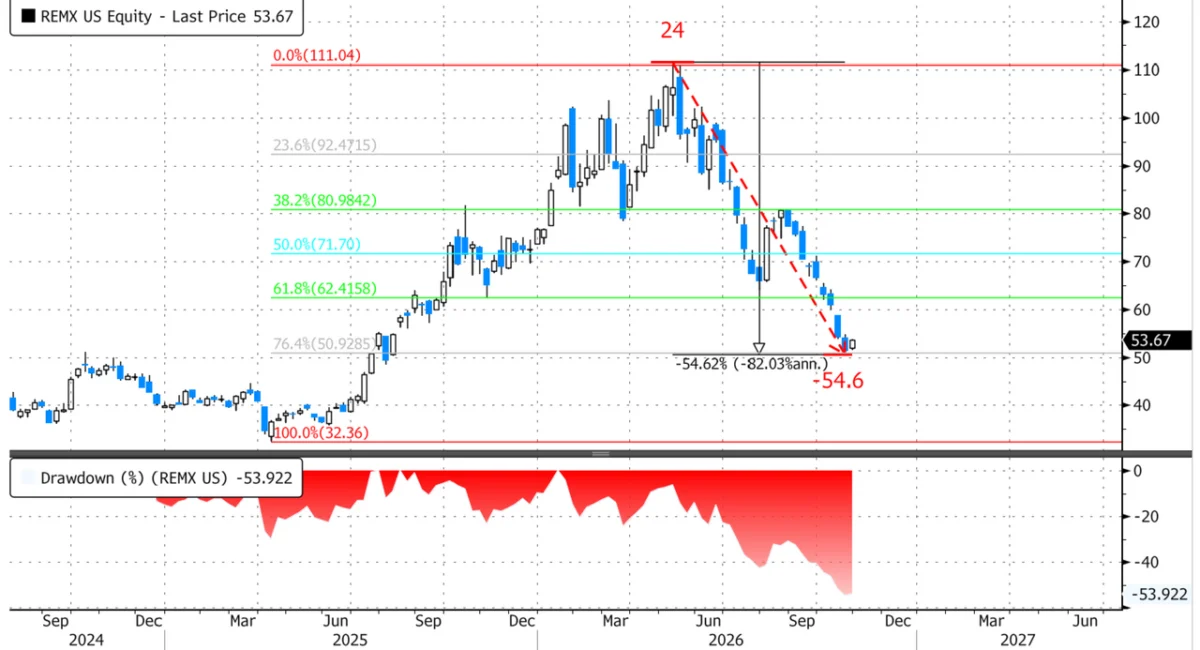
Last week, Canaccord’s critical minerals team illuminated a significant paradox within the rare earth market, aptly terming it the "great rare earth disconnect." This phenomenon describes a stark divergence: persistent tight supplies and elevated spot prices for these crucial materials coexisting with a severe bear market for rare earth mining stocks, a downturn that initiated in early summer and persisted through October. This critical observation has been echoed by other market analysts, including those at William Blair, who further challenged optimistic market expectations regarding an easing of Chinese supply constraints, dismissing such a view as "incorrect." The profound disconnect between the fundamental scarcity of critical materials—a scarcity exacerbated by China’s strategic "resource nationalism"—and the depressed valuation of mining equities, many trading near 52-week lows, is prompting considerable debate among traders regarding whether current valuations present a compelling buying opportunity.
The Great Rare Earth Disconnect Emerges
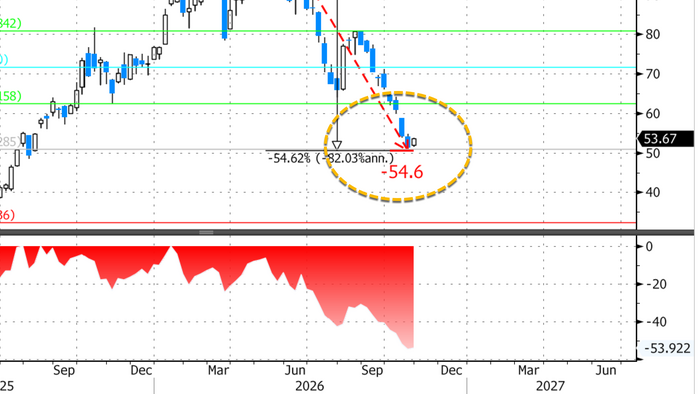
The core of the "great rare earth disconnect" lies in the paradoxical behavior of the physical rare earth market versus the financial instruments tied to its producers. On one hand, reports from end-users and commodity traders consistently point to constrained availability of key rare earth elements, driving up spot prices. This scarcity is rooted in complex supply chain dynamics, including production quotas, environmental regulations, and geopolitical maneuvering. On the other hand, the companies responsible for extracting and processing these materials have seen their stock valuations plummet. The VanEck Rare Earth and Strategic Metals ETF (REMX), a bellwether for the sector, provides a stark illustration of this trend. The ETF experienced a significant rally from approximately $32 in spring 2025 to a peak of $111 in spring 2026, only to reverse course dramatically, falling roughly 55% from its high over an approximate 24-week period. This retracement effectively erased much of its previous gains, bringing it back to levels unseen in recent memory.
Analyst Warnings and Market Trends
Canaccord’s initial assessment highlighted the inherent contradiction, noting that while demand for rare earths, driven by burgeoning clean energy technologies, electric vehicles (EVs), and advanced defense systems, remains robust, the investment community has seemingly retreated from the mining sector. William Blair’s analysts further solidified this perspective, emphasizing that the market’s expectation of relaxed supply from China, the dominant global producer, is fundamentally flawed. They argue that China’s long-term strategic objectives regarding critical minerals are unlikely to shift in a manner that would significantly alleviate global supply pressures, reinforcing its "quasi-monopoly" status. This analyst consensus suggests that the downturn in mining stocks is not necessarily a reflection of weakening fundamental demand for rare earths, but rather a complex interplay of broader market sentiment, geopolitical risk premiums, and perhaps an underestimation of the enduring nature of supply constraints.
Understanding Rare Earth Elements and Their Strategic Importance
To fully grasp the significance of this market disconnect, it is crucial to understand what rare earth elements (REEs) are and why they are deemed "critical." The term "rare earth" is somewhat misleading; these 17 metallic elements are not particularly rare in the Earth’s crust. However, they are rarely found in economically viable concentrations and require complex, often environmentally intensive, processing. The group includes scandium, yttrium, and the 15 lanthanide elements.
Applications Across Modern Industries
REEs possess unique magnetic, phosphorescent, and electrochemical properties that make them indispensable components in a vast array of high-tech applications essential for modern economies and national security. For instance, Neodymium and Praseodymium are critical for high-strength permanent magnets used in electric vehicle motors, wind turbines, and advanced electronics. Lanthanum is vital for hybrid car batteries and refinery catalysts. Cerium is used in catalytic converters and polishing agents. Dysprosium and Terbium improve the heat resistance of magnets in high-performance applications. Without these elements, many of the technologies driving the global transition to green energy, advancements in telecommunications, and modern defense systems would be severely hampered or impossible to produce at scale. The increasing global push for decarbonization and technological innovation ensures that demand for these materials is projected to grow significantly in the coming decades, creating a structural demand imbalance if supply does not keep pace.
China’s Dominance and the Rise of Resource Nationalism
The current state of the rare earth market is largely a consequence of decades of strategic development and policy decisions, primarily by China. For many years, China has cultivated an overwhelming dominance in the rare earth supply chain, from mining to sophisticated processing and magnet manufacturing. By the early 2000s, China accounted for over 90% of global rare earth production. This near-monopoly was achieved through a combination of low labor costs, less stringent environmental regulations (which allowed for cheaper, albeit more polluting, extraction methods), and significant state investment in processing technologies.
A Historical Overview of Supply Chain Control
The world first truly recognized its vulnerability to China’s rare earth dominance following the 2010 Senkaku Islands dispute with Japan. China briefly restricted rare earth exports to Japan, sending shockwaves through global industrial supply chains and highlighting the geopolitical leverage inherent in critical mineral control. This event spurred Western nations, particularly the United States, Europe, and Australia, to begin exploring strategies to diversify their rare earth supplies and build out domestic processing capabilities. However, establishing competitive alternative supply chains has proven to be a slow, capital-intensive, and technically challenging endeavor, underscoring China’s entrenched position.
The Geopolitical Leverage of Critical Minerals
China’s approach to critical minerals has evolved into a clear policy of "resource nationalism," where control over these strategic assets is viewed as a tool for economic and geopolitical influence. This involves a suite of measures, including export quotas, licensing requirements, and consolidation of domestic mining and processing entities, all designed to secure domestic industries and maintain global supply chain leverage. This strategy ensures that while global demand for rare earths rises, the availability of these materials to non-Chinese entities remains tightly managed, contributing directly to the observed supply constraints and elevated spot prices. Western governments now view the secure supply of critical minerals as a matter of national security, akin to energy independence.
Market Performance: The VanEck REMX ETF in Focus
The VanEck Rare Earth and Strategic Metals ETF (REMX) serves as a key barometer for investor sentiment and performance in the rare earth and strategic metals sector. Its recent trajectory illustrates the "disconnect" in stark financial terms.
A Rollercoaster Ride for Investors
After a substantial appreciation from around $32 in the spring of 2025 to a peak of $111 by the spring of 2026, reflecting optimistic outlooks for critical mineral demand and the potential for non-Chinese producers, the REMX experienced a severe correction. Over approximately 24 weeks, the ETF shed about 55% of its value from its peak, pushing many of its constituent stocks to or near 52-week lows by October. This rapid decline suggests a significant shift in investor sentiment, possibly driven by broader macroeconomic concerns, profit-taking after a robust rally, or a re-evaluation of the timelines and costs associated with establishing diversified supply chains outside of China. The recent rebound of about 4% in early Tuesday trading, however, could signal a technical bounce after prolonged selling pressure, with shares trading near the 76.4% Fibonacci retracement level of the prior rally—a technical indicator often watched by traders for potential reversals. It could also suggest a nascent reassessment by investors, recognizing that the fundamental drivers of rare earth scarcity, particularly China’s enduring "quasi-monopoly" and resource nationalism, are not easily overcome.
Key Holdings and Their Exposure
The REMX fund holds a diversified portfolio of companies involved in the rare earth and strategic metals value chain. Its significant holdings include companies like SQM (Sociedad Química y Minera de Chile), a major producer of lithium and other specialty chemicals; Albemarle, another lithium giant; China Northern Rare Earth, a dominant Chinese player; MP Materials, the only operating rare earth mine in the United States; and Almonty Industries, a tungsten producer. The inclusion of companies like SQM and Albemarle highlights the broader strategic metals focus of the ETF, encompassing other critical materials essential for the energy transition. The performance of these individual companies often correlates with overall market sentiment towards critical minerals, but also reflects specific operational successes or challenges. The downturn in REMX implies that even diversified portfolios of critical mineral producers have been vulnerable to the bearish sentiment, regardless of their individual supply chain positions or strategic importance.
Decoding the Divergence: Supply, Demand, and Investment Sentiment
The "great rare earth disconnect" is a multi-faceted issue stemming from a complex interplay of persistent physical supply constraints, robust and growing demand, and a cautious or even bearish investor sentiment toward the mining sector.
Persistent Supply Constraints
Despite the global recognition of the strategic importance of rare earths, establishing new, sustainable, and environmentally responsible mining and processing operations outside of China is an arduous undertaking. It requires massive capital investment, years of permitting and development, and overcoming significant technical challenges in processing. The environmental impact of rare earth mining, which often involves the use of harsh chemicals, has also led to stricter regulations in many Western countries, adding to costs and timelines. Moreover, China continues to exert significant control over the processing stages, particularly the separation of individual rare earth elements and their conversion into usable forms for advanced magnet production. This means that even if raw rare earth ores are mined elsewhere, they often still need to be sent to China for final processing, maintaining Beijing’s chokehold on the refined product market.

Investor Hesitancy Amidst Geopolitical Realities
Investor sentiment in the mining sector is notoriously cyclical and susceptible to various pressures beyond immediate supply-demand fundamentals. Factors contributing to the current bearishness include:
- Broader Macroeconomic Headwinds: Concerns about global economic slowdowns, inflation, and rising interest rates can dampen investor appetite for capital-intensive, long-cycle industries like mining.
- Geopolitical Risk Premium: The inherent geopolitical risks associated with critical minerals, including potential trade disputes, export restrictions, and resource nationalism, can deter investors seeking stable returns. The possibility of China using its rare earth leverage as a negotiating tool adds an element of uncertainty.
- Long Investment Horizons: New mining projects often have very long lead times before generating significant returns, making them less attractive to investors seeking quicker profits in volatile markets.
- Technological Substitution Fears: While rare earths are currently indispensable, some investors may harbor concerns about potential future technological advancements that could reduce reliance on certain REEs, though widespread substitution for all applications remains unlikely in the short to medium term.
- Capital Availability: Raising capital for new mining projects can be challenging, especially for smaller companies, in an environment of higher interest rates and tighter credit conditions.
These factors combine to create a challenging environment for rare earth mining stocks, even as the underlying physical market signals scarcity and high prices.
Global Responses and Future Outlook
The "great rare earth disconnect" underscores the urgency for global policymakers and industry leaders to address the vulnerabilities in critical mineral supply chains.
Western Efforts Towards Supply Chain Resilience
In response to China’s dominance, numerous Western governments have launched initiatives aimed at fostering domestic rare earth production and processing. The United States, for example, has committed significant funding through legislation like the Bipartisan Infrastructure Law and the Defense Production Act to support domestic mining, processing, and recycling of critical minerals. Similar efforts are underway in Europe, Australia, and Canada, focusing on developing new mines, establishing midstream processing facilities, and forging strategic partnerships with allied nations. These initiatives aim not just for self-sufficiency but also for diversification, creating a more resilient global supply network. However, these are long-term strategies, and their impact on global supply dynamics will only become fully apparent over several years.
Implications for Industries and Geopolitics
The continued disconnect has significant implications. For industries reliant on rare earths—such as automotive (EVs), renewable energy (wind turbines), defense, and consumer electronics—it means continued price volatility, supply uncertainty, and potential disruptions to production schedules. This can drive up manufacturing costs and potentially slow the pace of the green energy transition. From a geopolitical standpoint, the situation reinforces the strategic importance of critical minerals, making them a central component of international trade negotiations, national security doctrines, and diplomatic relations, particularly between major powers.
The Investment Conundrum: Opportunity or Ongoing Risk?
For investors, the current market presents a classic conundrum. Are the deeply discounted rare earth mining stocks a "buying opportunity" reflecting an undervaluation of their long-term potential in a demand-rich environment? Or do they represent ongoing risk, burdened by geopolitical uncertainties, long development cycles, and capital-intensive operations? The recent modest rebound in REMX could be interpreted as a sign that some investors are beginning to lean towards the former, anticipating that the fundamental demand for critical minerals will eventually reassert itself in stock valuations. However, the path to sustained recovery will likely be influenced by progress in establishing diversified supply chains, clarity on international trade policies, and overall macroeconomic stability.
Conclusion: Navigating a Complex Critical Minerals Landscape
The "great rare earth disconnect" serves as a powerful reminder of the intricate and often paradoxical nature of commodity markets, particularly those involving strategically critical materials. While the physical market signals tight supplies and elevated prices, reflecting robust demand and geopolitical realities, the investment market has taken a decidedly bearish turn. This divergence is rooted in China’s enduring "quasi-monopoly" and strategic resource nationalism, coupled with broader macroeconomic anxieties and the inherent challenges of establishing new, diversified supply chains. As global efforts to secure critical mineral independence continue, the rare earth sector is poised for sustained volatility, presenting both significant risks and potentially profound opportunities for those who can accurately navigate its complex landscape. The resolution of this disconnect will depend on a confluence of sustained policy support, technological innovation, and a fundamental shift in investor perception regarding the long-term value and strategic necessity of these indispensable elements.

