
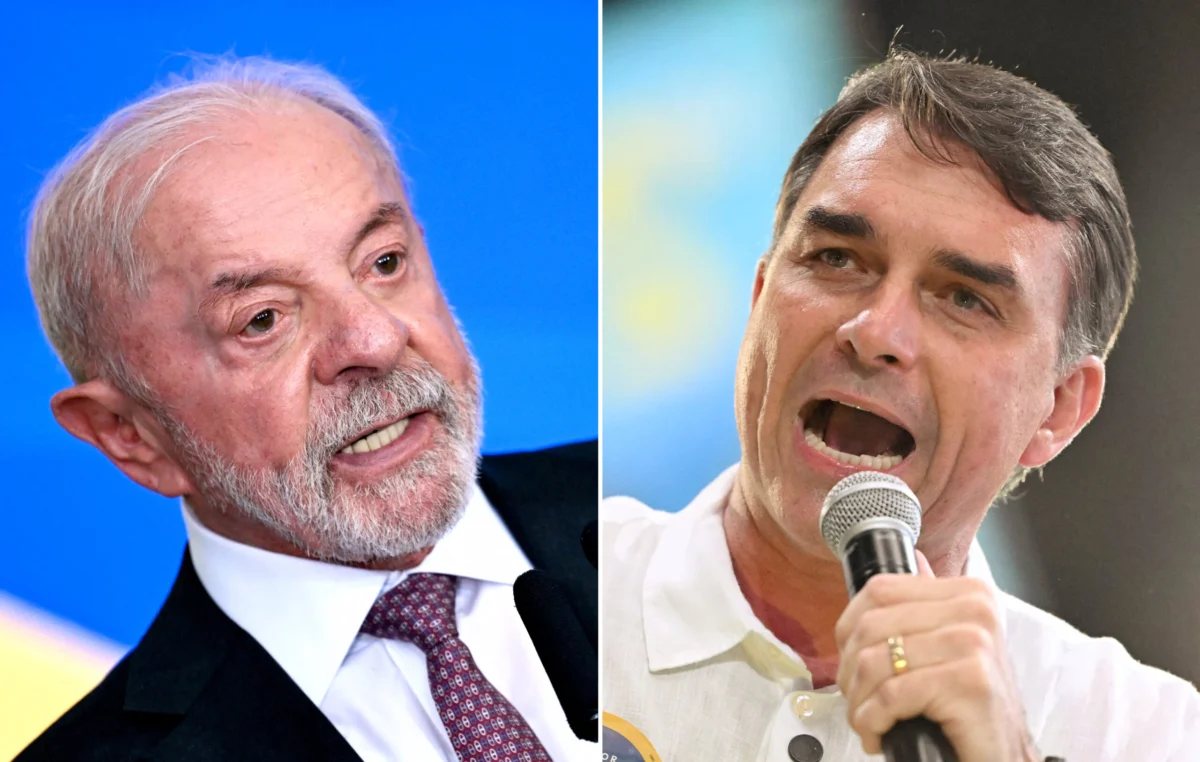
As Brazil stands on the cusp of its first-round presidential election this Sunday, global financial markets, particularly Wall Street, are keenly observing the unfolding political drama, bracing for starkly different economic trajectories depending on whether the veteran leftist Luiz Inácio Lula da Silva or the right-wing challenger Flavio Bolsonaro emerges victorious. The contest, widely characterized as a clash of ideologies and economic philosophies, pits two profoundly different visions for Latin America’s largest economy against each other, with significant implications for its vast financial landscape.
"The Brazil trade is: Does Lula win or does Bolsonaro win?" succinctly stated Fernando Marengo, chief economist at Black Toro Global Investments, capturing the binary nature of market sentiment. The names resonate with deep familiarity within Brazilian and international political circles. Luiz Inácio Lula da Silva, at 80 years old, is a towering figure of the Brazilian left, seeking an unprecedented fourth term at the nation’s helm. His challenger is the 45-year-old Flavio Bolsonaro, son of former President Jair Bolsonaro, representing a continuation of the right-wing, pro-market agenda. With polls indicating a tight contest, the possibility of neither candidate securing more than 50% of the vote looms large, potentially pushing the decision to a runoff election scheduled for October 25.
Market Expectations: A Tale of Two Futures
The financial community’s calculus is remarkably clear-cut: a Bolsonaro victory is broadly anticipated to ignite a robust rally across Brazil’s financial assets, encompassing its sovereign bonds, national currency (the real), and equity markets. This optimistic outlook stems from the perception that a Bolsonaro administration would prioritize fiscal discipline and market-friendly reforms. Indeed, recent months have seen a noticeable correlation between Flavio Bolsonaro’s ascent in the polls and an upward trend in Brazilian stock performance. JPMorgan, a prominent global financial institution, highlighted this phenomenon in a recent client note, observing that the MSCI Brazil index "rose by 0.25% on average each day that Flavio gained in the polls."
While official prediction markets are prohibited within Brazil, international platforms like Kalshi have shown Bolsonaro favored to win with 60% against Lula’s 39%. However, some analysts caution against reading too much into these figures as they may not fully capture local sentiment. Richard Lapper, senior advisor at Aurora Macro Strategies, noted in a client communication that while "the balance has shifted toward Flavio over the past month, but not nearly as far as the prediction markets are pricing." This underscores the inherent uncertainty and the potential for surprises in Brazilian electoral politics.
Conversely, a Lula victory, while potentially appealing to segments of the population focused on social welfare and state-led development, is generally viewed by markets with greater caution. Concerns often center on potential increases in social spending, a less aggressive stance on privatization, and a greater role for the state in the economy, which could raise questions about fiscal sustainability and potentially weigh on investor confidence. The currency outcome, in particular, is described by JPMorgan as "bimodal," with projections for the USD/BRL exchange rate moving to 5.50 if Lula wins, compared to a more favorable 4.90 under a Bolsonaro presidency.
The Crucial Fiscal Conundrum: Debt and Discipline
At the heart of Wall Street’s preference for Bolsonaro lies Brazil’s pressing fiscal situation. The nation’s debt-to-GDP ratio currently stands at a concerning 81.9%, a notable increase of 10 percentage points since Lula’s last tenure. This metric is a critical indicator of a country’s ability to service its debt and is a primary concern for investors. Leonardo Porto, Brazil head economist for Citi, articulated the severity of the challenge: "We need a 3-3.5% fiscal adjustment to stabilize the public debt in relation to GDP." He emphasized that such an adjustment cannot rely on one-off measures like asset privatizations but requires a "permanent fiscal adjustment," implying difficult choices between cutting spending or raising taxes.
However, implementing such measures presents significant hurdles. Approximately 90% of Brazil’s national budget is mandatory, with much of it enshrined in the constitution, making expenditure cuts politically arduous. Furthermore, Brazil’s tax burden, at 32% of GDP, is already the highest in Latin America according to the OECD, leaving little room for significant tax increases without stifling economic activity. Against this backdrop, Brazil’s prospects for robust economic growth remain subdued, making fiscal consolidation even more challenging.
Lessons from the Past: Jair Bolsonaro’s Reform Legacy
For proponents of the Bolsonaro agenda, the period under Flavio’s father, Jair Bolsonaro (2019-2022), serves as a compelling precedent. During his presidency, despite significant political challenges, Jair Bolsonaro successfully pushed through a landmark pension reform. This crucial reform, enacted in 2019, aimed to significantly reduce the long-term fiscal burden of the public pension system by establishing a minimum retirement age of 65 for men and 60 for women. This was a radical departure from the previous system, which allowed men to retire after 35 years of contribution and women after 30 years, regardless of age – leading to average retirement ages of 56 for men and 53 for women.
The pension reform, which saved hundreds of billions of dollars over decades, was widely hailed by financial markets as a critical step towards fiscal responsibility. JPMorgan noted that during this period of reform, Brazil’s 2-year yields fell almost to 4.7%, and the equity market gained an impressive 130%. This historical performance fuels the expectation that a "robust reform agenda" under Flavio Bolsonaro could yield similar positive outcomes. JPMorgan analysts project that renewed reform efforts could see interest rates decline to their neutral level (6% in real terms, 10% in nominal terms), and the MSCI Brazil could experience an upside potential of between 21% and 41%. They further believe the forward price-to-earnings (P/E) ratio could rise from its current 8.6 to as high as 13.3, a level last observed in 2020.
Lula’s Legacy and Current Platform: A Deeper Dive
Luiz Inácio Lula da Silva’s political journey is one of Brazil’s most remarkable. His previous two terms (2003-2010) were characterized by a period of robust economic growth, driven by a global commodity boom, and significant social progress. Programs like "Bolsa Família" lifted millions out of extreme poverty, earning him widespread international acclaim. His administration combined orthodox macroeconomic policies, such as maintaining a floating exchange rate and inflation targets, with an aggressive social agenda. However, critics point to an expansion of state-owned enterprises, increased public spending, and a tendency towards interventionist economic policies in his later years, which some argue laid the groundwork for subsequent economic challenges.
For his potential fourth term, Lula’s platform is expected to prioritize a renewed focus on social welfare, poverty reduction, and state-led investment in infrastructure and strategic industries. This would likely involve increased government spending, potentially reversing some privatization efforts, and strengthening the role of state-owned companies like Petrobras and Eletrobras. While appealing to his base, particularly those struggling with economic hardship, these policies could ignite concerns among investors regarding fiscal expansion and potential inflation, especially given the current global economic climate. His supporters argue that increased public investment is necessary to stimulate demand and drive sustainable, inclusive growth, rather than relying solely on market forces.
The Legislative Chessboard: A Key Determinant
Beyond the presidential race, this election also determines the composition of the entire lower house of Brazil’s Congress and one-third of the upper house. The legislative makeup will be a critical factor in either candidate’s ability to implement their agenda. Brazil’s Congress is notoriously fragmented, with numerous parties representing diverse interests. A president, regardless of their mandate, requires broad coalition-building skills to pass significant reforms.
A Bolsonaro presidency would likely seek to forge alliances with centrist and right-leaning parties to advance fiscal adjustments, administrative reforms, and further privatizations. Conversely, a Lula administration would need to navigate a potentially skeptical Congress to pass social programs and bolster state intervention, possibly requiring compromises that dilute his original policy proposals. The ability to secure a working majority or at least a stable coalition will dictate the pace and scope of any proposed reforms, significantly impacting their ultimate economic effect.
Broader Economic and Geopolitical Implications
Brazil’s election carries implications beyond its borders. As a key player in the BRICS group and a major agricultural exporter, its economic stability and policy direction resonate globally. Other recent victories by pro-business candidates in Latin America, such as in Colombia and Peru, have often been followed by significant upside moves in their respective stock markets, bonds, and currencies. Black Toro’s Marengo noted Colombia’s risk premium compression "was about 200 points, and it was one of the stock markets that rose the most – something similar to what happened in Peru." While some of this potential positive movement may already be priced into Brazilian assets, the magnitude of the post-election reaction remains a key variable.
However, the global economic environment presents its own set of challenges. Rising global interest rates, driven by efforts from major central banks to combat inflation, could put pressure on emerging markets like Brazil by increasing borrowing costs and attracting capital away from riskier assets. Furthermore, for Latin America, the recurring El Niño weather phenomenon poses a particular risk. Historically, El Niño has led to extreme weather patterns, including droughts in some regions and excessive rainfall in others, which could severely damage crop yields for Brazil’s vital agricultural export sector. Such an event could further complicate any new administration’s economic management, regardless of who takes office.
In conclusion, Brazil’s 2026 presidential election is more than just a political contest; it is a critical juncture for the nation’s economic future. The choice between Lula’s social-democratic vision and Bolsonaro’s market-oriented approach will determine the trajectory of fiscal policy, investment, and growth for years to come. Global markets are watching with bated breath, poised to react to the outcome of this pivotal democratic exercise. The path forward will require not only a clear electoral winner but also a political landscape conducive to implementing the difficult decisions necessary to navigate Brazil’s complex economic challenges.
Disclosure: CNBC and Kalshi have a commercial relationship that includes customer acquisition and a minority investment.

