
The landscape of domestic extremism in the United States is complex and multifaceted, presenting significant challenges to national security and public order. While public discourse often highlights specific forms of radicalization, a broader examination reveals the critical role of foreign enablers in supporting and amplifying domestic extremist activities across the ideological spectrum. A recent decisive action by the U.S. State Department, designating the Italy-based "Autistici/Inventati" (A/I Collective) as a "specially designated global terrorist" on August 26, 2023, underscores a strategic pivot towards dismantling the digital infrastructure that facilitates violent far-left movements both domestically and internationally. This move, which led to the immediate disruption of numerous radical online platforms, represents a significant development in the ongoing efforts to combat terrorism that transcends national borders and ideological divides.
The Escalation of Domestic Extremism and Its Varied Manifestations
The United States has experienced a notable rise in domestic extremist violence in recent years, prompting federal agencies and independent organizations to intensify their monitoring and counter-terrorism efforts. While attention frequently gravitates toward right-wing extremist groups, analyses from various security agencies and research centers indicate that violent extremism is not confined to a single political orientation. Indeed, left-wing extremist groups, often operating under the guise of social justice advocacy, have increasingly engaged in tactics involving property destruction, intimidation, and direct violence.
Data from organizations like the Anti-Defamation League (ADL) and the Center for Strategic and International Studies (CSIS) consistently track incidents across the ideological spectrum, showing that both far-right and far-left groups contribute to the overall threat. For instance, a 2023 report by CSIS highlighted the persistent threat posed by domestic terrorism, noting that while religiously motivated and right-wing extremist attacks have historically accounted for a significant portion, politically motivated attacks by left-wing groups have also seen periods of intense activity, particularly around contentious social issues and protests. The perception of disproportionate attention given to one side over another often stems from the varying scales and targets of attacks, as well as the political narratives surrounding such events. However, law enforcement and intelligence agencies emphasize that any form of politically motivated violence, regardless of its origin, poses a threat to democratic institutions and public safety.
The Rise of Jane’s Revenge and Post-Roe Violence
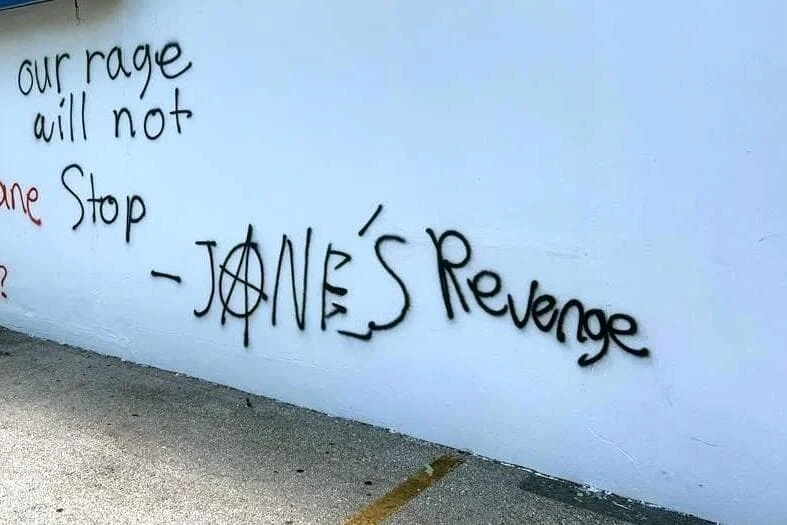
A striking example of escalating left-wing extremist activity emerged in the wake of the U.S. Supreme Court’s decision in Dobbs v. Jackson Women’s Health Organization on June 24, 2022, which overturned Roe v. Wade and eliminated the constitutional right to abortion. This landmark ruling ignited intense reactions across the nation, leading to widespread protests and, in some instances, acts of violence and intimidation, particularly from radical pro-abortion groups. Among these, a group identifying itself as "Jane’s Revenge," a reference to the anonymous plaintiff in Roe v. Wade, quickly gained notoriety for its aggressive tactics.
Beginning in May 2022, even before the Dobbs decision was officially released, Jane’s Revenge issued a stark ultimatum, demanding that "anti-choice establishments"—primarily crisis pregnancy centers (CPCs)—cease operations within 30 days or face further violence. Crisis pregnancy centers are non-profit organizations that offer support and resources to pregnant women, often emphasizing alternatives to abortion, such as adoption or parenting. These centers typically provide free services including pregnancy tests, ultrasounds, counseling, and material aid like diapers and clothing. Their mission, to support women who choose to carry their pregnancies to term or who are undecided about abortion, clashes directly with the absolutist stance of groups like Jane’s Revenge.
Following their initial threats, Jane’s Revenge and affiliated individuals launched a campaign of terroristic intimidation across the United States. Documented incidents, reported by various news outlets including The Guardian, detailed a disturbing pattern of attacks. These methods were extreme, involving arson, firebombing, vandalism, and property damage targeting dozens of crisis pregnancy centers and anti-abortion organizations. Locations affected stretched from New York and North Carolina to Wisconsin, Texas, and Washington state. For example, in June 2022, the office of Wisconsin Family Action in Madison was firebombed, with graffiti reading "If abortions aren’t safe, then neither are you" and "Jane’s Revenge." Similar attacks occurred in other states, causing extensive damage and creating an atmosphere of fear among those working at these centers. The group’s operations continued for an extended period, relying heavily on clandestine online communication and organization, until their digital footprint began to diminish following concerted law enforcement actions.
The A/I Collective: A Digital Infrastructure for Radicalism
The ability of groups like Jane’s Revenge to organize, communicate, and disseminate their messages, often anonymously, highlights the critical role of digital infrastructure in modern extremist movements. Many radical organizations, including various Antifa groups and those associated with Jane’s Revenge, have historically leveraged web services provided by entities like Italy’s "Autistici/Inventati," or A/I Collective.
The A/I Collective, an anarchist collective based in Italy, has operated for years, presenting itself as a provider of anonymous and secure communication services. However, according to the U.S. State Department, its services extended far beyond neutral digital hosting. The Collective has been described as building and operating the digital infrastructure specifically designed to support the operations of far-left terrorist networks across the world. This infrastructure allegedly enabled these groups to organize, recruit new members, communicate securely, disseminate propaganda, share target information and tactics, and plan and carry out violent attacks—all while striving to remain anonymous, untraceable, and beyond the reach of law enforcement.
The services provided by A/I Collective are comprehensive, including secure email, web hosting, VPNs, and other encrypted communication tools. These tools are invaluable to extremist groups seeking to evade surveillance and maintain operational secrecy. By offering a shielded online environment, the Collective effectively lowered the barrier for radical groups to coordinate complex actions, from simple acts of vandalism to more severe forms of violence. Its long-standing presence and ideological alignment with anti-capitalist and anti-fascist movements allowed it to become a central hub for a transnational network of militant left-wing organizations.
State Department’s Landmark Designation: August 26, 2023
Recognizing the A/I Collective’s integral role in facilitating global extremist activities, the U.S. State Department took a decisive and unprecedented step on August 26, 2023. It officially designated the A/I Collective as a "specially designated global terrorist" (SDGT) under Executive Order 13224, as amended. This designation is typically reserved for organizations or individuals directly involved in or supporting acts of international terrorism.

The State Department’s announcement detailed that the A/I Collective’s digital infrastructure had been instrumental in supporting a wide array of violent far-left militants. This included not only domestic groups like those responsible for the anti-abortion violence but also international entities. For instance, the designation cited the Collective’s provision of services to European "anarchist cells responsible for sabotaging rail systems across France, Italy, Germany, and the Netherlands." Domestically, it also supported "the anarchist cell responsible for waging a violent campaign to prevent the construction of a law enforcement training center in Atlanta, Georgia," an ongoing conflict involving protests, property damage, and clashes with authorities.
The implications of an SDGT designation are significant and far-reaching. It empowers the U.S. government to impose sanctions on individuals and financial institutions, both domestic and international, that engage in transactions or business with the designated entity. Furthermore, any assets of the A/I Collective found within American jurisdiction are subject to freezing and restriction. This financial and legal pressure aims to sever the funding and operational lifelines of the designated group, effectively disrupting its ability to provide services to extremist clients.
Immediate Impact and Strategic Implications
The immediate aftermath of the A/I Collective’s designation was palpable. Within days, numerous radical websites and online platforms that had relied on the Collective’s services went dark. This swift disruption demonstrated the effectiveness of targeting the foundational digital infrastructure that enables extremist operations. For groups like Jane’s Revenge, whose online presence was critical for coordination and propaganda, the loss of this secure hosting and communication channel significantly hampered their capabilities.
In response to the designation, the A/I Collective issued a media statement, complaining that "Antifascism and anticapitalism are not terrorism" and "Protesting is not terrorism." This statement reflects a common defense mechanism employed by groups operating on the fringes of legitimate activism, attempting to conflate their violent actions with protected forms of speech and assembly. However, U.S. counter-terrorism policy, aligned with international standards, clearly distinguishes between legitimate protest and acts designed to intimidate, coerce, or instill fear through violence. The State Department’s action underscores the position that when "protest" involves molotov cocktails, arson, doxing, or attempts to blind pilots, it crosses the line into terrorism, irrespective of the stated ideology.
The designation represents a strategic shift in how the U.S. government approaches domestic extremism, particularly when it has demonstrable links to foreign support networks. It acknowledges that domestic extremist threats are rarely isolated phenomena; rather, they are often interconnected with transnational movements and rely on international infrastructure for their sustainment. By targeting foreign enablers, the U.S. aims to cut off crucial resources that allow domestic groups to escalate from rhetoric to violent action. This approach moves beyond simply prosecuting individuals after an attack, focusing instead on proactively dismantling the networks that enable such attacks.
The Transnational Nature of Extremist Networks
The State Department’s action against the A/I Collective highlights a crucial understanding: the violent left is a transnational movement. Modern extremist groups, regardless of their specific ideology, increasingly leverage globalized communication technologies and cross-border collaborations to advance their agendas. This interconnectedness allows for the rapid dissemination of tactics, ideologies, and propaganda, as well as the sharing of resources and expertise.
The A/I Collective’s support for various anarchist cells in Europe, implicated in infrastructure sabotage, directly demonstrates this transnational dimension. Similarly, its role in facilitating domestic groups targeting law enforcement training centers or engaging in anti-immigrant enforcement activities illustrates how a single foreign entity can empower diverse extremist operations across different geographical and thematic fronts. The original article cited instances where domestic sites and groups using A/I Collective resources published calls for "direct action" against immigration laws and enforcement officers. This included sharing pamphlets urging activists to shine laser pointers at Customs and Border Protection helicopters, a dangerous tactic intended to blind pilots and potentially cause crashes. Other egregious acts facilitated by such networks involved "doxing" ICE agents, publishing their personal information to enable harassment at home, or, as implied by the article, inspiring acts of arson against their residences, drawing parallels to the tactics of groups like Jane’s Revenge.
These actions, far from being legitimate forms of political expression, are recognized as deliberate attempts by a radical fringe to achieve political objectives through intimidation and violence—tactics that fundamentally undermine the democratic process and the rule of law.
Challenges and Future Outlook
While the designation of the A/I Collective is a significant step, combating the evolving threat of domestic extremism and its foreign enablers presents ongoing challenges. One major hurdle is balancing national security imperatives with civil liberties, particularly concerns around freedom of speech and association. Critics of such designations often argue that they could be misused to suppress dissent or target groups based on political ideology rather than concrete links to violence. However, U.S. law and policy typically require a clear nexus to violent acts or the material support of terrorism for such designations to be applied.
Another challenge lies in the adaptive nature of online extremism. As one digital infrastructure provider is shut down, extremist groups may seek out alternative platforms or develop new, more clandestine methods of communication. The decentralized nature of many far-left movements, coupled with the rapid advancements in encryption and anonymization technologies, means that the fight against online radicalization is a continuous cat-and-mouse game. Law enforcement and intelligence agencies must constantly innovate their surveillance and disruption tactics to keep pace with these developments.
The State Department’s action signals a more proactive and globally oriented strategy towards domestic extremism, recognizing that effectively countering threats at home requires addressing their roots and enablers abroad. This precedent-setting move could lead to similar designations against other foreign entities found to be materially supporting violent domestic groups, regardless of their ideological leanings. Ultimately, defending the principle of self-government against those who seek to undermine it through violence and intimidation requires a comprehensive approach that includes robust intelligence gathering, effective law enforcement, and strategic actions against both domestic perpetrators and their international facilitators. The designation of the A/I Collective serves as a potent reminder that the digital battlefield is increasingly critical in the broader struggle against terrorism and extremism.

