
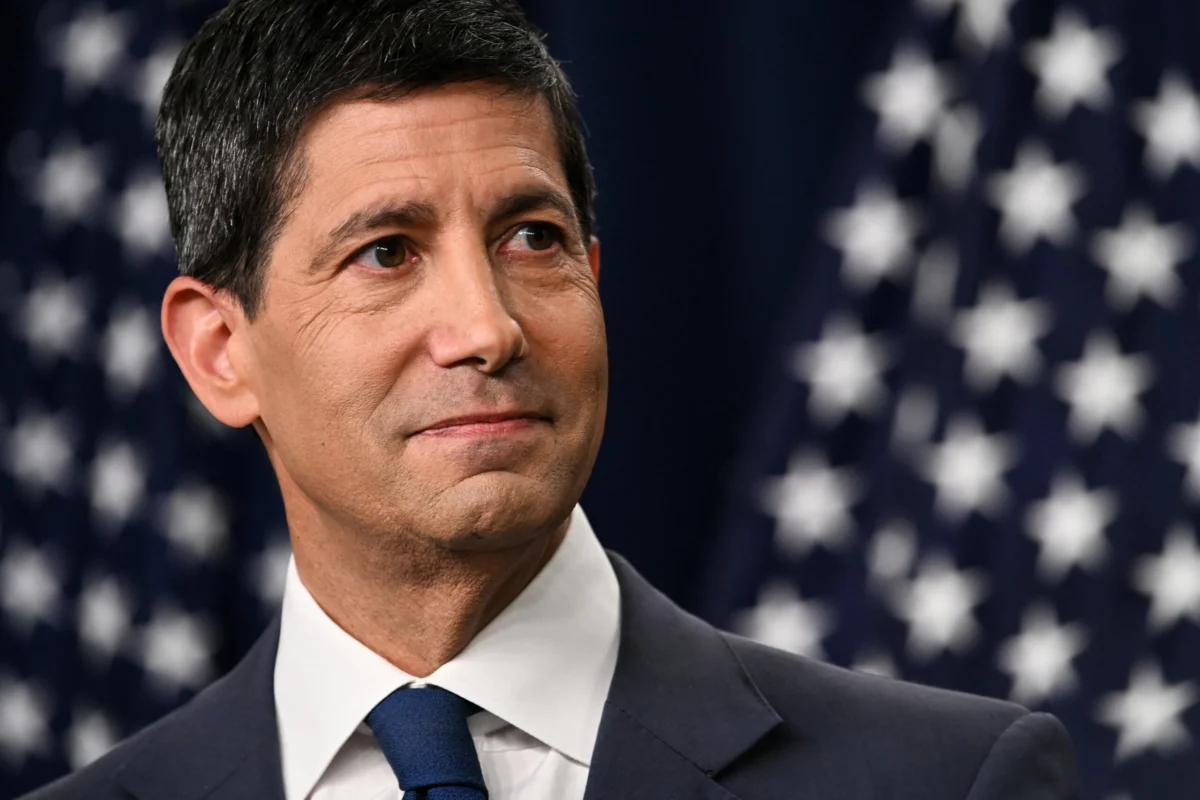
Federal Reserve Chairman Kevin Warsh is actively exploring the possibility of significantly reducing the number of annual Federal Open Market Committee (FOMC) meetings, a move that would further solidify his ongoing initiative to diminish the central bank’s direct influence and public footprint on financial markets. This potential alteration to the Fed’s long-established calendar, discussed in what one insider characterized as primarily hypothetical terms, marks another decisive step in Warsh’s tenure, which began in May 2026, and is expected to introduce both heightened volatility and novel opportunities for investors accustomed to a more communicative central bank.
Warsh’s Paradigm Shift: A New Era of Central Banking
Since assuming the chairmanship from now-Governor Jerome Powell on May 22, 2026, Kevin Warsh has embarked on a systematic reversal of decades of Federal Reserve culture. This culture, which gained particular prominence in the wake of the 2008 global financial crisis, emphasized aggressive transparency, with some critics arguing it had become overly prescriptive. Warsh’s agenda is rooted in a philosophy that markets should operate based on fundamental economic data rather than explicit signals or "Fedspeak" from policymakers.
Among the immediate changes implemented by Chairman Warsh are the dramatic curtailment of so-called "forward guidance," the practice by which the Fed signals its future interest rate moves to influence market expectations. Post-meeting statements, once detailed communiqués offering insights into the committee’s thinking, have been notably shortened, becoming more succinct and less revealing. Furthermore, during the two news conferences Warsh has held to date, including one on July 29, 2026, his responses to questions about his views on monetary policy have been consistently cryptic, often evasive, and devoid of the granular detail market participants had grown to expect. This deliberate obfuscation is part of a broader strategy, complemented by the establishment of five internal task forces dedicated to a top-to-bottom rethinking of the Fed’s approach to policy formulation, communications strategy, and data utilization. These actions collectively aim to redefine the central bank’s role, shifting it from an active market guide to a more reserved, data-dependent actor.
The Proposal: Fewer FOMC Meetings
The current schedule of eight annual FOMC meetings, a standard since the early 1980s under former Chairman Paul Volcker, is now under review. Prior to Volcker’s tenure, the Fed met almost monthly, reflecting a different era of monetary policy and communication. Reducing the frequency of these rate-setting gatherings would directly impact the quantity of official communications from the Warsh Fed, thereby creating a less predictable environment for stock and bond markets. While the Fed always retains the power to call emergency meetings, such an action is typically reserved for severe economic dislocations and carries substantial market implications, signaling deep concern among policymakers.
The idea of re-evaluating the meeting schedule has found some support among regional Fed presidents. Minneapolis Fed President Neel Kashkari, in an interview with CNBC on Wednesday, August 5, 2026, expressed an open mind, stating, "I don’t think there’s any magic number about eight or 10 or six. You know, we always have the ability to call emergency meetings if things happen, but that’s a big event." He acknowledged the powerful signal an emergency meeting sends, reinforcing the notion that scheduled meetings are the primary conduits for policy updates. Philadelphia Fed President Anna Paulson echoed similar sentiments on Tuesday, telling CNBC, "It’s healthy to have a good discussion about that."
Divergent Expert Opinions on Meeting Frequency and Transparency
While some policymakers are open to the discussion, market analysts and former Fed officials offer a range of perspectives on the potential implications. Bill English, a Yale professor and the Fed’s former head of monetary affairs during Warsh’s earlier stint at the central bank, believes there is "nothing magical about eight meetings." He notes that there are "costs associated with having a lot of meetings," but also cautions against having "so few meetings that you end up not acting in a timely way." English himself once proposed a schedule of six annual meetings, each paired with a news conference and an update to the Fed’s Summary of Economic Projections (SEP), which includes the closely watched "dot plot" of individual officials’ rate expectations. While he considers eight meetings "close to the right number," his primary concern lies with Warsh’s broader strategy of reducing communication. "I really don’t like this effort to communicate much less," English asserted, emphasizing that "explaining more about why you’re doing what you’re doing helps the public to understand it. It helps the public to anticipate it. It makes monetary policy more effective, and also it just seems like it’s appropriate to make the Fed accountable."
Critics of Warsh’s approach predict increased market volatility. George Catrambone, head of fixed income for the Americas at DWS Group, stated unequivocally, "Certainly, it’s going to increase volatility. Having less transparency forces market participants to hedge or have a wider dispersion of outcomes." Dario Perkins, head of global macroeconomics at TS Lombard, described the anticipated outcome as "a regime of continuous market repricing," where investors would have to "get used to FOMC meetings at which they don’t know the outcome ahead of time." Perkins, however, also noted that this scenario "will also provide new trading opportunities," hinting at a potential underlying objective of Warsh’s strategy. Mark Hackett, chief market strategist at Nationwide, identified the reduction in meetings as a potentially "disruptive" escalation of Warsh’s agenda, going beyond the changes to forward guidance or the dot plot.
Market Response and Warsh’s Stance on Data
Despite the significant shift in communication strategy, financial markets have, to date, exhibited a surprisingly muted reaction, or perhaps have been more preoccupied with geopolitical developments. Since Warsh assumed the chairmanship on May 22, 2026, the Dow Jones Industrial Average has climbed by approximately 3,500 points, a robust 7% gain. Bond yields have also seen a modest rise; the policy-sensitive 2-year Treasury yield is up about 8 basis points (0.08 percentage points), with the benchmark 10-year yield showing a similar increase.
This relative calm has unfolded even as Warsh defies a tradition of open communication that spans the latter half of the 20th century. Mark Hackett noted that Warsh "is kind of getting away with it" and is "really the first Fed official that I’ve seen explicitly say he wants the Fed to have less direct impact on market movement." Indeed, Warsh has explicitly articulated his philosophy to market participants, urging them to react to underlying economic data rather than the nuances of central bank pronouncements. During his most recent news conference, Warsh stated, "Market participants are learning to play the ball, not the referee — and market prices will continue to respond in the direction and magnitude they see fit. This is, in my view, a change for the better — and we are just getting started."
Broader Implications for Financial Stability and Government Finance
The potential ramifications of Warsh’s strategy extend beyond mere market volatility. Concerns have already been raised about the chairman’s skepticism toward forward guidance and his loosely defined "reaction function"—the economic conditions that would trigger a Fed policy response. Compounding this, Warsh has been critical of the "dot plot," the graphical representation of individual FOMC members’ interest rate projections, and notably declined to submit his own projection when the committee last updated the grid in June 2026.
Adding to this emerging "information vacuum" by reducing the number of annual meetings to, say, four or six, could force markets that have long relied on Fed cues to now largely guess at policy direction. Komal Sri-Kumar, president of Sri-Kumar Global Strategies, warns of a potential "bear steepener" in the bond market, where longer-term yields rise faster than shorter-term rates. This scenario implies that fixed-income investors might anticipate the Fed holding short-term rates low, thereby fueling inflation expectations and demanding higher compensation for longer-term debt. Sri-Kumar underscored the sentiment among bondholders, stating, "Bondholders are not babies trying to have their hands held. The bondholders are saying, ‘Please don’t make my life more difficult by introducing even more uncertainty.’"
Such a spike in yields would pose significant challenges for the federal government, which is already grappling with the immense financing costs of its $31.1 trillion in outstanding Treasury debt held by the public. Treasury Secretary Scott Bessent faces an increasingly difficult task as interest payments on the national debt now rank second only to Social Security in government outlays, with the Treasury Department estimating $1.3 trillion will be spent this year alone on debt servicing costs. In a CNBC appearance on Tuesday, Bessent characterized Warsh’s approach as a necessary "detox" for markets, acknowledging both plausible benefits and drawbacks without offering a definitive judgment on its long-term efficacy.
The Road Ahead: Jackson Hole and Beyond
As Chairman Warsh continues to reshape the Federal Reserve’s operational and communication framework, all eyes will turn to the annual gathering of central bankers in Jackson Hole, Wyoming, at the end of August. Historically, this symposium has served as a platform for Fed chairmen to unveil significant new policy agendas or philosophical shifts. Warsh’s speech at Jackson Hole is therefore anticipated with heightened interest, as it may offer a clearer articulation of his vision for a less transparent, more data-driven central bank.
The initial phase of Warsh’s chairmanship has undeniably ushered in a period of profound change and uncertainty for financial markets. While some experts caution against the risks of reduced transparency and increased volatility, others urge patience. As George Catrambone of DWS Group articulated, "Warsh is trying to undertake a very large change in terms of how to communicate the data and how to interpret it. I would say we should also provide a little bit of grace." The ultimate success or failure of this radical departure from established norms will likely be determined not just by immediate market reactions, but by the long-term stability and efficiency of financial markets under this new paradigm.

