
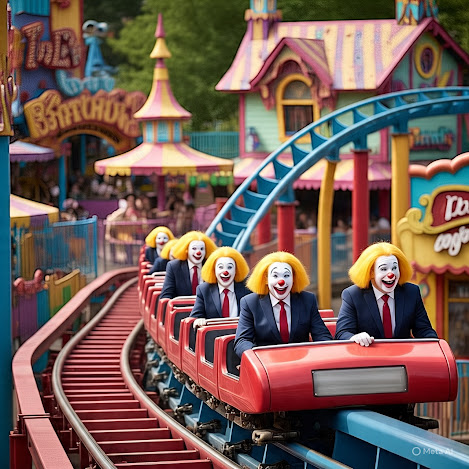
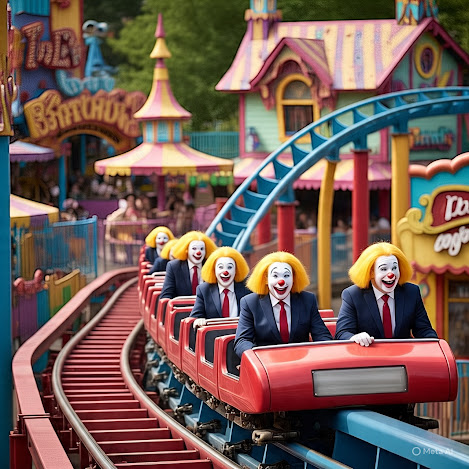
The global financial landscape has been gripped by an extraordinary period of volatility, characterized by sharp market swings that have left investors and analysts alike grappling with uncertainty. Following a robust multi-year climb culminating in February 2025, the stock market embarked on a tumultuous journey, experiencing some of the steepest drops and recoveries in recent history. At its nadir, broad market indices shed a full 20% of their value, only to rebound remarkably, approaching previous peaks as of June 2025. This dramatic oscillation, often challenging to attribute to a singular cause, has this time found a clear explanation: the widespread implementation of tariffs.
The Economic Roller Coaster: A Chronology of Market Reaction
The initial months of 2025 saw a continuation of the bullish trend that had defined previous years, fueled by technological advancements and strong corporate earnings. However, this upward trajectory abruptly shifted in late February, marking the beginning of a period of heightened instability. The market’s significant downturn, reaching its trough with a 20% contraction, underscored a palpable sense of apprehension among investors. This fear was not unfounded; major financial news outlets reported widespread concern among business leaders and economists regarding the potential for a global trade war. As businesses braced for significant changes, currencies fluctuated, and interest rates reacted, the repercussions rippled through the investment community, affecting everything from institutional portfolios to individual retirement funds.
A critical point in this timeline was April 2nd, 2025, when a presidential announcement, dubbed "Liberation Day," triggered one of the largest single-day stock market drops since 1932. This event exemplified the immediate and severe market sensitivity to protectionist policies. However, the subsequent weeks and months saw a gradual, albeit uneven, recovery. Each instance of proposed tariff reductions or pauses in their implementation corresponded with an uptick in stock prices, signaling renewed investor confidence in a potential de-escalation of trade tensions. By early June, the market had largely recouped its losses, a testament to its inherent resilience and the underlying belief among investors that a resolution to the tariff disputes is eventually achievable.
Deconstructing Tariffs: A Tax on Imports
At its core, a tariff is a sales tax levied by a government on goods imported into the country. These duties are typically paid by the importer—whether it be an individual purchasing an e-bike directly from an overseas manufacturer or large corporations like Amazon, Walmart, or Apple importing vast quantities of products. Crucially, while importers bear the initial cost, the financial burden ultimately falls upon the end consumer. As the cost of imported goods rises for retailers, they invariably adjust their pricing upwards to maintain profit margins.
The impact of tariffs extends beyond consumer goods. Industries reliant on imported raw materials or components face increased operational costs. For instance, construction projects, from new Home Depot stores to Chevron oil rigs, see expenses inflate due to tariffs on imported steel, copper, and lumber. The housing market is similarly affected, as a significant portion of building materials originates from various international sources. On average, tariffs contribute to higher prices across the board, functioning as a broad-based sales tax that can slow economic activity and diminish consumer purchasing power. While the revenue generated from tariffs flows into government coffers, potentially aiding national budgets and deficit reduction, the broader economic consequences are often counterproductive.
Economists generally advocate for tax systems that are as low, fair, and predictable as possible. This stability incentivizes businesses to invest and innovate, and individuals to work hard, fostering long-term economic planning. The current regime, characterized by frequently changing, often arbitrary, and unusually high tariff numbers, disrupts this essential predictability, creating an environment of uncertainty that is anathema to economic growth.
The Complex Calculus of Protectionism: Jobs vs. Efficiency
One of the primary arguments for implementing tariffs is the protection of domestic industries and the creation of local jobs. Consider a hypothetical $5,000 tariff on imported vehicles like Hondas. This tax would significantly increase the price of foreign cars, thereby granting a competitive advantage to domestic manufacturers like General Motors. Theoretically, this could boost GM’s sales, leading to increased production, more factory jobs, and potentially new model development. This could initiate a virtuous cycle of skill development and industrial expansion within the automotive sector.
However, the benefits to one industry often come at a cost to the wider economy. Consumers would face higher prices and reduced choice for vehicles. Furthermore, businesses reliant on transportation, such as Amazon’s delivery fleet, would incur higher operational costs, which would then be passed on to consumers through increased prices for all goods. More broadly, an economy where goods are artificially more expensive becomes less efficient. Startup companies and potential medical breakthroughs might find it harder to thrive in an environment of elevated costs and reduced overall efficiency.
Moreover, shielding domestic companies from foreign competition can inadvertently stifle innovation. Without the constant pressure to compete with global rivals, protected industries may have less incentive to streamline operations, develop new technologies, or improve product quality. While their profits might increase in the short term, their long-term trajectory could be one of slower growth and reduced efficiency.
Most economists, spanning various ideological spectrums, concur that tariffs should be deployed with extreme caution and only in very specific, strategic circumstances—such as for critical national defense industries or ensuring food security. The consensus is that their application almost invariably leads to unforeseen economic damage, a decrease in overall employment, and a general slowdown of the economy.
Political Motivations and Economic Repercussions

The recent surge in tariff implementation appears to be driven by a distinct economic philosophy that diverges significantly from mainstream thought. Proponents of these tariffs often articulate a belief that they can directly enhance national wealth by encouraging domestic production and reducing trade deficits. This perspective tends to focus on the immediate, first-order effects—like an increase in domestic factory jobs—while overlooking the broader, often negative, second-order consequences, such as the increased costs borne by consumers and the overall reduction in economic efficiency.
Market reactions consistently contradict this optimistic view. Announcements of higher tariffs typically lead to a decline in share prices, as corporate executives and investors understand that increased import costs directly translate to lower profit margins for US companies. Conversely, any indication of tariff reductions or pauses in their implementation usually triggers a market rally. This pattern suggests that the investment community, representing the collective wisdom of those who "run or invest in US companies," views tariffs as a net negative for economic prosperity.
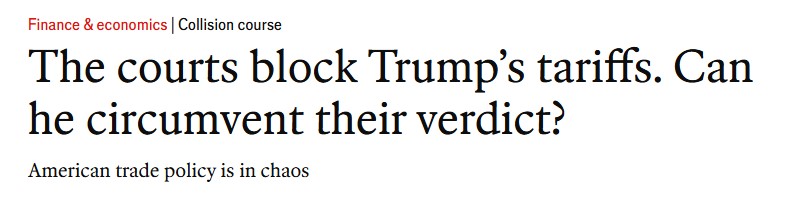
One prevailing theory suggests that the erratic and high-stakes nature of these tariff policies serves primarily as a negotiating tactic. The idea is that by wielding significant economic leverage, a government can extract concessions from trading partners. This approach, however, transforms the economy into a tool for political maneuvering, subjecting it to the unpredictable whims of a single individual or administration. This concentration of power raises fundamental questions about constitutional checks and balances, particularly the principle of "three independent branches of government" designed to prevent such unilateral economic control. Indeed, the legal system has already begun to challenge these executive actions, with courts becoming a battleground for defining the scope of presidential authority in trade policy, as highlighted by reports in publications like The Economist.
Historical Context and Current Tariff Levels
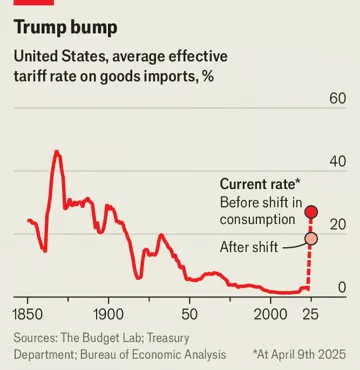
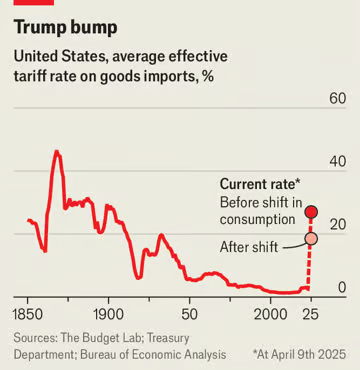
Historically, the United States has experienced varying levels of tariffs. From the highly protectionist era of the early 20th century, epitomized by the Smoot-Hawley Tariff Act of 1930 which exacerbated the Great Depression, to the post-World War II period characterized by a global move towards free trade under agreements like GATT (General Agreement on Tariffs and Trade) and later the WTO (World Trade Organization). For the past 75 years, the US economy has largely flourished under a regime of very low tariffs and relatively free trade, becoming deeply integrated into global supply chains.
The current tariff levels, even after some adjustments, remain significantly higher than they have been in decades—estimates suggest they are approximately seven times higher than pre-2025 levels. This stark departure from established norms poses a considerable challenge to an economic structure fundamentally built on the principles of open trade.
The Lag Effect: Why Consumers Haven’t Felt the Full Impact Yet
Despite the significant tariffs imposed, many consumers may not have yet experienced a dramatic increase in prices. This delay can be attributed to the inherent inertia of a large, complex economy. The US economy, much like a massive cargo ship, possesses considerable inventory and takes time to change direction.
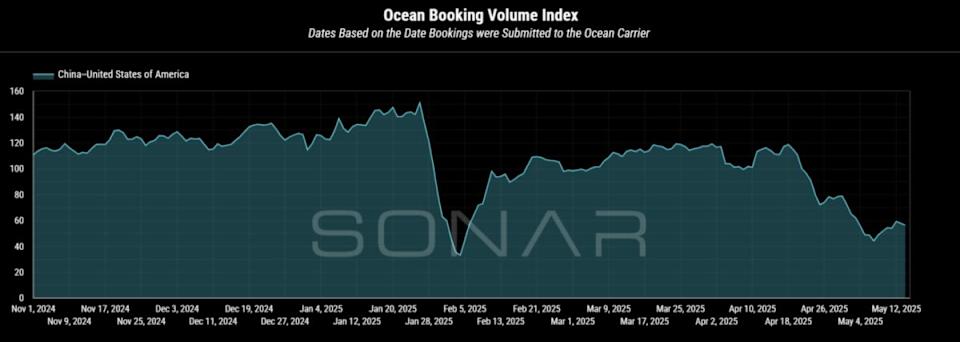
In typical times, the country maintains several months’ worth of inventory for most goods. When the tariff drama began, many importers strategically increased their orders to stockpile products in anticipation of new duties. Consequently, the initial phase saw businesses drawing down these pre-tariff inventories. However, official data from sources like the Freightwaves Ocean Shipping Index (OSI) indicate a significant drop in new imports following the tariff implementation. This suggests that the reserves of cheap, pre-tariff goods are diminishing.
Should this trend continue, it is highly probable that consumers will begin to observe shortages and widespread price increases, particularly through the summer and fall months. While the absence of certain non-essential items like "plastic party trinkets" might be tolerable, a sustained disruption to the supply of core useful items, such as tools and machinery, could have far more severe economic consequences, impacting productivity and the cost of living.
Navigating Future Scenarios: From Lingering Tariffs to Resolution
The trajectory of the current trade disputes remains uncertain, but several potential scenarios can be envisioned:
-
Sustained High Tariffs: This scenario, while less likely given historical precedent and economic pressures, would involve the current high tariffs persisting. Such a situation would likely lead to prolonged economic stagnation, characterized by persistent inflation due to higher import costs, reduced consumer spending power, and a significant restructuring of global supply chains. Businesses would either absorb costs, pass them on, or attempt to relocate production domestically, a process that is often slow, expensive, and may not fully replace the efficiencies of global trade. Innovation could suffer, and the nation’s overall competitiveness in the global market might erode. International trade relations would likely remain strained, potentially leading to further retaliatory measures from other countries, diminishing global economic cooperation.
-
Tariffs as a Negotiating Tactic Leading to De-escalation: This is the scenario that market behavior suggests investors are betting on. In this outcome, the tariffs would ultimately be revealed as a temporary leverage tool. Following a period of intense negotiation, a truce would be reached, leading to a significant reduction or complete removal of the current tariffs. This resolution would likely restore predictability to trade relations, allowing businesses to resume efficient global supply chain operations. Consumer prices would stabilize, and economic growth would likely reaccelerate as the drag of protectionist policies is removed. The global economy, built on the premise of free exchange of goods and services, would regain its momentum, reinforcing the idea that collaborative international trade enriches all participants. As much of US prosperity is built upon its vast domestic market with open internal borders, extending this principle to friendly international partners fosters mutual wealth.
The Enduring Lesson: Beyond the Headlines
The events of early 2025 offer a profound lesson in economic literacy and media consumption. In an age where news headlines are increasingly crafted to capture attention and generate engagement, often at the expense of accuracy and nuance, forming informed opinions requires diligence. The modern media landscape, whether politically aligned or not, often prioritizes outrage and fear, as these emotions tend to drive clicks and revenue.
To truly understand complex economic phenomena like tariffs, individuals must cultivate critical thinking skills. One approach is to consciously disengage from the constant barrage of sensationalized news and focus on tangible realities. A more proactive strategy involves becoming a subject matter expert in areas of personal interest, delving into original sources, academic research, and official economic reports. This deeper engagement often reveals the significant discrepancies between media narratives and factual realities, underscoring the importance of independent analysis.
The resilience of the stock market, rebounding despite ongoing tariff challenges, reflects a collective investor belief in the long-term strength and adaptability of the US economy and its eventual return to a more open trade policy. As history has repeatedly shown, economic disruptions, however severe, tend to be temporary. The fundamental principles of innovation, productivity, and human ingenuity ultimately prevail. By focusing on sound financial planning and maintaining a long-term perspective, individuals can weather these periods of volatility, confident that the economy, like its past challenges, "too shall pass."

