
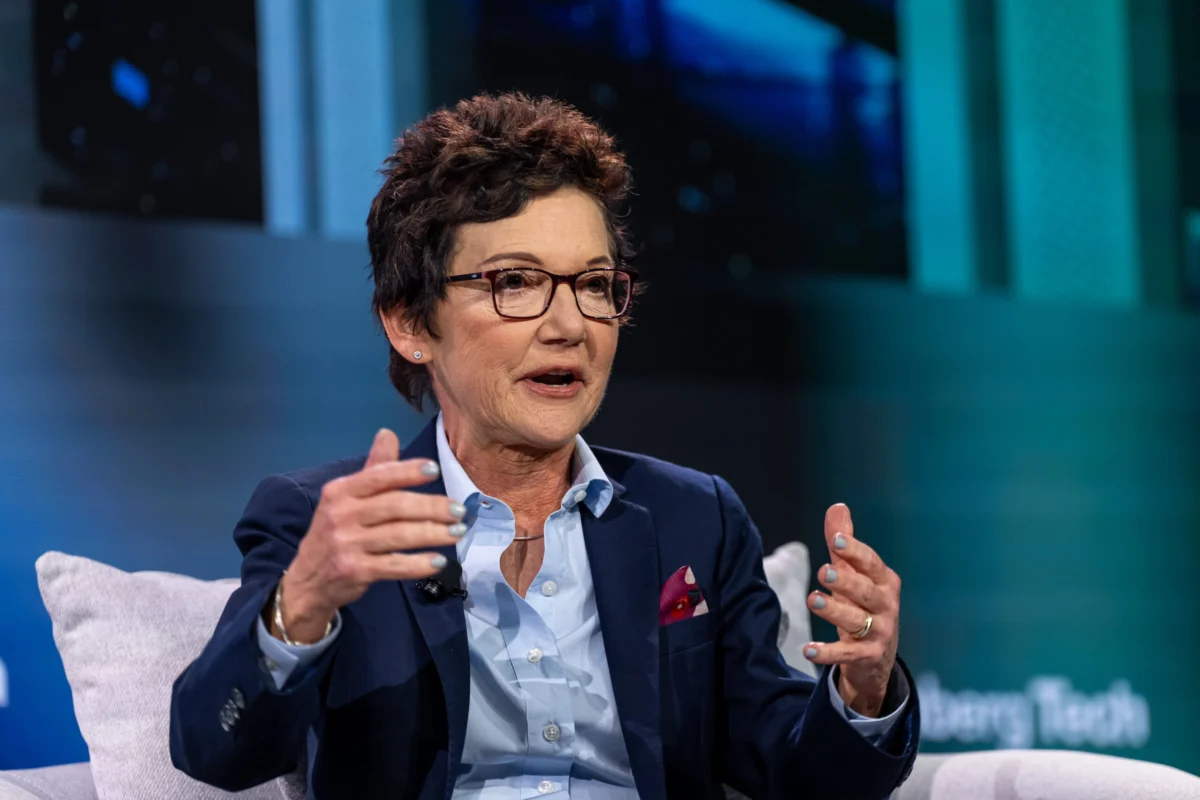
San Francisco Federal Reserve President Mary Daly stated on Friday her expectation that the central bank will need to implement further interest rate increases, aligning with her fellow policymakers in acknowledging the continuing uncertainty surrounding the precise pace and timing of such adjustments. Her remarks, delivered during a live interview with CNBC’s Steve Liesman, underscored the Fed’s challenging balancing act: managing persistent inflation while navigating a surprisingly resilient labor market. "My expectation is we’re going to have to tighten policy further. Exactly when and how much is still to be decided because we just have to take all the variables that are coming in," Daly articulated, adding, "More is likely to be needed, and certainly… I’m prepared to do that if that’s what the economy calls for."
The Latest Economic Indicators: A Mixed Picture
Daly’s comments arrived on a pivotal day for economic data, coinciding with the Bureau of Labor Statistics’ release of the October jobs report. The report revealed that the U.S. economy added a robust 165,000 jobs, a figure that significantly surpassed Wall Street’s expectations. In fact, job creation was nearly triple the Dow Jones consensus estimate, which had projected a more modest gain. Concurrently, the unemployment rate, a critical labor-market variable closely monitored by Fed officials, edged lower to 4.1%. This positive trend in employment, Daly acknowledged, represented "good news for American workers," signaling continued opportunities and a stable job market. However, this optimism was tempered by the enduring pressure of inflation on household finances. Average hourly earnings, a key measure of wage growth, rose by 3.1% annually in October. While seemingly healthy, this increase lagged behind the September inflation rate, as measured by the consumer price index (CPI), which stood at 3.7%. This disparity highlights a crucial challenge for American households: despite finding employment and seeing nominal wage increases, their real purchasing power is being eroded by elevated prices.
The Treadmill of High Inflation: Eroding Real Wages
Daly vividly described the consumer experience as being on "a treadmill of high inflation." She noted that while workers "see that they can get jobs, they continue to spend. They’re not out of the game, but they are on a treadmill of high inflation." This condition, she emphasized, "has been high for too long, almost six years, and we’re really starting to feel the burden of that spread everywhere." This prolonged period of elevated inflation, stemming from a complex interplay of factors including pandemic-induced supply chain disruptions, robust consumer demand fueled by fiscal stimulus, and geopolitical events impacting energy and food prices, has become deeply entrenched in the economic landscape. The Fed’s mandated goal of achieving price stability, typically defined as a 2% annual inflation rate, remains elusive, posing a significant policy dilemma.
The policymaker expressed no general concern about the overall trajectory of economic growth, a testament to the economy’s resilience in the face of aggressive monetary tightening. Her primary worry, however, remained squarely focused on the persistence of inflation. "The job market remains stable and solid, but not booming, and you see real wages falling because those wages are not really keeping up with inflation," Daly elaborated. This distinction is critical for the Fed, as it seeks to cool inflation without inadvertently triggering a severe economic downturn. "I think that’s the crux of this. Good news on the jobs front, not so clear that Americans are going to gain ground in the labor market," she concluded, succinctly capturing the nuanced and often contradictory signals emanating from the current economic environment.
Chronology of Federal Reserve Actions and Policy Shifts

The Federal Reserve embarked on its aggressive monetary tightening cycle in March 2022, initiating a series of interest rate hikes designed to combat soaring inflation, which had reached four-decade highs. Prior to this, the benchmark federal funds rate had been held near zero for an extended period to support the economy during the COVID-19 pandemic. Over the course of 2022 and into 2023, the rate-setting Federal Open Market Committee (FOMC) implemented eleven rate increases, cumulatively raising the federal funds rate by 525 basis points from its near-zero level.
In September of the current year, the FOMC opted for another quarter-percentage-point increase, bringing the benchmark overnight borrowing rate to a target range of 3.75%-4%. This move reflected the committee’s continued commitment to bringing inflation down to its 2% target, even as the economy showed signs of cooling. However, at its subsequent meeting in October, the committee chose to break from its consistent hiking pattern, declining to follow up with another rate increase. This decision to "hold" the rates steady was predicated on a desire to "wait for the accumulation of more information" before determining its next policy move. This pause signaled a shift towards a more data-dependent approach, allowing policymakers to assess the lagged effects of previous rate hikes and incoming economic data, including inflation, employment, and growth figures.
Daly, who will be a voting member on the FOMC next year, expressed her full support for both the September rate hike and the subsequent October pause. "I was really supportive and completely thought that that was the right move to move in September," she stated. Regarding the October decision, she added, "I also think that it was good to be on hold at the last meeting because the world is filled with uncertainty." This perspective underscores a growing consensus among some Fed officials to adopt a more cautious, wait-and-see approach, recognizing the inherent unpredictability of economic outcomes and the potential for overtightening.
Broader Context and Supporting Data
The Fed’s dual mandate tasks it with achieving both maximum employment and price stability. The recent jobs report, while strong, presents a dilemma: robust employment figures could potentially fuel inflationary pressures through wage growth, making the fight against inflation more challenging. Historically, a tight labor market often correlates with upward pressure on wages. While the 3.1% annual wage growth in October is lower than the peak seen earlier in the cycle, it still contributes to inflationary concerns, especially when compared to the 3.7% CPI. Core inflation, which excludes volatile food and energy prices, also remains elevated, suggesting that underlying price pressures persist across various sectors of the economy.
For context, the Consumer Price Index (CPI) peaked at 9.1% year-over-year in June 2022. Since then, it has steadily declined, but the path has been uneven. The Personal Consumption Expenditures (PCE) price index, the Fed’s preferred inflation gauge, has also shown a similar trajectory, albeit generally running slightly lower than CPI. Both measures indicate that inflation, while retreating from its highs, has yet to sustainably return to the Fed’s 2% target.
The labor market’s surprising resilience has been a hallmark of the post-pandemic recovery. Even with significant rate hikes, job creation has remained robust, and the unemployment rate has hovered at historically low levels. The labor force participation rate, while improving, has not fully recovered to pre-pandemic levels, suggesting some lingering supply-side constraints. Furthermore, job openings, though declining from their peak, still outnumber available workers, indicating a relatively tight labor market. This dynamic complicates the Fed’s efforts, as a strong job market can make it harder to cool demand-side inflation without pushing the economy into a recession—a scenario commonly referred to as a "hard landing." The Fed’s aspiration is to achieve a "soft landing," where inflation is tamed without significant job losses or a severe economic contraction.
Reactions from Related Parties and Policymaker Consensus

Daly’s sentiments resonate with those of other influential Fed officials. Richmond Fed President Thomas Barkin, for instance, echoed her view on Thursday, stating that he also "sees higher rates ahead" but acknowledged the uncertainty regarding the precise timeline. This shared perspective reflects a broader consensus within the FOMC that while significant progress has been made in combating inflation, the job is not yet complete. Most policymakers agree that the path forward will be dictated by incoming data, rather than a pre-set trajectory of rate hikes.
While there are differing views among the FOMC members—often characterized as "hawks" (those favoring aggressive tightening to fight inflation) and "doves" (those prioritizing employment and economic growth)—the current stance appears to be one of cautious optimism, coupled with a firm commitment to price stability. The recent pause in rate hikes signals a potential pivot towards a more nuanced strategy, where the Fed assesses the cumulative impact of its past actions and recalibrates its approach based on evolving economic conditions. The "higher for longer" narrative, suggesting that interest rates will remain elevated for an extended period even if further hikes are not immediately forthcoming, has gained traction among policymakers and market participants alike. This strategy aims to ensure that inflation expectations remain anchored and that the economy cools sufficiently to bring price pressures under control.
Implications for the Economy and Financial Markets
The implications of the Fed’s ongoing monetary policy adjustments are far-reaching, impacting consumers, businesses, and financial markets. For consumers, the persistence of high inflation, coupled with the potential for further rate hikes, means continued pressure on purchasing power. Higher interest rates translate to increased borrowing costs for mortgages, credit cards, auto loans, and other forms of credit, potentially dampening consumer spending and investment in big-ticket items. While a strong job market offers income stability, the erosion of real wages means families might feel less financially secure despite employment.
Businesses face higher costs of capital, making it more expensive to borrow for expansion, inventory, or new projects. This could lead to a slowdown in hiring, reduced investment, and potentially lower profit margins. Small businesses, which are often more sensitive to changes in borrowing costs, could be particularly affected. The Fed’s objective is to cool demand sufficiently to ease price pressures without triggering widespread business failures or job losses.
For financial markets, the Fed’s signals are paramount. Equity markets often react negatively to expectations of higher interest rates, as they can reduce future corporate earnings and make bonds more attractive relative to stocks. Bond yields, particularly for government bonds, tend to rise in anticipation of Fed tightening, reflecting the higher cost of borrowing. The "good news" of a strong jobs report can sometimes be perceived as "bad news" by markets if it strengthens the case for the Fed to continue raising rates, thereby increasing the risk of a recession. Volatility is likely to persist as markets attempt to price in the Fed’s next moves and the evolving economic outlook.
The path ahead for the U.S. economy remains characterized by significant uncertainty. The Federal Reserve is walking a tightrope, aiming to achieve a "soft landing" by bringing inflation down to its target without precipitating a severe recession. The delicate balance between maintaining a healthy labor market and ensuring price stability will continue to hinge on the incoming stream of economic data, including future CPI and PCE reports, wage growth figures, and GDP readings. Daly’s remarks underscore the Fed’s unwavering commitment to its inflation mandate, even as it acknowledges the complexity and data dependency inherent in its current policy deliberations.

