
The scientific mystery that captivated marine biologists and the public alike in late 2023, concerning a peculiar "golden orb" discovered deep within the Gulf of Alaska, has been conclusively solved. According to a preprint published on bioRxiv on April 21, 2024, and subsequently confirmed by a National Oceanic and Atmospheric Administration (NOAA) release on April 22, the perplexing object is the discarded basal cuticle of a giant deep-sea anemone belonging to the species Relicanthus daphneae. This revelation brings closure to an intriguing chapter of deep-sea exploration and underscores the persistent enigmatic nature of life in Earth’s abyssal plains.
The Initial Discovery: A Glimmer in the Deep
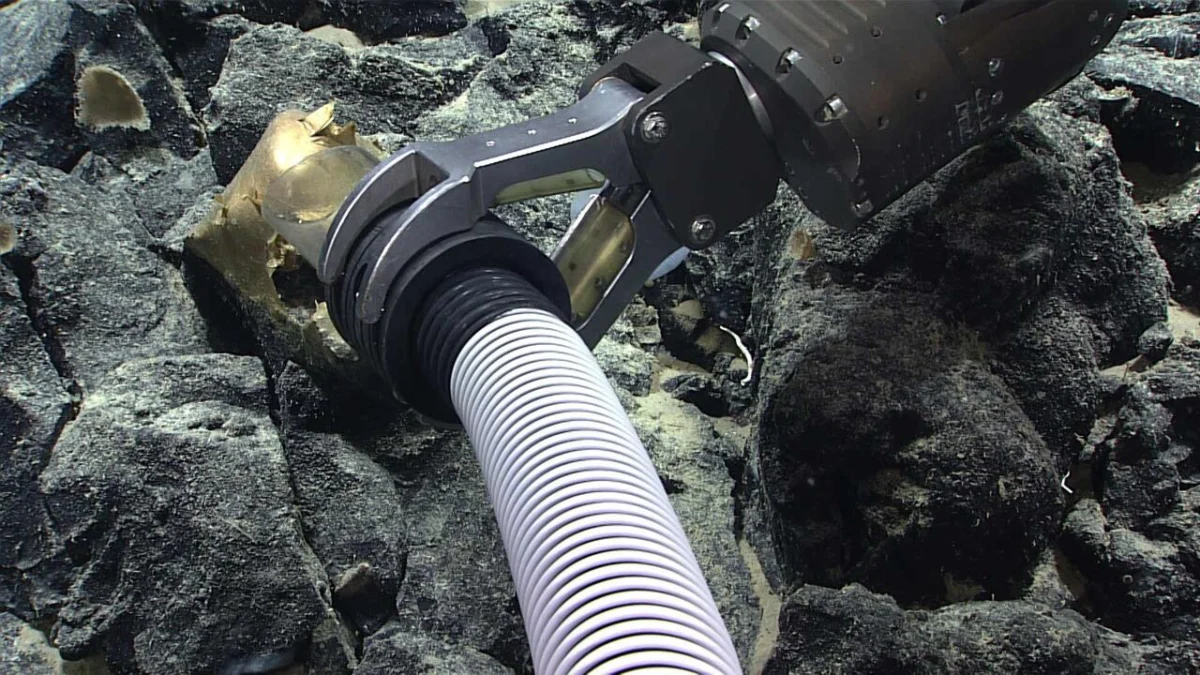
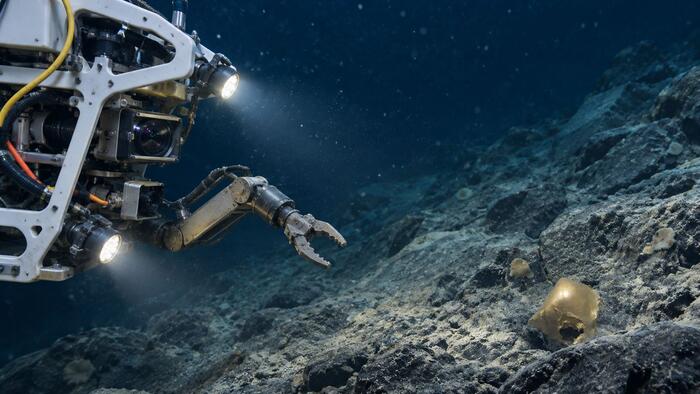
The saga of the golden orb began on August 30, 2023, during Dive 7 of NOAA’s Seascape Alaska 5 expedition. Aboard the NOAA Ship Okeanos Explorer, the remotely operated vehicle (ROV) Deep Discoverer was meticulously surveying the uncharted depths of the Gulf of Alaska when it encountered an extraordinary sight. At an impressive depth of approximately 3,250 meters (roughly 2 miles), the ROV’s cameras captured images of a luminous, mound-shaped object, roughly 10 centimeters (4 inches) in diameter, firmly attached to a rock. Its metallic-gold hue and unusual form immediately drew the attention of the onboard scientific team.
Initial reactions from the videographer likened it to a "yellow hat," a whimsical description that hinted at the profound uncertainty surrounding its identity. The scientists, seasoned explorers of the deep, offered a range of hypotheses, from a novel species of sponge or coral to an unusual egg casing. The object possessed a distinct hole or tear, suggesting it might be hollow or represent a remnant of a larger structure. This tantalizing ambiguity quickly propelled the "golden orb" into the public consciousness, becoming a symbol of the vast unknowns that still exist in the ocean’s depths.
From Seafloor to Smithsonian: A Specimen’s Journey
Recognizing the specimen’s unique nature and the scientific imperative to understand it, the team deployed Deep Discoverer’s sophisticated suction sampler. With delicate precision, the ROV retrieved the approximately 10-centimeter object from its deep-sea perch. Expedition coordinator Sam Candio confirmed at the time that the orb was "biological in origin," but its precise classification would require rigorous laboratory analysis. This marked the beginning of its journey from the cold, dark abyss to the illuminated halls of scientific inquiry.
Upon its return from the Seascape Alaska 5 expedition, the golden orb was carefully transported to a consortium of leading research institutions for detailed examination. Its primary destination was the Smithsonian’s National Museum of Natural History, specifically the NOAA Fisheries’ National Systematics Laboratory, which is housed within the museum. This collaboration between NOAA and the Smithsonian provided access to state-of-the-art analytical tools and the expertise of renowned systematists and marine biologists. The anticipation within the scientific community was palpable, as researchers awaited the results that would unravel the orb’s true identity.
The Analytical Process: Unraveling the Mystery
The initial macroscopic and microscopic examinations of the golden orb provided the first crucial clues. Researchers observed a fibrous, layered tissue, which, upon closer inspection, revealed the presence of specialized stinging cells known as spirocysts. This discovery was a significant breakthrough, as spirocysts are a cell type found exclusively in Hexacorallia, a subclass of Cnidaria that encompasses sea anemones and stony corals. This finding immediately narrowed the possibilities, pointing towards a sessile marine invertebrate.
However, the path to definitive identification was not entirely straightforward. Initial attempts at DNA barcoding, a technique that uses short genetic sequences to identify species, proved inconclusive. The specimen, having spent an unknown period on the seafloor, likely harbored DNA from various microscopic organisms that had colonized or interacted with it, obscuring the primary genetic signature of the orb itself. This challenge highlighted the complexities inherent in analyzing degraded or environmentally contaminated deep-sea samples.
Undeterred, the research team, led by scientists like Abigail Reft of the National Systematics Laboratory, pivoted to more advanced genetic sequencing techniques. Whole-genome sequencing was employed to obtain a more comprehensive genetic profile of the specimen. This powerful method allowed researchers to sift through the complex mixture of DNA and isolate the predominant animal DNA present. The analysis revealed a significant proportion of the genetic material belonged to Relicanthus daphneae, a species of giant deep-sea anemone. Further validation came from comparing the mitochondrial genomes of the orb and a similar specimen collected in 2021 aboard Schmidt Ocean Institute’s RV Falkor. Both were found to be nearly identical to a known R. daphneae reference sequence, providing robust genetic confirmation.
Allen Collins, a zoologist and director of the National Systematics Laboratory, expressed confidence in the laboratory’s capabilities, stating, "We work on hundreds of different samples and I suspected that our routine processes would clarify the mystery." The preprint, with Steven Auscavitch as the first author and Collins as the last, meticulously details these findings, concluding that both the 2023 golden orb and the 2021 specimen are remnant cuticles of Relicanthus daphneae. The authors further supported their conclusion by reporting the discovery of similar cuticles from R. daphneae specimens collected in the Southern Ocean and by referencing a 2016 image from the Mariana Islands depicting a living R. daphneae with a distinctly similar basal structure.
Relicanthus daphneae: A Glimpse into its Deep-Sea Life
The identification of the golden orb as the cuticle of Relicanthus daphneae shines a spotlight on this fascinating, yet relatively little-known, deep-sea inhabitant. Relicanthus daphneae belongs to the order Actiniaria, commonly known as sea anemones, and is part of the subclass Hexacorallia. Unlike their shallow-water cousins, deep-sea anemones often exhibit unique adaptations to survive in extreme environments characterized by crushing pressure, perpetual darkness, and scarce food resources.
Giant deep-sea anemones like R. daphneae are significant components of abyssal ecosystems. They are typically sessile, anchoring themselves to hard substrates on the seafloor. Their bodies consist of a muscular column, topped by a disc of stinging tentacles used to capture prey – typically small invertebrates or detritus drifting through the water column. The basal cuticle, which formed the golden orb, serves as the attachment point to the substrate. While the exact function of shedding this cuticle is still under investigation, it is hypothesized to be part of a growth process, a response to injury, or a mechanism to shed accumulated epibionts (organisms that grow on its surface). The fibrous, layered nature observed in the orb is consistent with the structural requirements for firmly anchoring a large organism in a dynamic deep-sea environment.
Previous observations of R. daphneae have indicated that these anemones can grow to considerable sizes, with their tentacles spreading wide to filter feed. The presence of these giant organisms, often in areas with strong currents or abundant particulate matter, suggests their ecological importance in transferring nutrients within the deep-sea food web. The shedding of their cuticles, which then become inert structures like the golden orb, adds to the organic detritus on the seafloor, potentially providing microhabitats or food sources for other benthic organisms.
The Broader Context: Deep-Sea Exploration and Biodiversity
The discovery and subsequent identification of the golden orb highlight the critical importance of deep-sea exploration and the advanced technologies that make it possible. NOAA’s Okeanos Explorer, often dubbed "America’s Ship for Ocean Exploration," is at the forefront of this endeavor. Equipped with state-of-the-art multibeam sonar mapping systems and advanced ROVs like Deep Discoverer, the ship systematically maps and characterizes unexplored ocean regions, collecting vital data on bathymetry, geology, and biology.

The Seascape Alaska 5 expedition, during which the orb was found, was part of a broader initiative to explore the vast and largely uncharted waters of Alaska, a region known for its rich biodiversity and complex oceanographic processes. Such expeditions contribute significantly to our understanding of marine ecosystems, revealing new species, mapping critical habitats, and providing baseline data for conservation efforts. The Gulf of Alaska, a dynamic basin influenced by powerful currents and tectonic activity, is a particularly fertile ground for discovering unique deep-sea life adapted to its specific conditions.
The process of discovery, from initial sighting by an ROV to sophisticated genetic analysis in a laboratory thousands of miles away, exemplifies modern oceanography. It is a testament to interdisciplinary collaboration, combining marine robotics, taxonomy, molecular biology, and informatics. Each piece of the puzzle, from the precise navigation of Deep Discoverer to the painstaking work of extracting and sequencing DNA, is essential in expanding our knowledge of the deep ocean.
Scientific Implications and Lingering Questions
The identification of the golden orb as an anemone cuticle carries several significant implications for marine science. Firstly, it provides tangible evidence of a shedding process in a giant deep-sea anemone, a biological phenomenon that is not fully understood for many deep-sea invertebrates. Understanding this life cycle aspect can offer insights into their growth rates, reproductive strategies, and their contribution to the deep-sea carbon cycle.
Secondly, the discovery reinforces the power of integrated morphological and genetic analysis in resolving deep-sea mysteries. When visual identification is impossible and traditional genetic barcoding is hampered by contamination, whole-genome sequencing offers a robust solution, demonstrating the adaptability of scientific methodology to challenging samples. This approach will undoubtedly be crucial for identifying other enigmatic deep-sea finds in the future.
Furthermore, the public fascination generated by the golden orb served to highlight the vastness of unexplored ocean territory and the sheer diversity of life it harbors. Such discoveries inspire future generations of scientists and reinforce the importance of continued investment in ocean exploration and research. They remind us that even in an age of advanced technology, fundamental mysteries persist just miles beneath the surface.
While the primary mystery of the golden orb’s identity has been resolved, some questions remain. NOAA’s release points out that it is still "unclear whether the anemone that left the base behind died or moved away." The shedding of a basal cuticle could signify either a relocation strategy, allowing the anemone to re-establish itself elsewhere, or simply a byproduct of its demise. Future research focusing on the life cycles and behaviors of Relicanthus daphneae and similar deep-sea anemones will be necessary to answer these intriguing biological questions. The specimen, now formally catalogued as USNM_IZ_1699903 in the Smithsonian’s Invertebrate Zoology Collection, will serve as a valuable reference for ongoing and future studies.
In conclusion, the journey of the golden orb from an unexplained deep-sea anomaly to a scientifically identified remnant of a giant anemone underscores the enduring allure and scientific significance of ocean exploration. Each such discovery peels back another layer of the deep ocean’s secrets, revealing the intricate and resilient life that thrives in its farthest reaches, and reaffirming the boundless potential for future revelations beneath the waves.

