
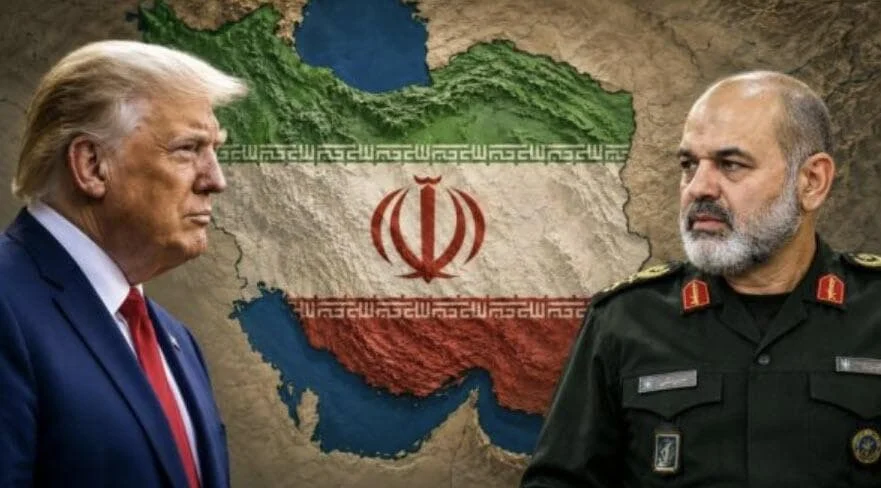
A recent report by Pepe Escobar, published on Unz.com and referenced by ZeroHedge, details an alleged covert operation by the Trump administration to destabilize the Iranian government through financial inducements offered to high-ranking military officials. According to the report, the President of the United States made a significant attempt to persuade General Ahmad Vahidi, Commander-in-Chief of the Islamic Revolutionary Guard Corps (IRGC), and other senior Iranian military leadership to sever ties with the government in Tehran using substantial financial incentives. This alleged initiative, described as a "full leadership-buyout operation," was reportedly modeled on strategies previously employed in Venezuela and aimed to fracture the Iranian state from within.
The report, authored by Pepe Escobar, cites a "Transition Protocol source" described as being within the "tight inner circle of Leader Mojtaba Khamenei." This source reportedly heard details of the alleged bribery attempt directly from General Vahidi himself and was later authorized to disclose this sensitive information to Pakistani mediators, including Field Marshal Asim Munir. The alleged overture was purportedly rejected outright by General Vahidi, leading to the failure of the operation.
Background on US-Iran Relations and the "Maximum Pressure" Campaign
The allegations emerge against a backdrop of severely strained relations between the United States and Iran, particularly during the Trump presidency. The administration had adopted a policy of "maximum pressure" following its unilateral withdrawal from the Joint Comprehensive Plan of Action (JCPOA), commonly known as the Iran nuclear deal, in May 2018. This policy involved reimposing and escalating sanctions targeting Iran’s economy, oil exports, banking sector, and key figures within its government and military.
The stated goal of the "maximum pressure" campaign was to compel Iran to negotiate a new, broader agreement that would not only restrict its nuclear program more severely but also curb its ballistic missile development and regional influence. However, Iranian leaders consistently rejected these demands, viewing them as an infringement on national sovereignty and an attempt to force regime change. The period was marked by heightened rhetoric, military confrontations, and proxy conflicts in the Middle East, including attacks on oil tankers, drone incidents, and the assassination of IRGC Quds Force commander Qassem Soleimani in January 2020.
Amidst this hostile environment, the alleged attempt to bribe Iranian military leadership represents a significant escalation in covert tactics, if true. It would suggest a departure from purely economic and diplomatic pressure towards direct attempts to subvert the Iranian state’s internal security apparatus.
Chronology of Alleged Events
According to the Escobar report, the initial contact that laid the groundwork for the alleged bribery attempt was established several months prior to the primary operation.
- May 2026 (as per source document): The Trump administration reportedly initiated a somewhat direct conduit to General Ahmad Vahidi. Then-Director of National Intelligence (DNI) Tulsi Gabbard, acting with full authorization from President Trump and Vice-President JD Vance, contacted Nechirvan Barzani, the President of the Kurdistan Region in Iraq. Through Barzani’s mediation, an encrypted communication channel to Vahidi was reportedly established via Erbil in Iraqi Kurdistan. This initial contact was not immediately followed by the alleged bribery attempt, with the channel remaining "dormant" or "in coma" for nearly three months.
- Late Summer 2026 (approximate): The Trump administration allegedly activated the dormant channel with the explicit intention of transforming it into a mechanism for fracturing the Iranian leadership. This phase involved offering "billions of dollars" as inducements to General Vahidi and several members of the senior IRGC leadership. The operation was conceptualized as a "leadership-buyout operation," with the aim of isolating the central command, bribing key figures for "cooperation," and thereby creating internal conditions conducive to regime decapitation.
- Immediate Aftermath: General Ahmad Vahidi reportedly "completely rejected" the offer, leading to the "miserable failure" of the attempt. The source emphasizes that during this period, President Trump was simultaneously engaged in public "Hardcore Vociferation mode," issuing threats against Tehran and asserting control over the Strait of Hormuz, thereby creating a stark contrast between public posturing and alleged covert actions.
The "Venezuela Playbook" and its Application
The report explicitly states that the alleged operation against Iran was "modeled on the Venezuela playbook." This refers to a strategy observed in US foreign policy towards Venezuela, where the US government has openly supported opposition figures, imposed sanctions, and called for the defection of military personnel from the government of Nicolás Maduro. The underlying principle is to leverage internal dissent and financial incentives to weaken the incumbent regime, isolate its leadership, and foster conditions for a change in governance.
In the Venezuelan context, there have been public calls for military defections and significant financial rewards offered to those who abandon the Maduro government. The alleged attempt in Iran would represent a similar approach, but targeting a much more entrenched and ideologically cohesive institution like the IRGC. The report suggests that the Trump administration believed this methodology, which may have seen limited success with certain Latin American political and military elites, could be directly translated to the Iranian context.
The Role and Significance of the IRGC and its Leadership
The Islamic Revolutionary Guard Corps (IRGC) is not merely a conventional military force; it is a powerful socio-economic, political, and military organization in Iran, deeply intertwined with the country’s governance structure and revolutionary ideology. Established after the 1979 Iranian Revolution to protect the Islamic Republic from internal and external threats, the IRGC has grown into a vast entity with its own army, navy, air force, intelligence apparatus, and economic interests. Its Quds Force is responsible for extraterritorial operations.
General Ahmad Vahidi, as the Commander-in-Chief of the IRGC, holds a position of immense authority and strategic importance. His leadership is central to Iran’s hard power capabilities and its regional defense posture. Targeting him specifically, and through him, the broader IRGC leadership, underscores the perceived criticality of the IRGC to the Iranian state’s resilience.
The report also highlights the role of Mohsen Rezaee, described as the "number two man in Iran," overseeing top IRGC decisions as the new Secretary of the Supreme National Security Council (SNSC) and personal representative of Leader Mojtaba Khamenei. Rezaee, a former IRGC commander, is presented as a figure whose leadership is "uncontested" and whose decisions, along with those of figures like Vahidi, are guided by "Shi’ite sense of moral duty, ethics, self-sacrifice and the spirit of Sovereign Resistance." This characterization is used in the original report to explain why such a bribery attempt was deemed culturally ignorant and destined to fail.
Challenges of Verification and Potential Implications
The report explicitly states that "Nothing so far has been independently confirmed in public. And probably will not." This highlights the inherent difficulty in verifying claims of covert operations, especially those involving sensitive intelligence and alleged bribery at the highest levels of foreign governments. Such operations, by their very nature, are designed to remain secret.
- US Response: If officially confronted, the US government would almost certainly deny such allegations, citing national security protocols or dismissing them as foreign propaganda. Admitting to such an operation, especially a failed one, would carry significant diplomatic and reputational costs.
- Iranian Response: The Iranian government, if it chose to address the allegations publicly, would likely condemn them as further evidence of US hostility, interference in its internal affairs, and attempts at regime change. This could be used to bolster domestic support and justify its stance against the US.
- Pakistani Mediators: Field Marshal Asim Munir and other Pakistani officials, if involved as described, would likely maintain strict silence given the extreme diplomatic sensitivity of the matter and their role as potential intermediaries. Public acknowledgment would jeopardize their ability to mediate in future regional disputes.
Broader Impact and Geopolitical Implications
If the allegations are indeed true, the implications for international relations and the perception of US foreign policy are significant:
- Erosion of Trust: Such attempts, even if unsuccessful, further erode trust between nations, particularly when one party is simultaneously engaged in public diplomacy or calls for negotiations. It reinforces the perception that covert subversion is an active tool of statecraft.
- Regional Instability: Attempts to destabilize a major regional power like Iran through internal fracturing could have catastrophic consequences, potentially leading to widespread conflict and humanitarian crises.
- Perception of US Diplomacy: The alleged "Art of the Deal" approach, as termed in the original article, suggests a transactional and cynical view of international relations, where even military leaders of sovereign states are seen as susceptible to financial inducements. This could further alienate allies and adversaries alike, potentially making genuine diplomatic engagement more challenging.
- Cultural Misunderstanding: The original report heavily criticizes the "astonishing degree of cultural stupidity" in applying the "Venezuela methodology" to Shi’ite Iran, suggesting a fundamental misunderstanding of the ideological cohesion and institutional loyalty within the Iranian security state. This points to potential intelligence failures or misjudgments in understanding the motivations and values of key foreign actors.
- Role of Mediators: The alleged involvement of Nechirvan Barzani and Pakistani mediators, particularly Field Marshal Asim Munir, highlights the complex web of regional diplomacy and backchannels. While such channels can be crucial for de-escalation, their alleged use in covert operations complicates their role and trustworthiness.
The report by Pepe Escobar presents a sensational claim about the Trump administration’s alleged attempts to undermine the Iranian government through direct financial inducements to its military leadership. While these allegations remain unconfirmed and are unlikely to be publicly verified, they underscore the intense and often clandestine nature of US-Iran relations during a period of "maximum pressure." The purported failure of this operation, if accurate, offers a perspective on the resilience of Iran’s security state and the challenges inherent in applying foreign policy strategies across diverse cultural and political landscapes. The international community continues to grapple with the legacy of this confrontational period and the potential for covert actions to shape geopolitical dynamics.

