
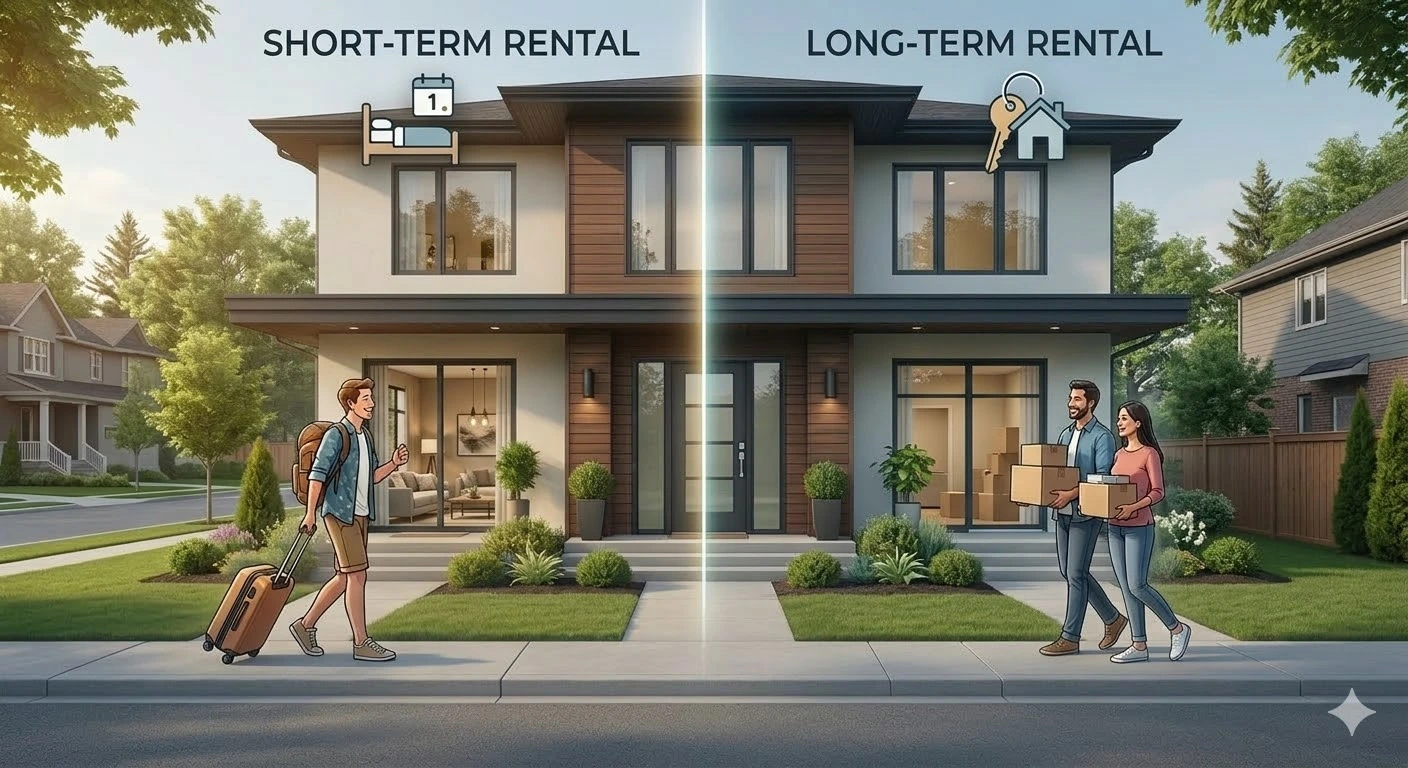
Just a few years ago, the allure of short-term rental properties, particularly through platforms like Airbnb, presented a seemingly straightforward path to passive income. The post-pandemic travel surge of 2021-2022 fueled an unprecedented boom, where investors could acquire properties in diverse locations, list them for short-term stays, and anticipate immediate cash flow. Data from that era often supported this narrative, with short-term rentals frequently outperforming traditional long-term leases in many U.S. markets. However, as of 2026, the investment calculus has significantly shifted. The once-passive income stream is now a complex business, characterized by increased regulatory scrutiny and evolving market dynamics. Simultaneously, traditional long-term rentals are also navigating their own set of challenges, leading to the emergence of a compelling third option: mid-term rentals. This evolving environment necessitates a comprehensive re-evaluation of rental strategies for real estate investors.
The Regulatory Reckoning: Shifting Legal Terrains
One of the most significant transformations impacting real estate investment strategies is the dramatic evolution of regulatory landscapes for both short-term and long-term rentals. Historically, the nascent short-term rental market benefited from a lack of stringent oversight. This regulatory vacuum allowed for easier market entry, as most jurisdictions had minimal or no specific laws governing platforms like Airbnb.
However, the widespread proliferation of short-term rentals led to increased community concerns regarding housing affordability, noise disturbances, and the conversion of residential units into de facto hotels. In response, many municipalities, particularly popular tourist destinations, have implemented strict regulations. Cities such as New York City, Honolulu, Santa Monica, New Orleans, and San Francisco have enacted what are often described as "de-facto" bans, imposing regulations so restrictive that they effectively prohibit most short-term rental operations. These regulations can encompass a wide array of requirements, including:
- Licensing and Permit Fees: Annual fees for operating permits and business licenses.
- Zoning Restrictions: Limitations on where short-term rentals can operate, often excluding residential zones.
- Occupancy Limits: Strict caps on the number of guests allowed per property.
- Safety Standards: Mandates for smoke detectors, fire extinguishers, and emergency exits.
- Tax Obligations: Collection and remittance of local occupancy taxes.
- Booking Platform Restrictions: Limitations on the number of days a property can be rented out annually.
- Owner Occupancy Requirements: Some cities require the owner to be present in the property while renting it out.
The increasing complexity and cost associated with legal compliance have compelled many investors to reconsider their short-term rental ventures. For instance, according to Mashvisor’s analysis of U.S.-wide short-term rental regulations, the number of cities with stringent restrictions has more than doubled since 2022. This regulatory shift is not exclusive to short-term rentals; the long-term rental market is also experiencing significant legal changes.
While landlords have been subject to local housing laws for decades, including those concerning habitability, lease agreements, and eviction procedures, the current landscape is increasingly tenant-centric. In 2026, new legislation is emerging that aims to bolster tenant protections and, consequently, increase landlord responsibilities and costs.
California, for example, has been at the forefront of legislative changes. Recent laws have introduced:
- Rent Control Measures: Caps on annual rent increases, limiting a landlord’s ability to adjust prices based on market demand.
- Just Cause Eviction Policies: Requiring landlords to have specific, legally recognized reasons to evict a tenant, thereby reducing landlord flexibility.
- Tenant Protections Against Arbitrary Evictions: Making it more difficult and time-consuming for landlords to reclaim possession of their property.
Similarly, Washington has seen the introduction of:
- Mandatory Renters’ Rebates: Requiring landlords to provide rebates to tenants under certain income thresholds.
- Eviction Moratoriums: Temporary halts on evictions, even for non-payment of rent, in specific circumstances.
- Just Cause Eviction Ordinances: Similar to California, these laws restrict the reasons for which a tenant can be evicted.
The ripple effect of such legislation is significant. As successful tenant-friendly laws are enacted in major states, other jurisdictions often follow suit, creating a broader trend of increased landlord obligations. Real estate investors must now conduct thorough due diligence, understanding that compliance with intricate legal frameworks is a fundamental requirement for both short-term and long-term rental operations in 2026. The ease of entry that once characterized short-term rentals has largely evaporated, replaced by a more complex and demanding regulatory environment.
The Escalating Cost of Ownership: Beyond Acquisition
The financial calculus of real estate investment has also undergone a significant shift, with costs increasing across both short-term and long-term rental strategies. While short-term rentals have traditionally been more capital-intensive, the general rise in property values, coupled with increased mortgage rates and insurance premiums, has inflated the overall cost of real estate ownership.
For short-term rental properties, the escalating expenses are multifaceted. Beyond the inherent costs of property acquisition and financing, investors now face new financial burdens directly attributable to regulations. Annual permit and registration fees, potentially substantial fines for non-compliance, and increased tax liabilities contribute to higher operating expenses. Furthermore, platform fees, such as those introduced by Airbnb in 2025, directly impact host revenue.
Competition has also intensified, raising the bar for property presentation and amenities. What was once considered a desirable feature, such as a hot tub in a Gatlinburg, TN Airbnb, is now often viewed as a baseline expectation. The need to differentiate in a crowded market necessitates ongoing investment in property upgrades, enhanced guest services, and professional marketing. Consequently, owning a vacation rental property in 2026 is considerably more expensive than it was just a few years prior.
Long-term rental properties are not immune to these cost increases. New legislation often mandates upgrades to meet modern living standards. For instance, requirements for functional stoves and refrigerators are standard, but tenants are also increasingly demanding energy-efficient appliances and sustainable living conditions. Investments in energy-efficient upgrades, while potentially leading to long-term savings, represent an upfront cost that must be factored into the investment analysis.
The cumulative effect of these rising start-up and ongoing costs means that a "general idea" of expenses is no longer sufficient. Investors require precise cost estimates, coupled with realistic income projections, to accurately determine the cash flow potential of any rental strategy. This meticulous financial planning is crucial for identifying the most profitable investment opportunities in the current market.
Location, Location, Location: Adapting to Shifting Demographics and Trends
The importance of location in real estate investment remains paramount, but the factors driving desirable locations have evolved. While regulatory considerations have already been discussed, a broader analysis of market dynamics reveals further nuances for investors.
Travel trends are notoriously fluid, and the short-term rental market is particularly susceptible to these shifts. An added challenge is the issue of market saturation, where an abundance of similar offerings can dilute profitability. For traditional long-term rentals, demographic migration patterns offer significant insights. Data from sources like Redfin indicate a sustained movement of residents towards the Sunbelt region, with particular growth in the Southeast and Mountain West states, contrasting with the historical preference for larger, established metropolitan areas.
Understanding where people are moving or visiting is only part of the equation; strategic positioning within those markets is critical. Daryl Fairweather, Chief Economist for Redfin, provides valuable perspective on these evolving dynamics:
Mashvisor: "Are there any markets where you expect more short-term rentals to convert to long-term rentals?"
Fairweather: "Conversions are most likely where short-term economics weaken or regulations tighten. We’re seeing this trend in markets that were once booming for STRs but are now facing increased competition and regulatory hurdles. For example, in popular tourist destinations that have seen a surge in STR inventory, the revenue per available room (RevPAR) has declined. If the local authorities also implement stricter rules, it pushes investors to consider the more stable, albeit potentially less lucrative, long-term rental market.
Bottom line: Conversions cluster where STR revenue softens but long-term fundamentals remain solid."
Mashvisor: "Are there any markets where short-term rentals might outperform long-term rentals in 2026?"
Fairweather: "Yes, some markets will still favor STRs. These are typically locations with robust, year-round tourism or significant demand for temporary housing due to events or industries. Think of college towns during the academic year, areas with major convention centers, or regions with unique attractions that draw visitors for short stays. However, success in these markets is no longer passive. It requires professional management to handle dynamic pricing, guest services, and ensure consistent bookings.
Bottom line: STR success depends on professional management, dynamic pricing, and consistent demand. Passive Airbnb investments in random towns are risky."
Investors must therefore meticulously analyze which locations are best suited for short-term versus long-term rental strategies, acknowledging that these trends are subject to continuous change. A data-driven approach to market selection is no longer a competitive advantage but a necessity.
The Occupant Factor: Navigating Tenant Expectations and Realities
The perceived difference in occupant behavior has historically been a key differentiator between short-term and long-term rentals. Investors were often attracted to short-term rentals by the prospect of temporary guests, assuming they would present fewer issues than long-term tenants. The common concerns associated with long-term tenants – such as wear and tear, late rent payments, lease violations, and the complexities of eviction – seemed absent in the short-term model.
However, the reality has proven more nuanced. The rise of online platforms has brought to light numerous "horror stories" from short-term rental hosts, detailing issues such as:
- Property Damage: Guests causing extensive damage beyond normal wear and tear.
- Theft: Guests stealing personal belongings or property fixtures.
- Parties and Disturbances: Unauthorized gatherings leading to noise complaints and property damage.
- Over-Occupancy: Guests exceeding stated capacity limits, potentially violating local ordinances.
- Illegal Activities: Use of the property for illicit purposes.
Beyond the potential for problematic guests, the cost of accommodating short-term visitors is also significant. High-speed internet, hotel-like amenities, and professional cleaning services are essential for guest satisfaction and positive reviews, adding to operational expenses.
In 2026, it is no longer a simple matter of one occupant type being inherently superior. Both short-term guests and long-term tenants require distinct management approaches and come with their own sets of potential challenges and costs. Investors must carefully assess their capacity to handle these unique demands, developing robust risk mitigation and management strategies for whichever model they choose.
The Effort Equation: Active Management in a Shifting Market
The notion that short-term rentals offer passive income has been largely dispelled. Online forums and communities are replete with complaints from hosts who underestimated the operational intensity of managing a hospitality business. Running a short-term rental, especially without outsourcing to a property manager, is an active investment. This involves handling bookings, guest communication, check-ins/check-outs, cleaning coordination, maintenance requests, and resolving guest issues – often 24/7.
Similarly, long-term rentals, while often perceived as more passive, also demand significant effort. Landlords must contend with tenant turnover, lease negotiations, emergency maintenance calls, property inspections, and, in some cases, the challenging process of evictions.
Both investment types can be transformed into a more passive endeavor by hiring a property manager. However, the cost of professional management must be carefully weighed against potential cash flow. Property management fees for long-term rentals typically range from 8% to 12% of monthly rental income. For short-term rentals, these fees are considerably higher, often falling between 15% and 25%, reflecting the increased complexity and demand for round-the-clock service.
Ultimately, neither being an Airbnb host nor a traditional landlord is inherently passive. Real estate investors must realistically assess their tolerance for day-to-day operations and their available time commitment. Alternatively, they must accurately factor in management costs from the outset when conducting investment property analysis to achieve a truly passive rental income stream.
The Rise of the Third Option: Mid-Term Rentals
The investment landscape has expanded beyond the binary choice of short-term versus long-term rentals. The mid-term rental, also known as a monthly rental, has emerged as a significant and attractive alternative. These properties are typically leased for periods ranging from one to six months, and sometimes up to a year. They occupy a strategic middle ground, catering to a specific demographic of renters, including:
- Traveling Healthcare Professionals: Nurses and other medical staff on temporary assignments.
- Corporate Relocators: Individuals or families transitioning to a new city for work.
- Digital Nomads: Remote workers seeking temporary accommodations in different locations.
- Individuals on Extended Holidays or Sabbaticals: Travelers seeking longer stays than typical vacation rentals.
Mid-term rentals often thrive in specific locations that support these demographics, such as:
- Cities with Major Hospitals and Medical Centers: High demand from traveling healthcare professionals.
- Areas with a Strong Corporate Presence: Demand from business travelers and relocating employees.
- Universities and College Towns: Demand from visiting faculty, researchers, and students on short-term programs.
- Popular Tourist Destinations with Off-Season Demand: Catering to longer leisure stays outside peak tourist periods.
A key advantage of mid-term rentals is their ability to often bypass the stringent regulations imposed on short-term rentals. While short-term rentals face limitations on booking days and strict licensing, mid-term rentals, due to their longer duration, often fall into a different regulatory category.
While the Average Daily Rates (ADRs) for short-term rentals can be higher, mid-term rentals boast higher occupancy rates and lower turnover costs. Data suggests that the combination of consistent occupancy, reduced cleaning fees, and fewer administrative tasks can lead to higher overall profits within the same real estate market compared to short-term rentals. Furthermore, mid-term rentals, being furnished, typically command a premium over traditional long-term leases, with tenants willing to pay an additional $600 to $800 per month for the convenience and flexibility. This makes mid-term rentals a compelling option for investors seeking a balance between the income potential of short-term rentals and the stability of long-term leases.
Strategic Decisions: Converting or Selling Underperforming Assets
The dynamic nature of the rental market in 2026 means that many real estate investors are re-evaluating their existing portfolios. A once-lucrative short-term rental property might now be hampered by market saturation, diminished profit margins, or insurmountable regulatory hurdles. For those investors facing these challenges, the critical decision is whether to convert their property to a long-term rental or to sell it entirely.
This decision hinges on a thorough analysis of current real estate market trends and the investor’s financial position. Key questions include: Is it an opportune moment to sell, or could holding the property yield greater future profits? Can the investor afford to maintain the property while awaiting a sale, or would it lead to negative cash flow? How are long-term rentals performing in the immediate vicinity?
Daryl Fairweather offers guidance on when selling might be the more prudent option:
Mashvisor: "When should an investor consider selling a vacation property instead of converting it to a long-term rental?"
Fairweather: "An investor should consider selling when the property no longer justifies the complexity and risk of short-term rentals or when the capital could be better used elsewhere. This often occurs when regulatory changes significantly impact profitability, or when the market becomes overly saturated, driving down occupancy rates and nightly rates. If the property requires substantial capital expenditure to remain competitive as an STR, and those costs outweigh potential returns, selling becomes attractive. Additionally, if there are more promising investment opportunities elsewhere that offer a better risk-adjusted return, liquidating an underperforming STR asset to redeploy capital is a sound strategy.
Bottom line: Sell if the property no longer provides strong returns, market prices are favorable, or regulations make your STR strategy unprofitable."
If the market conditions support a conversion to a long-term rental, Fairweather suggests a strategic approach:
Fairweather: "If converting makes sense, focus on these four things. First, understand the local long-term rental market: research average rents, tenant demand, and vacancy rates for similar properties in the area. Second, assess the property’s suitability for long-term tenants: this may involve minor renovations or upgrades to meet the needs of longer-term occupants. Third, develop a realistic financial model: calculate projected rental income, operating expenses, and potential cash flow for the long-term lease. Finally, consider the tenant screening process: establish a robust system for vetting potential long-term tenants to minimize risks associated with property damage or non-payment.
Bottom line: Long-term rentals offer predictability over upside. Treat the conversion as a strategic business decision."
Conclusion: Data-Driven Decisions in a Complex Market
The real estate investment landscape has undoubtedly become more intricate. Both the short-term and long-term rental markets have undergone significant transformations, demanding a more discerning approach from investors in 2026. While opportunities persist, they require careful selection and a commitment to leveraging data for informed decision-making.
Whether an investor remains committed to a specific strategy or explores new avenues like mid-term rentals, the fundamental principle remains the same: identify the strategy that aligns with their risk tolerance and offers the highest potential for cash flow and return on investment. Utilizing reliable market data, including current Airbnb occupancy rates, long-term rent estimates, and historical performance trends, is essential for accurately assessing profitability before committing capital. Platforms like Mashvisor, equipped with comprehensive data for both short-term and long-term rentals, can significantly aid investors in this critical evaluation process. For mid-term rentals, integrating supplemental data with these tools will provide a clearer picture of future earnings potential. The era of passive, easy gains in the rental market is largely over; success in 2026 hinges on strategic insight, diligent research, and a proactive approach to property management.

