
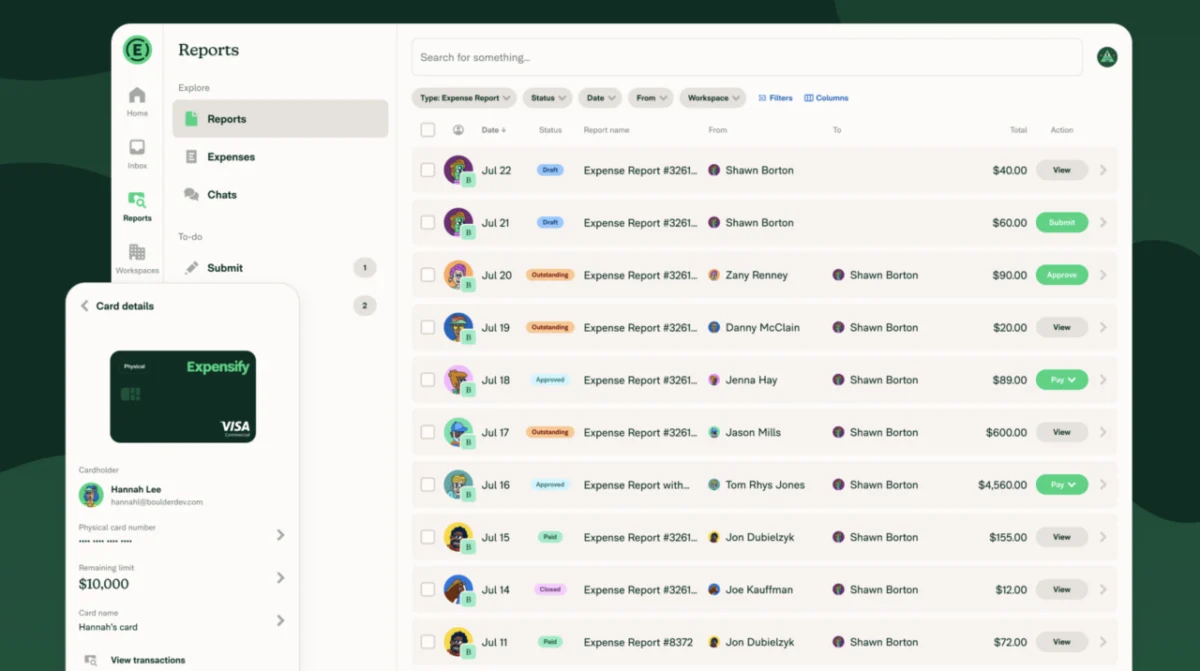
The global landscape of business expense management has reached a new milestone as Expensify, a leading provider of automated financial management tools, officially announced the expansion of its corporate card program into several key European markets. This strategic move, executed in partnership with the global card-issuing giant Marqeta, brings the Expensify Card to businesses in Spain, Ireland, Poland, and the Netherlands. By leveraging Marqeta’s sophisticated multinational card-issuing infrastructure, Expensify aims to provide a seamless, unified spend management experience for companies operating across the Atlantic, effectively bridging the gap between North American and European financial operations.
The expansion follows a successful beta period that began in 2025, during which Expensify tested the waters in the United Kingdom and various European Union territories. With the full commercial launch, the company is positioning itself to compete directly with both local European fintech incumbents and other U.S.-based giants like Brex and Navan, who have also been aggressively expanding their international footprints. The move signals a broader trend in the fintech sector where "global reach" is no longer a luxury but a core requirement for platforms serving modern, decentralized, and multinational workforces.
The Evolution of the Expensify Card: From US Innovation to European Integration
The Expensify Card was first introduced to the United States market in 2019, fundamentally changing how small and medium-sized enterprises (SMEs) and large corporations handled employee spending. Unlike traditional corporate cards that often required manual reconciliation and delayed reporting, the Expensify Card was built on the principle of "pre-accounting." This philosophy ensures that transaction data is captured, coded, and matched with receipts in real-time, significantly reducing the administrative burden on accounting departments.
For the European launch, Expensify has tailored its offering to meet the specific needs of businesses operating in the Eurozone and beyond. One of the most significant hurdles for international business travel and cross-border commerce has historically been the accumulation of foreign transaction fees. The Expensify Card addresses this pain point by eliminating these fees entirely. Furthermore, the card offers a high degree of flexibility in liquidity management, as it can be linked to any GBP, EUR, or USD business bank account. Notably, the program does not require minimum balances, security deposits, or traditional credit checks, making it an accessible option for high-growth startups that might otherwise struggle to secure corporate credit from traditional European banks.
Strategic Partnership with Marqeta: The Engine of Expansion
The technical backbone of this expansion is Marqeta’s modern card-issuing platform. Marqeta has established itself as a critical enabler for fintechs looking to scale globally without the need to build individual payment infrastructures in every new jurisdiction. By using Marqeta’s APIs, Expensify is able to offer a variety of card formats, including physical plastic, virtual cards for online procurement, and tokenized cards compatible with mobile wallets like Apple Pay and Google Pay.
Marqeta’s platform provides Expensify with "Just-in-Time" (JIT) funding capabilities and highly granular spend controls. This allows business owners and finance managers to set specific limits by cardholder, category (such as travel, SaaS subscriptions, or office supplies), and even by specific timeframes. Todd Pollak, Chief Revenue Officer at Marqeta, highlighted the significance of this collaboration, noting that Marqeta’s multinational capabilities are specifically designed to simplify the regulatory and technical complexities that often stall international growth.
For Marqeta, the partnership reinforces its dominance in the embedded finance sector. Having processed nearly $383 billion in annual payment volume in 2025, Marqeta continues to demonstrate that its value proposition lies in its ability to help partners like Expensify and Klarna scale across borders with minimal friction.
Chronology of Expensify’s Global Roadmap
To understand the significance of this launch, it is essential to view it through the lens of Expensify’s long-term growth strategy. The company has moved methodically from a receipt-scanning app to a comprehensive financial ecosystem.
- 2008-2009: Expensify is founded with a focus on "expense reports that don’t suck," targeting individual users and small businesses.
- 2019: The Expensify Card launches in the US, marking the company’s transition into the payments space.
- 2021: Expensify goes public (NASDAQ: EXFY), providing the capital necessary for aggressive R&D and international expansion.
- 2024: The company begins shifting toward "New Expensify," a chat-based platform that integrates communication with financial transactions.
- 2025: A limited beta launch of the corporate card is initiated in the UK and EU to gather data on regional spending habits and regulatory compliance.
- 2026 (July): The full commercial launch in Spain, Ireland, Poland, and the Netherlands is announced, supported by Marqeta’s updated multinational issuing stack.
Data-Driven Efficiency: Impact on Business Operations
The primary value proposition of the Expensify Card is the drastic reduction in "time-to-close" for monthly financial books. According to data provided by Expensify, one of their prominent US-based customers, Pivot Bio, reported a 90% reduction in the time spent auditing expense reports after switching to the automated card system.
In the European context, where VAT (Value Added Tax) compliance and multi-currency reporting add layers of complexity to accounting, this level of automation is particularly valuable. The card’s ability to automatically match receipts to transactions ensures that businesses can maximize their VAT reclaims—a process that is often prone to human error when handled manually.
Furthermore, the real-time visibility into spending patterns provides CFOs with a strategic advantage. In an era of economic volatility, having an instant dashboard of departmental spend allows for more agile budgeting and cash flow management. The integration with major accounting platforms like NetSuite, Sage Intacct, Xero, and QuickBooks ensures that the data flows directly into the "source of truth" for the company without manual intervention.
Market Analysis: The Competitive Landscape in Europe
The European spend management market is currently one of the most competitive in the world. Local players such as Pleo (Denmark), Moss (Germany), and Soldo (UK/Italy) have built strong foundations by catering to the specific regulatory requirements of the European Economic Area (EEA). These companies have historically held an advantage over US entrants due to their deep understanding of local tax laws and banking regulations.
However, Expensify’s entry, backed by Marqeta’s global infrastructure, challenges this status quo. Expensify’s advantage lies in its "unified platform" approach. For a multinational corporation with offices in New York, London, and Madrid, using a single provider like Expensify is often more efficient than managing a patchwork of local providers. The ability to manage US Dollars, British Pounds, and Euros under a single login is a powerful incentive for global finance teams.
Industry analysts suggest that this move by Expensify is a direct response to the "internationalization" of the workforce. As remote and hybrid work become permanent fixtures, and as even small companies hire talent across borders, the demand for financial tools that operate "without borders" has skyrocketed.
Broader Implications for the Fintech Ecosystem
The expansion of the Expensify-Marqeta partnership is emblematic of the "Platformization" of finance. We are seeing a shift away from standalone banking services toward integrated business platforms where payments, communication, and accounting coexist. David Barrett, Founder and CEO of Expensify, has often described the card as a "pre-accounting assistant," a term that suggests the future of fintech is not just about moving money, but about managing the data that surrounds that money.
From a regulatory perspective, this expansion also highlights the maturity of the "Banking-as-a-Service" (BaaS) model. By utilizing Marqeta’s existing licenses and network relationships, Expensify can enter new markets with a speed that was impossible a decade ago. This lowers the barrier to entry for innovation and forces traditional European banks to modernize their own corporate offerings, which have often lagged behind in terms of user experience and automation.
Looking Ahead: The Future of Spend Management
As Expensify establishes its presence in Spain, Ireland, Poland, and the Netherlands, the industry will be watching closely to see how quickly it can gain market share. The company has indicated that this is just the beginning of its European journey, with plans to expand into additional markets as regulatory approvals and localized features are finalized.
The focus for the remainder of 2026 will likely be on deepening the integration between the Expensify Card and the company’s new chat-based platform. By allowing employees to discuss expenses and approve spend within the same interface where the transaction occurs, Expensify is betting that "socialized finance" will be the next big trend in corporate productivity.
In conclusion, the partnership between Expensify and Marqeta represents a significant step forward in the globalization of business finance. By removing the friction of foreign transaction fees, automating the drudgery of receipt matching, and providing a scalable platform for multinational growth, Expensify is not just launching a card; it is providing a blueprint for how modern businesses will manage their capital in an increasingly interconnected world. For European businesses, the arrival of such a robust tool offers a new opportunity to streamline operations and focus on growth rather than paperwork.

