
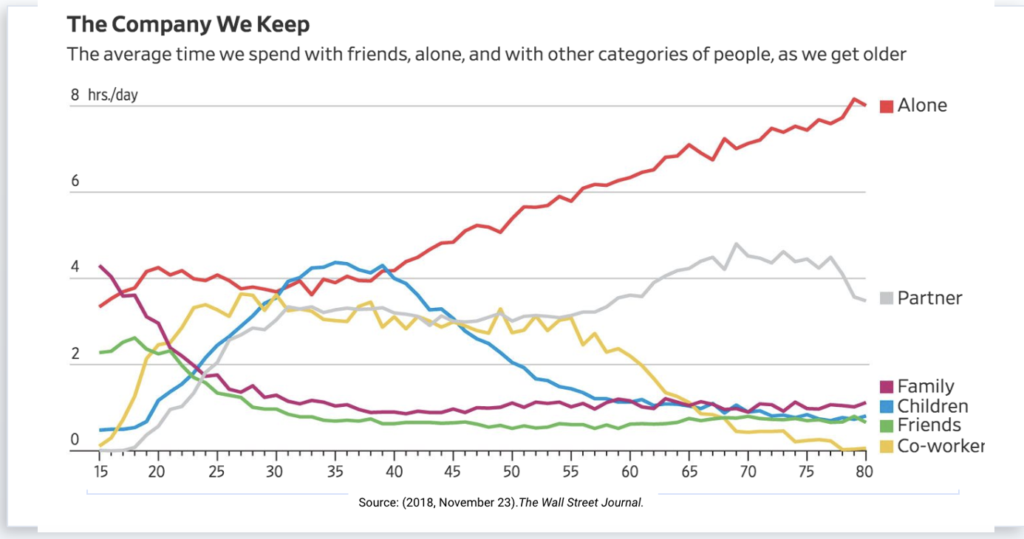
The transition into retirement, while often heralded for its promise of newfound freedom and leisure, presents a unique set of psychological challenges that are increasingly becoming a focus of research and expert analysis. For many, the absence of the structured routines and social interactions of a professional life can lead to an unexpected abundance of solitude. This solitude, however, is not merely an absence of others; it is an immersion in one’s own internal landscape, a constant stream of self-talk that can profoundly shape the retirement experience. Experts in psychology and neuroscience are highlighting the critical importance of understanding and managing this inner dialogue, suggesting that the most significant conversations in retirement are those that occur within the mind.
The nature of this internal monologue is multifaceted, encompassing planning, imagination, and reflection, but also frequently veering into worry, rumination, self-criticism, and blame. These internal conversations have been shown to either constrict one’s outlook or, conversely, to empower individuals to approach their next chapter with greater intention and a broader sense of possibility. This dichotomy is central to the work of Dr. Marilee Adams, a psychologist and the founder of The Inquiry Institute, whose latest book, Change Your Questions, Change Your Life, now in its fifth edition, delves into the power of self-directed questioning.
Dr. Adams’ core premise posits that the questions we ask ourselves fundamentally shape our mindset. She delineates two primary modes of operation: the "Judger" and the "Learner." Judger questions are often backward-looking or self-focused, frequently tinged with negativity and fault-finding, such as, "What’s wrong with me?" or "Why did this happen?" In contrast, Learner questions are forward-looking and action-oriented, fostering curiosity, agency, and a belief in potential. Examples include, "What do I want now?" or "How else can I approach this?"
This distinction is particularly resonant as individuals navigate the significant life transition of retirement. The established structures, professional identities, and feedback mechanisms of the workplace disappear, creating fertile ground for Judger questions to gain traction. Without these external anchors, individuals may find themselves more susceptible to negative self-assessment. However, by consciously shifting to Learner-based questions, individuals can redirect their focus toward what truly matters, such as cultivating deeper meaning, experiencing greater joy, contributing to their communities, nurturing relationships, and fostering personal growth.
Parallel research by Dr. Ethan Kross, director of the Emotion & Self Control Laboratory at the University of Michigan and author of Chatter: The Voice in Our Head, Why It Matters, and How to Harness It, further illuminates the impact of our internal dialogues. Dr. Kross distinguishes between ordinary negative thoughts and "chatter"—a relentless cycle of worry, rumination, and catastrophizing. He emphasizes that while negative emotions can serve a purpose in signaling problems or prompting learning, it is the prolonged entrapment in these states that becomes detrimental.
The insights of Dr. Adams and Dr. Kross converge on a crucial point: the objective is not to silence the inner voice, but to engage with it more skillfully. Both scholars underscore the universality of an inner critic and advocate for its acceptance as a starting point. They highlight that increased self-awareness is the gateway to choice, enabling a transition from automatic reactions to intentional responses.
Dr. Adams’ work offers a structured approach through "The Choice Map," a framework designed to provide practical language and a clear path for navigating internal dialogue. This model encourages individuals to recognize Judger tendencies, pause, and consciously shift to a Learner mindset. A particularly potent question from her repertoire is, "Who do I choose to be in this moment?" This prompts a deliberate selection of identity and attitude, rather than a passive acceptance of ingrained patterns.
Dr. Kross, meanwhile, presents a "toolbox" of strategies for managing chatter, recognizing that different situations call for tailored approaches. His recommendations include "distance self-talk," where individuals address themselves by name and offer advice as they would to a trusted friend. He also advocates for "mental time travel," urging individuals to consider how a current problem might appear from a future vantage point, such as six months or a year hence. Integrating physical activities, like a walk in nature, as a ritualistic practice can further enhance one’s ability to act as a skilled "chatter advisor," equipped with a personalized set of coping mechanisms.
Understanding the Psychological Shift in Retirement
The demographic landscape of retirement is evolving. With increased life expectancies, individuals are spending a significant portion of their lives in this post-work phase. For instance, a significant percentage of individuals in developed nations are now living 20 to 30 years or more in retirement. This extended period necessitates a robust approach to psychological well-being, moving beyond a sole focus on financial preparedness. The psychological adjustment, particularly concerning the management of internal thought processes, has become a critical area of focus for gerontologists, psychologists, and retirement planners alike.
Historically, retirement was often viewed as a period of winding down. However, contemporary research suggests that for many, it is a period of reinvention and continued personal growth. This shift in perception underscores the importance of mental agility and self-management. The challenges posed by an unmanaged inner dialogue can hinder this potential for growth, leading to feelings of isolation, regret, and a diminished sense of purpose.
Expert Consensus on Inner Dialogue Management
The convergence of research from fields like positive psychology, cognitive behavioral therapy, and neuroscience offers a robust understanding of how to harness the power of our internal narratives. The common thread is the emphasis on conscious awareness and intentional intervention.
"The internal monologue is not an optional extra; it’s a fundamental aspect of human cognition," states Dr. Anya Sharma, a cognitive psychologist specializing in adult development. "The key is to recognize that we have agency over this dialogue. It’s not a fixed trait but a dynamic process that can be influenced and improved through practice."
Data from studies on mindfulness and self-compassion interventions consistently show positive correlations with improved mood, reduced anxiety, and increased life satisfaction among older adults. For example, a meta-analysis published in the Journal of Gerontology: Psychological Sciences found that mindfulness-based interventions significantly reduced depressive symptoms in older adults, with a particular impact on rumination.
Strategies for Cultivating a Positive Inner Voice
Both Dr. Adams and Dr. Kross provide actionable strategies that individuals can integrate into their daily lives to foster a more constructive inner dialogue. These are not necessarily quick fixes but rather practices that, with consistent application, can yield substantial improvements in mental well-being.
- Heightened Awareness of Internal Conversations: The foundational step involves deliberately paying attention to the thoughts and questions that arise throughout the day. This requires a conscious effort to observe one’s internal landscape without immediate judgment.
- The "Stop. Breathe. Be." Technique: Inspired by Dr. Aditi Nerurkar, this simple yet profound practice involves a physical pause. Stopping the momentum of an overwhelming thought pattern, taking a deliberate breath, and simply being present in the moment can create a crucial space for reflection and a shift in perspective. This pause acts as an interruption to automatic negative loops.
- Question Identification and Categorization: Once awareness is established, the next step is to identify the nature of the questions being asked. Are they Judger questions, characterized by criticism and blame, or Learner questions, which open avenues for curiosity and problem-solving? This categorization provides clarity on the mindset being adopted.
- The "Switching Lane" Move: When individuals find themselves in the "Judger Pit" of negative rumination, Dr. Adams’ "Switching Lane" move is crucial. This involves actively posing a Learner question to deliberately shift into a more constructive mindset. This is an act of cognitive redirection, moving from a state of self-recrimination to one of exploration and possibility.
- Shifting the Internal Voice: Dr. Kross’s approach emphasizes altering the way one communicates with oneself. Using one’s own name in self-talk, as if offering advice to a friend, can create a sense of detachment and objectivity. This technique transforms the internal critic into a supportive coach.
- Temporal Reframing: Mental time travel, by considering the long-term perspective of current challenges, can significantly diminish their perceived magnitude. Asking, "How important will this feel six months from now?" can reframe immediate anxieties into more manageable concerns.
- Mindful Venting and Perspective Broadening: While expressing feelings is important, unchecked venting can perpetuate negative cycles. Identifying individuals who offer genuine empathy and can help broaden one’s perspective is vital. This involves seeking out supportive relationships that encourage constructive problem-solving rather than simply reinforcing negative narratives.
Broader Implications for Retirement Planning and Well-being
The insights from Dr. Adams and Dr. Kross suggest a paradigm shift in how retirement is approached. Beyond financial security, robust psychological preparedness is paramount. This includes equipping individuals with the tools to manage their inner worlds effectively.
The implications extend to retirement planning services, educational programs, and even healthcare. Integrating modules on self-talk management, emotional regulation, and positive psychology into pre-retirement and post-retirement planning can significantly enhance the overall well-being of this demographic. Furthermore, healthcare providers may increasingly recognize the interplay between mental health and the quality of one’s inner dialogue, particularly in addressing issues like anxiety, depression, and social isolation in later life.
The ultimate goal is to transform the inner voice from a potential source of distress into a valuable ally and coach. With dedicated practice and the application of evidence-based strategies, the freedom of retirement can be truly realized, characterized by a sense of purpose, contentment, and continued personal growth, fueled by a positive and empowering internal dialogue.
Further Resources for Exploration
For those seeking to delve deeper into these concepts, a wealth of resources is available. Podcast interviews with Dr. Marilee Adams and Dr. Ethan Kross offer accessible introductions to their research and methodologies.
Dr. Adams’ work can be further explored through her podcast conversations, such as "Change Your Questions, Change Your Life in Retirement," and by engaging with "The Choice Map" assessment. Her book, Change Your Questions, Change Your Life, is available in its updated fifth edition.
Dr. Kross’s research is detailed in his book, Chatter: The Voice in Our Head, Why It Matters, and How to Harness It. He has also discussed related topics in podcast episodes like "Chatter & Your Inner Voice" and "Shift," with a further exploration of emotional management in his book, Shift: Managing Your Emotions—So They Don’t Manage You.
These resources provide practical pathways for individuals to actively engage with and improve their internal conversations, thereby enhancing the quality of their retirement and overall life experience.

