

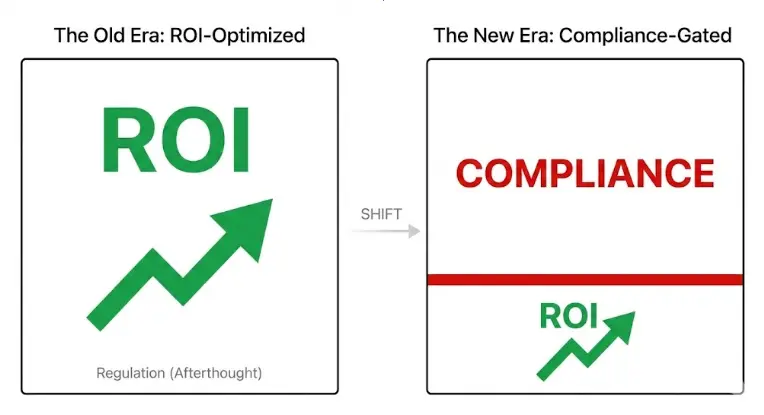
For nearly a decade, the short-term rental (STR) investment landscape operated akin to a digital gold rush. Investors meticulously optimized for nightly rates, occupancy curves, and complex platform algorithms. The prevailing mantra was straightforward: if the financial projections aligned, the investment was deemed sound. Regulatory considerations, if addressed at all, were often relegated to a mere checkbox, an afterthought tucked away between financing arrangements and furnishing plans. However, this era of unchecked expansion and regulatory ambivalence has decisively concluded.
Today, short-term rental regulation is no longer a minor legal hurdle; it has emerged as a terminal underwriting risk. A single, seemingly localized city council vote can effectively eliminate non-owner-occupied rentals overnight. The implementation of a newly enforced permit cap can instantaneously freeze the addition of new supply to the market. Furthermore, an aggressive enforcement cycle, often initiated without broad public announcement, can quietly decimate occupancy rates across an entire zip code, leaving investors with untenable assets. In this rapidly evolving environment, the allure of yield without explicit legality has proven to be a dangerous illusion. For Property Technology (PropTech) platforms, including marketplaces, analytics dashboards, and STR lending engines, this fundamental shift necessitates a complete re-evaluation of operational frameworks. Compliance can no longer be addressed through a blog post or a time-consuming manual research process; it must be integrated as a programmatic underwriting input.
The API as a Policy Enforcement Engine: Translating Law into Action
Within the complex domain of real estate compliance, an Application Programming Interface (API) transcends its typical role as a mere data conduit. It evolves into the essential infrastructure for automated policy enforcement. When industry professionals speak of "staying compliant by city," they are referring to the critical ability to translate thousands of disparate local municipal codes into a single, executable logic gate within their technological systems. This programmatic approach is paramount for scaling operations and mitigating risk in a fragmented regulatory landscape.
Deterministic vs. Probabilistic Data: The Compliance Threshold
A crucial distinction within real estate technology lies in the difference between probabilistic modeling and deterministic data. Historically, most PropTech platforms have relied heavily on probabilistic data. This encompasses estimations, inferred classifications, and Automated Valuation Models (AVMs), which provide educated guesses about property characteristics and market conditions. While probabilistic data can be acceptable for estimating potential return on investment (ROI) – where a degree of estimation is often tolerable – it becomes a significant liability when dealing with compliance.
Probabilistic data operates on "likelihoods." For instance, it might infer that a property is a single-family home based on its square footage or its neighborhood profile. However, if a city ordinance explicitly bans STRs in multi-family units but permits them in single-family homes, a "likely" classification is simply insufficient. Such estimations expose users to catastrophic capital risk. If an institutional investor deploys substantial capital, say $50 million, into a market based on "probable" eligibility, and that metadata proves incorrect, the entire portfolio’s cash flow can be irrevocably jeopardized by a single enforcement letter from a municipality.
In stark contrast, deterministic data is anchored by authoritative records. This includes official tax assessments, deed filings, and legally recognized land-use codes. For a platform to function as a genuine underwriting tool, its API must provide these deterministic metadata points. Compliance, by its very nature, demands a binary "Yes" or "No" answer, derived from legal truth. When a platform relies on inferred data for compliance, it is essentially building its operations on a foundation of sand, leaving its users vulnerable to significant financial repercussions.
The "Ghost Listing" Problem and the Detection of Enforcement Signals
Standard real estate APIs also grapple with the pervasive "Ghost Listing" problem, particularly in markets undergoing stringent regulatory crackdowns. In these scenarios, thousands of STR listings may remain technically "active" on booking platforms even after their legal permits have been unequivocally revoked by local authorities.
If a platform’s data solely tracks active listings, it might present a deceptively healthy and thriving market. In reality, that market could be in the throes of a severe "supply contraction" driven by regulatory intervention. A compliance-aware API, therefore, must offer more than a static snapshot of current listings; it must provide crucial historical performance trends. By cross-referencing a sudden and significant drop in the number of active listings with sustained demand metrics, platforms can effectively detect an "enforcement signal."
Consider a hypothetical scenario: if the number of active STR rentals in a specific zip code plummets by 40% within a single quarter, while nightly rates remain high, this is rarely indicative of organic market failure. Instead, it strongly suggests a widespread regulatory "clean sweep." Platforms equipped to programmatically identify these subtle yet critical signals can empower their users to avoid entering markets where the "door is closing," even if the immediate ROI appears attractive. This proactive approach is vital for capital preservation and strategic market entry.
Transforming Ordinances into Actionable Logic: The Technical Framework
To effectively automate compliance, PropTech platforms must develop the capacity to translate complex and often ambiguous legal language into structured, queryable data. At a practical level, most short-term rental regulations can be categorized into three fundamental operational "guardrails":

1. Zoning and Property-Type Restrictions
A significant portion of municipal STR regulations is based on building classifications and zoning laws. Many cities restrict STR operations to specific property types, such as single-family homes, while prohibiting them in multi-family dwellings or commercial zones. By leveraging detailed property-level metadata, a platform can automatically flag ineligible property classes or exclude restricted asset types from search results. This ensures that users are presented only with legally viable inventory, significantly reducing the risk of investing in non-compliant properties. For example, an ordinance might specify that STRs are only permitted in properties zoned for "Residential-Single Family." A deterministic API would identify the property’s zoning code and cross-reference it with this ordinance, providing a clear "Pass" or "Fail" designation.
2. Residency and Ownership Mandates
A growing number of cities are implementing regulations that permit STRs only if the property is owner-occupied. This measure aims to preserve housing stock for long-term residents and mitigate the impact of STRs on local communities. By utilizing ownership indicators embedded within the property dataset, a platform can transition its analytical focus from mere "ROI modeling" to "operational viability modeling." This represents a fundamental shift: moving from a tool that merely indicates what a property could earn to one that clearly defines what a user is allowed to earn under current legal frameworks. This is a critical distinction for institutional investors who require certainty regarding the operational longevity of their investments.
3. Market Saturation and Permit Caps
Some municipalities employ a more direct approach to regulation by implementing hard permit caps. These caps limit the total number of STR permits issued within a given jurisdiction, effectively controlling supply. While official ordinance databases define these legal limits, real-world enforcement patterns and market performance trends often reveal the practical implications of these caps. This is where platforms must move beyond static data analysis to sophisticated, predictive risk modeling. By understanding not just the theoretical cap but also the rate at which permits are being issued or revoked, platforms can provide a more nuanced view of market accessibility and potential regulatory shifts. For instance, if a city has a cap of 1,000 STR permits and 980 are already issued, any new application faces significant uncertainty, a factor an advanced API could flag.
Technical Architecture: Building the Compliance Layer with Mashvisor
For compliance to be a true underwriting input, it must be seamlessly integrated into the platform’s core architecture. By leveraging a provider like Mashvisor, which offers structured and deterministic property data, platforms can feed their proprietary validation frameworks with reliable information. A compliance-aware underwriting engine can be constructed by strategically combining various API endpoints that expose deterministic property metadata and historical rental performance data.
Phase 1: The Eligibility Filter (Property Information)
The foundational data pull typically begins with a request to an endpoint like GET /v1.1/client/property. This retrieves the comprehensive Property Object, which contains essential details about the property. This object serves as the initial screening mechanism. For example, it would include fields such as property_type (e.g., "Single Family Home," "Condo," "Townhouse"), number_of_bedrooms, number_of_bathrooms, and potentially a zoning_classification field. This data is crucial for applying zoning and property-type restrictions. If an ordinance prohibits STRs in "Condos," a platform can instantly filter out any properties classified as such, ensuring that users are not presented with non-compliant investment opportunities.
Phase 2: Ownership and Residency Screening (Property Ownership Data)
When local regulations mandate primary residency or owner-occupancy, the platform must delve deeper into ownership details. An endpoint such as GET /v1.1/client/owner/contact can provide critical information, including the owner’s mailing address. By comparing the owner’s mailing address with the property’s address, the platform can programmatically determine if the owner is an absentee owner or if the property is likely a primary residence. This is a vital step for institutional investors, as manual verification of ownership for a large portfolio would be logistically impossible and prohibitively expensive. The API provides the deterministic proof required for compliance and for investor reporting.
Phase 3: Regulatory Pressure Detection (Rental Activity Data)
Static regulatory rules capture what is written in law, but real-world trends capture what is actually happening on the ground. The GET /v1.1/client/rento-calculator/historical-performance endpoint is invaluable for identifying "enforcement signals." This endpoint can provide historical data on metrics such as the number of active listings, occupancy rates, and average daily rates over time. By analyzing trends in this data, platforms can detect patterns indicative of regulatory intervention, such as a sudden, unexplained drop in active listings. This historical perspective allows for a more dynamic and responsive compliance assessment, moving beyond simple rule-based checks to a more nuanced understanding of market dynamics.
Case Study: Institutional Underwriting for a Multi-Market REIT
Consider a hypothetical Real Estate Investment Trust (REIT) with a strategic focus on expanding its portfolio within the dynamic Florida market, particularly in areas like Miami. In such regions, city-level ordinances governing short-term rentals are not static; they are frequently updated and carry significant fiduciary implications for investors. For a REIT, compliance transcends a mere legal objective; it is a fundamental capital markets requirement. Their investment committee (IC) mandates a robust, audit-traceable risk framework before any institutional capital is deployed.
Step 1: The Metadata "Gateway"
The underwriting workflow commences with the system querying the GET /v1.1/client/property endpoint to retrieve the high-fidelity Property Object. In a traditional, manual workflow, an investment analyst might spend hours navigating a city’s GIS website and municipal code databases. Programmatically, however, the system can instantaneously check critical fields like property_type and occupancy_status within milliseconds. For instance, if the property is flagged as a "Second Home" in a zoning district that explicitly requires primary residency for STR operations, the potential investment is immediately terminated before it even reaches the analyst’s desk. This automation drastically reduces the time and cost associated with initial deal screening.
Step 2: Ownership and Residency Verification
The platform then proceeds to verify the owner’s details by querying the GET /v1.1/client/owner/contact endpoint. The system extracts the owner’s mailing address and performs a crucial cross-reference with the subject property’s address. For a REIT evaluating dozens or even hundreds of properties across multiple markets, this programmatic check is absolutely vital for achieving scale. Manual verification of ownership status for an entire portfolio is logistically infeasible. The API, by providing this deterministic data point, furnishes the concrete evidence required for the investment committee’s approval memorandum.
Step 3: Market Contraction and Enforcement Analysis
Subsequently, the platform queries the GET /v1.1/client/rento-calculator/historical-performance endpoint. If the retrieved data reveals a sharp and precipitous decline in the number of active STR listings within the target zip code, the REIT’s system flags a "Regulatory Pressure" signal. This crucial insight allows the REIT to pivot its capital allocation strategies towards more stable micro-markets, thereby preserving capital in the face of unpredictable municipal policy shifts. This analytical capability is a significant advantage in volatile regulatory environments.
Step 4: Output – The Unified Underwriting Score
Finally, the platform aggregates these critical data points obtained from Mashvisor’s API into its internal decision-making engine, generating a comprehensive underwriting score. This score might look something like this:
| Metric | Mashvisor API Source | Value |
|---|---|---|
| Projected ROI | Investment Analysis (from platform’s own models) | 8.2% |
| Zoning Match | Property Info (property_type) |
Pass (Single Family) |
| Residency Match | Property Ownership (mailing_address) |
Fail (Absentee Owner) |
| Market Pressure | Historical Performance Trends | High (Supply contraction) |
The Result: Based on this programmatic evaluation, the system generates a definitive "No-Buy" signal. This automated workflow ensures that every potential investment opportunity pipeline rigorously adheres to the REIT’s stringent fiduciary standards for operational certainty and regulatory compliance. This level of data-driven decision-making is essential for managing institutional capital effectively.
Compliance as a Fiduciary Guardrail: The Institutional Imperative
As the short-term rental market matures from an arena dominated by opportunistic retail investors into a recognized institutional asset class, the demand for repeatable, data-driven risk frameworks has shifted dramatically. What was once a "nice-to-have" feature has now become an indispensable capital markets requirement. For institutional funds, robust compliance protocols are the ultimate fiduciary guardrail, protecting both their investors and their reputations.
Lenders and capital partners are increasingly sensitive to the phenomenon of "regulatory drift." This occurs when an asset is acquired and operated under one set of legal frameworks, only to become "orphaned" or rendered non-compliant by subsequent regulatory changes. In this high-stakes environment, a platform’s reliance on manual research, subjective interpretations, or vague "best-effort" disclaimers is no longer acceptable. Institutional underwriting demands an audit-traceable data lineage for every investment decision.
By leveraging deterministic property metadata, platforms can provide a clear, digital paper trail that substantiates every investment decision. When a lender inquires about the rationale behind approving a specific asset for a high-leverage loan, the platform can point directly to the specific occupancy_status and property_type indicators, sourced from a trusted provider like Mashvisor, that validated the property’s compliance with the city’s ordinance at the time of underwriting. This transforms compliance from a potential legal burden into a significant liquidity feature, making assets demonstrably more attractive to risk-averse institutional buyers and lenders.
Conclusion: From ROI Calculation to Operational Viability Assurance
The short-term rental market has unequivocally moved beyond its nascent "growth at all costs" phase. In this new, more mature landscape, the most sophisticated and critical calculation is no longer solely focused on how much a property could potentially earn, but rather, whether it is legally allowed to exist and operate. For PropTech platforms, this fundamental market shift represents a profound change in their product category and essential value proposition.
By seamlessly integrating deterministic property metadata and real-time performance signals directly into the underwriting workflow, these platforms transcend their former roles as simple ROI calculators. They evolve into indispensable risk infrastructure – tools designed to protect capital, ensure fiduciary compliance, and provide the operational certainty that institutional investors increasingly demand. As regulatory scrutiny continues to tighten globally, the platforms that proactively encode legality into their technical architecture will not merely survive; they will ultimately define and lead the next era of real estate investing.
Scaling Compliance in Your Real Estate Data Stack?
If you are currently evaluating how to integrate structured property metadata into your existing underwriting engine or contemplating a transition from manual research processes to a programmatic compliance workflow, we encourage you to engage in a constructive dialogue. We are prepared to thoroughly pressure-test your current architecture and identify areas for enhancement.
To explore how Mashvisor’s API can empower your platform with deterministic property data and real-time performance signals, book a brief introductory call with our data team. We can walk through your specific use case, discuss your technical requirements, and outline a strategy for leveraging our API to build a robust, compliance-aware roadmap for your real estate data stack.

