
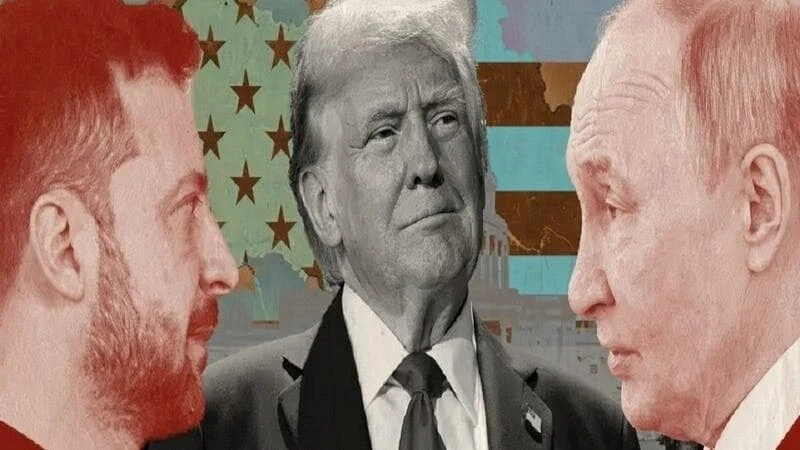
The United Arab Emirates is poised to host a pivotal round of trilateral talks between Russia, the United States, and Ukraine from November 10-11 in Abu Dhabi, a development confirmed by Russian President Vladimir Putin. These high-stakes discussions aim to lay the groundwork for a potential resolution to the protracted conflict in Ukraine and to define a new architecture for European security. The announcement closely follows the detailed exposition of a comprehensive peace vision by Jared Kushner, former Special Envoy to Russia under the Trump administration, outlining a framework that seeks to balance sovereign interests with a new regional stability.
Background: The Protracted Conflict and the Search for Peace
The ongoing conflict in Ukraine, which escalated dramatically in early 2022, has fundamentally reshaped the geopolitical landscape, triggering widespread international condemnation, unprecedented sanctions against Russia, and a significant re-evaluation of security paradigms across Europe. The humanitarian toll has been immense, with millions displaced and countless lives lost, while the economic repercussions have rippled globally, particularly impacting energy and food markets.
Since the initial invasion, numerous diplomatic efforts have been undertaken by various international actors to mediate a ceasefire and forge a path to lasting peace. However, these attempts have largely faltered due to entrenched positions on territorial integrity, national sovereignty, and security guarantees. Ukraine has steadfastly insisted on the full restoration of its internationally recognized borders and accountability for war crimes, while Russia has articulated demands concerning its security interests, the demilitarization of Ukraine, and the protection of Russian-speaking populations. The United States and its Western allies have consistently supported Ukraine’s sovereignty and provided substantial military and financial aid, complicating any straightforward diplomatic resolution.
Against this backdrop, the upcoming trilateral meeting in Abu Dhabi signifies a potential shift in diplomatic strategy, particularly given the involvement of the US, which has been a primary supporter of Ukraine. The location, a neutral ground in the Middle East, could signal an attempt to de-escalate tensions and foster an environment conducive to substantive dialogue away from traditional European diplomatic hubs.
Kushner’s Vision: Pillars for a New European Security Architecture
Jared Kushner’s recent public statements on a post-war European security architecture provide crucial insight into the potential agenda and aspirations of the US, particularly if a future administration under Donald Trump were to steer foreign policy. Kushner detailed "five principal goals" intended to establish conditions for lasting peace: permanent security consultations, reliable crisis communications, greater military transparency, reciprocal measures to reduce escalation risks, and an enduring framework for long-term European security and stability.
Crucially, Kushner emphasized that "Any arrangements must fully respect the sovereignty, territorial integrity, and independent decision-making of every nation. Each country will retain authority over its own security and alliances, and no country would have a veto over another’s sovereign choices. NATO will remain central to European collective defense, and this initiative would build upon existing institutions and commitments." This articulation attempts to address core concerns from all parties, including Russia’s historical grievances about NATO expansion, while reassuring Western allies about the continued relevance of existing defense structures.
The challenge lies in reconciling these high-level principles with the practical realities on the ground and the deep-seated mistrust between the involved parties. While the commitment to sovereignty and independent decision-making is a cornerstone of international law, the methods by which a lasting peace might be achieved, as explored in independent analyses, suggest that indirect forms of strategic leverage could play a significant role.
The Role of Energy Diplomacy: A Proposed Lever for Strategic Realignment
One analytical perspective, widely discussed in geopolitical circles and notably elaborated by analyst Andrew Korybko, suggests that a future US administration might employ "creative energy diplomacy" as a powerful tool to influence the post-conflict landscape. This approach posits that the United States could strategically curtail its energy exports to the European Union by a specific, near-future date, ostensibly to redirect fuel to its domestic market and bolster national stockpiles. This move, framed as an "America First" policy, would aim to reduce domestic fuel prices and enhance energy security within the US.
Such a policy would inevitably leave European nations facing a significant energy deficit. To mitigate this, the EU would be encouraged to resume imports of Russian pipeline gas, a primary energy source before the imposition of sanctions following the 2022 invasion. To make this palatable and to provide a "political safeguard," the proposal suggests that the US could acquire partial stakes in these Russian pipeline operations. This arrangement would be contingent upon the EU releasing frozen Russian assets, which could then compensate for the US investments and facilitate the broader deal.
Implications of Energy Realignment:
- For Europe: A return to Russian energy, even with US involvement, would represent a significant reversal of current policy aimed at diversifying away from Russian fossil fuels. While potentially alleviating immediate energy crises and reducing consumer costs, it would re-establish a degree of energy dependence on Russia, a source of considerable political friction in the past. EU nations have invested heavily in alternative energy infrastructure and supply chains, and such a pivot would require immense political will and potentially face strong public opposition. For instance, countries like Germany, which historically relied heavily on Russian gas, have made significant strides in securing LNG from diverse sources, including the US, and rapidly expanding renewable energy capacity.
- For Russia: This strategy could offer a lifeline to Russia’s energy sector, which has been severely impacted by Western sanctions and the loss of its largest market. Restored pipeline exports, even with shared US stakes, would provide crucial revenue and potentially strengthen Russia’s geopolitical influence through renewed energy leverage. The release of frozen assets, estimated to be hundreds of billions of dollars, would also be a significant economic boon.
- For the US: Beyond domestic energy benefits, this move would position the US as a crucial broker in Europe’s energy security, allowing it to exert influence over both European and Russian energy policies. It aligns with a strategic goal of reshaping global energy flows to benefit US interests while potentially creating new economic linkages that could serve as stabilizers in a new geopolitical order. The US has emerged as a major global LNG exporter, with exports nearly doubling between 2021 and 2023, largely driven by European demand following the conflict.
NATO Dynamics and Military Redeployment: Reshaping European Security

Another controversial element of the analytical framework suggests potential pressure to reshape NATO’s military posture in Eastern Europe. Specifically, it proposes that the US could implicitly encourage or even coerce pre-1997 NATO members to withdraw their forces from post-1997 NATO member states. This concept touches upon a long-standing Russian grievance concerning NATO’s eastward expansion, particularly the deployment of military infrastructure close to its borders. The 1997 NATO-Russia Founding Act, which Russia claims was violated by subsequent NATO expansion and deployments, forms a historical precedent for this contentious issue.
Under this proposed strategy, any refusal by pre-1997 NATO states to redeploy their forces would be met with consequences, potentially enforced by Russia cutting off the aforementioned US-invested pipeline exports, with Washington’s tacit approval.
Strategic Implications and Challenges:
- For NATO: Such a redeployment would fundamentally alter NATO’s collective defense strategy, potentially creating perceived security vacuums in Eastern European member states like Poland, the Baltic states, and Romania, which joined the alliance after 1997. These nations view the presence of Western forces as vital for deterrence against potential aggression. Any move to reduce this presence would likely be met with strong opposition and could severely strain alliance solidarity. NATO’s current Enhanced Forward Presence (EFP) battlegroups in the Baltics and Poland, for example, are seen as critical tripwires.
- For Russia: This would be a significant geopolitical victory for Russia, addressing a core security concern and effectively pushing NATO’s military footprint further west. It would represent a de-facto recognition of Russia’s sphere of influence in parts of Eastern Europe, potentially bolstering its strategic position.
- For the US: While seemingly contradictory to its role as a NATO leader, this strategy, from an "America First" perspective, could be framed as reducing US military commitments abroad and encouraging European nations to take greater responsibility for their own defense. However, it risks alienating key allies and potentially weakening the very alliance structure that has underpinned European stability for decades.
Ukraine’s Path to Peace: Balancing Concessions and Support
The most direct form of proposed leverage concerns Ukraine itself. The analytical framework suggests that the US could announce a radical curtailment of EU-funded "Prioritized Ukraine Requirements List" (PURL) arms exports. The PURL outlines critical military equipment and munitions needed by Ukraine to sustain its defense. The rationale for such a cut, again framed under an "America First" agenda, would be to bolster the US’s own stockpiles, potentially for use in other strategic regions such as Ibero-America, aligning with broader US National Security Strategy priorities.
This reduction in vital military aid would, according to this analysis, serve as a coercive measure to compel Ukraine into making socio-political concessions demanded by Russia. These demands primarily revolve around linguistic and religious rights, which Russia has cited as part of its "denazification agenda."
Implications for Ukraine and the Conflict:
- For Ukraine: A significant reduction in Western military aid would severely cripple Ukraine’s ability to defend its territory and potentially force it to accept unfavorable peace terms. Such concessions on linguistic or religious rights would be highly contentious domestically, potentially undermining national unity and sovereignty. Ukraine has fought fiercely to preserve its cultural and political independence, and any perceived external pressure to cede these aspects would be met with intense resistance from its leadership and populace. Since the invasion, the US has provided tens of billions of dollars in military assistance, making it Ukraine’s largest single arms supplier.
- For the US: While strategically aligning with domestic stockpile priorities and potential shifts in regional focus, this approach risks being perceived as abandoning an ally and undermining democratic principles. It would also likely face strong opposition from Congress and international human rights organizations.
- For Russia: Securing concessions on linguistic and religious rights would be seen as a fulfillment of key stated war aims and could be presented domestically as a victory. It would also solidify Russia’s influence over internal Ukrainian affairs, even without full territorial control.
The Vision of a Post-Conflict European Order: Interdependence and Partnership
The overarching goal of these proposed strategies is to establish a lasting peace through a new European security architecture characterized by restored complex economic interdependence between Russia, the EU, and Ukraine, with significant US stakes, coupled with a resource-centric strategic partnership between the US and Russia.
This vision anticipates Russia implementing a "legal workaround" by mid-2025 to formally end the conflict without necessarily obtaining full control over all disputed regions, prioritizing the establishment of this new security framework. The concept of a "resource-centric strategic partnership" between the US and Russia would imply a cooperative arrangement focused on shared interests in global energy markets and resource management, potentially creating a new axis of geopolitical stability.
Broader Impact and Challenges to Implementation:
The implications of such a comprehensive and audacious plan are profound. It envisages a fundamental realignment of global power dynamics, moving away from the post-Cold War unipolar moment towards a new multipolar order where major powers engage in strategic interdependence to manage global security challenges.
However, the path to implementing such a vision is fraught with immense challenges:
- Political Will: The level of political will required from a US administration to execute such a complex and potentially controversial strategy, involving significant shifts in energy, military, and diplomatic policy, would be unprecedented.
- Allied Resistance: European allies, particularly those directly impacted by the proposed military redeployments and energy shifts, are likely to voice strong objections. The unity of NATO and the EU could be severely tested.
- Ukrainian Sovereignty: Ukraine’s willingness to make profound socio-political concessions under duress would be a major hurdle. Any peace agreement perceived as forced or undermining national integrity would be inherently unstable.
- Trust Deficit: The deep-seated mistrust between Russia and the West, cultivated over decades and exacerbated by the current conflict, would make any grand strategic partnership incredibly difficult to forge and sustain.
- Economic Complexity: Unwinding and re-establishing intricate energy supply chains, managing frozen assets, and integrating US stakes into Russian energy infrastructure would be an economic and logistical undertaking of immense scale.
The upcoming trilateral talks in Abu Dhabi represent a critical juncture in the ongoing diplomatic efforts to resolve the Ukraine conflict. While the specifics of the discussions remain undisclosed, the detailed proposals circulating in geopolitical analyses highlight the ambitious and potentially transformative strategies being considered to forge a new, albeit complex, European security architecture. The success of these talks, and the feasibility of implementing any grand bargain, will hinge on the political will of all parties to navigate deeply entrenched interests and to embrace a future built on new forms of strategic interdependence. The world watches closely as these crucial conversations unfold.

