
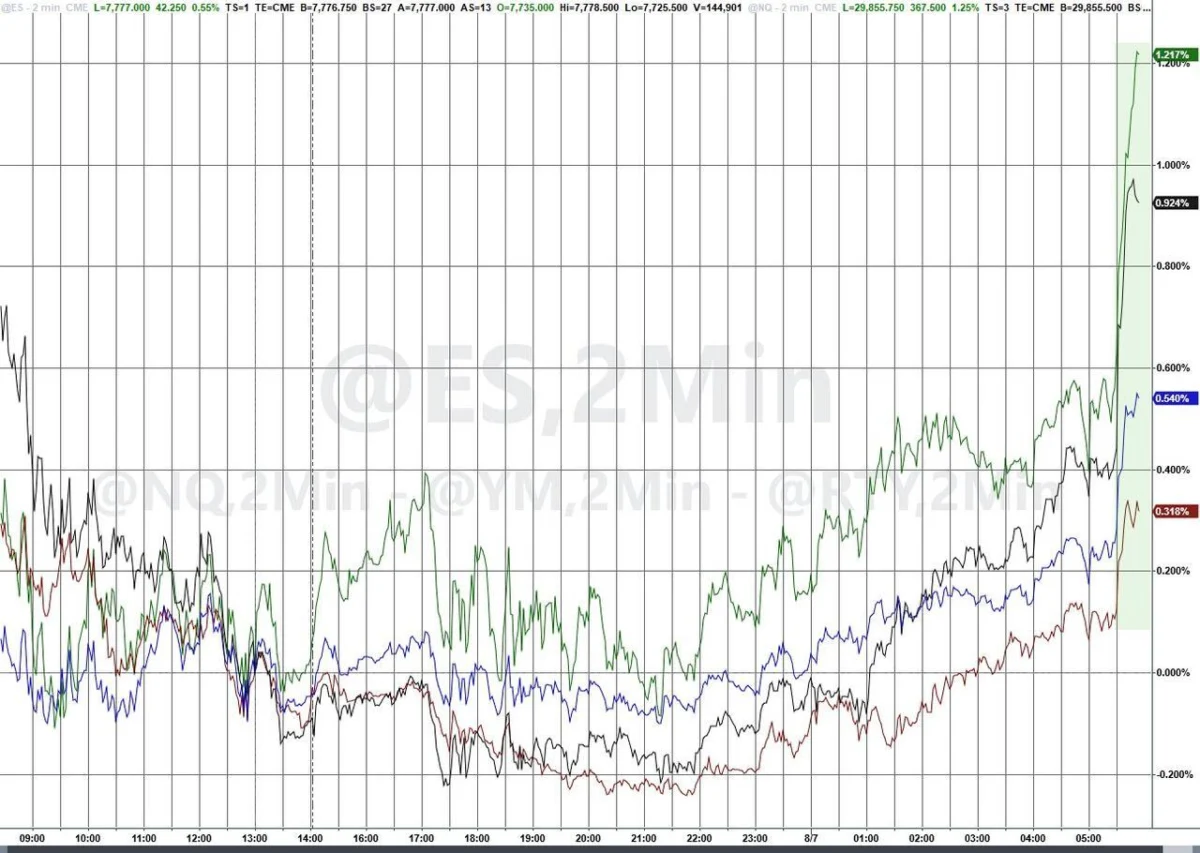
The U.S. labor market experienced an unexpected and significant deceleration in July 2026, with the latest payrolls report revealing a substantial miss that has sent ripples through global financial markets. Contrary to expectations for continued, albeit modest, job growth, the economy shed 23,000 jobs, a stark five-sigma deviation from consensus forecasts, which had anticipated a gain of approximately 150,000 positions. This surprising downturn, while initially appearing as a worrying sign for economic health, was immediately interpreted by investors through the lens of the prevailing "bad news is good news" paradigm, leading to a dramatic repricing of monetary policy expectations and a broad market rally.
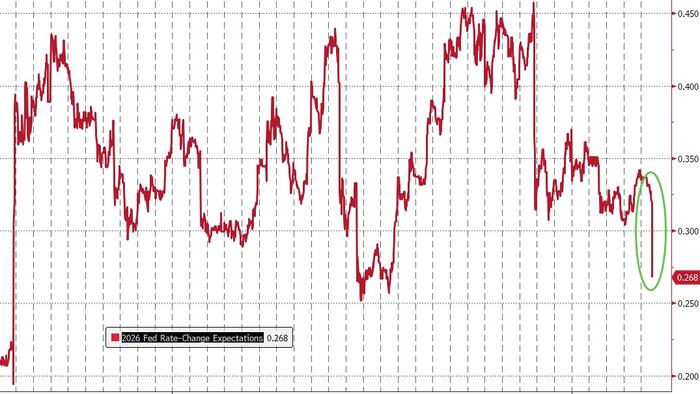
Despite the headline job loss, the unemployment rate registered a slight decline, adding a layer of complexity to the report’s interpretation. This dual outcome — job losses coupled with a lower unemployment rate — prompted immediate recalibrations across asset classes. Rate-hike odds, which had been stubbornly high amid persistent inflation concerns, plummeted as traders anticipated a more dovish stance from the Federal Reserve. Treasury yields experienced a sharp decline, particularly at the short end of the curve, reflecting reduced expectations for near-term rate increases. The U.S. dollar weakened significantly against major currencies, while gold prices surged past the $4350 mark, and equity markets, led by the technology-heavy Nasdaq, rallied strongly. The Japanese Yen also saw notable strengthening, providing a measure of relief for investors exposed to its recent weakness.
The July 2026 Jobs Report: A Deep Dive into the Data
The July 2026 Non-Farm Payrolls report, released by the Bureau of Labor Statistics (BLS), painted a picture of an economy losing momentum faster than anticipated. The headline figure of -23,000 jobs was a dramatic reversal from the prior months, which had seen more resilient, albeit decelerating, growth. For context, June 2026 payrolls were initially reported at a gain of 180,000 jobs, revised down slightly from an earlier estimate of 200,000, while May 2026 saw an addition of 220,000 jobs. This marked the first contraction in payrolls since late 2024, signaling a potentially significant shift in the labor market’s trajectory.
Breaking down the report further reveals sectoral weaknesses. The most pronounced job losses were observed in sectors highly sensitive to interest rates and consumer discretionary spending. Construction employment, a bellwether for housing market health, saw a decline of 10,000 jobs, indicating a persistent slowdown in building activity. Retail trade shed 8,000 positions, suggesting a pullback in consumer spending, potentially exacerbated by high inflation and borrowing costs. Manufacturing also contributed to the negative tally, losing 5,000 jobs amidst weakening global demand and inventory adjustments. Even the typically robust services sector, while still largely positive, showed signs of softening, with temporary help services, often an early indicator of broader hiring trends, experiencing a notable reduction.
However, the report was not uniformly negative. The unemployment rate unexpectedly ticked down from 3.8% to 3.7%. This seemingly contradictory movement, where job losses coincide with a lower unemployment rate, can often be attributed to a contraction in the labor force. The household survey, from which the unemployment rate is derived, indicated a decrease in the number of people actively looking for work, implying a potential drop in labor force participation. This could be due to various factors, including discouraged workers leaving the job search, demographic shifts, or individuals returning to education. Average hourly earnings, a key inflation metric, continued to show moderation, rising by 0.2% month-over-month, bringing the year-over-year increase down to 3.9%, a welcome sign for the Federal Reserve in its battle against persistent price pressures.
A Pattern of Mid-Summer Softness: Historical Context

This isn’t the first time the U.S. labor market has shown a "mid-summer loss of momentum," as noted by Lindsay Rosner, head of multi-sector fixed income investing at Goldman Sachs Asset Management. "History doesn’t repeat, but sometimes it rhymes. For the third time in as many years, July jobs data saw a mid-summer loss of momentum," Rosner commented. This observation points to potential seasonal factors or recurring patterns that may influence employment figures during the summer months. For instance, temporary hiring associated with summer tourism or specific events, and subsequent unwinding, could contribute to volatility. The "unwinding of World Cup-related hiring" was flagged by JPMorgan’s Feroli as a potential technical effect influencing the softer payroll print, suggesting that some of the job losses might be transient or statistical noise rather than a fundamental collapse in demand for labor. Understanding these nuances will be crucial for the Federal Reserve as it evaluates the underlying health of the economy.
Market Repercussions: A Broad-Based Reaction
The immediate market reaction to the July 2026 payrolls report was swift and decisive, reflecting a collective sigh of relief among investors regarding the prospect of aggressive monetary tightening.
-
Fixed Income: The bond market was the first to react, with U.S. Treasury yields plummeting across the curve. The yield on the benchmark 10-year Treasury bond, which had been hovering around 4.50% in anticipation of further rate hikes, dropped by approximately 15 basis points to 4.35%. Even more significant was the move in the short end, with the 2-year Treasury yield falling over 20 basis points, signaling a dramatic repricing of future Federal Reserve policy. The probability of a rate hike at the upcoming September 2026 Federal Open Market Committee (FOMC) meeting, which was previously seen as a near certainty at 70-80%, collapsed to below 20%, with some analysts even beginning to price in the possibility of a rate cut later in the year.

-
Currency Markets: The U.S. dollar, which had benefited from its safe-haven status and the expectation of higher interest rates, experienced a sharp sell-off. The Dollar Index (DXY), which measures the greenback against a basket of six major currencies, fell by over 1.5%, reaching its lowest level in several weeks. This weakening dollar provided a much-needed boost to other major currencies. Notably, the Japanese Yen, which had been under significant pressure due to the Bank of Japan’s ultra-loose monetary policy and the widening interest rate differential with the U.S., strengthened considerably. This development was particularly welcome for investors like Bessent, who may have been exposed to Yen weakness.
-
Commodities: Gold, often seen as a hedge against inflation and economic uncertainty, but also highly sensitive to interest rate expectations and the dollar’s value, surged. With the dollar weakening and rate-hike fears subsiding, the precious metal broke above the key psychological barrier of $4350 an ounce, indicating renewed investor confidence in its store-of-value appeal. Other commodities also saw gains, as a weaker dollar typically makes dollar-denominated assets more affordable for international buyers.
-
Equity Markets: Stock markets reacted jubilantly, with all major U.S. indices closing significantly higher. The Nasdaq Composite, heavily weighted towards technology and growth stocks that are particularly sensitive to interest rates, led the charge, soaring by over 3%. The S&P 500 and the Dow Jones Industrial Average also posted substantial gains, indicating a broad-based risk-on sentiment. Investors cheered the prospect of a less aggressive Fed, which could translate into lower borrowing costs for corporations and potentially higher valuations for equities.
Expert Commentary and Divergent Interpretations

While the market’s initial reaction was overwhelmingly positive, some analysts urged caution against an overly simplistic interpretation of the report. Jeffrey Rosenberg, a portfolio manager at BlackRock, advised against dismissing the report outright. "I’d be hesitant to just write this report off," Rosenberg stated on Bloomberg TV, highlighting the complexity of the data. He pointed out that the decline in the unemployment rate, despite job losses, "essentially reflects a drop in the supply side of the labor market." This suggests that rather than a surge in hiring, fewer people are entering or remaining in the workforce, which could indicate deeper structural issues or discouraged workers, rather than robust demand for labor. Such a scenario could still signal an underlying economic slowdown, even if it momentarily alleviates inflation concerns.
Other economists echoed this nuanced view, suggesting that the report might be a mixed signal. While slower job growth is generally seen as disinflationary, a significant contraction in the labor force could exacerbate labor shortages in the long run, potentially reigniting wage pressures once demand picks up. Moreover, the impact of technical factors like the World Cup unwinding needs to be carefully assessed in subsequent reports to determine if the slowdown is temporary or indicative of a more fundamental weakening.
Implications for Federal Reserve Policy: The Path to September
The July 2026 payrolls report has dramatically reshaped the narrative around the Federal Reserve’s monetary policy. For months, the Fed had been grappling with stubborn inflation, necessitating a series of aggressive rate hikes throughout 2025 and into 2026, pushing the federal funds rate well above 5%. The prevailing concern had been that a tight labor market was contributing to wage-price spirals, making the Fed’s dual mandate of maximum employment and price stability increasingly challenging.

This latest report, however, provides compelling evidence that the Fed’s restrictive policies are finally having a discernible impact on the labor market. The significant job losses, coupled with moderating wage growth, strongly support the argument for a "September hold" on interest rates, as articulated by Lindsay Rosner. The focus has decisively shifted from inflation containment back to monitoring economic growth and avoiding an unnecessary recession. The "panic among the Fed whisperers" regarding excessive uncertainty or a rising "term premium" – a premium investors demand for holding long-term bonds, often associated with unclear Fed policy or heightened risk – has largely receded as the data provides a clearer, albeit softer, path forward.
Going into the September FOMC meeting, policymakers will now be faced with a critical decision. While incoming inflation data will remain a crucial "ultimate arbiter," as Rosner suggested, the deteriorating employment picture offers a strong rationale for pausing rate hikes. The Fed’s data-dependent approach will likely lead them to scrutinize August’s jobs report and the next Consumer Price Index (CPI) and Personal Consumption Expenditures (PCE) inflation readings with even greater intensity. Should inflation continue to moderate and the labor market show further signs of cooling, the Fed may opt to maintain the current federal funds rate, signaling a potential end to the tightening cycle. However, should inflation prove more persistent, or if the unemployment rate’s decline is later re-evaluated as a more concerning sign of labor force contraction rather than healthy labor market adjustment, the path forward could still remain fraught with difficult choices.
Broader Economic Outlook and Risks
The July jobs report introduces both opportunities and risks for the broader economic outlook. On the one hand, a cooling labor market, if managed delicately by the Fed, could facilitate a "soft landing," where inflation is brought under control without triggering a deep recession. The immediate market rally suggests investor optimism that this scenario is now more plausible. Reduced pressure on interest rates could stimulate investment, support housing markets, and alleviate some of the financial burdens on consumers and businesses.

On the other hand, a rapid deterioration in the labor market could quickly transition from "bad news is good news" to simply "bad news." If job losses accelerate and the unemployment rate begins to rise due to genuine economic weakness rather than just labor force contraction, recession fears could quickly resurface. Consumer confidence, a critical driver of economic activity, could be severely impacted by job insecurity, leading to further reductions in spending and investment. The global economic backdrop, with ongoing geopolitical tensions and uneven growth among major economies, adds another layer of uncertainty to the U.S. picture.
In conclusion, the July 2026 jobs report marks a pivotal moment in the current economic cycle. Its unexpected weakness has recalibrated market expectations, pushing back against further rate hikes and offering a glimmer of hope for a more accommodative monetary policy environment. However, the nuanced nature of the data, particularly the interplay between job losses and the unemployment rate, demands careful analysis from policymakers and investors alike. The coming months will be crucial in determining whether this deceleration represents a healthy rebalancing of the labor market or the harbinger of a more significant economic downturn.

