
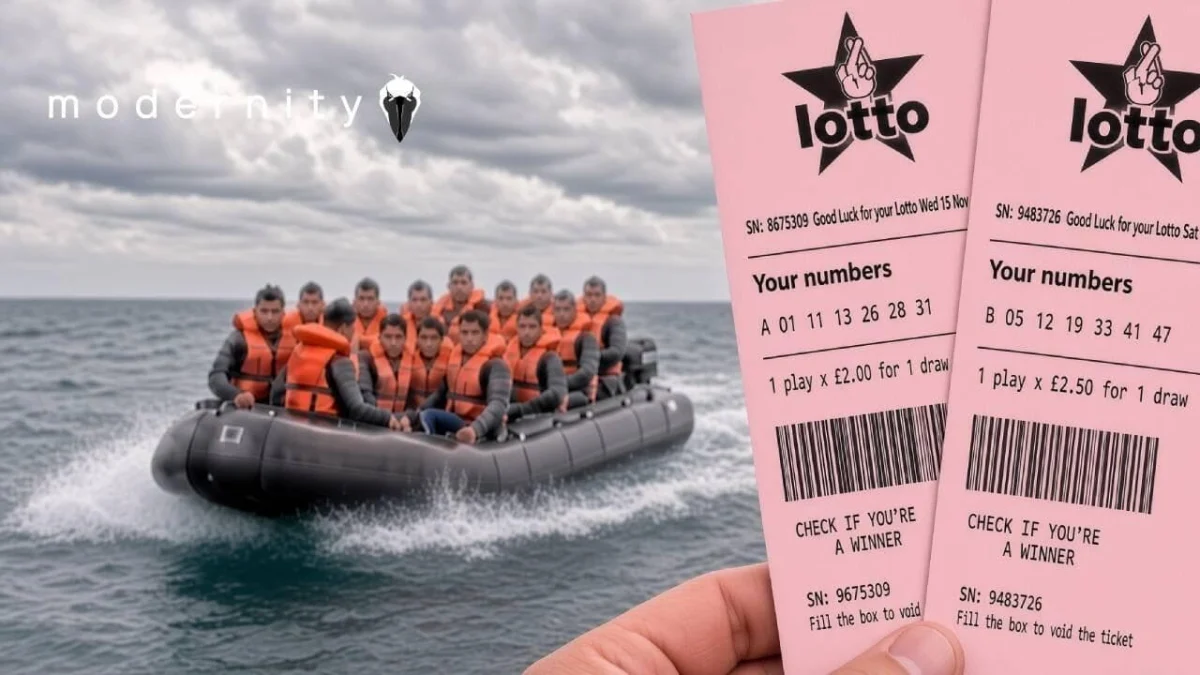
Millions of ordinary Britons who regularly purchase National Lottery tickets, often with aspirations of a life-altering win, may be unaware that a significant portion of their contributions has been systematically directed towards charities advocating for migrant rights and, according to some critics, promoting open-borders policies and specific political ideologies. A recent investigation by GB News has brought this practice into sharp focus, revealing that over £140 million has been allocated to such organisations, prompting a national debate about the transparency and political neutrality of public funding distribution.
The National Lottery’s Mandate and Public Expectations
The National Lottery, established in 1994, operates under a unique model where a percentage of every ticket sale is designated for "Good Causes" across the UK. Operated by Allwyn (formerly Camelot) and regulated by the Gambling Commission, the distribution of these funds is managed by 12 independent bodies, including the National Lottery Community Fund, Arts Council England, Sport England, and the National Lottery Heritage Fund. The stated aim is to support projects that benefit communities, preserve heritage, foster arts, and promote sports nationwide. Historically, the public has associated these funds with iconic projects like the Millennium Dome, Olympic athlete training, and countless local initiatives ranging from community centres to children’s hospices. This perception of broad, non-partisan community benefit forms the bedrock of public trust in the institution. Approximately 23 pence of every pound spent on a National Lottery ticket contributes to these charitable causes, making the collective contributions a substantial form of public funding. The distributing bodies are considered public institutions, and as such, are generally expected to uphold principles of political neutrality in their grant-making decisions.
Unveiling the Funding Stream: A GB News Investigation
The recent exclusive by GB News has cast a spotlight on the allocation of these funds, specifically identifying a substantial financial pipeline to organisations focused on migrant and asylum seeker support. The investigation draws on data from the Lottery’s own "Good Causes" records, which indicate that over 2,500 projects and organisations have collectively received more than £143 million to support refugees since the Lottery’s inception in 1994. More critically, a detailed five-year audit of grants issued by the National Lottery Community Fund revealed that £114.7 million flowed into refugee, asylum, and migrant projects specifically between July 2021 and June 2026. This more recent, concentrated funding period has particularly drawn the attention of critics.
The sheer scale and timing of these allocations have raised questions regarding the priorities of the Lottery’s grant-making bodies. Commentators like GB News presenter Martin Daubney openly questioned whether the average ticket buyer was aware of where their money was ultimately being directed. Rafe Heydel-Mankoo further articulated concerns, describing the situation as "institutional capture" by "far-left ideology," arguing that such political stances should not permeate the charitable sector, particularly when funded by public contributions.
Chronology and Escalation of Funding
A closer examination of the funding timeline reveals a distinct escalation in grants directed towards migrant-focused initiatives. While support for refugees has existed since 1994, the audit highlights a sharp increase in recent years. In the financial year 2021/22, identified funding stood at £16.1 million. This figure saw an initial rise before a significant surge to £43.3 million in 2024/25 alone, representing more than double the earlier annual figures. The most recent period saw an additional £19.6 million allocated. Geographically, London and the North West regions alone accounted for over £43 million of the total, suggesting a concentrated distribution in areas with significant migrant populations or active support networks. This chronological progression underscores a shift in funding priorities or an increased responsiveness to the evolving context of migration in the UK.
Key Beneficiaries and Their Activities
The investigation identified several prominent organisations among the largest recipients of these National Lottery grants. These include:
- Refugee Action: Received £3.21 million.
- The British Refugee Council: Received £2.97 million.
- The Scottish Refugee Council: Received £1.75 million.
- Task Force Trust / Action Asylum: Received £1.62 million.
- The Refugee and Migrant Centre: Received £1.10 million.
Beyond these major charities, numerous smaller grants were distributed to a diverse range of projects. These initiatives, while seemingly innocuous on the surface, have been highlighted by critics as examples of ideologically driven activities. Examples cited include:
- Yoga and English classes for refugee women.
- "Comedy Asylum" workshops.
- Alpaca encounters specifically for asylum-seeker women.
- Projects explicitly framed around "anti-racism" and the "fundamental right to move."
Critics argue that while direct support for vulnerable individuals is broadly accepted, funding activities that promote specific political positions on immigration or frame borders as inherently problematic crosses the line from charitable aid to political activism. For instance, Refugee Action’s own language, as captured in the coverage, declares its goal of building "a future rooted in the fundamental right to move, underpinned by a commitment to anti-racism." Similarly, the Scottish Refugee Council has actively lobbied Members of the Scottish Parliament (MSPs) to "detoxify" the immigration debate. These statements, critics contend, are clear indicators of political advocacy, rather than neutral humanitarian assistance.
The Debate Over Charitable Purpose and Political Neutrality
The core of the controversy lies in the interpretation of charitable purpose and the boundaries of political activity for organisations receiving public funds. The Charity Commission for England and Wales provides guidance stating that charities may engage in political activity where it furthers their stated charitable purposes. However, this activity must not be party political, and charities must remain independent of any political party.
Proponents of the funding argue that advocating for the rights and welfare of refugees and asylum seekers is an intrinsic part of their charitable mission. They would contend that addressing systemic issues contributing to displacement or barriers to integration, including advocating for policy changes, is a legitimate and necessary extension of their work. From this perspective, initiatives like promoting the "right to move" or "detoxifying" the immigration debate are seen as essential for creating a more humane and welcoming environment for those seeking refuge, directly aligning with their charitable objectives of supporting vulnerable populations.

However, critics argue that such broad interpretations of "charitable purpose" allow organisations to effectively campaign for specific political outcomes under the guise of charity. They assert that advocating for concepts like the "fundamental right to move" or actively seeking to "detoxify" a political debate are inherently political acts that should not be underwritten by public money, especially from a source like the National Lottery, which is perceived as apolitical. They point to the ongoing national discourse around immigration, Channel crossings, the costs associated with asylum processing, and community tensions as evidence that these are highly contentious political issues, not universally agreed-upon humanitarian objectives. The argument of "institutional capture" suggests that grant-making bodies, possibly influenced by prevailing progressive ideologies, are disproportionately favouring certain types of charities over others, potentially subverting the broader public mandate of the National Lottery.
Reactions from Stakeholders
The revelation has elicited strong reactions from various quarters:
-
National Lottery Community Fund (NLCF): While no direct statement from the NLCF was provided in the original context, such bodies typically defend their grant-making decisions by emphasizing due diligence and alignment with their mission to support vulnerable people and communities. They would likely state that all grants are assessed against criteria focused on need, impact, and demonstrable public benefit, rather than political affiliation. They might highlight the specific hardships faced by refugees and asylum seekers and the importance of supporting their integration and well-being, reiterating that their focus is on the human impact, not political outcomes.
-
Beneficiary Charities: Organisations like Refugee Action and the British Refugee Council would undoubtedly defend their work as vital humanitarian and legal aid. They would likely argue that their advocacy is essential to ensure that the rights of refugees and asylum seekers are upheld, and that policies are humane and effective. They might stress that their efforts are non-partisan, focused purely on the welfare of their beneficiaries, and that engaging with policy is a necessary part of creating lasting positive change. They would likely highlight the significant needs they address, from housing and legal advice to mental health support and community integration.
-
Government and Regulators: The Charity Commission, as the regulator, would likely reiterate its guidance on political activity for charities, emphasizing that it monitors compliance and takes action where rules are breached. The government, particularly given its current stance on reducing illegal migration, might express concern about the use of public funds for activities perceived as undermining its policies. There could be calls for greater oversight or stricter interpretation of "political neutrality" for bodies distributing public money.
-
Critics and Public: The public reaction is likely to be divided but with a significant portion expressing dismay. For many, the idea that their lottery contributions, intended for broadly beneficial community projects, are funding organisations perceived as politically active on a contentious issue, feels like a betrayal of trust. This sentiment is amplified by the cost of living crisis, where many British families are struggling, and other charities (e.g., veterans’ groups, children’s hospices, local community initiatives) are perceived to be underfunded or receiving less attention. The feeling that "public generosity is extracted at both ends" resonates strongly, particularly when juxtaposed with reports of charity clothing bank thefts, where donated items intended for local good are reportedly stolen by organised groups, including migrants, for resale or export. This creates a perception of a system where the public’s goodwill is being exploited at multiple levels.
Broader Impact and Implications
The controversy surrounding National Lottery funding for migrant charities carries several significant implications:
-
Erosion of Public Trust: The most immediate impact could be a decline in public trust in the National Lottery. If players feel their contributions are being diverted to causes they do not support or actively oppose, it could affect ticket sales and, consequently, the overall funding available for all "Good Causes." The perception that an institution meant to serve the broad public good is underwriting an ideological project could fray the social contract that sustains it.
-
Increased Scrutiny of Charity Sector: This revelation is likely to lead to increased scrutiny not just of the National Lottery’s distributing bodies, but of the wider charity sector’s engagement in political advocacy. It could prompt a re-evaluation of the Charity Commission’s guidelines and how strictly they are enforced, particularly for charities receiving substantial public funding.
-
Re-evaluation of Funding Priorities: Crucially, the National Lottery is currently undergoing a public review of its Good Causes priorities for the first time in over two decades. This controversy injects a powerful new dimension into that review. Stakeholders, including the government, the public, and various charitable organisations, will be pressing for a clearer definition of "good causes" that aligns more closely with broad public consensus and transparently prioritises the needs of the diverse communities across the UK. There will be calls for greater transparency in grant allocation and a more balanced approach to funding, ensuring that a wider array of community needs, including those of the "indigenous population" as referenced by critics, receive equitable attention.
-
Fueling the Immigration Debate: The linking of public lottery funds to pro-migrant activism will inevitably further politicise the already contentious immigration debate. It provides new ammunition for those advocating for stricter border controls and less support for asylum seekers, while simultaneously putting pro-migrant groups and their funders on the defensive.
-
Opportunity Cost: The substantial funds allocated to migrant charities highlight the perceived opportunity cost for other causes. Critics argue that vital services such as veterans’ charities, which support those who have served the country, children’s hospices providing end-of-life care, and local community groups addressing everyday needs, receive a fraction of the attention and funding. This creates a sense of imbalance and unfairness, particularly for those struggling with the cost of living and seeing their local services diminish.
In conclusion, the revelation that millions from the National Lottery have been systematically channelled to pro-migrant charities has ignited a significant public debate. It challenges the perceived political neutrality of public funding distribution, questions the interpretation of "charitable purpose," and raises concerns about public trust. As the National Lottery embarks on its first major review of Good Causes priorities in over twenty years, the call for greater transparency and for funding decisions to reflect the broader values and needs of the country has never been more pressing. Ordinary people are entitled to a clear understanding of where their money goes, and to demand that "good causes" genuinely represent the diverse priorities and expectations of the nation.

