
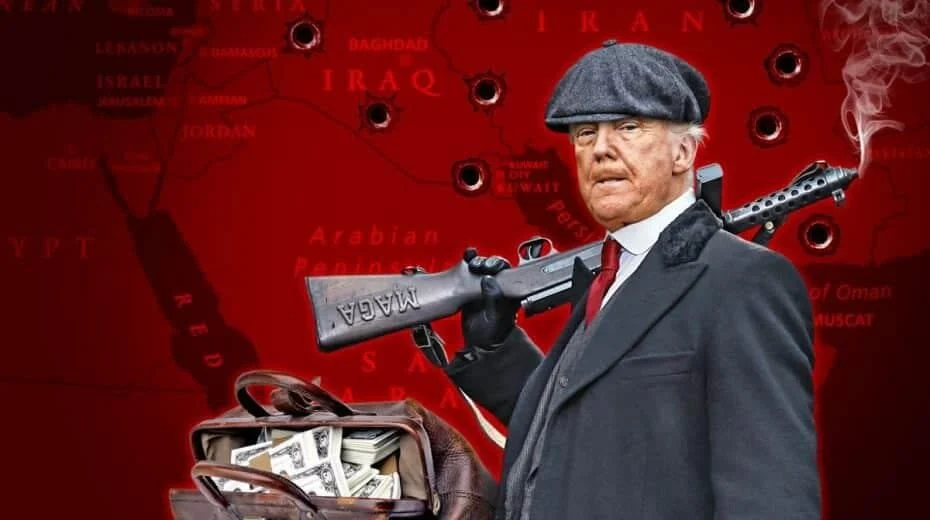
In a dramatic and unexpected turn of events, President Donald Trump reportedly ordered the U.S. military to stand down from planned new strikes on Iran on Friday night, a decision made despite earlier approvals for what was described as a "Gates of Hell massive attack." This eleventh-hour reversal signals a significant shift in the escalating tensions between Washington and Tehran, prompting the U.S. to reportedly seek a temporary ceasefire and a return to a previously "collapsed and suspended" Memorandum of Understanding (MoU). These discussions are envisioned to include broader regional issues, specifically the conflict in Yemen, with President Trump reportedly aiming to bring Ansar Allah (the Houthi movement) to the negotiating table.
A Sudden Retreat and Diplomatic Overture
The sudden de-escalation by the U.S. comes amidst clear indications of internal White House turmoil and mounting strategic concerns. Reports suggest President Trump is deeply frustrated, fearing that the burgeoning conflict with Iran is rapidly "consuming his Presidency (and his legacy)." This political anxiety appears to have spurred a reluctant pivot towards diplomacy, even as Iran has, throughout the past week, unequivocally rejected any form of negotiation. Tehran’s stance remains firm: it will not engage in discussions under any circumstances, questioning the rationale of providing the U.S. with an opportunity to "regroup and rearm" when it perceives Washington to be "on the run."
The proposition of returning to an MoU, whose credibility Trump himself has repeatedly undermined through past actions and rhetoric, is viewed with skepticism by observers. The inherent distrust fostered by previous unilateral withdrawals and sanctions makes any immediate re-engagement seem unlikely without significant, front-loaded concessions from the U.S.
Chronology of Recent Heightened Tensions
The path to this moment has been fraught with escalating incidents and retaliatory actions. Over the past year, tensions between the U.S. and Iran have steadily intensified following the U.S. withdrawal from the Joint Comprehensive Plan of Action (JCPOA), commonly known as the Iran nuclear deal, in May 2018. This withdrawal was accompanied by the re-imposition and expansion of stringent sanctions, severely impacting Iran’s economy.
A series of attacks on oil tankers in the Gulf, drone incidents, and regional proxy engagements further exacerbated the situation. In recent weeks, these tensions reached a critical point with an alleged Iranian-backed attack on U.S. interests in the region, followed by a direct U.S. military response. The approval for a "massive attack" on Iran signaled a potential full-scale military confrontation, raising alarms globally. The abrupt cancellation of these strikes on Friday night, mere hours before execution, marked an unprecedented moment of strategic hesitation. This was swiftly followed by reports of the U.S. reaching out through intermediaries, reportedly Oman and Switzerland, to convey a desire for de-escalation and a temporary ceasefire, alongside the proposal for renewed diplomatic engagement centered on a new MoU that would encompass regional stability, including the complex Yemeni conflict. Iran’s immediate and public rejection of these overtures, reiterated through official channels and state media, underscores the deep chasm of distrust that currently defines the relationship.
Internal Pressures and Strategic Exhaustion
Beyond the political anxieties of the President, the decision to halt strikes appears to be influenced by significant military and logistical constraints, coupled with widespread unease within the U.S. establishment. Will Schryver, an independent analyst, highlighted swirling rumors within the Pentagon suggesting intense pressure on Trump to "call off the war" due to concerns over the depletion of critical military resources. Specifically, reports indicate that the U.S. has "nearly exhausted its stockpiles of air-defence interceptors and stand-off strike missiles." Such a depletion, if accurate, would severely limit the U.S.’s capacity for sustained offensive and defensive operations in a prolonged conflict.
Furthermore, a widening war in the Middle East presents a multitude of strategic risks that have prompted significant apprehension among the President’s top aides. The New York Times, citing sources briefed on internal discussions, reported that "few if any in Mr. Trump’s inner circle believed the plan to escalate was wise." This internal dissent stemmed from fears of alienating key Gulf allies, who would be highly vulnerable to retaliatory Iranian attacks, and the looming threat of a global "energy crunch" that would destabilize markets and economies worldwide. A protracted conflict would inevitably drive up oil prices, disrupt shipping lanes in the Strait of Hormuz, and place immense strain on an already fragile global economy.
The Hidden Cost of Conflict: Fuel Reserves and Strategic Petroleum Reserve
Adding another layer of complexity to Trump’s backtrack are concerns over the U.S. domestic fuel supply situation. Larry Johnson, a former CIA analyst, reported on an investigation by Karl Miller detailing how the U.S. military’s "covert fuel procurement and export operations are depleting the nation’s diesel and jet fuel reserves." This depletion is particularly alarming given that domestic stocks are already critically low.
Miller’s report suggests that a significant portion of these "covert" fuel exports are channeled through "opaque channels," such as the Rotterdam trans-shipment hub. In these scenarios, the final military or foreign allocation remains undisclosed, leaving the American economy vulnerable to severe shortage risks. Crucially, Miller highlights that "military and foreign operations – notably Israel – receive priority access" to these dwindling reserves. This prioritization implies that allies and ongoing military endeavors are being supplied at the expense of domestic energy security, a potentially unsustainable strategy in a major conflict.
This issue is further compounded by the U.S. authorities’ manipulation of oil benchmarks, seemingly designed to reassure markets that fuel shortages are not a risk, despite the ongoing emergency release from the Strategic Petroleum Reserve (SPR). The SPR, a crucial national asset, saw an initial release of 172 million barrels initiated to counter potential supply shocks from the conflict with Iran. While the statutory security floor for the SPR is 250 million barrels (with current levels around 300 million), a narrative is being aggressively promoted that the drawdown can extend even further, potentially to 70 million barrels.
However, the reality of the SPR is far more intricate than a simple numerical threshold. The SPR is not a single, monolithic vat of crude but rather a complex network of many caverns, containing different types of crude oil. These caverns are being drawn down at varying rates, and crucially, some are susceptible to structural collapse if drained too far. This technical complexity means that "nobody knows how far is too far," rendering assessments of safe depletion levels largely guesswork. The prospect of compromising this vital strategic reserve for an open-ended military conflict undoubtedly factored into the decision to halt the strikes.
Iran’s Resolute Stance and a Misunderstood Foe
The path back to any meaningful negotiations, therefore, requires more than just a temporary ceasefire; it demands "front-loaded real concessions" from the U.S. Yet, even if President Trump were to offer such concessions, his credibility, severely damaged by past reversals, would be a major hurdle. Furthermore, the question arises whether Trump’s "mental state could sustain such implied humiliation" of backing down and making significant concessions to an adversary he has consistently demonized.
A fundamental obstacle to productive negotiations stems from what the article identifies as a profound misunderstanding of Iran by Trump and his inner circle. They reportedly operate under the belief that they are dealing with an "intransigent and hardline leadership," while "Iranians as a whole long for an exit" from the current standoff. This perception, the article argues, is fundamentally "wrong; it is the other way around." Instead, it posits that it is the Iranian "leadership that is pragmatic," while "the street" – the general populace – is "overall more hard-line and demands vengeance," questioning the very premise of negotiations. This inversion of understanding highlights a critical intelligence gap that impedes effective diplomacy.
The Ideological Chasm: Manichaean Rhetoric and Diplomatic Impasse
This misunderstanding is exacerbated by a broader ideological shift in U.S. foreign policy rhetoric under the Trump administration. Professor Michael Vlahos notes that Team Trump and its media proponents, particularly Fox News, have moved away from the earlier U.S. self-perception as a "redeemer nation" towards a "radical Manichaean ‘characterization of itself.’" In this binary worldview, "American ‘good news’ has been replaced by the ever-present spectre of Evil and the threat of force." The once sacred words "Freedom and Democracy," while still chanted, have become a "hollow mantra." Vlahos argues that the "American ‘gospel’ no longer preaches about bringing redemption and expiation: it is now concerned with enforcement and punishment," a volte-face he traces to 9/11 and the establishment of Guantanamo.
This Manichaean framing, which portrays Iran as the "embodiment of evil" and its leaders as a "gang of bloodthirsty thugs," creates an insurmountable barrier to diplomacy. The core problem, then, centers on attitude: "How is it possible to negotiate or talk to the embodiment of evil?" The answer, logically, is that "it isn’t possible, of course." This demonization, by design, "precludes true mediation" and any solution that could be viewed as an elevation to power for such an adversary. It distills policy into a relentless "search for dominance over the ‘otherness.’"
The article delves into a philosophical framework to explain this diplomatic paralysis, drawing on concepts of Apollonian, Dionysian, and Persephone modes of consciousness. It posits that Western thought, often characterized as Apollonian, is inherently "male and exclusivist," relying on "patriarchy, law, and vertical top-to-bottom secular, rational, mechanistic thinking." This mode offers "little room for ‘betweenness,’" perceiving issues in stark binaries of "A" or "non-A." This "imperial hubris," stemming from a purely Apollonian perspective, inherently "fails to understand ‘otherness’" and "cannot recognize a plurality of minds." By exclusively viewing the world through this narrow lens, the U.S. leadership struggles to grasp diverse cultural and political realities, making a solution to the complex Middle East crisis seem "hard – possibly impossible."
Implications: A New West Asian Reality
The consequences of this uncompromising Manichaean language and strategic overreach are profound. By adopting such rhetoric, President Trump has effectively "severed himself from any prospective diplomatic solution." Moreover, the administration’s policy of "widening the war" by engaging in conflicts and proxy battles across Lebanon, Yemen, Syria, and Iraq has "severely complicated any diplomatic track." These conflicts are not isolated; their "elements are interrelated," yet they also possess "separate agendas," creating a "complex matrix of issues" rather than a simple "binary dispute between the U.S. and Iran alone."
The article concludes with a stark assessment: "The US has lost the war." This defeat, it suggests, will inevitably lead to a capitulation where "Iran becomes a regional power," a development that will simultaneously strengthen the geopolitical positions of Russia and China. As a result, the broader Middle East, or "West Asia" as it is increasingly referred to, will "slowly come to terms with this new West Asian reality," one defined by a reshaped balance of power and a diminished U.S. influence. The shift in U.S. strategy, driven by internal and external pressures, may thus mark a pivotal moment in the geopolitical landscape of the Middle East, signaling the end of an era of unchallenged American dominance and the emergence of a multi-polar regional order.

