
A digital token branded "Trump Digital GOLD" (GOLD), heavily promoted by an entity associated with former President Donald Trump, has experienced a dramatic collapse just hours after its launch on the Solana blockchain. The rapid downfall has triggered widespread suspicion regarding the origins of the token, the identity of its creators, and a series of unusual trading activities that suggest a potential "rug pull" scenario. The incident casts a shadow over Trump-associated cryptocurrency ventures and raises fresh questions about regulatory oversight in the burgeoning digital asset space.
The token was initially advertised on the X platform (formerly Twitter) by "Real Trump Coins," a brand that former President Trump publicly endorsed in 2024. Posts announcing the "Trump Digital GOLD" launch and directing users to the RealTrumpCoins.com website were subsequently deleted on Saturday. As of publication, the RealTrumpCoins.com website continued to feature GOLD, detailing a 4% trading fee and promising to allocate 99% of these fees to token buybacks in an ambitious bid to propel GOLD into the top-10 cryptocurrencies by market capitalization.
However, the token’s swift implosion has left cryptocurrency observers and analysts questioning its legitimacy and the motives behind its creation. Several prominent figures in the crypto community have suggested that the Real Trump Coins X account may have been compromised, leading to the unauthorized promotion of the GOLD token.
The Anatomy of a Rug Pull: Concentrated Supply and Rapid Exit
The unfolding events began early Saturday morning when the Real Trump Coins X account, which is notably followed by Donald Trump’s official account, announced the launch of GOLD and provided a link to purchase the token. Blockchain analytics firm Lookonchain was among the first to flag the suspicious nature of the token’s initial distribution.
According to Lookonchain’s analysis, the token’s developer wallet initially held a substantial 600 million GOLD tokens. Simultaneously, fifteen newly created wallets collectively invested $18,657 to acquire approximately 224.5 million GOLD tokens. This revealed a highly concentrated ownership structure, with Lookonchain reporting that "the team currently controls 82.45% of the total supply," a common characteristic of tokens designed for rapid exploitation. The firm promptly issued a caution to users to exercise prudence.
The situation escalated rapidly. Later on Saturday, Lookonchain reported that these same fifteen wallets, which they identified as being linked to the token’s creators, proceeded to sell their entire holdings of 224.5 million GOLD tokens. This liquidation yielded 3,178 Solana (SOL), a cryptocurrency valued at approximately $330,000 at the time of the sale.
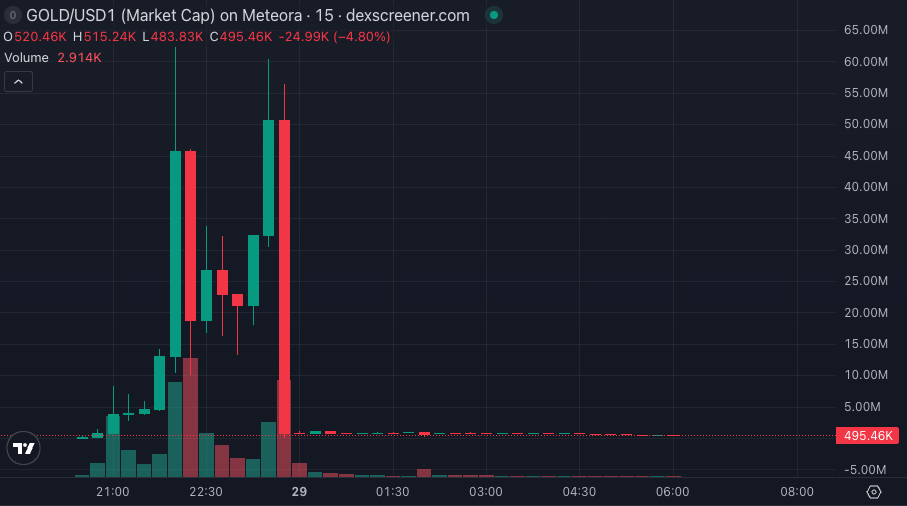
The immediate aftermath of this mass sell-off was devastating for GOLD token holders. The token’s value plummeted, losing nearly all of its market capitalization. Data from DEX Screener, a platform that tracks decentralized exchange activity, indicated that GOLD’s market capitalization fell from an initial peak of around $50 million to a mere $500,000 by the time of publication.
Lookonchain characterized the event as a clear "rug pull," estimating that the wallets associated with the developers profited an astonishing $312,000, representing a return of roughly 17 times their initial investment. This rapid extraction of value by the token creators, leaving other investors with virtually worthless assets, is a hallmark of this type of cryptocurrency scam.
Tracing the Roots: The "Real Trump Coins" Brand
The "Real Trump Coins" brand has a history of association with Donald Trump, adding a layer of complexity and potential reputational damage to the GOLD token incident. In September 2024, Donald Trump publicly promoted RealTrumpCoins.com as the exclusive platform for purchasing his silver medallions. He made this announcement on Truth Social, his social media platform. It is important to note that the RealTrumpCoins.com website explicitly states that its products are not manufactured, distributed, or sold by the Trump Organization, a detail that may have been overlooked by many investors drawn in by the association.
The abrupt promotion of the GOLD token, followed by the swift deletion of related posts on X, has fueled speculation that the Real Trump Coins X account may have been compromised. This theory is supported by several observations within the crypto community. Fabiano.sol, a member of the Solana community, claimed that the Real Trump Coins X account had been hacked. Similarly, onchain analyst EmberCN described the GOLD token as a scam. Adding another layer to the speculation, an X user named TITAN shared claims suggesting that Iranian hackers were allegedly responsible for orchestrating this "fake Trump launch."
The incident involving the GOLD token adds to an existing pattern of scrutiny surrounding cryptocurrency ventures linked to Donald Trump. These associations have drawn criticism and raised concerns about potential conflicts of interest, particularly as the former president has actively engaged in discussions about cryptocurrency regulation.
Broader Implications for Crypto Regulation and Trump’s Influence
The GOLD token debacle occurs at a critical juncture for the cryptocurrency industry in the United States, as discussions around regulatory frameworks intensify. Donald Trump has been an vocal advocate for clearer rules governing digital assets. On August 19, he urged lawmakers to expedite the passage of a "fair version" of the CLARITY Act, proposed legislation aimed at establishing a comprehensive regulatory framework for crypto assets and clarifying their classification under existing securities and commodities laws.
Trump and his family have been involved in or launched several cryptocurrency-related ventures, including the Official Trump (TRUMP) memecoin and World Liberty Financial. These initiatives have consistently drawn scrutiny due to potential conflicts of interest, especially as his administration has played a role in shaping the nation’s approach to cryptocurrency policy. The White House has, in the past, denied any impropriety in relation to these ventures.
The GOLD token incident, with its clear hallmarks of a rug pull and its association with a brand previously endorsed by a major political figure, underscores the urgent need for robust consumer protection measures in the digital asset space. The ease with which such tokens can be created, promoted through compromised accounts, and then rapidly exploited highlights the vulnerabilities that retail investors face.
The rapid rise and fall of GOLD also raises questions about the due diligence of platforms that host or promote such assets. While decentralized exchanges offer greater accessibility, they also present challenges in terms of oversight and recourse for victims of fraud. The reliance on social media platforms like X for promotion further complicates the landscape, as the potential for account compromise or the dissemination of misleading information is significant.
Furthermore, the incident could impact broader legislative efforts. Lawmakers are likely to point to such events as evidence of the inherent risks within the crypto market and the need for stringent regulatory oversight. The association, however indirect, with a prominent political figure like Donald Trump could amplify calls for accountability and stricter enforcement.
Expert Analysis and Potential Scenarios
Several scenarios could explain the events surrounding the GOLD token. The most probable, given the rapid sell-off and concentration of ownership, is a deliberate "rug pull" by the token’s creators. In this scheme, developers create a token, inflate its perceived value through aggressive promotion, and then abruptly sell off their holdings, leaving investors with worthless assets. The 82% supply concentration in the hands of a few wallets strongly supports this theory.
Another possibility, as suggested by some in the crypto community, is that the Real Trump Coins X account was indeed compromised. If this is the case, an unauthorized actor could have gained control of the account and used it to promote a scam token. However, the swift deletion of posts and the subsequent analysis of wallet activity suggest a coordinated effort by the token’s creators, regardless of how the promotion was initiated.
A third, albeit less likely, scenario could involve an internal dispute or unforeseen technical issue within the "Real Trump Coins" operation. However, the textbook execution of a rug pull makes this explanation less probable.
The implication for investors is clear: extreme caution is warranted when engaging with new cryptocurrency projects, especially those with tenuous or celebrity-based endorsements. The promise of high returns, particularly when coupled with a narrative of exclusivity or political association, can be a powerful lure that overshadows fundamental risks.
The regulatory response to such incidents is also a key factor. As the US grapples with how to regulate digital assets, the GOLD token case serves as a potent reminder of the potential for exploitation and the need for clear guidelines and enforcement mechanisms. The debate over whether tokens like GOLD should be classified as securities, commodities, or something else entirely will likely be influenced by such high-profile events.
The financial loss, while significant for those who invested, is only part of the story. The erosion of trust in the digital asset market, particularly when linked to figures of public trust, can have far-reaching consequences. It reinforces the perception among some that the crypto space is rife with scams, potentially hindering wider adoption and innovation.
Moving forward, the incident involving the Trump Digital GOLD token is likely to be closely examined by regulators, law enforcement agencies, and the cryptocurrency community itself. It serves as a stark illustration of the risks inherent in the decentralized finance landscape and the ongoing challenges in protecting investors from fraudulent activities. The continued association of political figures with cryptocurrency ventures, especially those with a history of volatility and potential for scams, will undoubtedly remain a subject of intense public and governmental scrutiny.

