
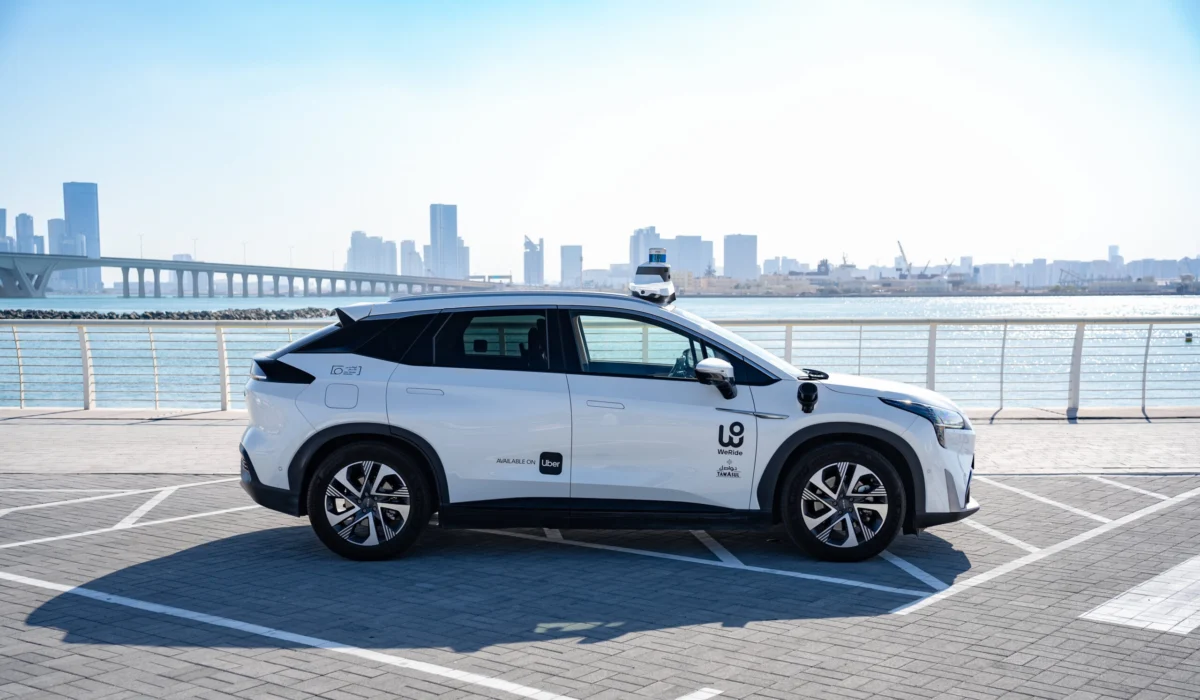
BEIJING – Despite the ongoing geopolitical complexities in the broader Middle East, at least three prominent Chinese robotaxi companies are aggressively advancing their expansion strategies into the United Arab Emirates, signaling a concerted push to establish a significant foothold in the burgeoning autonomous mobility sector of the region. This strategic pivot highlights the UAE’s growing appeal as a testbed and early adoption market for advanced technologies, underpinned by progressive regulatory frameworks and ambitious smart city visions.
The latest development comes from Didi, the Chinese ride-hailing giant, which has announced plans to commence its inaugural overseas robotaxi tests in the United Arab Emirates later this year. This significant step was revealed by Zhang Bo, co-founder of Didi and head of its autonomous driving business, during a high-profile UAE-China business cooperation forum held in Beijing earlier this week. The timing of this announcement is particularly noteworthy, coinciding with the state visit of Abu Dhabi Crown Prince Sheikh Khaled bin Mohamed bin Zayed Al Nahyan to Beijing, where he met with Chinese President Xi Jinping. This high-level diplomatic engagement underscores the strategic importance both nations place on technological collaboration and economic partnership, providing a fertile ground for such ventures.
A Chronology of Chinese Autonomous Vehicle Inroads in the UAE
Didi’s forthcoming entry into the UAE market is not an isolated incident but rather the latest in a series of strategic moves by Chinese autonomous driving companies. The past few months have seen a rapid acceleration of deployments and partnerships, painting a clear picture of the Middle East, particularly the UAE, as a critical new frontier for these technology pioneers.
Earlier this month, Guangzhou-based WeRide made headlines by launching fully driverless, fare-charging robotaxi services in Dubai’s prestigious Jumeirah and Umm Suqeim districts. This rollout is made even more significant by its partnership with global ride-hailing giant Uber, allowing riders to conveniently book a WeRide robotaxi directly through the Uber application. This collaboration merges cutting-edge autonomous technology with an established ride-hailing platform, potentially accelerating public adoption and integration into existing urban mobility ecosystems. The deployment in prime residential and tourist areas suggests confidence in the technology’s readiness for commercial operation and a strategic focus on high-demand, high-visibility corridors.

Pony.ai, another leading Chinese autonomous driving firm, is also vigorously pursuing commercial operations in the emirate. In late March, James Peng, CEO of Pony.ai, addressed concerns regarding regional stability, stating that the ongoing conflict in Iran had not impacted its application for a commercial license in Dubai and that he viewed the conflict as short-term. This statement reflects a calculated risk assessment by companies, prioritizing the long-term strategic opportunities in the UAE over immediate geopolitical anxieties. Pony.ai had previously secured permission from Dubai’s Roads and Transport Authority (RTA) in September to test autonomous driving locally, laying the groundwork for its current commercial ambitions. This phased approach, from testing to commercial application, is typical for autonomous vehicle deployments, allowing for rigorous validation and regulatory compliance.
Adding to the competitive landscape, Baidu’s robotaxi unit, Apollo Go, announced on April 1 that residents and visitors in Dubai could begin hailing fully driverless rides through its dedicated application. This marked a significant expansion for Apollo Go, which has been a frontrunner in China’s autonomous driving sector. While the initial operational areas were not immediately clarified, the Dubai Media Office confirmed via social media that the rollout would commence with 50 vehicles, with ambitious plans to scale up to over 1,000 robotaxis within the next few years. This aggressive expansion plan underscores the vast potential seen by Baidu in the Dubai market, aiming to integrate autonomous mobility deeply into the city’s future transportation network.
The Strategic Allure of the Middle East for Autonomous Vehicles
The concerted push by Chinese robotaxi companies into the Middle East, particularly the UAE, is driven by a confluence of strategic factors that make the region an exceptionally attractive market for autonomous vehicle technology.
- Progressive Regulatory Environment and Government Vision: The UAE, especially Dubai and Abu Dhabi, has articulated clear and ambitious visions for smart cities and advanced mobility. Dubai, for instance, launched its Dubai Autonomous Transportation Strategy 2030, aiming for 25% of all transportation trips in the city to be smart and driverless by 2030. This top-down governmental support translates into proactive regulatory frameworks, streamlined permitting processes, and a willingness to embrace cutting-edge technologies. Such an environment stands in stark contrast to many Western markets, where regulatory hurdles can be more fragmented and protracted, slowing down deployment.
- Economic Diversification and Innovation Hub Ambitions: As Gulf nations seek to diversify their economies away from oil dependency, investing in technology and innovation has become a cornerstone of their long-term strategies. The integration of autonomous vehicles aligns perfectly with this goal, positioning cities like Dubai and Abu Dhabi as global leaders in urban mobility and technological advancement. This attracts foreign direct investment, fosters local talent, and enhances the nation’s international reputation as a hub for future technologies.
- Modern Infrastructure and Favorable Operating Conditions: The UAE boasts state-of-the-art road infrastructure, characterized by wide, well-maintained roads and relatively predictable traffic patterns in many areas. While extreme heat and dust can present specific challenges for sensor technology, these conditions are often less complex than the diverse and chaotic urban environments found in older cities globally. The relatively new urban planning allows for easier integration of smart infrastructure necessary for autonomous fleets.
- High Disposable Income and Tech-Savvy Population: The UAE has a high per capita income and a population that is generally open to adopting new technologies. This creates a receptive market for innovative services like robotaxis, where convenience, efficiency, and novelty are highly valued. A robust tourism sector also ensures a constant influx of visitors eager to experience cutting-edge services.
- Geopolitical Alignment and Belt and Road Initiative: China’s broader "Belt and Road Initiative" (BRI) seeks to foster economic cooperation and infrastructure development across Asia, Africa, and Europe, with the Middle East playing a crucial role as a nexus. The expansion of Chinese tech companies into the region aligns with this strategic vision, strengthening bilateral ties and establishing China as a key technology partner.
Global Race for Autonomous Vehicle Dominance
The aggressive expansion of Chinese robotaxi companies into the Middle East underscores the intensifying global race for leadership in autonomous driving technology. While Alphabet-backed Waymo has extensively rolled out fleets across various U.S. cities and initiated tests in London and Japan, and GM’s Cruise has also expanded its operations, Chinese firms are rapidly catching up and, in some cases, carving out distinct niches for their international expansion.

Companies like Baidu, WeRide, Didi, and Pony.ai have benefited from substantial government backing, massive domestic markets for data collection, and rapid development cycles. Their pivot to international markets, particularly the Middle East and exploratory tests in Europe, signifies a maturing of their technology and a strategic intent to become global players. This competition is driving innovation, pushing the boundaries of what autonomous vehicles can achieve, and accelerating the timeline for widespread commercial deployment. The ability of Chinese firms to deploy fully driverless, fare-charging services demonstrates a level of confidence in their technology that is critical for market penetration.
Implications and Future Outlook
The influx of Chinese robotaxi services carries significant implications for the UAE, the broader autonomous vehicle industry, and the evolving geopolitical landscape.
- Enhanced Urban Mobility and Economic Benefits for the UAE: The deployment of robotaxis is expected to enhance urban mobility by reducing traffic congestion, decreasing pollution through electric vehicle fleets, and providing efficient, on-demand transportation options. Economically, it could lead to job creation in areas of maintenance, software development, and operational support. It further solidifies the UAE’s reputation as a forward-thinking nation and a global innovation hub, potentially attracting more foreign investment in high-tech sectors.
- Competitive Landscape and Technology Transfer: The robust competition among multiple robotaxi providers – both local and international – will likely foster rapid advancements in technology and service quality. It could also lead to technology transfer and knowledge sharing, benefiting local talent and encouraging the growth of a domestic autonomous vehicle ecosystem.
- Geopolitical Considerations: While the original article mentioned the "Iran war," the operational decisions of these companies seem to hinge more on the perceived stability and long-term strategic value of the UAE itself, rather than being directly deterred by regional conflicts that do not directly impact their operational zones. The increasing technological and economic ties between China and the UAE reflect a broader trend of strengthening relations between China and Middle Eastern nations, diversifying partnerships beyond traditional Western alliances. This alignment could also influence future standards and protocols for autonomous vehicles globally, with Chinese firms potentially shaping the industry’s direction.
- Challenges and Adaptation: Despite the enthusiasm, challenges remain. Operating in diverse weather conditions (heat, dust storms), ensuring robust cybersecurity against potential threats, and navigating public acceptance are ongoing hurdles. Companies will need to continuously refine their AI and sensor capabilities to adapt to specific local driving behaviors and infrastructure nuances. The scalability from initial fleets to thousands of vehicles will also test their operational capabilities, supply chains, and infrastructure support.
In conclusion, the UAE is rapidly emerging as a pivotal battleground for the next generation of urban transportation. The aggressive expansion of Chinese robotaxi companies like Didi, WeRide, Pony.ai, and Baidu into this market signifies a calculated and strategic move to capture a leading position in the global autonomous mobility sector. Backed by forward-thinking government policies, modern infrastructure, and a receptive populace, the Middle East is poised to become a vibrant hub for autonomous vehicles, accelerating the transition towards smarter, more efficient, and sustainable urban transportation systems worldwide.

