
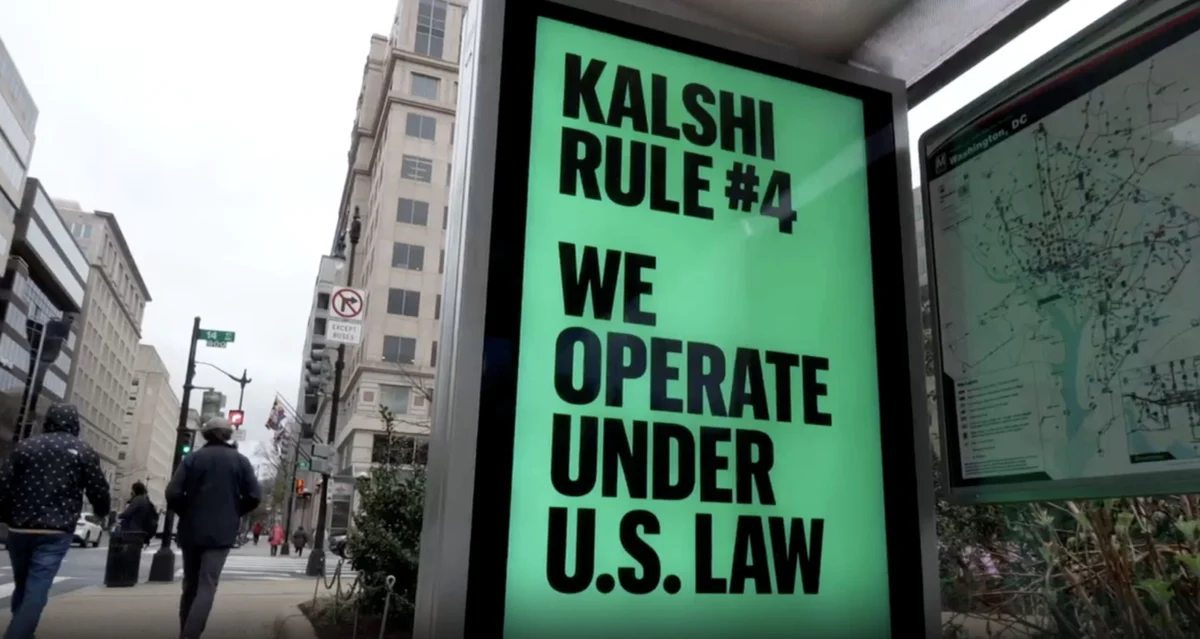
In a landmark decision with far-reaching implications for the burgeoning prediction market industry and the future of online wagering, the 9th U.S. Circuit Court of Appeals has rejected requests for injunctive relief from prominent prediction market platforms Kalshi, Crypto.com, and Robinhood. The court concluded that sports-related event contracts, central to these platforms’ offerings, are not financial derivatives regulated exclusively by the federal government but rather constitute sports betting, falling squarely under state gaming control boards’ jurisdiction. This ruling directly contradicts an earlier decision by the 3rd U.S. Circuit Court of Appeals, creating a "circuit split" that legal experts widely expect will propel the contentious issue to the U.S. Supreme Court.
The Genesis of a Regulatory Battle: Prediction Markets Emerge
The conflict stems from the rapid rise of prediction market platforms, which allow users to "trade" on the outcome of future events, ranging from economic indicators and political elections to entertainment awards and, crucially, sports results. These platforms assert that their offerings, structured as "event contracts," are a form of financial "swap" — a type of derivative instrument falling under the exclusive regulatory purview of the Commodity Futures Trading Commission (CFTC) as defined by the Commodity Exchange Act (CEA). Proponents argue that prediction markets offer valuable tools for price discovery, risk hedging, and information aggregation, functioning akin to traditional financial markets.
Companies like Kalshi, which has aimed to build a "Bloomberg terminal for prediction markets," and Crypto.com, a major player in the broader digital asset space, have invested heavily in developing these platforms. Robinhood, a popular trading app known for democratizing access to financial markets, also entered the fray, featuring event contracts on its platform, further blurring the lines between traditional finance and speculative wagering. They contend that their sophisticated market mechanisms and federal oversight differentiate them from traditional sportsbooks, offering a regulated and transparent environment for participants.
However, state gaming regulators, led by Nevada, a long-standing hub for regulated gambling, have viewed these sports-related event contracts with deep skepticism. They argue that regardless of how they are structured or labeled, contracts based on sports outcomes are functionally indistinguishable from sports betting and therefore fall under their established gaming laws and regulatory frameworks. This perspective is shared by a significant majority of states; 44 states have collectively argued that the CFTC lacks authority over these markets, asserting their own sovereign right to regulate activities they deem gambling.
A Timeline of Escalating Tensions
The regulatory clash has been simmering for several years, escalating into direct legal confrontation.
- Early 2020s: Prediction market platforms gain traction, attracting attention from both investors and regulators. The CFTC begins to assert its jurisdiction over these "event contracts," treating them as legitimate financial derivatives.
- Mid-2020s: State gaming authorities, particularly in states with established gambling industries like Nevada and New Jersey, begin to challenge the platforms’ operations, viewing sports-related event contracts as unlicensed gambling.
- July 2026: A coalition of 44 states publicly declares that the CFTC has no authority over sports prediction markets, underscoring the widespread opposition to federal preemption.
- August 2026: The CFTC, in an assertive move to defend its perceived exclusive jurisdiction, sues nine states, seeking judicial affirmation of its authority to regulate all event contracts. This action underscores the federal agency’s firm belief in its mandate under the Commodity Exchange Act.
- Early April 2026: In a significant development, the 3rd U.S. Circuit Court of Appeals rules in a separate case (likely involving New Jersey and Kalshi) that only the CFTC has jurisdiction to regulate sports-related event contracts. This ruling provides a temporary boost to the prediction market platforms and the CFTC, affirming their interpretation of federal law.
- August 28, 2026: The 9th U.S. Circuit Court of Appeals issues its pivotal ruling, explicitly rejecting the argument that sports-related event contracts are "swaps." The court’s opinion against Kalshi states unequivocally, "The sports event contracts were not ‘swaps’ because they were sports bets," directly contradicting the 3rd Circuit’s earlier finding. This decision effectively grants states like Nevada the authority to halt operations of prediction markets offering sports-related contracts within their borders, unless these platforms obtain state gaming licenses.
Official Reactions and Stark Disagreements
The 9th Circuit’s ruling immediately drew strong reactions from all parties involved, highlighting the deep philosophical and legal chasm between state and federal regulators.
Nevada’s Stance: A Resounding Victory for State Sovereignty
The Nevada Attorney General’s office hailed the ruling as a major victory, reinforcing the state’s long-held position. Alcinia Whiters, deputy communications director for the office, articulated their perspective in a statement: "Kalshi sought to sidestep Nevada’s gaming laws by claiming its sports wagering products were federally regulated financial instruments beyond the reach of state regulators. The Ninth Circuit rejected that argument and made clear what we have maintained from the beginning: sports betting does not become something else simply because a company calls it an ‘event contract.’ Our office is proud to have defended Nevada’s authority." This statement underscores the state’s commitment to protecting its regulatory framework for gambling, which includes stringent licensing, consumer protection measures, and tax collection.
CFTC’s Rebuttal: A "New and Atextual Exception"
The Commodity Futures Trading Commission, however, expressed profound disagreement with the 9th Circuit’s interpretation. A CFTC spokesperson, in a statement to CNBC, acknowledged that the court understood swaps are exclusively regulated by the commission but asserted that the court erred in believing that sports-related event contracts do not fall under that definition. "A derivative contract structured as a swap is a swap regardless of the underlying subject matter — the only exceptions in statute are onions and movie box office receipts," the spokesperson emphasized. "The Ninth Circuit erred today when it invented a new and atextual exception to the CEA," referring to the Commodity Exchange Act, the foundational law detailing the types of event contracts the CFTC is allowed to permit or reject. The CFTC’s position is that the nature of the financial instrument (a swap) takes precedence over the underlying subject matter (sports), unless explicitly excluded by Congress.
Platforms’ Response: Intent to Appeal and Federal Preemption
Kalshi, Crypto.com, and Robinhood, the platforms directly affected, also voiced their intentions and concerns. Jovy Dedaj, Kalshi’s head of litigation, took to X (formerly Twitter) to share his perspective. He noted that both the 9th and 3rd Circuit decisions agreed that federal law prevents states from regulating federally licensed exchanges. However, he argued that the 9th Circuit "overstepped by declaring sports-related event contracts not as swaps." Dedaj further contended that Congress, through the Commodity Exchange Act, granted the CFTC the sole power to determine if event contracts related to "gaming" are contrary to the public interest, not individual states. This highlights Kalshi’s belief in the federal government’s preeminent role in defining and regulating such financial instruments.
Robinhood, in its statement, confirmed its plan to appeal the decision. A spokesperson reiterated the company’s commitment to offering these markets, stating, "Every eligible customer should have access to these markets, which are federally regulated by the CFTC and offered through our CFTC-registered Futures Commission Merchant." Crypto.com did not immediately respond to requests for comment, but its inclusion in the ruling indicates a similar operational model and likely a shared legal strategy with its peers.
The Inevitable Road to the Supreme Court: A Classic Circuit Split
The direct contradiction between the 9th Circuit’s ruling and the 3rd Circuit’s earlier decision creates what legal scholars term a "classic circuit split." Joshua Mitts, a professor at Columbia Law School, succinctly summarized the situation: "Circuit splits are when federal appeals courts rule differently on the same topic. Ultimately, this is the kind of legal controversy or legal difference of opinion which will make its way to the Supreme Court."
This split means that depending on where a prediction market operates, its legal status could be entirely different. In states within the 3rd Circuit’s jurisdiction (Delaware, New Jersey, Pennsylvania), sports-related event contracts might be considered federally regulated derivatives. Conversely, in states covered by the 9th Circuit (Alaska, Arizona, California, Hawaii, Idaho, Montana, Nevada, Oregon, Washington, Guam, and the Northern Mariana Islands), they are deemed gambling subject to state law. Such fundamental inconsistencies in federal law are precisely what the Supreme Court is tasked with resolving to ensure uniformity across the nation.
Broader Implications: Regulatory Uncertainty and Market Dynamics
The legal saga has cast a long shadow of regulatory uncertainty over the nascent prediction market industry. Without a clear, unified federal stance, platforms face a patchwork of state-by-state regulations, making nationwide operation exceptionally challenging and costly. This uncertainty can stifle innovation, deter investment, and limit consumer access to what many see as a valuable new financial tool. The outcome will also set a precedent for how future innovative financial products that straddle the line between traditional finance and wagering will be regulated.
Beyond the legal and regulatory quagmire, the ruling has significant market implications, particularly for established online sportsbooks. Shares of DraftKings jumped 7%, while Flutter Entertainment, the parent company of FanDuel, saw its stock rise by more than 6% in response to the 9th Circuit’s decision. This surge reflects investor relief: the threat of disruption from prediction markets operating under a less stringent federal financial regulatory framework appears to have diminished, at least for now. Both DraftKings and Flutter have themselves been exploring or developing their own prediction market exchanges, indicating their recognition of the potential of this market segment. If prediction markets are ultimately classified as gambling, these established players, with their existing licensing and operational infrastructure, would be better positioned to compete, potentially incorporating event contracts into their expansive sports betting ecosystems.
The core of the debate also touches upon fundamental questions of consumer protection. State gaming commissions often prioritize responsible gambling initiatives, age verification, and addiction prevention, given the inherent risks associated with wagering. The CFTC, on the other hand, focuses on market integrity, preventing fraud, and ensuring fair trading practices, typical concerns in financial markets. The Supreme Court’s eventual decision will likely lean towards one regulatory philosophy over the other, shaping the future landscape of consumer safeguards in these markets.
The Path Forward: Awaiting the Highest Court
The legal battle over prediction markets is far from over. With a clear circuit split now established, it is highly probable that one or more of the aggrieved parties — the prediction market platforms or the CFTC — will petition the Supreme Court for a writ of certiorari, requesting the Court to hear the case. Given the significance of the issue, touching upon federal preemption, the definition of financial instruments, and the scope of state regulatory authority, the Supreme Court is likely to grant review.
The ultimate decision from the nation’s highest court will determine whether sports-related event contracts are indeed "swaps" under the Commodity Exchange Act, granting the CFTC exclusive jurisdiction, or whether they are primarily "sports bets," subject to state-by-state gambling regulations. This ruling will not only shape the future of prediction markets in the United States but also profoundly influence the delicate balance of power between federal financial regulators and state gaming authorities, setting a critical precedent for how innovation at the intersection of finance and entertainment is governed in the digital age. Until then, the industry remains in a state of flux, navigating a complex legal landscape that is rapidly evolving.

