
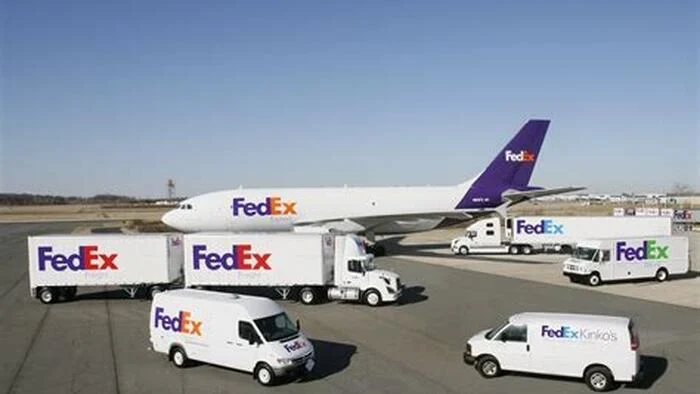
The intricate web of global commerce, often measured by the pulse of its express delivery networks, is currently navigating an unprecedented confluence of geopolitical crises. In 2026, major international carriers like FedEx and UPS are not merely indicators of economic health; they are direct conduits for the escalating costs generated by two major East-West air corridor closures and a significant disruption in global oil supply. The direct consequence, as revealed through operational reports and market analysis, is a substantial increase in shipping expenses, which is systematically being passed down the supply chain, inevitably fueling the inflationary pressures central banks worldwide are struggling to contain.
The insights into this brewing storm were starkly underscored by a recent conversation with a FedEx pilot, highlighting the operational realities faced by the world’s leading cargo airlines. Their once-optimized global air networks, designed for efficiency and speed, are now contending with dramatically altered routes, extended flight times, and soaring fuel costs, fundamentally restructuring the economics of international logistics.
The Unfolding Crisis: A Global Air Network Under Siege
The current challenges for global express carriers are multifaceted, stemming primarily from two distinct but interconnected geopolitical flashpoints. Firstly, the ongoing conflict in Ukraine and subsequent Western sanctions have, since 2022, effectively closed Russian airspace to U.S. and European carriers. This mandate forces significant detours for Europe-Asia routes, adding considerable flight time and fuel consumption. Carriers from China, Turkey, India, and the Gulf, however, retain access to Russian airspace, granting them a distinct competitive advantage through shorter, more economical routes.
Compounding this, the global supply chain has been hit by a second, arguably more impactful, disruption: the near-total closure of the Strait of Hormuz, triggered by an escalating conflict in the region. This vital chokepoint, through which a substantial portion of the world’s seaborne oil supply passes, has been described by the International Energy Agency (IEA) as the most significant supply disruption in the history of the global oil market. This dual squeeze on both air corridors and critical energy arteries has created a perfect storm for the express logistics sector, transforming operational norms and driving up costs across the board.
The Fuel Shock: Hormuz Disruption and Soaring Energy Prices
The immediate and most visible impact of the Hormuz disruption has been a dramatic surge in energy prices. Brent crude, a global benchmark, peaked near $118 per barrel in late March of the current year (2026), reflecting the initial shockwaves of the supply curtailment. While it experienced a temporary dip to approximately $70 by July 1, renewed attacks on shipping and energy infrastructure in late July saw it rebound above $100, climbing further to $109 in early September. Although hopes stemming from ongoing U.S.-Iran talks have since seen prices ease slightly to around $99, this still represents a staggering 60% increase for the year, underscoring the volatility and upward pressure on global energy markets.
The ripple effect on aviation fuel has been even more pronounced. Jet fuel prices have outpaced crude oil due to widened refining margins, exacerbated by the increased demand for alternative fuels and logistical bottlenecks. The International Air Transport Association (IATA)’s latest weekly readings indicate a global average of $194.90 per barrel for jet fuel, marking a significant 7.4% increase in a single week. In the U.S. Gulf Coast, kerosene-type jet fuel averaged $4.341 per gallon in September. The impact isn’t confined to air travel; ground networks are equally exposed, with the national diesel average hitting a record $6.31 per gallon, affecting every leg of the supply chain.
For FedEx, the world’s largest cargo airline by fleet count, these escalating fuel costs translate directly into a massive financial burden. In the quarter ending May 31, the company’s fuel bill surged by a remarkable 66%, climbing from $864 million to $1.43 billion. This increase highlights the direct correlation between geopolitical instability, energy markets, and the operational viability of global logistics giants.
Airspace Squeeze: The Dual Impact of Ukraine and Gulf Restrictions
Beyond the immediate fuel shock, the closure of critical airspaces presents a fundamental re-engineering challenge for international logistics. The Ukraine war, initiated in 2022, led to the immediate closure of Russian airspace for U.S. and European carriers. This forced Europe-Asia flights to undertake lengthy detours, adding hours to flight times, consuming more fuel, and increasing crew operating costs. This strategic advantage was immediately seized by Chinese, Turkish, Indian, and Gulf carriers, who, retaining Russian access, could offer faster and more cost-effective routes between Europe and Asia.
This existing challenge was then compounded by the late February closure or restriction of airspace by eight Middle Eastern states. This critical development funneled air traffic into the narrow Caucasus corridor, a mere 100 miles wide at its most constricted point, situated between the Black and Caspian Seas. Industry analytics firm Xeneta estimated that this unprecedented event led to the disappearance of 16-18% of global air cargo capacity with virtually no warning. Concurrently, data from Freightos revealed that rates from South Asia to North America and Europe surged by approximately 50% in the early weeks following the Gulf airspace restrictions.
By mid-July, Gulf carriers had managed to restore 75-96% of their original schedules, largely by rerouting flights south over Saudi Arabia and Egypt. However, these new routes typically added 30-60 minutes to Europe-Asia services. The implications of these longer flights are manifold: they necessitate greater fuel consumption, reduce potential cargo payloads due to weight restrictions, demand more crew hours, and ultimately lead to lower aircraft utilization rates. DHL Global Forwarding, a major player in the sector, reported that these rerouting efforts around the Gulf hubs were significantly reducing schedule reliability and driving up overall operating costs. Furthermore, air freight traffic to and from the Middle East and Africa region itself suffered a sharp decline, with exports falling 24% year-on-year, indicating a broader economic impact on regional trade.
Express Giants’ Response: Surcharges and Shifting Financials
In the face of these escalating costs and operational complexities, express carriers have largely adopted a strategy of passing on the burden to their customers through fuel surcharges. This mechanism has, so far, provided a significant buffer for companies like FedEx and UPS, insulating them more effectively than traditional airlines or asset-light trucking firms. FedEx’s chief customer officer explicitly stated in March that the fuel surcharge was "doing its job" and was instrumental in maintaining company profitability.
The financial results largely corroborate this assertion. In the March-May quarter, FedEx reported a 13% increase in revenue, reaching $25 billion. Notably, Iran-war related fuel surcharges accounted for a substantial 5 percentage points of this revenue growth. By the week of August 17, FedEx’s U.S. ground fuel surcharge stood at an eye-watering 26%. Similarly, UPS adjusted its full-year 2026 guidance upward, projecting $91.2 billion in revenue and an adjusted EPS of approximately $7.22, suggesting a successful absorption and pass-through of increased costs.
However, a closer look at profitability metrics reveals the underlying pressure. While FedEx managed to beat analyst estimates last quarter, its operating income experienced a nearly 22% year-over-year decline. This phenomenon is attributable to the inherent lag in surcharge adjustments: when fuel prices spike rapidly, both revenue and costs rise by similar absolute dollar amounts. This effectively dilutes the percentage operating margin, even if total revenue increases. This margin compression has had an impact on investor sentiment; FedEx shares were down 6.6% over 30 days and 7.6% over 90 days, despite still showing a robust 65.5% gain over the preceding year.

The broader freight sector also flashed a warning sign in the current month. J.B. Hunt, a major transportation company, projected a 5-10% decline in its Q3 earnings compared to the prior quarter. This forecast explicitly cited at least $10 million in additional fuel costs and a further $25 million in driver recruiting and bonus expenses, factors that subsequently dragged down the stock prices of package-delivery companies alongside other trucking firms.
The Downstream Ripple: From Shippers to Consumers
The evidence overwhelmingly suggests that shippers are currently bearing the brunt of these increased costs. UPS’s CFO characterized the net profit impact of surcharges on the company as "modest," while FedEx stated that surcharges were not a "material driver" of its adjusted operating income. These statements have drawn scrutiny from critics, who question why surcharge percentages have risen so sharply if they only modestly impact net profits. For context, the U.S. Postal Service, a government entity, only imposed its first surcharge on April 26, setting it at 8% on most packages. While a fact-check found no widespread evidence of industry-wide "gouging," it did reveal instances where some transport companies were collecting more in surcharges than their actual increased fuel expenditures.
Regardless of the precise mechanics, the trajectory of these costs is clear: from the express carriers, they flow directly to shippers, who then incorporate them into the prices of their goods. This is the crucial point where the carriers’ operational challenges cease to be an industry-specific issue and become a problem for the broader economy and, ultimately, the end consumer.
The Broader Inflationary Landscape
The global economic impact of these rising freight costs is now inextricably linked to the ongoing battle against inflation. The Organisation for Economic Co-operation and Development (OECD)’s interim outlook, published recently, projects G20 headline inflation to rise to 4.1% in 2026 before easing slightly to 3.6% in 2027. In advanced economies, core inflation is expected to moderate from 2.7% to 2.5%. This distinction between headline and core inflation is vital; the current surge is predominantly an energy shock, pushing up overall headline figures, rather than a broad-based wage-price spiral. The OECD credits various mitigating factors, including government support measures, input substitution strategies, increased non-Gulf oil supply, and strategic oil reserve drawdowns, with limiting the overall damage.
In the United States, the August Consumer Price Index (CPI) recorded a 3.4% year-on-year increase, while the core CPI, which excludes volatile food and energy prices, stood at 2.4%, its lowest level since March 2021. However, gasoline alone accounted for more than one-third of the monthly increase in CPI. Despite the core figure showing some moderation, the U.S. Federal Reserve remained cautious. On September 16, the Fed raised interest rates to 3.75-4.00%, marking its first hike since 2023. The Fed explicitly cited the "Iran energy shock" as a primary reason for its decision, and most officials anticipate at least one more rate hike before the year concludes, signaling continued vigilance against inflationary pressures.
Channels to the Checkout: More Than Just Parcel Rates
While the express surcharges represent a tangible cost increase, their direct impact on the final retail price of a finished good is often secondary. Shipping typically constitutes a relatively small percentage of a product’s overall retail price. Therefore, parcel surcharges tend to add friction at the margin rather than being a primary driver of the CPI. The same underlying jet fuel price, however, manifests much more directly and visibly in passenger airfares, which have soared by more than 23% since August 2025, providing a stark example of energy costs immediately translating to consumer prices.
A far more significant channel for inflationary pressure, particularly in developing economies, is food. The costs of diesel, packaging materials, and fertilizers—many of which rely on energy-intensive production or transport through critical chokepoints like Hormuz—have a profound impact on global food prices. One inflation analyst, who previously dismissed food and energy price fluctuations as mean-reverting, now expresses less confidence regarding food prices, specifically because energy costs are deeply embedded in trucking and packaging expenses across the agricultural supply chain.
The concern for central banks remains the spillover into core inflation. Economists issue clear warnings that sustained or renewed rises in oil, gasoline, and diesel prices could easily propagate across various other sectors, influencing inflation expectations and potentially igniting a broader inflationary spiral. So far, the median CPI, a measure designed to filter out extreme price changes, appears relatively contained. Furthermore, a portion of the observed rise in services inflation is attributed to airfares, which, at their root, are largely a reflection of energy costs.
It is also crucial to acknowledge that the economic pain is not evenly distributed. Energy- and food-importing emerging economies are significantly more exposed to these shocks than wealthier nations like the U.S. In the Philippines, for instance, diesel prices have surged above ₱140 per liter, equating to approximately $10.75 per gallon. Weak domestic currencies, coupled with heavier weighting of food and fuel components in their consumer price indexes, amplify the inflationary shock in these vulnerable nations, threatening economic stability and living standards.
The Critical Factor: Duration and Long-Term Outlook
The ultimate trajectory of this global economic challenge hinges on one critical factor: duration. The OECD’s June scenarios provide a framework for understanding the stakes. If the Gulf supply disruptions begin to recover from Q3 2026, the overall shock is projected to largely fade by 2027. However, if the disruption persists into late 2027, the economic consequences would be far more severe, resulting in significantly weaker global growth and substantially higher inflation—adding approximately 0.4 percentage points to inflation in 2026 and a staggering 1.3 percentage points in 2027. The OECD’s baseline scenario currently assumes a decline in energy prices in 2027, but it explicitly lists prolonged Middle East export disruptions and a very strong El Niño weather pattern as key downside risks that could derail this optimistic outlook. With Brent crude still hovering near $99 per barrel and the critical Saudi East-West pipeline shut since September 11, that baseline now appears increasingly precarious.
A prolonged disruption would also fundamentally alter the operating landscape for express carriers. Their current pass-through model, reliant on surcharges, is sustainable only as long as customers are willing and able to accept these elevated costs. If surcharges remain consistently above 25%, a growing number of small and mid-size shippers are likely to downgrade their shipping preferences—shifting from express to ground services, from air freight to ocean shipping, or simply reducing their overall shipping volumes. FedEx’s own outlook, while cautiously optimistic, implicitly assumed no further major geopolitical disruptions and explicitly acknowledged that soaring fuel costs could negatively impact results if customer demand were to retract. Furthermore, the persistent disadvantage faced by carriers unable to utilize Russian airspace will not dissipate even if oil prices fall, representing a permanent structural increase in their operational costs for specific routes. The widening gap between surcharge revenue and actual fuel expenditure could also increasingly become a target for political scrutiny and potential legal challenges, as questions of fairness and transparency are raised.
In essence, the ongoing conflicts and associated sanctions have structurally elevated the cost of operating a global express network. Carriers now contend with longer flight routes, a reduced number of viable hubs, and a volatile fuel market characterized by persistently high prices and unpredictable swings. To date, FedEx and UPS have largely succeeded in converting these increased costs into surcharge revenue, meaning their financial strain has manifested primarily as margin compression rather than outright losses. This cost, however, has been effectively pushed downstream, where it significantly contributes to the energy-led inflation that has compelled central banks, such as the U.S. Federal Reserve, to resume interest rate hikes.
For both the global express carriers and the broader inflation outlook, the most decisive factor remains the duration of the disruption in the Strait of Hormuz. If jet fuel prices remain stubbornly near $190 per barrel through the upcoming peak shipping season, the fundamental question will shift from whether FedEx and UPS can pass on costs to whether their customers—and the consumers they serve—can continue to absorb them. Key markers for assessing this evolving situation include the September CPI report, due on October 14, and FedEx’s commentary on surcharge recovery and shipping volumes in its fiscal Q1 2027 report, which will offer crucial insights into the resilience of the global supply chain and the enduring impact of these intertwined crises.

