
A significant discourse has emerged within the Financial Independence, Retire Early (FIRE) community, questioning the contemporary relevance of its foundational principles amidst a rapidly evolving economic landscape. This re-evaluation was recently catalyzed by an engaged reader’s critique, highlighting the perceived disconnect between the financial successes of early FIRE proponents—often characterized by high-earning tech careers and opportune real estate investments prior to 2019—and the present-day challenges faced by individuals contending with escalating housing costs, elevated interest rates, and stagnant wage growth in many sectors. This sentiment underscores a broader concern about the accessibility of financial independence for a new generation of aspiring savers.
The Reader’s Challenge: A Shifting Economic Landscape
The critique, lodged against a foundational post on FIRE principles, articulated a growing sentiment among aspiring adherents. The reader observed that much of the advice dispensed by prominent FIRE bloggers appears rooted in an economic era vastly different from the post-2019 reality. Specifically, the points of contention centered on the advantageous positions of earlier adopters who benefited from lucrative six-figure salaries in the tech industry and acquired homes at significantly lower valuations, often described as "a bag of potatoes," before the sharp market upturn. For those not privy to such opportunities in their youth, the path to financial independence now appears fraught with new obstacles.
The practical strategies often recommended for younger individuals, such as "house hacking" or purchasing "fixer-uppers," are increasingly out of reach or prohibitively complex. The current confluence of high property prices and elevated interest rates renders entry into the housing market a formidable challenge. Furthermore, local zoning regulations, as illustrated by the example of a cousin prohibited from living in a trailer on his 60 acres, often restrict innovative housing solutions like Accessory Dwelling Units (ADUs) or multi-unit conversions, further limiting options for creative affordability. This has led to a call for new voices and strategies within the FIRE movement, tailored to the current economic environment.

Reaffirming Mustachian Principles: Efficiency Over Escalation
In response to this critical assessment, leading figures within the FIRE movement have initiated a re-examination of their core tenets. The initial reaction acknowledges the validity of some concerns while simultaneously distinguishing between genuine obsolescence of principles and what is termed "Complainypants and/or Excuse-itis"—a tendency to attribute financial stagnation to external forces rather than internal choices. Historically, the FIRE movement has weathered various economic shifts, demonstrating an adaptive resilience in its underlying philosophy. Over the past decade and a half, the concept of FIRE has periodically been declared "obsolete" due to market crashes, inflationary periods, or changing societal norms, yet it has consistently adapted and reaffirmed its core value proposition.
The critique’s dual focus on high tech salaries and surging housing costs merits a deeper dive. Regarding income, it is undeniable that certain professions inherently offer higher earning potential. The FIRE philosophy, however, does not solely hinge on maximizing income, although it certainly encourages it. Instead, a core tenet, often championed as "Mustachianism," emphasizes the meticulous streamlining of spending and the cultivation of joyful, efficient living without perceived compromise. The underlying premise is that financial stress can plague even high earners if unchecked spending habits persist. Evidence for this is abundant, with numerous software engineers and medical professionals nearing retirement age still experiencing financial anxiety, a scenario mathematically improbable if income were managed prudently over decades. The movement’s primary focus remains on reducing waste and optimizing expenditure, a skill set universally valuable, particularly for those on lower to middle-income scales.
The Housing Conundrum: A Data-Driven Perspective
The most potent aspect of the reader’s critique revolves around housing, arguably the largest expense for most households. To assess whether the current state of the housing market fundamentally undermines the FIRE plan, an analysis of historical data is crucial. The St. Louis Federal Reserve provides invaluable information, specifically charting U.S. house prices adjusted for inflation.
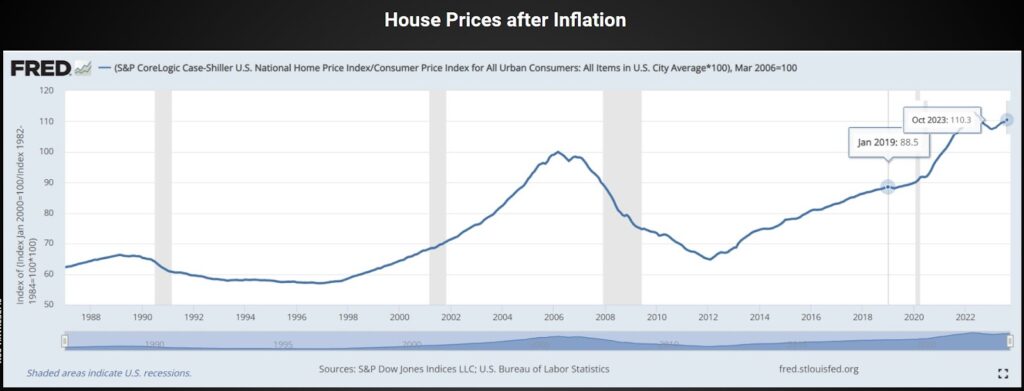
According to FRED data (series HPIPSA), inflation-adjusted U.S. house prices have indeed seen a significant increase since the beginning of 2019. The data indicates that, relative to average salaries and the general cost of goods and services, houses "feel" approximately 25% more expensive in early 2024 compared to early 2019. This substantial jump within a relatively short period presents a formidable barrier. However, a longer historical view reveals a more nuanced picture: current inflation-adjusted prices are only about 10% higher than their last peak in early 2006, an eighteen-year span. While still a blow, this long-term perspective suggests that the current situation, while challenging, may not be an insurmountable "FIRE-extinguishing" event when viewed in broader historical context.
It is imperative to note, however, that national averages often mask significant regional disparities. Highly desirable cities and metropolitan areas, including many popular FIRE destinations, have experienced far more dramatic price escalations. For instance, Longmont, Colorado, a location cited by a prominent FIRE blogger, now boasts a median home price of $540,000. This represents a nearly threefold increase since 2011, vastly outstripping average wage growth in the area and rendering homeownership considerably more difficult for the average resident. This localized surge underscores the necessity of moving beyond national aggregates and examining specific markets.
Geographic Arbitrage: A Strategic Imperative
The solution to escalating housing costs, within the Mustachian framework, transcends a victim mentality and instead advocates for proactive, strategic decision-making. Housing, like any other commodity, is subject to supply and demand dynamics, resulting in a wide spectrum of prices. The fundamental principle is that one’s birthplace or current residency does not automatically entitle one to affordable housing in that specific location. Just as a child born on the Apple campus does not automatically receive an annual iPhone, an individual’s connection to a locale does not guarantee its financial viability for homeownership.
The decision-making process for housing, consistent with all significant purchasing decisions, involves a series of critical choices:
- Is it necessary? For housing, the answer is usually yes, but the form and location are negotiable.
- Can I optimize my need for it? This involves considering smaller spaces, shared living, or alternative structures.
- Can I build it myself? While not always practical for housing, this principle encourages self-sufficiency and DIY.
- Can I buy it used? This translates to buying older homes, fixer-uppers, or homes in less desirable (but still functional) areas.
- Can I buy it at a discount? This is where geographic arbitrage becomes paramount.
- Can I simply do without it? In the context of housing, this might mean prolonged renting or very minimalist living.
When applied to housing, this process necessitates a rigorous evaluation of renting versus buying, and exploring "house hacking" strategies. While an initial analysis might focus on one’s current city, a Mustachian approach inherently expands the scope to include numerous other cities and even countries, acknowledging that happiness and fulfilling lives are found globally. This strategy, known as geographic arbitrage, involves intentionally relocating to areas where the cost of living, particularly housing, is significantly lower without a proportional decrease in quality of life or opportunities.
Domestic Relocation: Unlocking Hidden Value
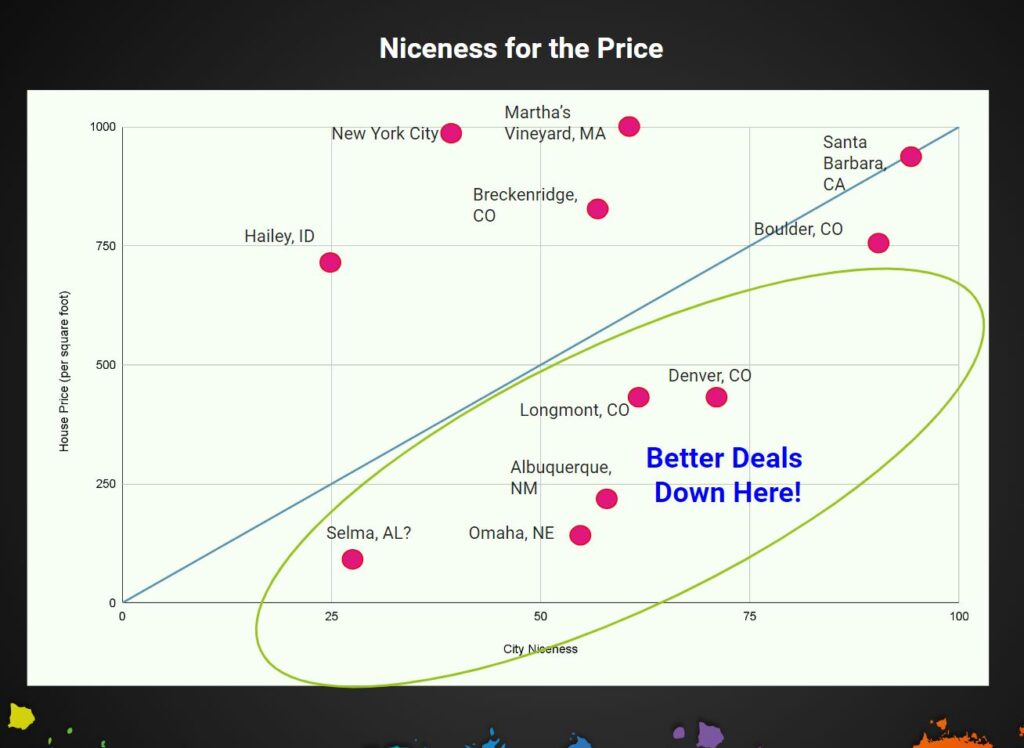
The reluctance to relocate is often driven by strong personal ties and a natural human aversion to change. However, distinguishing between genuine, positive bonds and mere fear of the unknown is critical. The national housing market exhibits a peculiar irrationality, with exorbitant prices in some areas juxtaposed against remarkably affordable options in others. While a general correlation exists between perceived "niceness" and cost, this correlation is imperfect and subjective, creating opportunities for those willing to seek them out.
Consider the example of Longmont, Colorado. While it met family needs at $200,000 in 2005, its current median price of $540,000 (averaging $450 per interior square foot) places it in direct competition with a much broader array of cities offering comparable or superior amenities at similar or lower price points. Utilizing tools like FRED’s list of the top 1000 metro areas, which provides price per square foot data, allows for a data-driven exploration of alternatives.
For instance, a hypothetical search might reveal that Albuquerque, New Mexico, offers a significantly lower cost of living while still providing a sunny climate, a high priority for many. Conversely, Denver, while slightly more expensive than Longmont on a per-square-foot basis ($299 vs. $272 for Phoenix, for example), might offer a higher quality of life for the incremental cost. Even within a state, cities like Boulder, Colorado, though substantially more expensive, might be deemed worthwhile for those prioritizing specific amenities and willing to accept the higher housing burden.
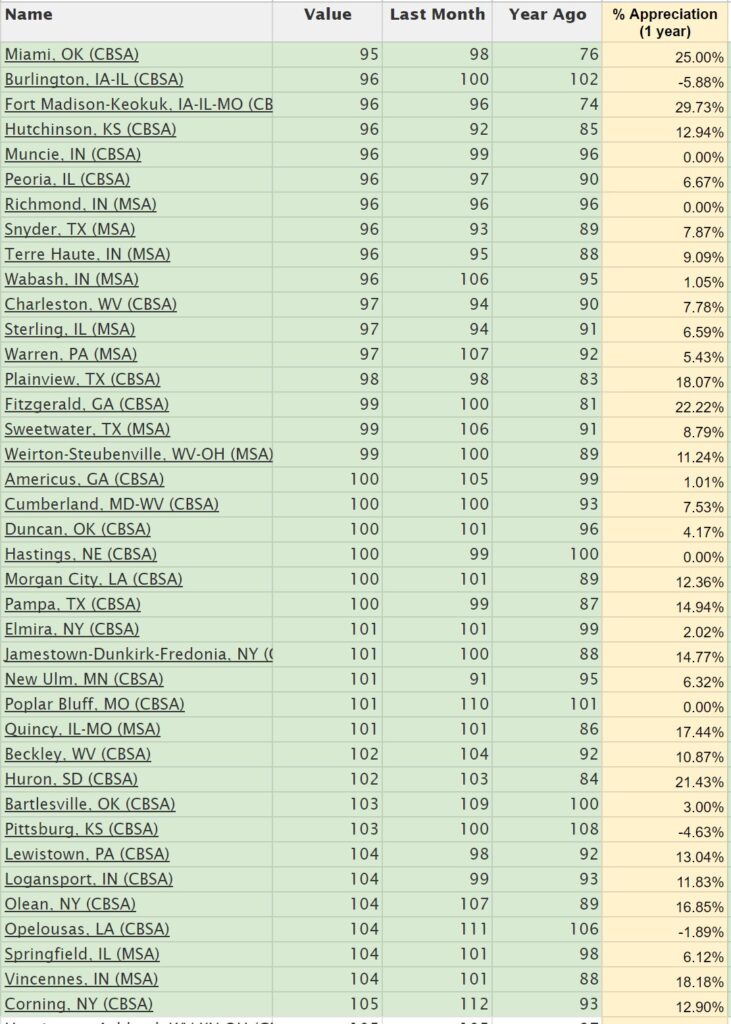
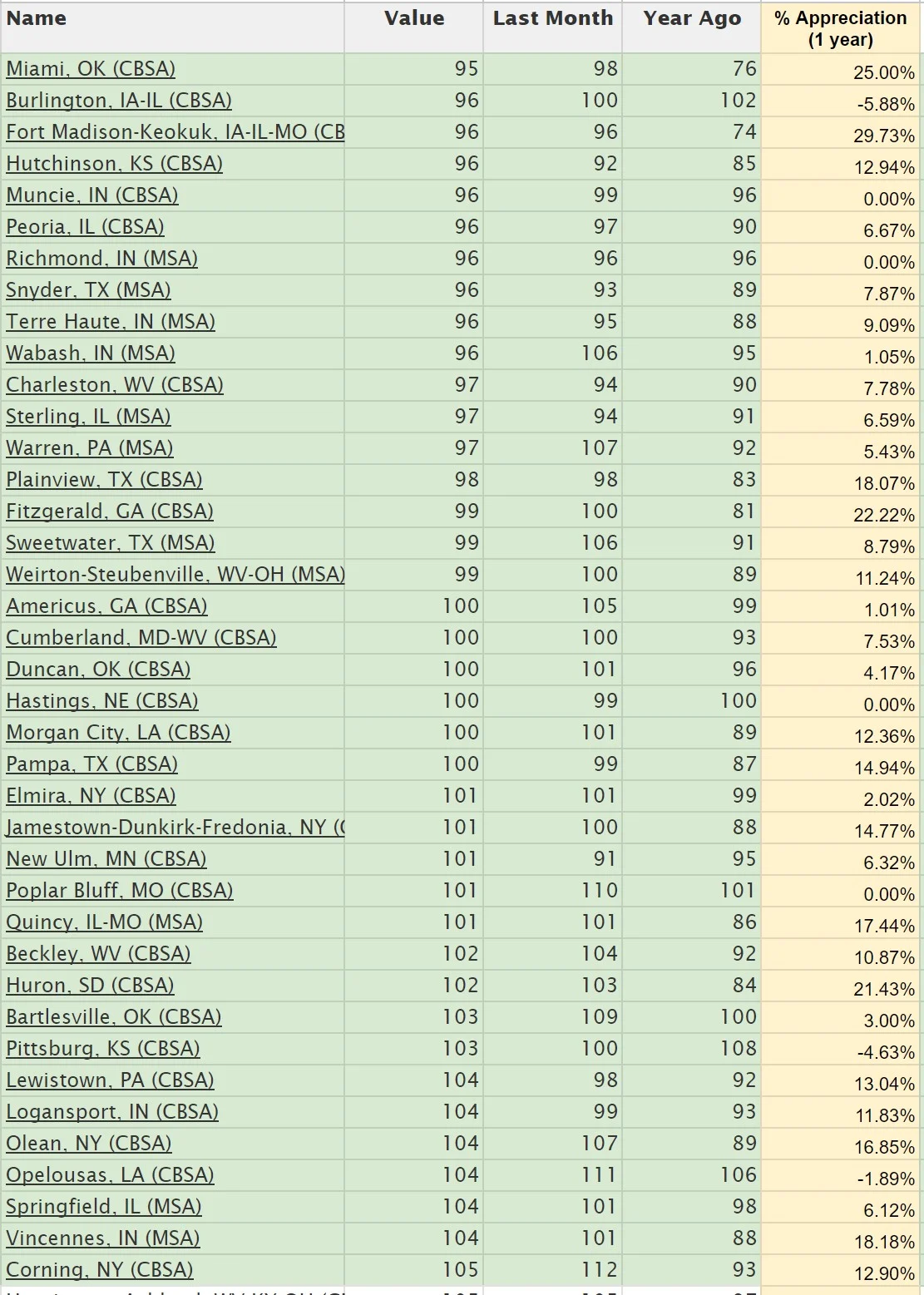
By filtering data for cities centered around a cost of $100 per square foot, one could identify numerous metropolitan areas where a 2,000-square-foot home costs approximately $200,000. Examples from such a list might include cities like Akron, Ohio; Toledo, Ohio; Wichita, Kansas; or Little Rock, Arkansas. Adding a column to track year-over-year price changes can further inform decisions, indicating whether a market is appreciating or becoming more affordable. While such data provides a starting point, personal visits and thorough research remain essential to fully assess the suitability of a location.
International Horizons: The Earth Awaits
Extending the principle of geographic arbitrage globally opens up even more possibilities. Housing prices are often the most significant determinant of overall cost of living. Beyond housing, factors like accessible nature, efficient transportation (e.g., biking), and universally available services like discount retailers tend to remain relatively consistent in cost or even be free. Therefore, optimizing housing costs can dramatically alter one’s financial trajectory.
Platforms like "The Earth Awaits," a site specifically designed by FIRE bloggers, facilitate global exploration. By inputting criteria such as geographic area (e.g., North America), monthly budget ($0-$6,000), family size (e.g., two), preferred apartment type (e.g., two-bedroom outside city center), and climate preferences (e.g., January lows not colder than 10F), the tool generates a curated list of potential locations.
A sample search for North America might yield cities like Fayetteville, Arkansas; Columbia, Missouri; Athens, Georgia; or Chattanooga, Tennessee. The site often provides population figures, offering insight into the "feel" of a city, allowing individuals to filter for preferences (e.g., 50,000-200,000 population for a mid-sized town). Discovering that a city like Chattanooga, known for its vibrant outdoor scene, is comparable in cost to Columbus, Ohio, can be a revelation.
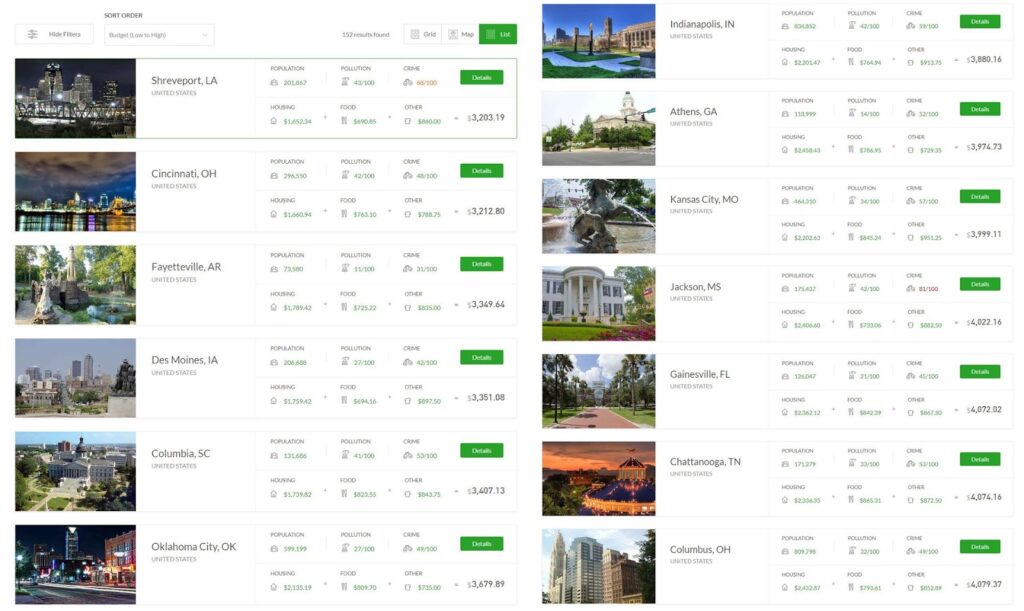
Expanding the search to South America reveals even more dramatic cost savings. Cities like Medellín, Colombia; Cuenca, Ecuador; or Montevideo, Uruguay, often appear on lists for significantly lower living expenses. While moving internationally introduces complexities such as navigating citizenship, visa requirements, local laws, traditions, and the logistics of international travel for family visits, these are framed within the Mustachian philosophy as "Adulting Puzzles." These challenges, though potentially daunting, are largely administrative and logistical. The effort expended in solving these puzzles is often dwarfed by the long-term benefits of a drastically reduced cost of living, potentially shaving years off one’s working life or significantly enhancing lifestyle in retirement. The experience of navigating a move from Canada to the U.S. demonstrates that such transitions are manageable, even for those initially averse to bureaucratic processes.
Broader Implications for Financial Planning and Happiness
Ultimately, the choice of one’s physical environment—encompassing social connections, access to nature, urban amenities, and climate—is a paramount factor in cultivating a happy and fulfilling life. While cost of living is a critical consideration, it is not the sole determinant. The power lies in making an informed, deliberate choice that optimizes the balance between desired lifestyle and financial feasibility. Strategic relocation, even within one’s existing city to be closer to work, walking paths, or loved ones, can significantly enhance life quality without necessarily incurring greater expense.
The core message remains that housing, like most aspects of life, presents a series of choices. Thoughtful consideration and proactive effort in navigating these choices can yield substantial rewards. In an economic climate where traditional paths to homeownership and financial independence appear increasingly challenging for many, adaptability, a data-driven approach, and a willingness to explore alternative geographies become indispensable tools for achieving financial freedom. The ongoing dialogue within the FIRE community, spurred by reader critiques and data analysis, reinforces its dynamic nature and its continuous effort to remain relevant and accessible to all who aspire to financial independence. The collective knowledge and shared experiences of this community are invaluable resources in identifying and actualizing these opportunities for a better, more efficient life globally.

