

The adoption of strategic frugality as a lifestyle and financial framework has gained significant traction in the post-pandemic economy, characterized by high inflation and shifting consumer priorities. A comprehensive analysis of recent household expenditure data and domestic management strategies reveals that intentional spending, particularly within the "Financial Independence, Retire Early" (FIRE) community, serves as a multifaceted tool for both wealth accumulation and psychological well-being. This report examines the financial activities and philosophical underpinnings of a representative Vermont-based household during the month of May, providing a case study in resource optimization, literacy development, and the burgeoning resale economy.

The Role of Literacy in Early Childhood Development
A primary focus of the household’s May activities centered on an intensive literacy initiative involving J.R.R. Tolkien’s "The Hobbit." The project serves as the culmination of a multi-year "reading ladder" designed to transition a first-grade student from introductory texts to complex epic fantasy. The pedagogical progression began with John Patience’s "Fern Hollow" series, followed by Brian Jacques’ "Redwall" series, before arriving at the Tolkien classic.
Educational experts suggest that reading aloud to children, even after they have acquired basic reading skills, is a critical factor in cognitive development. According to data from the National Endowment for the Arts, children who are read to at home perform significantly better in reading comprehension and vocabulary tests. The household reported that this daily ritual allowed for real-time tracking of pronunciation and contextual understanding. Furthermore, the introduction of "The Hobbit" provided a framework for moral and ethical discussions. By identifying "bad behavior" within the narrative, the child developed articulated reasoning regarding social interactions—a key component of emotional intelligence (EQ) development in seven-year-olds.

While the household maintains a strict policy of utilizing public libraries and yard sales for book procurement, a strategic exception was made for a high-quality, illustrated hardcover edition of "The Hobbit." This investment highlights a core tenet of modern frugality: the prioritization of "value over price." The purchase of a durable, aesthetically pleasing volume is viewed as a long-term investment in the child’s personal library and a symbol of the family’s commitment to literary engagement.
The Economics of the Secondhand Market
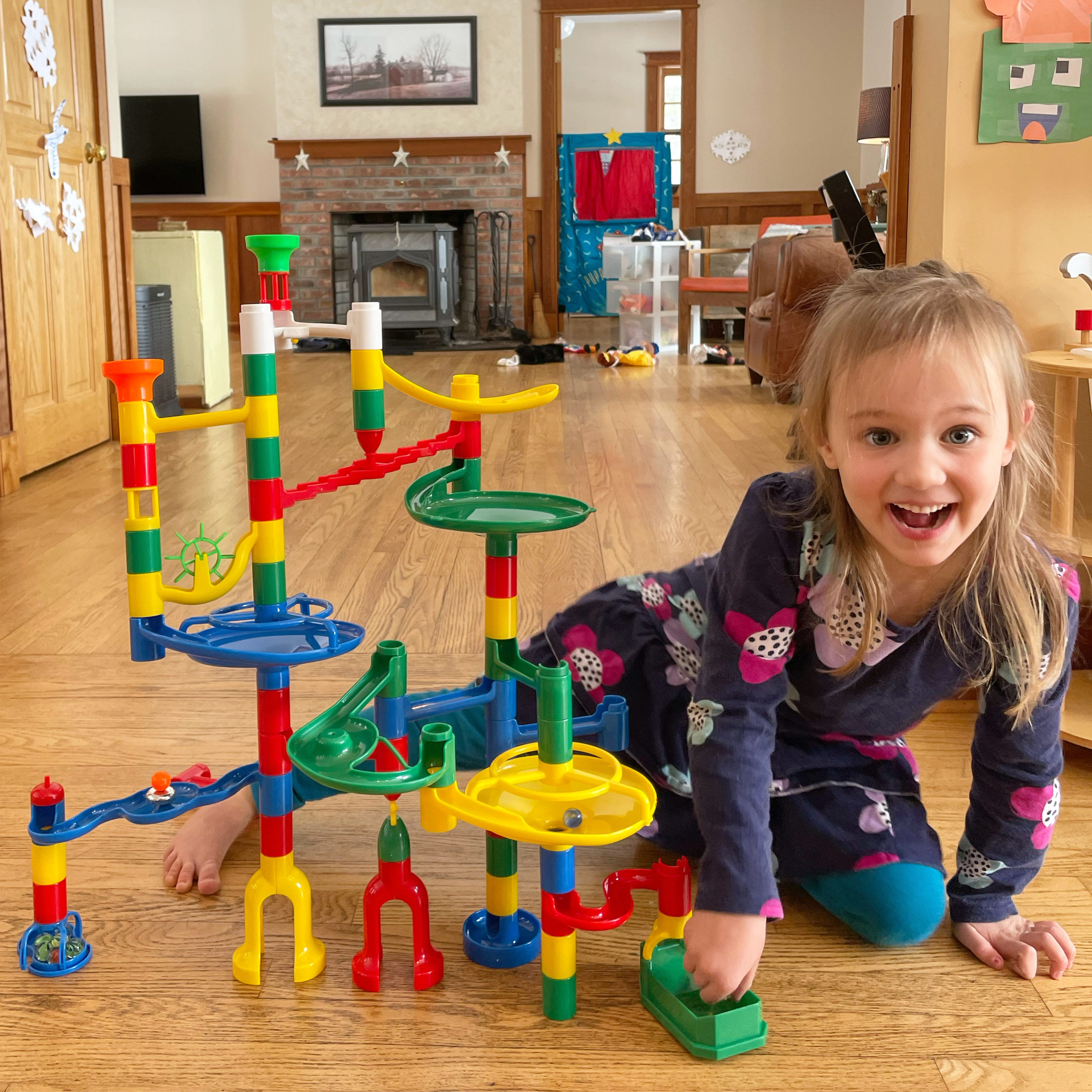
The month of May marks the commencement of the "yard sale season" in northern New England, a period that facilitates significant cost avoidance for households willing to participate in the circular economy. The report details a rigorous approach to thrifting and yard sales to procure essential items, including children’s clothing, footwear, and household maintenance tools.
The broader economic impact of the resale market is substantial. Industry reports from platforms such as ThredUp indicate that the global secondhand apparel market is expected to reach $350 billion by 2027. This shift is driven not only by cost-savings but also by environmental concerns. The fashion industry is responsible for approximately 10% of global carbon emissions; by opting for used clothing, consumers significantly reduce their "water footprint" and prevent textile waste from entering landfills.
Beyond the financial and environmental metrics, the household identified several psychological benefits to the used market. Citing research popularized by NPR on the "Paradox of Choice," the report argues that the limited selection found at yard sales reduces "decision fatigue." In a traditional retail environment, infinite choice can lead to paralysis and decreased satisfaction. Conversely, the "kismet" or serendipity of finding a necessary item at a thrift store provides a dopamine response that standard e-commerce cannot replicate.

Financial Optimization via Digital Tools and MVNOs
A critical component of the household’s financial health is the utilization of advanced money-tracking software and alternative service providers. The report highlights the use of Empower (formerly Personal Capital) to maintain a holistic view of net worth, investments, and retirement accounts. Financial analysts agree that "visibility is the first step toward velocity" in personal finance; without a comprehensive understanding of cash flow, long-term goals such as debt repayment or early retirement remain elusive.
One of the most striking data points in the May report is the total cost for cellular service: $28.24 for two lines. This was achieved through the use of a Mobile Virtual Network Operator (MVNO). Unlike major carriers that own and maintain national towers (e.g., Verizon, AT&T, T-Mobile), MVNOs lease space on those towers at wholesale rates and pass the savings to consumers.

The average American cell phone bill is approximately $114 per month, according to J.D. Power. By switching to an MVNO, the household in this study saved nearly $1,000 annually compared to the national average. This "low-hanging fruit" strategy is a cornerstone of the Frugalwoods methodology, which emphasizes cutting fixed costs that do not contribute to long-term happiness or utility.
High-Yield Cash Management Strategies
The report also underscores the importance of interest rate optimization. In a climate where the Federal Reserve has maintained elevated interest rates to combat inflation, "lazy money"—cash sitting in standard, low-interest checking or savings accounts—represents a significant opportunity cost.

The household utilizes high-yield savings accounts (HYSA), such as those offered by American Express or similar institutions, which currently offer rates around 4.00% to 4.50% APY. The report provides a mathematical demonstration: $5,000 in a 0% interest account remains $5,000 after a year, whereas the same amount in a 4% HYSA grows to $5,200. This $200 gain is achieved with zero risk and minimal effort, embodying the principle of making capital work for the individual rather than the institution.
Furthermore, the household employs a 2% cash-back credit card strategy for all monthly expenses. In May, $4,081.76 in spending generated $81.64 in cash rewards. While seemingly small, when compounded over a year, these rewards can exceed $700, effectively providing a 2% discount on the entire cost of living.

May Expenditure Analysis: A Case Study in Intentional Spending
The total expenditure for May was $4,641.49. An itemized breakdown reveals a blend of fixed living costs and strategic investments in home maintenance and quality of life.
| Category | Amount | Analysis |
|---|---|---|
| Groceries | $879.72 | Reflects the impact of food inflation on a four-person household. |
| Restaurants & Social | $493.81 | Classified as "discretionary joy," prioritized over material goods. |
| Household & Home Improvement | $469.98 | Includes essential supplies and minor repairs. |
| Preschool | $420.00 | A fixed educational cost nearing its conclusion. |
| Maintenance Tools | $420.09 | Includes a battery string trimmer and pole saw for property management. |
| Health Insurance | $41.74 | Facilitated through the Affordable Care Act (ACA). |
| Utilities (Electric/Internet) | $108.59 | Low electric costs due to solar panel integration. |
A notable subset of the expenses involved "replacement" items necessitated by the presence of young children. The household spent approximately $41 on replacement cabinet hinges, doorknobs, and a toilet paper holder. This "wear and tear" factor is a recognized variable in domestic financial planning for families. The report notes that these repairs were performed as "DIY" projects, avoiding the high cost of professional labor.

Broader Economic Implications and the FIRE Movement
The data presented in the May report reflects a broader shift toward "Lifestyle Design," a concept central to the FIRE movement. By minimizing spending on "invisible" costs—such as high cell phone bills, bank fees, and new clothing—households can redirect funds toward experiences (e.g., lunches with friends) and long-term security (e.g., retirement investments).
The report concludes with a brief analysis of the "Endowment Effect," a psychological bias where individuals overvalue items they own. By primarily purchasing used goods, the household reduces this effect, making it easier to declutter and recirculate items back into the community when they are no longer needed. This creates a "community of hand-me-downs," strengthening local social ties and reducing the overall consumption of the neighborhood.

In summary, the May financial report from the Frugalwoods household serves as a blueprint for modern domestic management. It demonstrates that a high quality of life—characterized by rich cultural experiences like reading Tolkien and social engagements—is not inextricably linked to high levels of consumption. Through the strategic use of MVNOs, high-yield savings, the secondhand market, and DIY maintenance, households can navigate inflationary pressures while building a robust financial future.

