
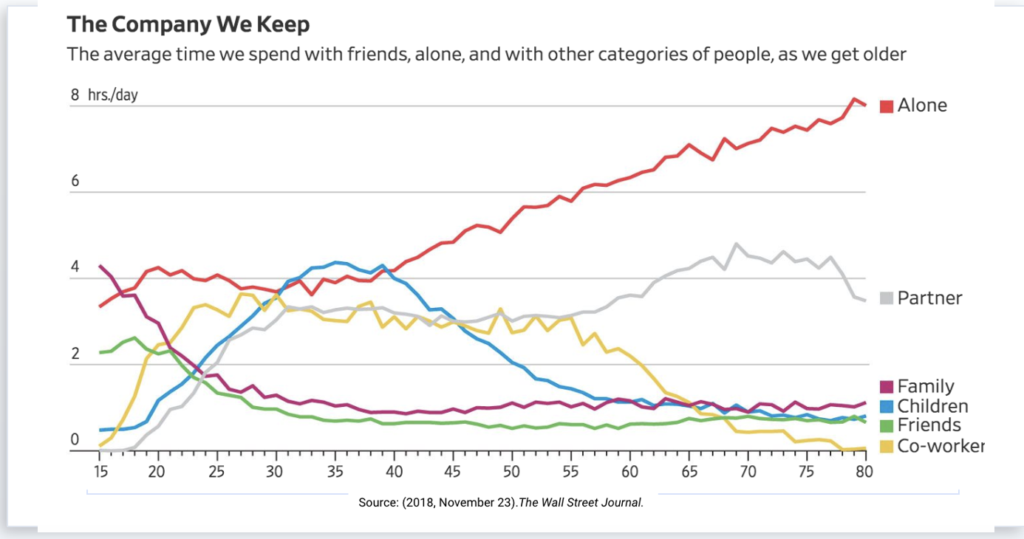
The transition into retirement, while often anticipated with a sense of liberation and newfound freedom, introduces a profound shift in daily life: an amplified presence of solitude. For many, this increased personal time reveals an unexpected companion – their own inner dialogue. This internal discourse, far from being a passive backdrop, emerges as a critical element shaping the retirement experience. Experts in psychology and self-development highlight that the quality of these self-conversations can significantly influence an individual’s ability to navigate this new chapter with intention and fulfillment, or conversely, lead to feelings of stagnation and doubt.
The nature of this inner monologue is diverse, encompassing a spectrum of mental activities. It can manifest as forward-thinking planning, imaginative exploration, and reflective contemplation. However, it can just as readily devolve into cycles of worry, repetitive rumination, self-questioning, harsh self-criticism, and blame. Research and expert discussions, including those featured on platforms like The Retirement Wisdom Podcast, underscore a pivotal distinction: these internal conversations possess the power to either constrict one’s life or catalyze an expansive embrace of the future.
Central to understanding this dynamic is the work of Dr. Marilee Adams, Founder and CEO of The Inquiry Institute and author of the recently updated fifth edition of Change Your Questions, Change Your Life. Dr. Adams’s research posits that the questions we pose to ourselves are instrumental in shaping our cognitive frameworks and emotional responses. She identifies two primary mindsets from which individuals operate: the "Judger" and the "Learner."
The Judger vs. The Learner: A Framework for Self-Inquiry
The "Judger" mindset is characterized by questions that tend to be backward-looking or inwardly focused, often laced with an element of self-recrimination. Examples include inquiries such as, "What is wrong with me?", "Why did this happen?", or "Why even bother?". These questions typically reinforce negative self-perceptions and can create a sense of helplessness.
In contrast, the "Learner" mindset is driven by curiosity, agency, and a focus on possibility. Learner questions are forward-oriented and empowering, such as, "What do I want now?", "What can I contribute?", or "How else can I think about this?". These inquiries encourage exploration, problem-solving, and a proactive approach to life’s challenges.
This distinction between Judger and Learner questions becomes particularly salient during significant life transitions like retirement. The absence of the structured environment, established identity, and regular feedback loops inherent in a professional career can amplify the tendency towards Judger-type thinking. Without conscious intervention, these critical self-queries can gain momentum, potentially hindering the individual’s capacity to engage meaningfully with their post-work life. Conversely, adopting wise, Learner-oriented questions can effectively redirect attention towards what truly matters – cultivating deeper meaning, fostering joy, making meaningful contributions, nurturing relationships, and pursuing personal growth.
Understanding "Chatter": The Science of Self-Talk
Complementing Dr. Adams’s framework is the research of Dr. Ethan Kross, Director of the Emotion & Self Control Laboratory at the University of Michigan and author of Chatter: The Voice in Our Head, Why It Matters, and How to Harness It. Dr. Kross’s work delves into the science of self-talk, differentiating between ordinary negative thoughts and what he terms "chatter." Chatter is defined as a repetitive, often involuntary loop of worry, rumination, and catastrophizing.
Dr. Kross’s central thesis is not that negative emotions are inherently detrimental. In moderate doses, he suggests, they can serve as valuable learning opportunities, signaling areas that require attention or adjustment. The critical issue arises when individuals become trapped in these negative emotional cycles, preventing them from moving forward.
Synergistic Approaches to Inner Dialogue Management
The insights of Dr. Adams and Dr. Kross converge on a fundamental principle: the objective is not to silence the inner voice, but rather to cultivate a more skillful and discerning engagement with it. Both researchers emphasize the universality of an inner critic and the importance of accepting its presence. Crucially, they both highlight that heightened awareness is the precursor to choice. By understanding the nature of our internal dialogue, we gain the power to shift from automatic, often detrimental, reactions to more intentional and constructive responses.
Dr. Adams’s contribution lies in the elegant simplicity of "The Choice Map," a tool that provides a practical language and a clear pathway for self-inquiry. This model encourages individuals to recognize when they are operating from the Judger mindset, to pause, and then to consciously transition into the Learner mindset. A particularly powerful "switching question" she advocates is: "Who do I choose to be in this moment?" This question empowers individuals to assert their agency and define their response in any given situation.
Dr. Kross, on the other hand, offers a "toolbox" approach, recognizing that different challenges may require different strategies. He advocates for "distance self-talk," a technique that involves using one’s own name and speaking to oneself as one would a trusted friend or mentor. Another valuable strategy is "mental time travel," wherein individuals are encouraged to consider how they will perceive a current problem from a future vantage point, such as six months or a year from now. The incorporation of simple yet effective rituals, such as a walk in nature, can further enhance one’s ability to act as a more adept "chatter advisor," equipped with a personalized toolkit for managing internal dialogue.
Practical Strategies for Cultivating a Wiser Inner Voice
To effectively manage one’s inner conversation, particularly during the significant life adjustment of retirement, a multi-faceted approach incorporating awareness, intention, and practical techniques is recommended.
Enhancing Awareness of Inner Dialogue
The foundational step is to cultivate a heightened awareness of one’s internal conversations. This involves actively listening to the thoughts and questions that arise throughout the day. This practice can be initiated by simply observing the mental landscape without immediate judgment.
The "Stop. Breathe. Be." Technique
Drawing from the work of Dr. Aditi Nerurkar, as highlighted by Dr. Adams, a simple yet powerful physical pause can interrupt the momentum of automatic thought patterns. This technique involves:
- Stop: Physically cease current activity, even for a brief moment.
- Breathe: Take a few deep, intentional breaths to center oneself.
- Be: Acknowledge the present moment and one’s internal state without immediate analysis or reaction.
Identifying Judger vs. Learner Questions
Following the pause, the next step is to identify the nature of the questions being asked. Are they judgmental and critical, or are they curious and forward-looking? This identification process is crucial for recognizing when one is caught in a negative loop.
The "Switching Lane" Move
When a pattern of Judger thinking is identified, the "Switching Lane" move comes into play. This involves consciously posing a Learner question to deliberately shift the mindset from a negative, self-critical state to one of curiosity and possibility. For instance, if the internal question is "Why did I make that mistake?", a switching question might be, "What can I learn from this experience?".
Altering the Voice and Time Frame
From Dr. Kross’s research, two effective techniques for reframing challenging thoughts are:
- Changing the Voice: Instead of using "I," refer to oneself by name. For example, ask, "What advice would [Your Name] give to a good friend facing this situation?" This creates psychological distance and often allows for more objective and compassionate self-assessment.
- Shifting the Time Frame: Encourage a long-term perspective by asking, "How important will this feel six months from now?" or "Will this matter in a year’s time?" This can help to contextualize current challenges and reduce their immediate emotional impact.
Managing Venting and Seeking Broader Perspectives
While expressing feelings can be cathartic, chronic venting can inadvertently reinforce negative thought loops. It is beneficial to identify when this is occurring and to seek out individuals who can offer empathy while also helping to broaden one’s perspective. These conversations should aim for understanding and constructive dialogue, rather than simply reiterating grievances.
Broader Implications for Post-Career Fulfillment
The transition into retirement, while offering unprecedented freedom, is most effectively navigated with a conscious and deliberate approach to one’s internal world. By actively engaging with and refining our inner dialogue, we can transform our internal voice from a source of criticism into a valuable ally and a supportive coach. This proactive management of self-talk is not merely an exercise in self-improvement; it is a critical component of fostering sustained well-being, resilience, and a deeply fulfilling post-career life. The ability to consciously shape our thoughts and emotional responses empowers individuals to embrace the opportunities and challenges of retirement with greater wisdom, intention, and a renewed sense of purpose.
Further Resources:
-
Podcast Interview with Marilee Adams, PhD: Listen to the conversation on "Change Your Questions, Change Your Life in Retirement."
-
The Choice Map™: Take the survey and download this valuable tool for self-inquiry.
-
Book Recommendation: Change Your Questions, Change Your Life, 5th Edition by Marilee Adams, PhD.
-
Podcast Interview with Ethan Kross: Listen to the discussion on "Chatter & Your Inner Voice."
-
Book Recommendation: Chatter: The Voice in Our Head, Why It Matters, and How to Harness It by Ethan Kross, PhD.
-
Podcast Interview with Ethan Kross: Listen to the episode on "Shift."
-
Book Recommendation: Shift: Managing Your Emotions – So They Don’t Manage You by Ethan Kross, PhD.

