

The pursuit of financial stability and homeownership remains a cornerstone of the American dream, yet for many mid-career professionals, this path is often obstructed by consumer debt and the volatility of the modern housing market. A detailed analysis of the financial standing of two Connecticut-based professionals, Brian and Michael, both 34, reveals a complex interplay between high-earning potential and the lingering weight of consumer liabilities. Despite a combined gross household income exceeding $167,000, the couple finds themselves navigating a precarious transition period characterized by recent relocation costs, unexpected medical expenses for their pets, and the looming expiration of zero-percent interest credit card windows.

Economic Transitions and the Impact of Rental Market Volatility
The financial trajectory of the household underwent a significant shift between late 2022 and early 2023. Previously, the couple resided in a 600-square-foot studio apartment with a monthly rent of $945, a figure significantly below market value for central Connecticut. This low overhead allowed for the aggressive repayment of Brian’s student loans, totaling $58,000, which he successfully cleared several years ago. However, an unplanned move forced the couple into the 2023 rental market, resulting in a transition to a two-bedroom, two-bathroom apartment in a refurbished industrial mill.
While the new residence provides necessary space for a home office and library, the monthly rent has more than doubled to $2,000. This increase, coupled with approximately 3.5 months of "scrambling" to find housing and moving costs, significantly depleted their liquid savings. The transition was further complicated by the adoption of two kittens requiring specialized veterinary care and prescription diets, adding a monthly recurring cost of $517. These events represent a classic "financial shock" scenario, where multiple unrelated expenses converge within a short window, forcing a reliance on credit instruments to maintain cash flow.

Detailed Breakdown of Household Liabilities and Interest Rate Cliffs
As of late 2023, the household carries a total consumer debt of $28,259. The structure of this debt is particularly time-sensitive due to the nature of promotional interest rates. Brian’s primary Visa account holds a balance of $16,057, currently at 0% interest, but set to spike to 17.99% in November 2023. A secondary account holds $2,503 at 0.99%, which will increase to 17.74% in the same period. Michael carries a $9,700 balance on a Visa Platinum card at a steady 10.99% interest rate.
Financial analysts note that "interest rate cliffs"—dates when promotional periods expire—create a sense of urgency that can either catalyze aggressive repayment or lead to a debt spiral if not managed correctly. The couple’s current strategy involves Michael paying $1,400 per month toward his balance, aiming for a six-month payoff, while Brian intends to "snowball" his smaller debts first. However, without a significant reduction in discretionary spending, the $16,057 balance remains a significant threat to their long-term solvency once the 17.99% rate is applied.

The Public Sector Advantage: Retirement and Benefits Analysis
A critical component of the couple’s financial health is their employment within the state government and behavioral health sectors. Brian serves as a quality assurance manager for a state-run hospital, a role that provides what financial planners call the "triple crown" of retirement security: a 403(b) plan, a 457(b) plan, and a traditional pension. His pension is projected to provide a monthly payout of $4,150 upon retirement in 2054, assuming 35 years of service.
Michael, working as a project coordinator and a disability leadership coordinator, contributes to a 401(k) with a 4% employer match. Combined, the couple’s assets total approximately $91,250, though the majority of this is tied up in retirement accounts rather than liquid cash. Brian’s access to a 457(b) plan is particularly noteworthy; unlike a 401(k), 457(b) plans often allow for penalty-free withdrawals upon separation from service, regardless of age, providing a unique bridge for those considering early retirement.

Despite these robust long-term vehicles, the couple’s current liquid emergency fund stands at only $9,000, which covers roughly one month of their $8,035 in monthly expenses. Standard financial advice for households in high-cost-of-living areas like Connecticut suggests a minimum of three to six months of expenses in a high-yield savings account to prevent future debt accumulation during emergencies.
Strategic Spending Realignment and the "Famine-Feast" Cycle
A granular review of the couple’s $96,414 annual spending reveals several areas for potential optimization. While fixed costs such as rent ($24,000/year) and car repairs/fuel ($12,768/year) are difficult to adjust in the short term, discretionary categories represent a significant portion of their outflow. Monthly expenditures on eating out ($200), home goods ($200), personal care ($180), and various subscriptions and hobbies total over $1,000 per month.
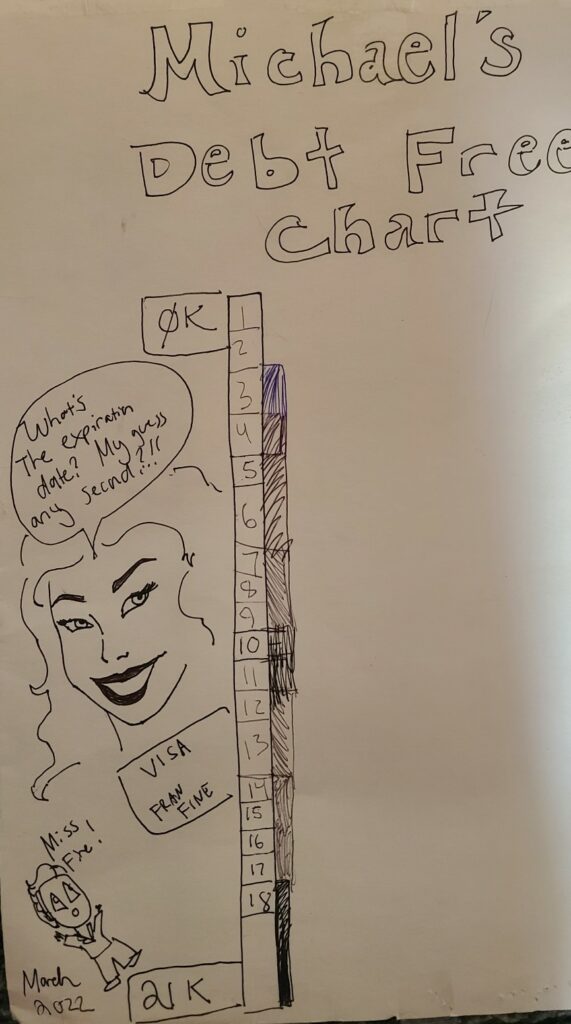
Financial experts suggest a "spending detox" or a period of relative austerity to break the cycle of debt. By categorizing expenses into Fixed, Reducible, and Discretionary, the household could theoretically reallocate over $1,300 monthly toward debt repayment. In an aggressive repayment scenario, the couple could increase their total monthly debt payments to over $4,400. At this rate, the entire $28,259 debt could be eliminated in approximately 6.5 months, effectively clearing the ledger before the high-interest rates on the larger balances become catastrophic.
The Master’s Degree Dilemma and Career Trajectory
Brian has expressed interest in pursuing a graduate degree to rectify perceived past academic struggles. From a strictly ROI (Return on Investment) perspective, professional financial consultants often advise against pursuing advanced degrees unless they are a prerequisite for a specific, guaranteed salary increase. Given Brian’s current success in the public sector and the strength of his existing benefits package, the opportunity cost of tuition and time must be weighed against the immediate goals of homeownership and debt elimination.

For Michael, the focus remains on leveraging his lived experience as a brain injury survivor into a broader consulting and public speaking business. While this offers a pathway to increased income, it also introduces the need for meticulous tax planning and the potential for "lifestyle creep," where increased earnings are immediately absorbed by increased spending rather than savings.
Broader Implications for Middle-Income Earners in the Northeast
The case of Brian and Michael reflects broader economic trends affecting millennials in the Northeastern United States. High utility costs—noted by the couple’s $235 average monthly electricity bill despite efforts to switch suppliers—and a competitive housing market create high barriers to entry for first-time homebuyers. In Connecticut, where property taxes are among the highest in the nation, the transition from renting to owning requires not just a down payment, but a significant "maintenance buffer" that the couple currently lacks.

Furthermore, the psychological impact of "financial shame" is a recurring theme in this case study. Both partners expressed feelings of being "behind" their peers, a sentiment common in an era of social media-driven comparison. However, an objective analysis shows they are outperforming the national average in retirement savings for their age group and possess high-value public sector protections that many of their peers in the private sector lack.
Timeline for Proposed Financial Recovery
To reach their ten-year goals of homeownership, marriage, and business ownership, a phased approach is recommended:

- Immediate (Months 1-7): Implement a total discretionary spending freeze. Channel all excess cash flow—estimated at $4,456 per month—into the credit card balances, prioritizing the SCU Visa before the 17.99% interest rate applies in November.
- Short-Term (Months 8-18): Once debt-free, redirect the former debt payment amounts into a high-yield savings account (HYSA) to build a $30,000 to $40,000 emergency fund. This fund will serve as a permanent barrier against future credit card reliance.
- Mid-Term (Years 2-4): Begin accumulating a down payment for a home in a more rural area of Connecticut, as desired. During this period, the couple should also explore the legal and financial implications of marriage, specifically regarding tax filing statuses and beneficiary designations for Brian’s pension.
- Long-Term (Years 5-10): Focus on maximizing retirement contributions to the 457(b) and 403(b) accounts to take full advantage of compound interest. Evaluate the feasibility of Brian’s graduate studies only if the household is debt-free and the emergency fund is fully vested.
Conclusion: The Path to Permanent Debt Freedom
The financial situation of Brian and Michael is not one of insolvency, but of misaligned cash flow. With a net annual income of over $109,000, the couple possesses the necessary capital to achieve all their stated objectives. The primary obstacle is the habit of "vacillating between feast and famine" spending. By adopting a rigorous tracking system and acknowledging that their public sector benefits provide a security level far above the average, they can move from a state of financial anxiety to one of strategic growth. The transition from "adulting" as a series of crises to "adulting" as a series of planned milestones requires only a temporary period of discipline to reset the foundation of their shared economic life.

