
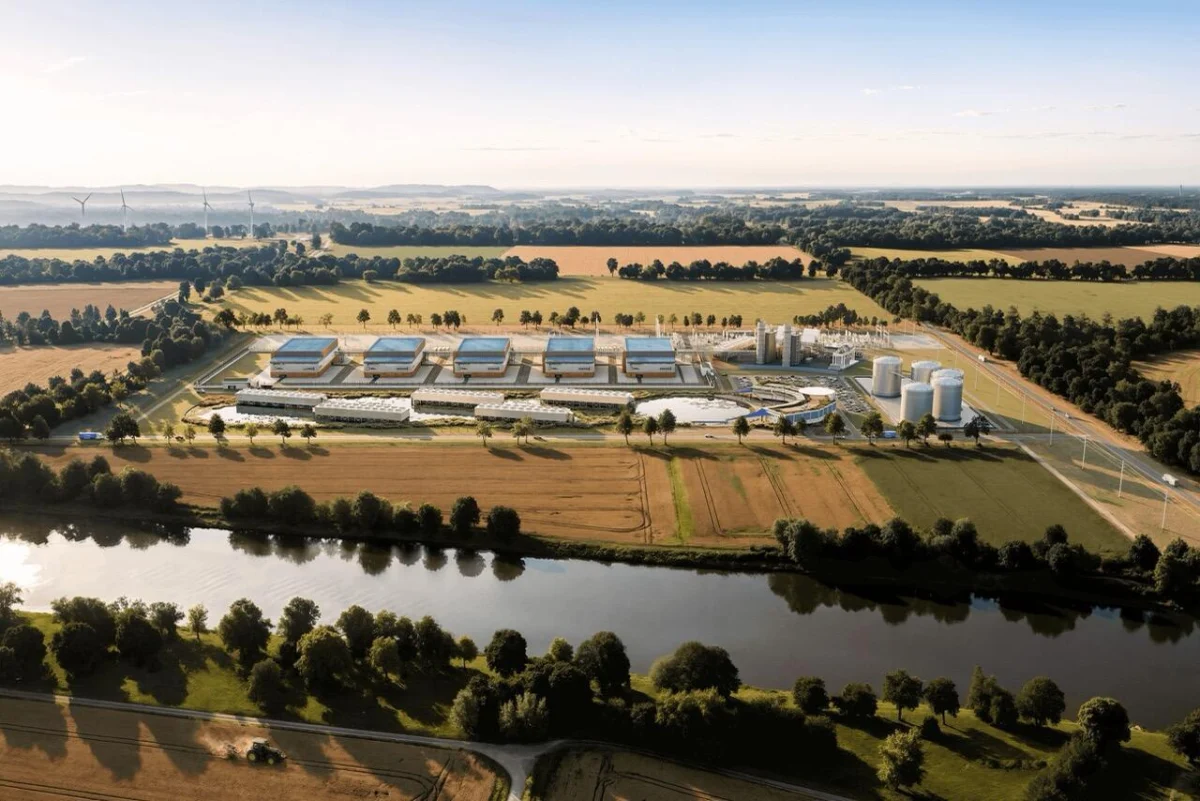
Constellation Energy, already the custodian of the largest nuclear fleet in the United States, has solidified its aggressive strategy to expand carbon-free energy generation by making a strategic equity investment in Blue Energy. This move, executed through its venture arm Constellation Technology Ventures (CTV), targets Blue Energy’s innovative shipyard-based prefabrication and project financing model for small modular reactors (SMRs), underscoring a pivotal shift towards accelerating the deployment of advanced nuclear capacity. This partnership is not merely a financial transaction; it represents a powerful endorsement from a leading nuclear operator, lending crucial credibility to a novel approach designed to overcome the historical construction and financing bottlenecks plaguing new nuclear projects.
The Nuclear Renaissance: Constellation’s Pivotal Role in Meeting Surging Demand
The landscape of energy demand in the United States is undergoing a significant transformation, largely driven by the exponential growth of data centers, particularly those powering artificial intelligence (AI) infrastructure, and the increasing electrification needs of various industries. This surging demand for reliable, always-on, and carbon-free power has thrust nuclear energy back into the spotlight as a critical component of national energy security and decarbonization strategies. Constellation Energy, with its extensive operational expertise and existing fleet of 21 reactors across multiple sites, has been at the forefront of this nuclear renaissance.
Over the past several years, Constellation has actively pursued and secured major power agreements with hyperscale data center operators and large retailers, demonstrating a clear market demand for nuclear power. High-profile examples include Microsoft’s commitment to take the output from the restarted Three Mile Island Unit 1 in Pennsylvania. This facility, which had been idled in 2019 due to market conditions, represents a tangible success story in bringing existing nuclear capacity back online to meet modern industrial needs. Similarly, Meta Platforms, the parent company of Facebook and Instagram, has entered into an agreement to secure emissions-free energy from Constellation’s Clinton Power Station in Illinois, a deal specifically aimed at fueling its burgeoning AI operations. Beyond tech giants, Constellation has also inked long-term agreements with major retailers like Walmart, further diversifying the demand for its nuclear output and demonstrating nuclear’s appeal across various commercial sectors seeking to meet their sustainability goals.
These agreements highlight a fundamental shift in corporate energy procurement. Companies are no longer solely focused on cost but are increasingly prioritizing grid reliability, carbon footprint, and long-term energy price stability. Nuclear power, with its high capacity factors—often exceeding 90% for Constellation’s fleet—and zero-emissions profile, perfectly aligns with these evolving corporate objectives. The ability to provide consistent baseload power, irrespective of weather conditions, makes it an indispensable asset for energy-intensive operations like data centers that require uninterrupted power supply.
Blue Energy’s Innovative Approach to SMR Deployment
The conventional construction of large-scale nuclear power plants has historically been plagued by substantial cost overruns, lengthy timelines often stretching over a decade, and complex regulatory hurdles. These challenges have made new nuclear builds a formidable undertaking, limiting their widespread adoption despite their clear benefits. Blue Energy, an American nuclear developer, is proposing a radical departure from these traditional methods through its innovative shipyard-based prefabrication and project financing model for SMRs.
Small Modular Reactors (SMRs) are advanced nuclear reactors that produce up to 300 MW(e) per unit, roughly one-third of the generating capacity of traditional nuclear power reactors. Their key advantages lie in their modular design, which allows components to be fabricated in factories and then transported to the site for assembly. This approach promises numerous benefits:
- Reduced Construction Time: Factory fabrication allows for parallel construction activities and mitigates many on-site construction delays.
- Lower Upfront Capital Costs: Smaller unit size and modularity mean less initial investment per unit.
- Enhanced Safety: SMR designs often incorporate advanced passive safety features.
- Flexibility and Scalability: Units can be added incrementally to match growing demand.
- Siting Flexibility: Their smaller footprint allows them to be sited in locations unsuitable for larger plants.
Blue Energy’s model takes this modularity a step further by leveraging industrial processes from the offshore oil, gas, and liquefied natural gas (LNG) sectors. Large reactor modules would be fabricated in existing shipyards, utilizing advanced robotic manufacturing techniques. This shipyard-based approach offers several critical advantages:
- Industrialized Quality Control: Manufacturing in a controlled factory environment ensures higher quality and consistency, reducing defects and rework.
- Cost Efficiency: Leveraging established shipbuilding infrastructure and supply chains can drive down manufacturing costs.
- Accelerated Production: Parallel fabrication of multiple modules can significantly compress overall project schedules.
- Skilled Workforce: Access to a highly skilled industrial workforce experienced in complex fabrication.
Once fabricated, these large modules would be barged to the designated project site, ready for assembly. This innovative logistical approach significantly de-risks on-site construction, moving a substantial portion of the labor and complexity into a controlled factory environment. Furthermore, Blue Energy’s design philosophy maintains a clean split between the "nuclear island"—the reactor and its immediate safety systems, supplied by the reactor vendor—and the "balance-of-plant" (BOP) components, which include the turbine generator and auxiliary systems. The BOP work is intended to be executed under fixed-price commercial contracts, a standard practice in conventional power plant construction but novel for the nuclear industry, which traditionally sees extensive cost escalation in these areas.
The "Gas-to-Nuclear Bridge" at a Texas Site
A key component of Blue Energy’s strategy, developed in collaboration with GE Vernova, is a phased "gas-to-nuclear" approach planned for a site in Texas. This innovative strategy aims to provide immediate power generation while laying the groundwork for future nuclear deployment, addressing the urgent demand for energy in a rapidly growing region.
The initial phase envisions the deployment of two GE Vernova gas turbines, projected to deliver approximately 1 gigawatt (GW) of power starting around 2030. This gas-fired capacity serves as a crucial "bridge," providing a rapid energy solution and establishing a revenue stream for the project. The co-location of gas turbines with planned nuclear facilities also allows for shared infrastructure, such as transmission lines, cooling systems, and site preparation, optimizing capital expenditure and streamlining the development process.
In the subsequent phase, the steam supply for these turbines would transition to advanced nuclear reactors. Blue Energy plans to utilize GE Vernova Hitachi BWRX-300 reactors, targeting an eventual nuclear capacity of up to 1.5 GW. The BWRX-300 is a boiling water SMR design, which has garnered significant attention for its simplified design, enhanced safety features, and potential for rapid deployment. Early site works for this ambitious project are anticipated to commence this year, with a final investment decision (FID) targeted for 2027. This aggressive timeline, aiming for power generation within 48 months or less via the gas bridge, stands in stark contrast to the conventional decade-plus timelines associated with traditional nuclear power plant construction.
Blue Energy’s approach also addresses the complex issue of project financing. The company has developed an NRC-approved licensing topical report, which is crucial for de-risking the regulatory pathway. This regulatory clarity, combined with the modular construction, shipyard fabrication, and fixed-price BOP contracts, is designed to make nuclear projects more attractive to a broader range of investors, potentially unlocking project financing for a meaningful portion of the capital expenditure—a significant breakthrough for an industry that has historically relied heavily on government backing and balance sheet financing.
The Strategic Significance of Constellation’s Investment
While the exact terms of Constellation Technology Ventures’ (CTV) equity investment in Blue Energy remain undisclosed, industry observers suggest the capital injection is likely in the single-digit millions, based on CTV’s prior energy technology investments, such as a $4 million investment in SWTCH. However, the true value of this deal extends far beyond the monetary sum.

The most profound implication of Constellation’s investment is the powerful "partnership signal" it sends to the broader energy market and the nuclear industry. Constellation Energy is not merely a financial investor; it is the most experienced and largest nuclear plant operator in the United States, managing a fleet that consistently achieves capacity factors above 90%. For an operator with such an impeccable track record and deep operational expertise to lend its credibility to a nascent company like Blue Energy and its innovative deployment model for SMRs carries immense weight.
This endorsement serves as a validation of Blue Energy’s technological and financial approach, signaling to potential investors, regulators, and other industry players that Blue Energy’s vision is viable and strategically aligned with the future of nuclear energy. It suggests that Blue Energy’s shipyard-based construction methodology and its phased gas-to-nuclear strategy are seen as credible solutions to the long-standing challenges of cost and schedule overruns in nuclear new builds. For the SMR sector as a whole, this partnership could be a catalyst, encouraging further corporate interest and investment, accelerating the commercialization of these advanced reactor designs.
Broader Implications and the Future of Energy
Constellation’s investment in Blue Energy marks CTV’s first foray into an American nuclear developer focused on SMRs, indicating a strategic pivot towards actively shaping the future of nuclear energy beyond merely operating existing plants or restarting idled ones. This move underscores Constellation’s commitment to not only maintain its leadership position in clean energy generation but also to innovate and accelerate the decarbonization of the electricity sector.
The partnership holds significant implications for several critical areas:
- Decarbonization Goals: Rapid deployment of SMRs can play a crucial role in achieving ambitious carbon reduction targets by providing a constant, reliable, and emissions-free power source to complement intermittent renewables like solar and wind.
- Energy Security: Diversifying the energy mix with new nuclear capacity enhances grid resilience and reduces reliance on volatile fossil fuel markets, contributing to national energy independence.
- Economic Development: The shipyard-based manufacturing model for SMRs has the potential to create new high-tech manufacturing jobs, revitalize industrial sectors, and foster economic growth in regions capable of supporting such large-scale fabrication. The Texas project itself promises significant job creation during construction and operation.
- Technological Advancement: This partnership pushes the boundaries of nuclear construction and financing, fostering innovation that could set new global standards for deploying advanced nuclear technologies.
- Data Center Growth: As AI and other data-intensive technologies continue to expand, the demand for clean, reliable baseload power will only intensify. Partnerships like this demonstrate a clear pathway to meeting that demand sustainably.
Despite the optimism, challenges remain. Navigating the complex regulatory environment, securing necessary permits, and managing the inherent risks associated with first-of-a-kind deployments will require meticulous planning and execution. Public acceptance and community engagement are also vital for the successful implementation of any new nuclear project. However, with the backing of an industry giant like Constellation, Blue Energy’s innovative model is significantly better positioned to address these challenges and potentially usher in a new era of rapid, cost-effective nuclear power deployment.
This strategic alignment between a seasoned nuclear operator and an innovative SMR developer represents a pivotal moment for the nuclear industry. It signals a strong market confidence in SMR technology’s ability to overcome historical hurdles and deliver clean, reliable power at scale, thereby playing an indispensable role in the global energy transition. The coming years will undoubtedly showcase whether Blue Energy’s shipyard-to-site model, bolstered by Constellation’s expertise, can indeed achieve its ambitious goal of delivering nuclear power in a fraction of the traditional timeline.

