

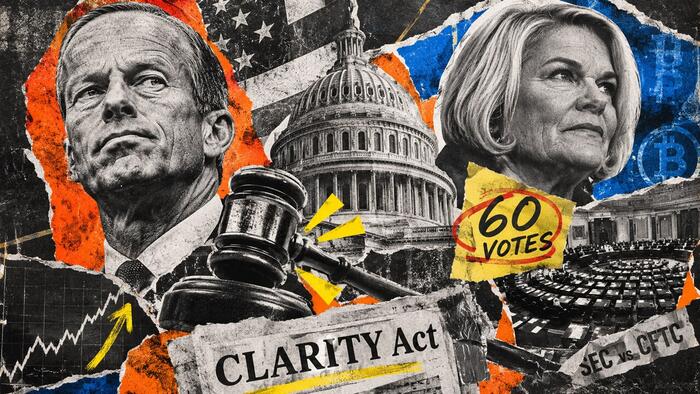
The United States Senate is poised for a significant legislative battle over the future of cryptocurrency regulation, following a pivotal procedural move by Senate Majority Leader John Thune (R-S.D.). On a recent Saturday, Senator Thune initiated steps to bring the CLARITY Act, a comprehensive bill aimed at establishing a federal regulatory framework for digital assets, to the Senate floor. This action sets the stage for a critical vote on whether to formally consider the legislation once lawmakers reconvene from their August recess, signaling a potential turning point for the rapidly evolving digital asset industry.
The CLARITY Act represents a concerted effort to move beyond the current fragmented and often criticized regulatory landscape governing cryptocurrencies and other digital assets. Its proponents argue that the bill would introduce much-needed legal certainty and clarity, replacing what they describe as the Securities and Exchange Commission’s (SEC) "regulation-by-enforcement" approach with a more defined set of rules. However, the legislation faces staunch opposition from some lawmakers who express concerns about potential risks to consumers, national security, and the broader financial system, arguing that the bill is overly favorable to the crypto industry.
Understanding the CLARITY Act: A Deep Dive into its Provisions
At its core, the CLARITY Act seeks to establish a clear federal regulatory framework by delineating the authority of two primary financial regulators: the Securities and Exchange Commission (SEC) and the Commodity Futures Trading Commission (CFTC). This distinction is fundamental, aiming to classify digital assets as either securities or commodities, thereby determining which agency will oversee them.
Defining Digital Assets: Securities vs. Commodities
One of the most persistent challenges in cryptocurrency regulation has been the lack of a universally accepted definition for various digital assets. The CLARITY Act proposes to resolve this by providing criteria to distinguish between digital assets that fall under the purview of securities law and those that should be treated as commodities. In traditional finance, the SEC regulates securities (like stocks and bonds), while the CFTC oversees commodity markets (like oil, gold, and agricultural products). Applying these established frameworks to novel digital assets is complex, but the bill aims to provide a legislative solution, rather than relying on individual agency interpretations or court decisions. This clarity is crucial for developers, exchanges, and investors who currently grapple with uncertainty regarding compliance obligations.
Addressing "Regulation-by-Enforcement"
A major driving force behind the CLARITY Act is the widespread industry dissatisfaction with the SEC’s current approach to digital assets. Critics, including many industry leaders and some lawmakers, contend that the SEC has largely regulated the crypto space through enforcement actions against companies and projects, rather than by issuing clear, proactive guidelines. This "regulation-by-enforcement" strategy has been criticized for creating an environment of unpredictability, stifling innovation, and driving some blockchain companies overseas. The CLARITY Act aims to supplant this reactive approach with a comprehensive set of rules that would allow businesses to understand and comply with regulations upfront.
Enhancing Investor Protection and Market Integrity
Beyond jurisdictional clarity, the bill includes several provisions designed to protect investors and maintain market integrity. It mandates that certain digital asset offerings and sales provide specific public disclosures to investors, similar to requirements in traditional securities markets. This aims to ensure transparency and equip investors with the information needed to make informed decisions.
A significant feature is the creation of a new exemption from SEC registration, dubbed "Regulation Crypto." This provision would allow qualifying digital asset projects to raise capital from the public while adhering to a tailored set of disclosure and regulatory requirements, potentially offering a more streamlined path to market access for innovative projects.
Furthermore, the CLARITY Act includes measures to prevent market manipulation and fraud. It seeks to prevent companies from structuring projects solely to evade existing securities laws and would impose restrictions on insiders reselling assets in ways that could facilitate "pump-and-dump" schemes or other forms of market manipulation. The legislation also aims to provide legal certainty for digital assets that U.S. courts have already determined are not securities, solidifying their regulatory classification.
The Broader Context: A Fragmented Regulatory Landscape
The push for the CLARITY Act comes amidst a prolonged period of regulatory uncertainty for the digital asset industry in the United States. Unlike many other developed nations that have begun to establish bespoke frameworks for cryptocurrencies, the U.S. has largely relied on applying existing laws designed for traditional financial instruments to this new technology. This has resulted in a patchwork of regulations enforced by various federal and state agencies, often with overlapping or conflicting jurisdictions.
For instance, the SEC has asserted that many cryptocurrencies are unregistered securities, leading to high-profile enforcement actions against major players. Conversely, the CFTC has generally viewed Bitcoin and Ethereum as commodities. This lack of a unified approach has led to significant legal battles, hindered innovation, and created a complex compliance environment for businesses operating in the digital asset space. Industry stakeholders have long called for a comprehensive federal framework to provide a level playing field, foster innovation domestically, and protect consumers more effectively. The CLARITY Act is one of several legislative proposals that have emerged in Congress over recent years, reflecting a growing recognition of the need for decisive action.
Key Voices: Supporters and Opponents Weigh In
The debate surrounding the CLARITY Act highlights a fundamental divide in Washington regarding the role and regulation of digital assets. Both proponents and critics voice strong opinions on the potential implications of the bill.
Arguments from Proponents:
Senator Cynthia Lummis (R-Wyo.), Chair of the Senate Banking Digital Assets Subcommittee, has been a vocal champion of the legislation. In late July, she expressed her strong support, stating, "This is another step in my years-long journey to ensure the U.S. leads the way on digital assets." Lummis emphasized the urgency of the moment, adding, "The U.S. has always been at the forefront of financial innovation, and the coming weeks are likely the last real chance we will have for years to get this right." Her perspective aligns with many in the industry who believe that clear regulation is essential for the U.S. to maintain its competitive edge in financial technology and prevent talent and capital from migrating to more crypto-friendly jurisdictions.
Former President Donald Trump has also expressed his support for the bill, urging the Senate to pass it. While the original source incorrectly stated this was in honor of a "late" Senator Lindsey Graham, President Trump’s broader statements have often linked crypto regulation to national security and global competitiveness. In July, he articulated a concern that "China and other countries aim to ‘take complete and total control of the major financial ‘happening’ and artificial intelligence." This perspective suggests that a robust, clear regulatory framework could bolster American innovation and prevent rival nations from dominating emerging financial technologies. Industry groups, such as the Chamber of Digital Commerce and various blockchain associations, have consistently advocated for legislative clarity, arguing that it would unlock economic growth, create jobs, and foster responsible innovation within the U.S. borders.
Concerns from Critics:
On the opposing side, Senator Elizabeth Warren (D-Mass.) stands as one of the most prominent critics of the CLARITY Act and similar pro-crypto legislation. In a statement released in May, Warren articulated her strong reservations: "Our job is not to advance a pro-industry crypto bill that will put American consumers, investors, our national security and our financial system at risk."
Senator Warren’s concerns extend beyond the specifics of the bill to what she perceives as a fundamental misplacement of congressional priorities. She argued that lawmakers should focus on "kitchen-table issues, such as capping interest rates on credit cards and preventing big banks from charging overdraft fees." Her most pointed criticism centered on the alleged influence of the crypto industry in drafting the legislation: "But, instead of that, we’re spending our time working on a bill written by the crypto industry for the crypto industry. Nothing made it into this bill that wasn’t approved by the crypto industry." This sentiment is echoed by consumer advocacy groups and some financial stability advocates who fear that a framework developed too closely with industry input might create loopholes, insufficiently protect retail investors, and potentially introduce systemic risks into the broader financial system. They argue that the speculative nature of many digital assets, combined with their volatility and susceptibility to scams, necessitates stringent oversight rather than a potentially lenient framework.
Timeline of Legislative Efforts and Industry Developments
The journey toward comprehensive cryptocurrency regulation has been protracted, marked by both rapid technological innovation and significant market disruptions.
- Early 2010s: Bitcoin emerges, followed by other cryptocurrencies. Regulatory bodies initially struggle to categorize and oversee these novel assets.
- Mid-2010s: The SEC and CFTC begin to assert jurisdiction over certain digital assets, with the CFTC declaring Bitcoin a commodity. Early enforcement actions begin.
- 2017 ICO Boom: A surge in Initial Coin Offerings (ICOs) prompts increased scrutiny from the SEC, which classifies many as unregistered securities offerings, leading to numerous enforcement actions.
- 2018-2021: Calls for clearer regulation intensify. Various legislative proposals are introduced in Congress, but none gain sufficient bipartisan momentum for passage. The SEC continues its "regulation-by-enforcement" approach, leading to high-profile legal challenges.
- 2022 Market Turmoil: The collapse of major crypto entities like Terra/Luna, Celsius, Voyager, and FTX sends shockwaves through the industry, wiping out billions in investor funds. These events underscore the urgent need for robust consumer protection and market stability measures, galvanizing congressional interest in regulatory reform.
- 2223: Increased Legislative Activity: Several comprehensive bills, including the CLARITY Act (though its formal introduction date would be earlier, the procedural move is recent), the Lummis-Gillibrand Responsible Financial Innovation Act, and others, gain renewed attention. Discussions intensify in congressional committees.
- Recent Procedural Step: Senate Majority Leader John Thune’s procedural move on Saturday brings the CLARITY Act closer to a floor vote, marking a significant advancement in its legislative journey. This action indicates that the bill has garnered sufficient support to warrant consideration by the full Senate, even if its ultimate passage remains uncertain.
Supporting Data and Market Implications
The cryptocurrency market has grown exponentially over the past decade, transforming from a niche interest into a trillion-dollar global industry. At its peak, the total market capitalization of cryptocurrencies exceeded $3 trillion, and while it has since seen significant corrections, it consistently remains a substantial and influential sector. Millions of Americans actively participate in the crypto economy, either as investors, traders, or users of blockchain-based applications.
This rapid growth, however, has also highlighted the vulnerabilities inherent in an unregulated or under-regulated market. The high-profile bankruptcies and alleged frauds of 2022, such as the collapse of FTX, which defrauded customers of billions, serve as stark reminders of the risks posed by a lack of clear oversight. These events have not only caused significant financial losses for individual investors but have also eroded public trust and raised concerns about systemic risk.
Implications for Investors:
If passed, the CLARITY Act could offer a dual benefit to investors. The mandated public disclosures and "Regulation Crypto" framework aim to provide greater transparency, enabling investors to make more informed decisions and reducing their exposure to opaque or fraudulent schemes. Simultaneously, the legal certainty regarding asset classification could foster more robust and regulated exchanges, potentially increasing institutional participation and overall market stability.
Implications for Innovation and U.S. Competitiveness:
For innovators and blockchain companies, the bill could provide a much-needed roadmap for product development and market entry. By clarifying which assets fall under SEC or CFTC jurisdiction, and by offering a structured path for fundraising through "Regulation Crypto," the legislation could reduce regulatory compliance costs and risks. This, in turn, could incentivize blockchain companies to build and operate within the United States, fostering domestic innovation and preventing a "brain drain" of talent and capital to more permissive jurisdictions. A clear framework is often seen as a prerequisite for institutional adoption, potentially unlocking significant investment into the sector.
Implications for Regulatory Agencies:
The CLARITY Act would provide a clearer mandate for the SEC and CFTC, potentially reducing inter-agency friction and allowing them to focus on their defined areas of oversight. This could lead to more efficient enforcement and regulatory development, as each agency would have a precise scope of authority. However, implementing such a framework would require significant resources and expertise within both agencies to adapt to the nuances of digital asset technology.
Potential Road Ahead: Challenges and Prospects
The procedural step taken by Senator Thune is a crucial advancement, but it is by no means a guarantee of the CLARITY Act’s passage. The upcoming vote will merely determine whether the Senate will formally consider the bill. Even if it moves forward, the legislative process is fraught with challenges.
Bipartisan Hurdles: While some crypto legislation has seen bipartisan support, deeply entrenched ideological differences persist. Senator Warren’s strong opposition highlights the difficulty of bridging the gap between those prioritizing consumer protection above all else and those advocating for innovation and industry growth. Achieving the necessary 60 votes to overcome a potential filibuster, let alone a simple majority for final passage, will require significant negotiation and compromise.
Amendments and Revisions: It is highly likely that the bill would undergo further amendments and revisions during its journey through the Senate. Lawmakers from both sides of the aisle may seek to modify provisions related to investor protection, agency jurisdiction, or industry exemptions. These negotiations could be complex and time-consuming.
Executive Branch Engagement: The Biden administration has also expressed interest in cryptocurrency regulation, issuing an executive order in 2022 that called for a whole-of-government approach to digital assets. The White House and relevant federal agencies would undoubtedly weigh in on the CLARITY Act, potentially influencing its final form or even posing a veto threat if they believe it does not adequately address their concerns, particularly around financial stability and illicit finance.
The ultimate fate of the CLARITY Act remains uncertain, but its progression to a potential Senate floor vote signifies a growing congressional urgency to address the complexities of digital asset regulation. As lawmakers return from their August recess, the debate over this landmark legislation promises to be a central and defining moment for the future of cryptocurrency in the United States. The outcome will have profound implications for investors, innovators, and the nation’s standing in the global digital economy.

