
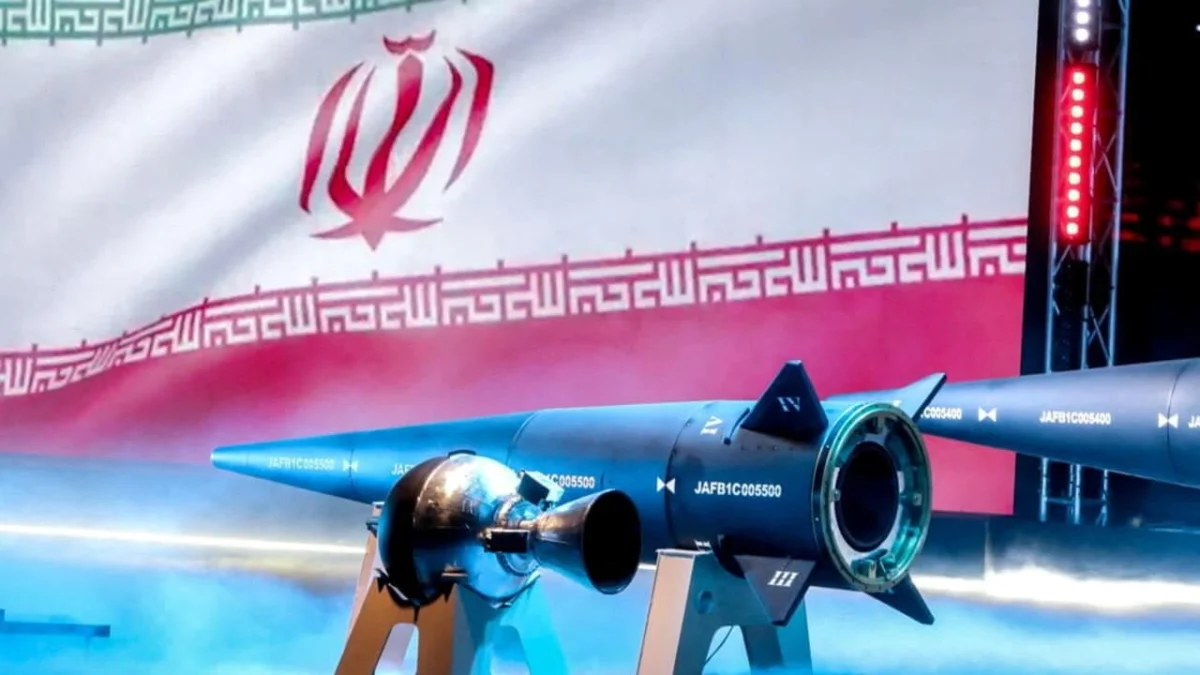
A significant new allegation has emerged this week, reported by the London-based Financial Times, asserting that Russia has been secretly assisting Iran in the development of supersonic cruise missiles. This clandestine program, described as one of the most substantial transfers of strategic military technology from Moscow to Tehran, is alleged to have been ongoing throughout a period marked by heightened tensions and conflict involving the United States and Israel. The revelations, based on internal Russian evidence uncovered by the Financial Times, including correspondence, travel records, and military patents, paint a picture of deepening military cooperation between two nations frequently at odds with Western powers.
The Genesis of the Allegations: An In-Depth Look
The Financial Times‘ investigation points to Russia’s state arms exporter, Rosoboronexport, as a central player in this alleged collaboration. The project, reportedly codenamed "C430L," also involves NPO Mashinostroyenia, a prominent Russian rocket design company that is currently under U.S. sanctions. According to the report, officials from both Russian entities have frequently traveled to Iran since 2023, indicating a sustained and active engagement. The program’s continuation was reportedly projected into June 2026, though the current status amidst ongoing global conflicts remains unclear.
The type of missile reportedly under development is designed to achieve speeds multiple times that of sound, potentially classifying it as an "aircraft killer." This capability raises significant concerns among defense analysts and policymakers, particularly regarding its potential threat to naval assets, most notably aircraft carriers. The report highlights that such advanced weaponry could fundamentally alter the balance of power in volatile regions.
The Strategic Significance of Supersonic Cruise Missiles
Supersonic cruise missiles represent a leap in offensive military capability due to their extreme speed, maneuverability, and ability to fly at low altitudes, making them exceedingly difficult to detect and intercept by conventional air defense systems. Unlike slower, subsonic missiles, a supersonic missile drastically reduces the reaction time available for defensive measures, posing a severe challenge to even the most sophisticated naval fleets.
For Iran, acquiring such technology would be transformative. As Jim Lamson, a former CIA military analyst specializing in Iran, stated to the Financial Times, this would equip Iran with "a qualitatively new strategic weapon system that could threaten US Navy vessels." The implications for maritime security in critical waterways like the Persian Gulf and the Strait of Hormuz are profound. The ability to credibly threaten U.S. aircraft carriers or other large surface combatants could significantly constrain naval operations and project Iranian influence further than ever before.
Fabian Hinz, a senior analyst with Conflict Armament Research, underscored the historical context of this alleged transfer, noting that "This is the transfer of a highly strategically sensitive military technology from Russia that the Iranians have wanted to acquire for decades." Hinz further emphasized the political gravity of such a program, adding, "A program like this would require political clearance from the very top in Russia." This suggests that the alleged cooperation is not merely a commercial transaction but a strategic decision at the highest levels of the Russian government, indicative of a deeper geopolitical alignment.
Background and Context of Russia-Iran Relations
The alleged missile cooperation is not an isolated incident but rather the latest manifestation of a rapidly strengthening strategic partnership between Russia and Iran. This alliance has solidified over the past decade, driven by shared geopolitical interests, a common antipathy towards perceived Western hegemony, and mutual economic and military needs.
The relationship gained significant momentum during the Syrian civil war, where both Russia and Iran provided crucial military and political support to the Assad government. Russia’s intervention in 2015, alongside Iranian-backed militias, was instrumental in turning the tide of the conflict in favor of Damascus. This shared endeavor fostered a deeper trust and operational coordination between their respective military establishments. For Russia, preventing a US-imposed regime change in Syria was a clear objective, and the Kremlin certainly does not wish to see a similar outcome in Tehran.
In recent years, this partnership has expanded beyond Syria to encompass a broader spectrum of defense and economic cooperation. Iran has become a significant supplier of drones to Russia, particularly for use in the conflict in Ukraine, showcasing a transactional yet strategic exchange of military hardware. These drone transfers have been widely reported and have drawn international condemnation, highlighting the growing interdependence of their defense industries. Furthermore, both nations have inked various economic pacts, aimed at circumventing Western sanctions and establishing alternative trade routes and financial mechanisms. This broader framework provides fertile ground for more sensitive military collaborations, such as the alleged supersonic missile program.
A History of Iran’s Missile Program and its Aspirations

Iran has maintained an ambitious missile program for decades, driven by a strategic imperative to develop a credible deterrent against regional adversaries and potential foreign aggression. Following the Iran-Iraq War (1980-1988), during which Iran faced severe missile attacks, Tehran intensified its efforts to achieve self-sufficiency in missile production. Over the years, Iran has developed an extensive arsenal of ballistic missiles, including the Shahab series, Qiam, Emad, and Sejjil, as well as various cruise missiles like the Hoveyzeh and Soumar. These missiles have varying ranges and capabilities, allowing Iran to target objectives across the Middle East.
However, Iran’s existing missile technology, while formidable, has largely remained in the subsonic or ballistic categories. The acquisition or indigenous development of supersonic cruise missiles would represent a qualitative leap. Supersonic cruise missiles offer distinct advantages over ballistic missiles, primarily their ability to fly at lower altitudes, follow terrain contours, and execute complex maneuvers, making them less predictable and harder to intercept than ballistic trajectories. For a nation like Iran, which faces advanced air and missile defense systems operated by its adversaries, such as Israel and the United States, supersonic capabilities would significantly enhance its offensive punch and survivability.
International efforts to curb Iran’s missile program, largely through sanctions and diplomatic pressure, have been a continuous feature of global non-proliferation policy. The UN Security Council Resolution 2231, which endorsed the 2015 Iran nuclear deal, included restrictions on Iran’s ballistic missile activities, though these provisions have been contentious and largely expired. Despite these pressures, Iran has consistently asserted its right to develop its defensive capabilities, viewing its missile program as a cornerstone of its national security. The alleged Russian assistance in supersonic missile development would signify a major breakthrough for Iran, potentially circumventing years of international isolation and technological barriers.
Chronology of Alleged Cooperation and Related Events
- Early 2010s: Intensification of Russia-Iran strategic dialogue, particularly concerning regional security issues and opposition to Western influence.
- 2015: Russia’s direct military intervention in the Syrian civil war, aligning closely with Iranian and Hezbollah forces, deepening military-to-military ties.
- Late 2010s – Early 2020s: Reports of increased military-technical cooperation, including intelligence sharing and joint exercises.
- 2022: Russia’s full-scale invasion of Ukraine. Subsequent reports emerge of Iran supplying Russia with Shahed-136 "kamikaze" drones, marking a significant transactional defense relationship.
- 2023: According to the Financial Times report, Russian officials from Rosoboronexport and NPO Mashinostroyenia begin frequent travel to Iran, initiating or intensifying the "C430L" supersonic missile program. This period coincides with ongoing conflicts in Ukraine and heightened tensions in the Middle East.
- June 2026 (Projected): The Financial Times report indicates the program was slated to continue until at least this date, suggesting a long-term commitment to the development.
- September 2, 2026 (Social Media Reference): A tweet from "Clash Report" referencing "Bessent on Iran" discussing Iranian supplies from Russia and potential disruptions to Iranian airlines. While the date on the tweet appears to be in the future (Sept 2, 2026), it reflects the ongoing discourse around Russia’s material support to Iran.
- Current Period: The Financial Times publishes its investigation, bringing the alleged supersonic missile development to international attention, amidst persistent reports of advanced and ultra-fast weapons being used against Israel, which some analysts speculate could be related to such emerging capabilities.
Potential Implications for Regional and Global Security
The confirmed development and deployment of Iranian supersonic cruise missiles, particularly with Russian assistance, would carry profound implications for regional and global security.
- Middle East Power Balance: It would significantly shift the military balance in the Middle East, providing Iran with a formidable offensive capability that could challenge the air and naval superiority of its adversaries, including Israel and Saudi Arabia. This could trigger an arms race in the region, as other states might seek similar deterrents or advanced defensive systems.
- Threat to U.S. Interests: The primary concern for the United States is the direct threat to its naval assets in the Persian Gulf and broader Middle East. Supersonic anti-ship missiles could complicate U.S. freedom of navigation and power projection in the region, potentially increasing the risk of escalation in any confrontation.
- Israeli Security: For Israel, which considers Iran its foremost existential threat, the development of such advanced missiles would be a grave concern. It would necessitate a re-evaluation of its multi-layered air and missile defense systems and potentially lead to more aggressive pre-emptive strategies. The original article’s mention of "advanced and ultra-fast weapons" used against Israel, causing significant damage, adds a layer of speculation, though no direct link to this alleged Russian-Iranian program has been established.
- Nuclear Proliferation Concerns: While supersonic cruise missiles are conventional weapons, their development in a highly volatile region by a state with an active nuclear program raises broader proliferation anxieties. The transfer of advanced military technology, especially from a major power like Russia, could be seen as setting a dangerous precedent.
- International Non-Proliferation Regimes: Such cooperation would further undermine international non-proliferation efforts and sanctions regimes, particularly those aimed at limiting Iran’s military capabilities. It highlights the challenges faced by the international community in enforcing restrictions when major powers are willing to circumvent them.
- Deepening "Axis of Resistance": The military collaboration reinforces the narrative of an emerging anti-Western "axis" involving Russia, Iran, and potentially other states. This alignment challenges the existing unipolar global order and could lead to increased instability in various flashpoints worldwide.
Official Responses and the "Propaganda" Question
As of now, there have been no official confirmations or outright denials from Moscow or Tehran regarding the Financial Times’ allegations. However, the question of whether these revelations are "propaganda" designed to exert further Western pressure on Russia and Iran is a valid consideration. Western intelligence agencies and media outlets often publish reports on adversary activities that serve geopolitical objectives.
Nevertheless, several factors suggest that these allegations, if true, would be consistent with the known trajectories of both nations. As noted, Russia and Iran have openly deepened their defense and economic pacts, making transfers of military technology a logical extension of this strategic alignment. The ongoing drone transfers are a clear example of this practical cooperation. Moreover, Russia’s need for allies and resources amidst its war in Ukraine, coupled with Iran’s decades-long ambition to acquire advanced military technology, creates a strong rationale for such a partnership.
Any official response from Russia would likely involve a denial of interference or assistance in developing offensive weapons, while Iran would likely assert its sovereign right to enhance its defensive capabilities. The opacity surrounding such programs often leaves room for both strategic ambiguity and propaganda narratives from all sides.
Broader Geopolitical Landscape
The alleged missile cooperation must be viewed within the larger context of a shifting global order. Russia, increasingly isolated by Western sanctions and engaged in a protracted conflict in Ukraine, is actively seeking to forge alliances with like-minded states that share its skepticism of Western dominance. Iran, similarly isolated by a multitude of sanctions and facing persistent external pressures, finds a willing strategic partner in Moscow.
This convergence of interests is creating a formidable bloc that seeks to challenge the existing international system. The transfer of advanced military technology, especially something as potent as supersonic cruise missiles, symbolizes this emerging geopolitical reality. It underscores the limitations of Western sanctions and diplomatic isolation when determined actors are willing to collaborate in defiance of international norms. The implications extend beyond military capabilities, touching upon economic ties, energy cooperation, and diplomatic coordination, all contributing to a more multipolar and potentially more volatile world.
In conclusion, the Financial Times‘ report alleging Russian assistance to Iran in developing supersonic cruise missiles represents a critical development in international security. If substantiated, it would not only signify a major technological leap for Iran but also deepen the strategic partnership between Moscow and Tehran, with far-reaching consequences for regional stability in the Middle East and the broader global geopolitical landscape. The international community will undoubtedly monitor these developments closely, as the potential for escalation and altered power dynamics remains significant.

