
By late afternoon on Saturday, October 24, 2026, a second consecutive weekend of intense social unrest had escalated dramatically across France, prompting an unprecedented deployment of 70,000 police officers to major metropolitan areas nationwide. The Macron government, grappling with a confluence of social, financial, and migratory crises, found itself confronting organized far-left groups whose stated objectives range from the overthrow of capitalism to sparking broader chaos across Western nations. The volatile situation underscored deep-seated societal fractures and raised alarms about the stability of not only France but also the wider European progressive experiment, especially as reports emerged of riots spilling over into Brussels.
Escalating Unrest and Massive Security Deployment
The day began with a pre-emptive show of force unseen in recent memory. Authorities had anticipated a repeat of the previous weekend’s widespread disturbances, which saw over half a million people demonstrating by day’s end, leading to more than 2,500 arrests, nearly 1,000 injured police officers, and over 3,000 looted stores. In response, France’s Interior Ministry initiated a comprehensive security operation, deploying 70,000 police officers, reinforced by military troops, armored vehicles, drones, and helicopters. This formidable force was strategically positioned in high-risk urban centers such as Paris, Marseille, Lyon, and Nantes. Key landmarks, including the iconic Arc de Triomphe in Paris, were closed to the public, and several municipalities imposed downtown protest bans and extended curfews into the weekend in a bid to quell potential violence.
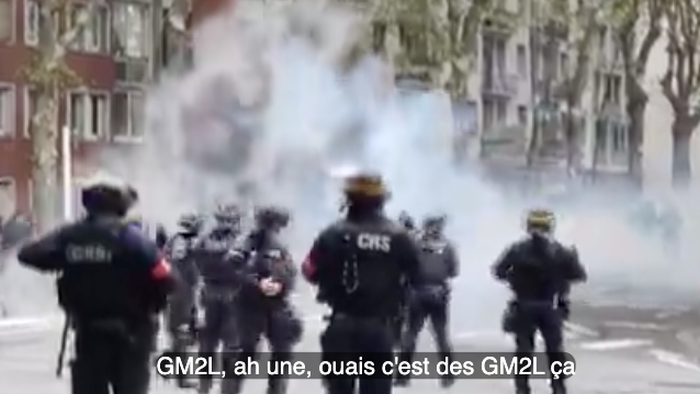
Despite these stringent measures, clashes and acts of vandalism quickly materialized. Footage from the afternoon depicted mobs smashing windows in central Grenoble, while Nantes was enveloped in tear gas as riot police pursued protesters. In Toulouse, initial skirmishes were reported near the Pont des Catalans, indicating the rapid spread of flashpoints across different regions. Lyon also witnessed significant disturbances, with riot police deploying large quantities of pepper spray to disperse crowds. Further reports from Pau showed demonstrators being dispersed with grenades, highlighting the intensity of the confrontations between law enforcement and rioters.
Interior Minister Laurent Nuñez, cited by The New York Times, estimated national turnout at 35,000 by midday, a figure significantly lower than the previous Saturday’s count at the same point. However, the dispersed nature of the unrest and the aggressive tactics employed by some groups suggested that the impact was not solely measured by sheer numbers but by the severity and coordination of the destructive acts.
The Ideological Underpinnings: Anti-Capitalism and Revolution
Central to the ongoing turmoil are the explicit ideological motivations articulated by many of the participating groups. Analysts and government officials have pointed to a pronounced far-left agenda, with some factions openly advocating for the "overthrow of the capitalist French government" and the establishment of a "worker’s government." This revolutionary rhetoric has been a consistent theme throughout the protests, distinguishing them from traditional demonstrations against specific government policies.
Dr. Karlyn Borysenko, an anti-communist analyst, offered a detailed perspective on the genesis and expansion of the uprisings. She asserted that the riots originated as a student movement, facilitated and even indoctrinated by teachers within the French educational system, mirroring patterns observed in other Western nations. According to Borysenko, this initial student activism, involving individuals from various communities, subsequently broadened to include teachers, university students, major labor unions, and explicitly anti-fascist and anti-capitalist groups. "All of it is grounded in far-left ideology," Borysenko stated, emphasizing that participants are "explicitly calling for the communist overthrow of the government." She further highlighted the alarming trend of this ideology "bleeding into other countries in the region," underscoring the perceived transnational nature of the movement.
This assessment was further supported by a Fox News Digital investigation, led by Asra Nomani, which delved into the organizational structure behind the unrest. The report identified a vast "protest ecosystem" comprising nearly 300 organizations involved in the October protests. Of these, only about one-third (16 out of 54 identified in a specific analysis) were student or youth organizations, including communist youth groups and a Muslim student association. The overwhelming majority, 38 organizations, comprised adult-led communist groups, labor unions, political parties, revolutionary-left organizations, advocacy groups, and international propaganda outlets. Nomani’s team meticulously documented 287 groups and 649 planned protest actions, revealing sophisticated coordination in terms of transportation, fundraising, and protest logistics. This extensive network, far exceeding mere student grievances, underscored the deep organizational capacity and ideological drive behind the sustained unrest.
Regional Contagion: Riots Spread to Brussels
A particularly concerning development on Saturday was the confirmation that the unrest had crossed national borders, with riots breaking out in Brussels, Belgium. Reports indicated that rioters were actively constructing barricades on the streets, likely intended for ignition. This expansion of civil disorder into a neighboring capital, particularly one that hosts key European Union institutions, immediately amplified concerns about a potential "far-left extremism crisis" gripping Europe.
The notion of a coordinated, transnational campaign by far-left groups gained traction, as Nomani highlighted what she termed "RED PROPAGANDA" and a "concentrated communist campaign" supported by "propaganda arms of a transnational network funded by American-born communist tech tycoon Neville Roy Singham." While these claims require independent verification, they contribute to a narrative suggesting that local grievances are being strategically leveraged and amplified into a broader revolutionary movement. The US State Department’s reported meetings with European counterparts over the summer to discuss "far-left extremism" further illustrate the growing international apprehension regarding these developments.
Media Coverage and Political Implications
The nature of media coverage surrounding the riots has also become a point of contention. Critics argue that certain "lefty corporate media outlets" have "run cover for the left," downplaying the severity of the chaos. An example cited was BBC News describing last week’s riots as "mostly peaceful," a characterization that drew sharp rebukes from those witnessing the widespread destruction and violence. This perceived media bias, according to some analysts, serves to obfuscate the true scale and ideological drivers of the unrest, potentially emboldening further acts of defiance.
The persistent instability poses significant political challenges for the Macron government, already struggling with a "growing list of crises, including social unrest, financial turmoil and unfettered mass migration." The riots are widely seen as an "embarrassment for the European progressive experiment," placing immense pressure on centrist governments across the continent. There is speculation that this surge of highly coordinated unrest could be a "pressure campaign toward the rising right wing" in Europe, as countries from Germany to France witness a shift in political sentiment. In France, marine Le Pen’s National Rally has seen a surge in popularity, leading polls ahead of upcoming elections. Nomura analysts have also forecast a broader rightward shift during Europe’s election cycle over the next year and a half, suggesting the current unrest could be a reaction against this anticipated political realignment.
Economic Fallout and Future Outlook
Beyond the immediate social and political ramifications, the prolonged unrest carries substantial economic consequences. The previous week’s widespread looting and property damage disrupted business activity, prompting Parisian retailers to board up storefronts in anticipation of further violence. The cumulative impact on local economies, particularly the tourism and retail sectors, is expected to be significant.
In a closely watched development, Moody’s, the credit rating agency, announced on Friday that it had spared France from a credit ratings downgrade. However, this decision was contingent on crucial assumptions. "The Aa3 rating assumes that a deficit-reducing budget for 2027 will be adopted, while financing costs and social tensions will abate somewhat in the next few months," Moody’s stated. This conditional reprieve underscores the fragility of France’s economic position and the urgency for the government to restore stability.
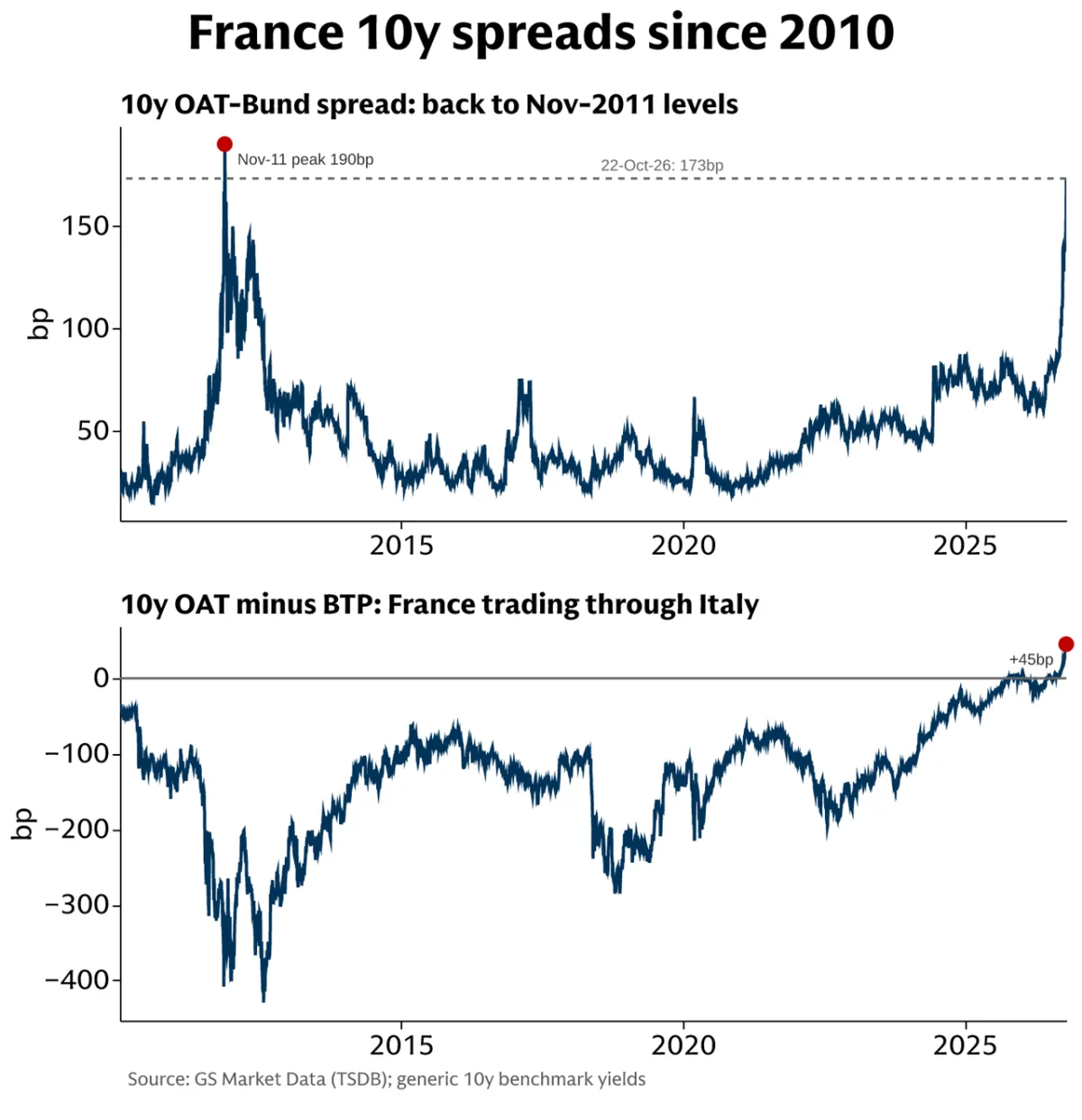
Financial markets reflected this anxiety, with France’s OAT-Bund spread – the difference in yield between French and German 10-year government bonds – closing around 167.4 basis points on Friday. This figure approached levels last seen during the height of the eurozone sovereign debt crisis, signaling heightened investor concern about France’s fiscal health and political stability. An elevated spread indicates that investors demand a higher premium to hold French debt compared to the safer German benchmark, reflecting increased perceived risk.
The outlook for France and, by extension, parts of Europe remains uncertain. While the government’s massive police deployment aimed to deter violence and restore order, the underlying ideological fervor driving the "far-left uprising" shows no signs of abating. Analysts suggest that these groups view "sustained disruption as a way to get concessions," particularly as the government considers measures to reduce the budget deficit, which could impact social welfare programs. The ongoing resistance to a potential Le Pen presidency further complicates the political landscape. The immediate risk is that this period of profound instability could persist for months, exacerbating existing crises and reshaping the political and economic trajectory of France and potentially the broader European Union. The challenge for the Macron government is not merely to quell the riots but to address the deep-seated grievances and ideological currents that continue to fuel them, all while navigating a complex geopolitical environment and preparing for critical elections.

