

The financial landscape for mid-career professionals in the Northeastern United States has become increasingly complex, characterized by rising housing costs, inflationary pressures, and the lingering impact of consumer debt. A recent comprehensive financial profile of two 34-year-old public sector employees in central Connecticut, identified as Brian and Michael, serves as a significant case study for the broader economic challenges facing the millennial demographic. With a combined gross annual income of $167,544, the couple represents a high-earning household that nonetheless faces structural barriers to homeownership and long-term wealth stability due to $28,259 in high-interest consumer debt and a recent 111% increase in monthly housing expenditures.

Current Financial Snapshot and Demographic Profile
Brian and Michael operate within the essential services sector of Connecticut’s state government. Michael serves as a project coordinator for a state behavioral health agency and maintains a secondary role as a disability leadership coordinator. Brian holds a management position in quality assurance for a state-run hospital. Their professional trajectories reflect a common shift toward public sector employment, motivated by the stability of state-sponsored benefits, including the Connecticut State Employees Retirement System (SERS) pensions and comprehensive healthcare.
Despite their robust income, the household reports significant "financial shame," a psychological state frequently observed in professionals who perceive themselves as trailing their peers in traditional milestones such as real estate acquisition and liquid savings. Their current asset portfolio is valued at approximately $91,250, primarily concentrated in retirement accounts (401k, 403b, 457b, and pension funds). Conversely, their liabilities consist of $28,259 in credit card debt across three primary accounts, with significant interest rate hikes looming in the fourth quarter of 2023.

Chronology of Financial Volatility (2022–2023)
The household’s current financial strain is largely the result of a series of concentrated "black swan" events and lifestyle transitions over the past twelve months.
- Housing Disruption: For eight years, the couple resided in a 600-square-foot studio apartment with a monthly rent of $945. In late 2022, an unplanned move forced them into the current rental market. They eventually secured a two-bedroom, two-bathroom unit in a refurbished industrial mill for $2,000 per month. This transition more than doubled their housing costs, a shift that coincided with a period of high inflation in utility and grocery sectors.
- Veterinary and Moving Expenses: The move was compounded by the adoption of two kittens that required significant medical intervention for chronic gastrointestinal issues. These unplanned veterinary costs, combined with the logistical expenses of uprooting an eight-year residency, depleted liquid reserves and led to the accumulation of the current $28,259 debt load.
- Career Evolution: Brian’s transition from the private sector to the state hospital system initially provided a significant salary increase and long-term security. However, this period also saw the conclusion of his $58,000 student loan repayment journey—a major financial achievement that temporarily left him with minimal liquid savings just as the aforementioned emergencies occurred.
Detailed Data Analysis: Income vs. Expenditures
The household’s financial health is defined by a high "burn rate" that leaves little margin for error. An analysis of their annual cash flow reveals the following:

- Gross Annual Income: $167,544.
- Net Annual Income (Post-tax and Deductions): $109,455.
- Current Annual Expenditures: $96,414.
- Theoretical Annual Surplus: $13,041.
A critical point of concern is the "leakage" of funds. While the couple reports a $13,000 surplus, their debt remains stagnant, suggesting that untracked discretionary spending is absorbing their potential savings. Furthermore, their utility costs are notably high; Connecticut residents pay some of the highest electricity rates in the continental United States, with the couple averaging $235 per month for a two-bedroom apartment.
Their debt structure is particularly time-sensitive. Brian’s $16,057 Visa balance is currently at 0% interest but is scheduled to reset to 17.99% in November 2023. This represents a potential interest charge of approximately $240 per month if the balance is not aggressively reduced before the deadline.

Strategic Financial Interventions and Recommendations
Financial analysts and personal finance experts suggest a multi-phased approach to stabilizing this household’s trajectory. The primary objective is the elimination of consumer debt to free up cash flow for a future home down payment.
Phase I: The 6.5-Month Debt Elimination Plan
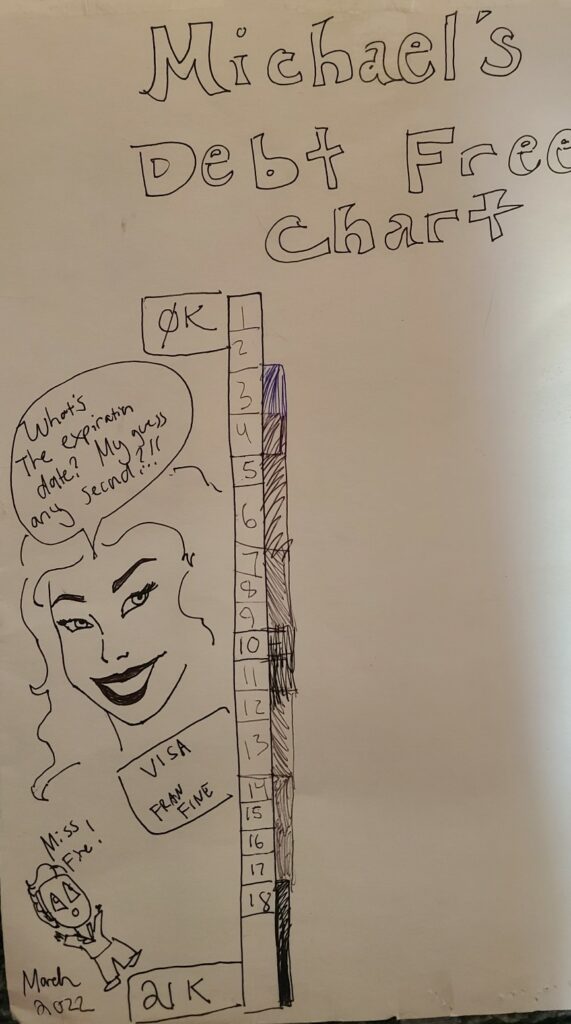
By categorizing expenses into "Fixed," "Reduceable," and "Discretionary," the household can identify approximately $1,370 in monthly discretionary spending that can be redirected toward debt. This includes $200 for dining out, $200 for home goods, $150 for personal care, and $200 for gifts. If these items are suspended, and the current $2,000 monthly debt payment is maintained, the couple could apply $4,456 per month toward their balances. At this rate, the entire $28,259 debt could be retired in approximately six and a half months, effectively shielding them from the impending November interest rate hikes.
Phase II: Emergency Fund Recalibration
The current liquid savings of $9,000 covers roughly five weeks of expenses. For a household with two aging vehicles (a 2007 Mercedes and a 2007 Subaru, both with 175,000 miles), this is insufficient. Analysts recommend an emergency fund of $25,000 to $30,000, representing three to four months of essential expenses, to prevent future reliance on credit cards when mechanical failures or medical emergencies arise.
Phase III: Retirement Optimization and the "Triple Crown"
Brian’s access to a 403b, a 457b, and a pension represents a rare "triple crown" of retirement security. The 457b plan is particularly valuable, as it allows for penalty-free withdrawals upon separation from service, regardless of age, providing a bridge to early retirement. Experts advise maximizing these contributions only after the high-interest debt is eliminated and the emergency fund is established.

Market Context: The Connecticut Real Estate Hurdle
One of the couple’s primary goals is homeownership, a milestone they feel is "deferred." The Connecticut housing market in 2023 has been characterized by low inventory and high demand, particularly in the central corridor between Hartford and New Haven. With median home prices rising and mortgage rates hovering near 7%, the barrier to entry is high.
For Brian and Michael, the transition from renting to owning requires a significant capital stack. A 20% down payment on a $350,000 home (a typical entry point for a rural/suburban property in their region) would require $70,000 plus closing costs. Given their current debt-to-income ratio and lack of liquid cash, homeownership is likely a 24-to-36-month goal, contingent upon the successful execution of the debt payoff plan.

Broader Implications and Societal Context
The case of Brian and Michael is emblematic of the "Millennial Middle Class" paradox. Despite high educational attainment and six-figure incomes, these individuals often struggle with the "signifiers of adulthood" due to the high cost of living and the volatility of the modern economy.
The psychological impact of this financial friction is evident in their reported "shame." However, a factual analysis suggests they are in a stronger position than many of their peers. Brian’s successful repayment of $58,000 in student loans is a feat that places him ahead of the national average for his age group. Furthermore, their dual-income status in the public sector provides a hedge against private-sector layoffs and market volatility.

The path forward for this household—and many like them—requires a shift from "reactive" financial management (responding to crises) to "proactive" management (intentional spending and automated savings). By leveraging their high income and robust state benefits, they are well-positioned to achieve their goals of marriage, homeownership, and business ventures, provided they can break the cycle of consumer debt that currently acts as an anchor on their net worth.
Conclusion and Future Outlook
The financial trajectory for Brian and Michael remains positive, provided they implement a rigorous austerity period to clear their current liabilities. Their story highlights the necessity of a "middle ground" in financial planning—avoiding the extremes of excessive spending and total deprivation. As they approach their 10-year anniversary, the shift from a 600-square-foot studio to a "formal" apartment marks a transition into a new phase of adulthood. With a structured 6.5-month plan, the "dreams forever deferred" can be converted into a tangible, debt-free reality, allowing them to finally secure the "earth to call their own" in the Connecticut countryside.

