
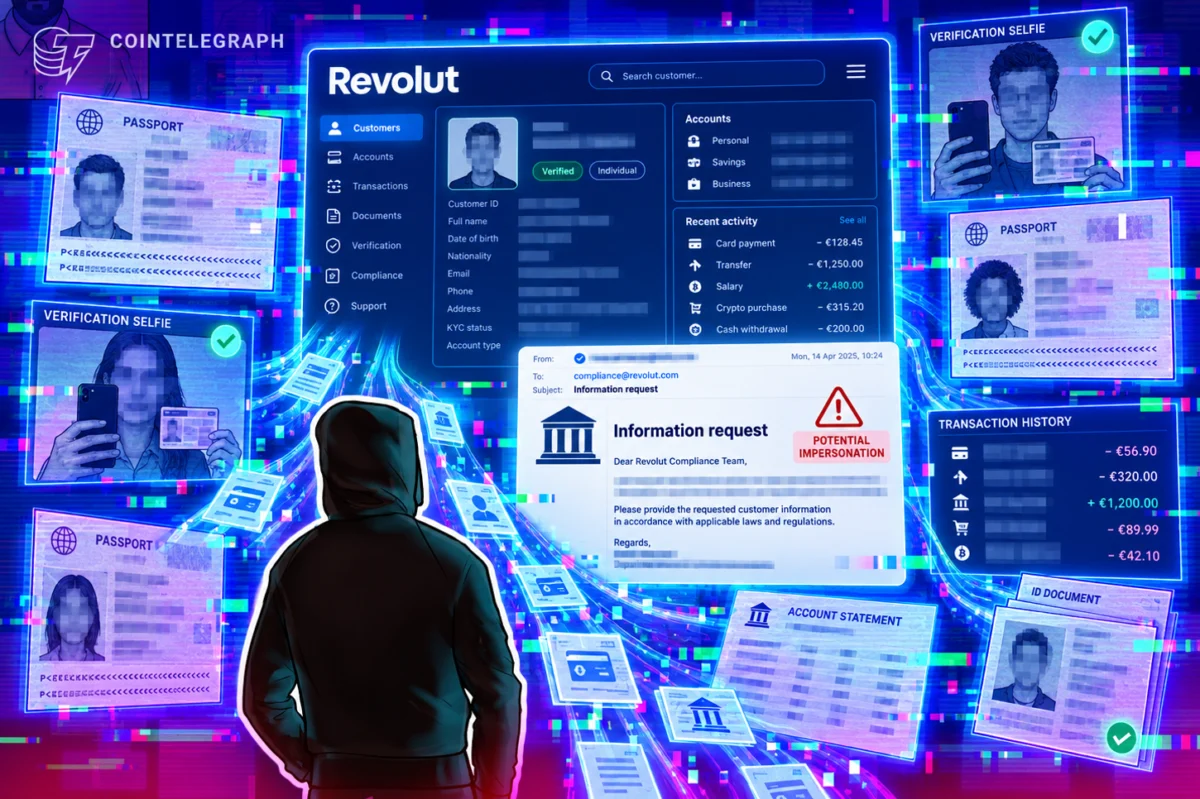
Financial technology giant Revolut has become the subject of intense scrutiny after a sophisticated external impersonation scam resulted in the exposure of sensitive customer data. The breach, which involved a fraudulent request that convincingly mimicked a legitimate government agency, led to the unauthorized disclosure of personal identification documents, verification selfies, and detailed transaction histories for a limited number of Revolut users. The incident has ignited a fresh debate surrounding the efficacy and inherent risks of Know Your Customer (KYC) regulations and mandatory data sharing within the financial sector.
The vulnerability was exploited when an unauthorized third party utilized an email domain belonging to a legitimate government agency to submit fraudulent requests for customer information. According to a posting on X by International Cyber Digest, these deceptive requests managed to bypass Revolut’s authentication checks because they originated from a seemingly official source. It was only after the data had been disseminated that Revolut identified the requests as inauthentic. The company confirmed on Friday that it had begun notifying the customers whose information was compromised.
A spokesperson for Revolut provided a statement to Cointelegraph on Saturday, detailing the nature of the attack. "Revolut recently identified a sophisticated external impersonation scam where an unauthorized third party utilized a legitimate government agency domain email to submit fraudulent requests for information," the spokesperson explained. The swiftness of Revolut’s response was highlighted, with the company stating that upon detection, they immediately blocked the offending email address and alerted the relevant government agency. Furthermore, enforcement agencies and financial regulators were promptly notified, signaling a proactive approach to damage control and investigation.
Revolut has emphasized that its core systems and customer funds remain unaffected by this incident. "Revolut systems and customer funds are unaffected. We have contacted the limited number of impacted individuals directly to inform them and provide support," the spokesperson reiterated. This assurance aims to mitigate widespread panic among its vast customer base, which spans millions globally.
The Attack Vector and Initial Response
The incident underscores a growing trend in sophisticated cyberattacks that leverage social engineering and impersonation to circumvent traditional security protocols. The use of a legitimate government email domain is particularly concerning, as it exploits the inherent trust placed in such official communications. This tactic bypasses standard technical safeguards designed to detect spoofed domains or suspicious sender addresses, forcing security systems to rely on the perceived legitimacy of the sender’s identity.
The chronology of events, as pieced together from initial reports, suggests a multi-stage attack:
- Initial Infiltration: The unauthorized third party obtained or created an email address that convincingly mimicked that of a government agency. The precise method of acquiring or compromising this domain is currently under investigation.
- Fraudulent Request Submission: Using the impersonated email, the attacker submitted requests for customer data to Revolut.
- Authentication Bypass: Revolut’s security protocols, designed to verify the legitimacy of requests from government entities, were deceived by the use of the seemingly official domain. This implies a potential gap in verification processes that rely heavily on email source validation.
- Data Disclosure: Sensitive customer information, including passport copies, verification selfies, and transaction histories, was released in response to the fraudulent requests.
- Detection and Notification: Revolut eventually identified the requests as inauthentic. The company then moved to block the compromised email, notify the actual government agency involved, and inform affected customers.
The speed at which this breach was discovered and addressed is a critical factor in assessing its overall impact. While the initial exposure is serious, Revolut’s prompt action in blocking further access and informing customers is a standard, albeit reactive, cybersecurity measure.
Scale and Scope of the Breach
While the full extent of the breach is still being assessed, initial reports suggest that the number of affected individuals is "limited." Crypto sleuth ZachXBT, a prominent figure in tracking on-chain activity and security incidents, reportedly indicated that the incident appeared to be contained in size and potentially targeted high-net-worth users. This observation, if accurate, could suggest a more strategic rather than a broad, indiscriminate attack. Such targeted breaches often aim to acquire specific pieces of information for more sophisticated future fraud or identity theft operations against individuals with significant financial assets.
The nature of the data exposed is particularly alarming. Copies of passports are critical documents for identity verification and can be used for extensive identity fraud, including opening new accounts, applying for loans, or even traveling under a stolen identity. Verification selfies, often used in conjunction with ID documents to confirm liveness and match the individual to the document, can be misused in sophisticated deepfake attacks or to further solidify fraudulent identities. Full transaction histories provide a detailed financial roadmap of an individual’s spending habits, income sources, and financial relationships, which can be invaluable for targeted phishing attacks or financial blackmail.
Broader Implications and Regulatory Scrutiny
The Revolut data breach is likely to intensify the ongoing debate about the necessity and security of mandatory KYC (Know Your Customer) procedures in financial services, particularly within the fintech and cryptocurrency sectors. KYC regulations, implemented to prevent money laundering, terrorist financing, and fraud, require financial institutions to collect and verify customer identity documents. While intended to enhance security, these regulations necessitate the collection and storage of highly sensitive personal data, creating attractive targets for cybercriminals.
Marc Zeller, a notable figure in the crypto space, expressed his dismay on X following the incident. He stated, "I woke up to all my data being leaked by Revolut." Zeller further articulated a common sentiment among some in the industry: "Sharp reminder that KYC hasn’t produced meaningful upside and has put many in harm’s way." This sentiment highlights the inherent paradox of KYC: intended to protect users and the financial system, it paradoxically centralizes vast amounts of personal data that, if compromised, can lead to significant harm.
The implications of this breach extend beyond Revolut and its affected customers:
- Increased Regulatory Scrutiny: Financial regulators globally are likely to review Revolut’s security protocols and their adherence to data protection laws. This could lead to stricter compliance requirements and potential penalties.
- Erosion of Trust: Such incidents can erode customer trust in fintech companies, potentially driving users back to more traditional, albeit sometimes less innovative, banking institutions.
- Re-evaluation of KYC Practices: The breach may prompt a critical re-evaluation of how KYC data is collected, stored, and protected. Innovations in decentralized identity management and zero-knowledge proofs, which allow verification without revealing underlying data, might gain more traction.
- Heightened Awareness for Users: Customers are likely to become more vigilant about the data they share with financial institutions and the security measures in place.
Revolut’s Position and Future Safeguards
Revolut’s spokesperson maintained that the company is committed to transparency and customer support. The company’s actions – blocking the email, alerting authorities, and notifying affected users – align with standard incident response protocols. However, the fact that a fraudulent request from a seemingly legitimate government email could bypass authentication raises questions about the robustness of their verification mechanisms for such sensitive requests.
In the aftermath of the incident, it can be inferred that Revolut will undertake a thorough review of its security infrastructure, specifically focusing on:
- Enhanced Authentication Protocols: Implementing multi-factor authentication for all sensitive data requests, even those appearing to originate from official channels. This could include requiring secondary verification methods or direct confirmation through established, non-email based channels.
- Advanced Threat Detection: Investing in more sophisticated AI-driven threat detection systems capable of identifying anomalous patterns in data requests, regardless of sender legitimacy.
- Data Minimization Strategies: Exploring ways to reduce the amount of sensitive customer data stored and to implement more secure, encrypted storage solutions.
- Regular Security Audits and Penetration Testing: Increasing the frequency and rigor of independent security audits and penetration tests to identify and address vulnerabilities proactively.
The incident serves as a stark reminder that in the digital age, even established financial institutions are not immune to sophisticated cyber threats. The balance between regulatory compliance, user convenience, and robust data security remains a critical challenge for the entire financial technology industry. As cybercriminals evolve their tactics, so too must the defenses employed by companies like Revolut to safeguard the sensitive information entrusted to them by their customers. The coming weeks and months will likely see further developments as investigations unfold and the full impact of this breach becomes clearer.

