
The German financial technology landscape has reached a significant turning point in the second half of the decade, marked by high-profile capital injections, strategic ecosystem integrations, and a fundamental shift toward artificial intelligence and embedded finance. Berlin-based spend management platform Moss has officially ascended to unicorn status following a successful Series C funding round, while the digital banking giant N26 has signaled a new era of cross-border payment interoperability through its integration with the Wero instant payment system. Simultaneously, the SME sector is seeing a rapid expansion of credit accessibility through a new partnership between YouLend and comrce, highlighting a broader trend of financial services becoming seamlessly woven into the fabric of daily business operations.
Moss Achieves Unicorn Status with Focus on Agentic Finance AI
Moss, the Berlin-headquartered spend management innovator, has secured €30 million ($35 million) in a Series C funding round, propelling the company’s valuation past the €1 billion threshold. This milestone makes Moss one of the few German fintechs to achieve unicorn status in the current economic cycle. The funding round was led by prominent venture firms Portage and Cherry Ventures, bringing the company’s total lifetime funding to more than €200 million ($234 million).
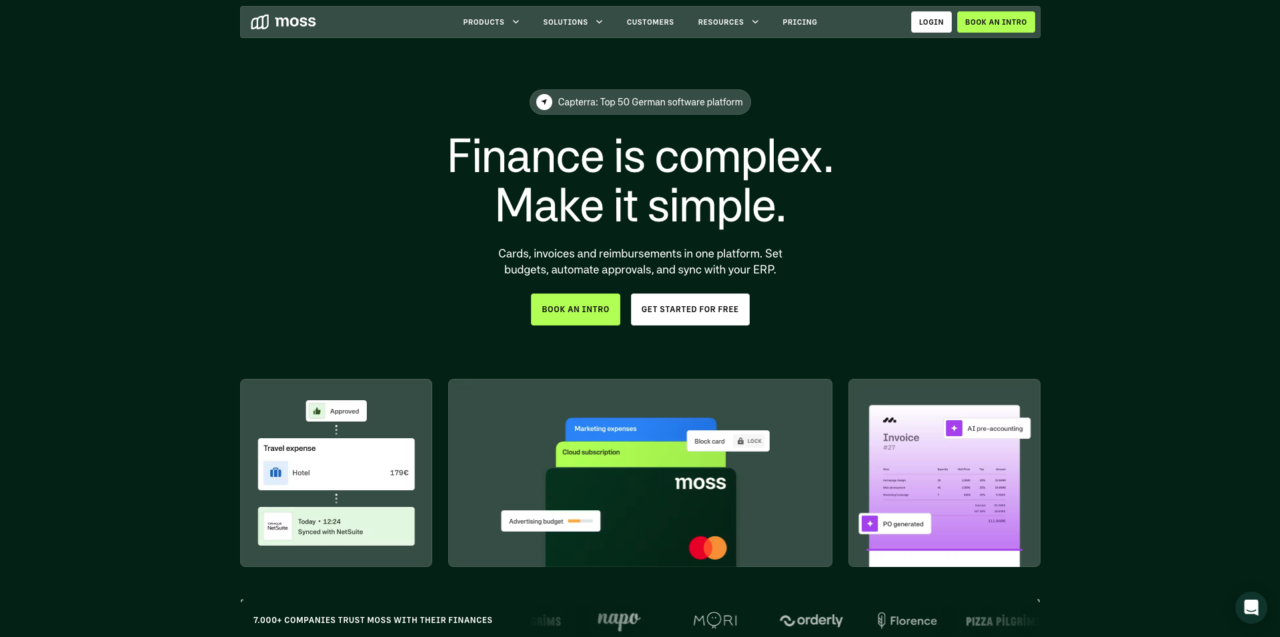
Founded in 2019 by Ante Spittler, Anton Rummel, Ferdinand Meyer, and Stephan Haslebacher, Moss began its journey as a pioneer in providing corporate credit cards to German startups, a segment that was traditionally underserved by legacy banking institutions. However, the company has since evolved into a comprehensive financial operating system. Today, the platform integrates corporate cards, invoice management, employee reimbursements, and real-time budgeting tools into a unified interface.
The fresh capital is earmarked for the development of "Finance AI," a proprietary suite of agentic AI tools designed to automate complex accounting and administrative tasks for small and medium-sized enterprises (SMEs). Unlike traditional automation, which follows rigid rules, these new AI agents are designed to categorize and reconcile transactions dynamically. Moss reports that its current AI systems already process more than two million transactions per month, significantly reducing the manual workload for finance departments.
CEO and Co-Founder Ante Spittler emphasized that the future of the platform lies in user-controlled autonomy. According to a recent survey conducted by Moss, 48% of financial leaders cited "control" as their highest priority when implementing AI, while only 6% expressed a desire for fully autonomous systems. Consequently, the company’s "Finance AI" roadmap focuses on agents that prepare work and explain their reasoning down to the ledger account level, requiring human sign-off before any consequential financial actions are taken. With over 5,000 customers and annual revenue exceeding €70 million, Moss is positioning itself to lead the digital transformation of the European "Mittelstand."
The Evolution of Embedded Capital: YouLend and comrce Partnership
As Moss streamlines how businesses spend money, a new partnership between YouLend and comrce is redefining how those same businesses access growth capital. YouLend, a leading global embedded finance provider, has finalized a strategic alliance with comrce, a major e-commerce software hub for German SMEs. This collaboration aims to bridge the financing gap for approximately 24,000 merchants by integrating capital options directly into their existing operational dashboards.
The partnership represents a significant shift in the lending paradigm for retailers. Rather than seeking traditional bank loans—which often involve lengthy application processes and rigid collateral requirements—merchants using the comrce ecosystem can now explore financing options within the same tools they use for inventory management and order processing. The comrce platform acts as a centralized hub for several specialized services, including Billbee for order automation, Amainvoice for accounting, and VentoryOne for inventory optimization.
By embedding YouLend’s technology into these workflows, the partnership allows for data-driven credit assessments. Because the platform has visibility into a merchant’s transaction history and inventory turnover, financing can be offered more quickly and with terms that reflect the actual health of the business. Leonard Strigel, General Manager for Europe at YouLend, noted that this integration is vital for the day-to-day success of small businesses that require flexible capital to manage seasonal fluctuations or scale operations.
This move aligns with broader market data suggesting that embedded finance is no longer a niche offering but a requirement for B2B software platforms. For comrce, which was founded in 2023 in Twistetal, Germany, adding a financial layer to its software suite enhances user retention and provides a more holistic "all-in-one" solution for modern retailers.

N26 and the Wero Integration: A New Standard for European Payments
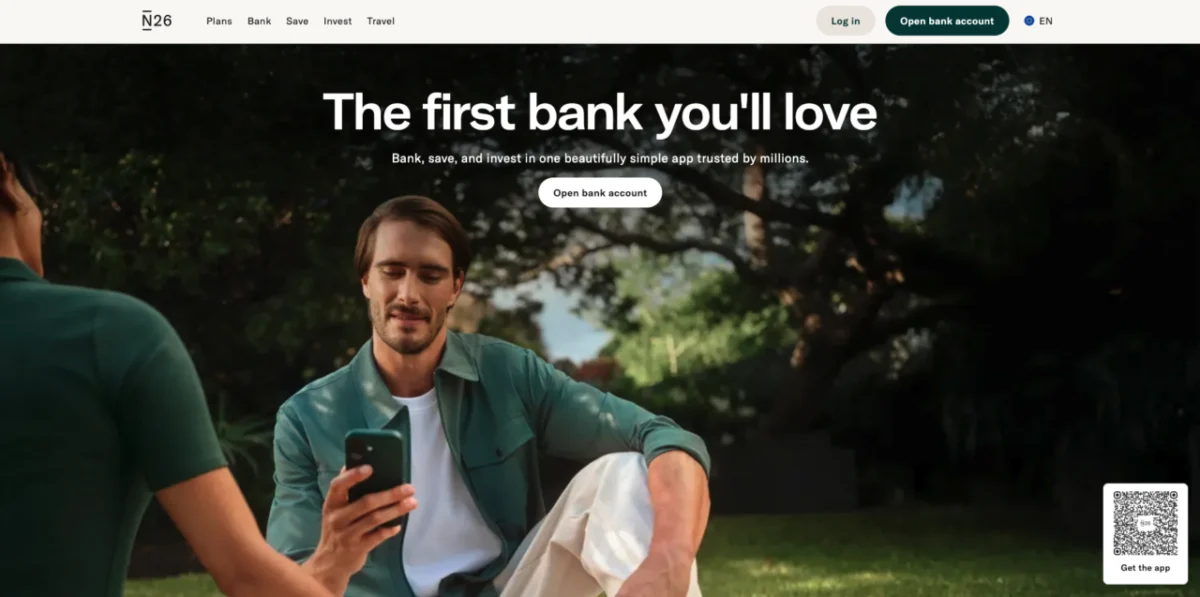
In the consumer and digital banking space, N26 has made a landmark move by integrating Wero, the pan-European instant payment system, into its mobile application. This integration, which follows N26 joining the European Payments Initiative (EPI) in late 2025, allows users in Germany and France to send and receive funds instantly without the need for IBANs or third-party apps.
Wero is designed to be Europe’s answer to dominant international payment networks, offering a unified standard for daily digital transactions. By utilizing SEPA Instant protocols, Wero enables transfers to be completed in less than 10 seconds. For N26, a bank that has long prided itself on "borderless" banking, the adoption of Wero is a natural extension of its core product philosophy. Daniel Lappas, Chief Product and Business Officer at N26, stated that the integration brings the simplicity of N26’s internal "MoneyBeam" feature to the wider European banking ecosystem.
The timing of this launch is particularly significant for N26’s financial trajectory. The bank recently reported a milestone year in 2025, achieving its first full year of net profitability with annual revenues exceeding €500 million. With over €10.5 billion in customer deposits across 24 markets, N26 has transitioned from a high-growth startup into a stable, profitable financial institution. The bank has also expanded its demographic reach with the launch of "N26 for under 18s," a managed debit card solution for children and teenagers, signaling a long-term strategy to capture the next generation of banking customers.
Context and Chronology of the German Fintech Recovery
The recent flurry of activity in the German fintech sector suggests a robust recovery following the global "fintech winter" of 2022-2023, during which valuations were slashed and venture capital became scarce.
- 2013–2019: The Foundation Era. N26 and Moss were founded during a period of intense experimentation. Berlin emerged as a global hub, attracting international talent and establishing the infrastructure for digital-first financial services.
- 2020–2022: The Growth Surge. The COVID-19 pandemic accelerated the adoption of contactless payments and digital spend management. Moss raised significant early-stage rounds to meet the demand from businesses forced to digitize their operations overnight.
- 2023–2024: The Profitability Pivot. Following a shift in interest rate environments, investors began demanding profitability over raw growth. N26 restructured its operations, leading to its first profitable year in 2025.
- 2025–2026: The AI and Integration Era. The current phase is defined by the integration of AI (as seen with Moss) and the push for European financial sovereignty through projects like Wero.
Broader Implications for the European Financial Landscape
The developments in Germany reflect three broader trends currently reshaping the global financial sector. First is the "Platformization" of Finance. Financial services are increasingly being delivered at the point of need—whether that is an e-commerce dashboard for a merchant or a spend management tool for a CFO. This reduces friction and allows for more accurate risk assessment through real-time data.

Second is the Rise of Agentic AI. The shift from "software as a service" (SaaS) to "agents as a service" in the finance sector suggests that the next generation of fintech will not just provide tools for humans to do work, but will actively perform the work themselves. Moss’s focus on maintaining human control while utilizing AI agents addresses a critical psychological barrier to adoption among conservative finance professionals.
Third is the Consolidation of European Payment Standards. For years, the European payment landscape has been fragmented, with different countries relying on domestic schemes or American card networks. The successful rollout of Wero across major banks like N26 represents a coordinated effort to build a competitive, homegrown alternative that supports the digital single market.
As Berlin continues to mature as a financial hub, the success of companies like Moss and N26 serves as a bellwether for the health of the broader European tech ecosystem. The move toward profitability, combined with cutting-edge AI implementation and strategic partnerships, suggests that German fintech has moved beyond its adolescent phase and is now setting the standard for the future of global finance.

