
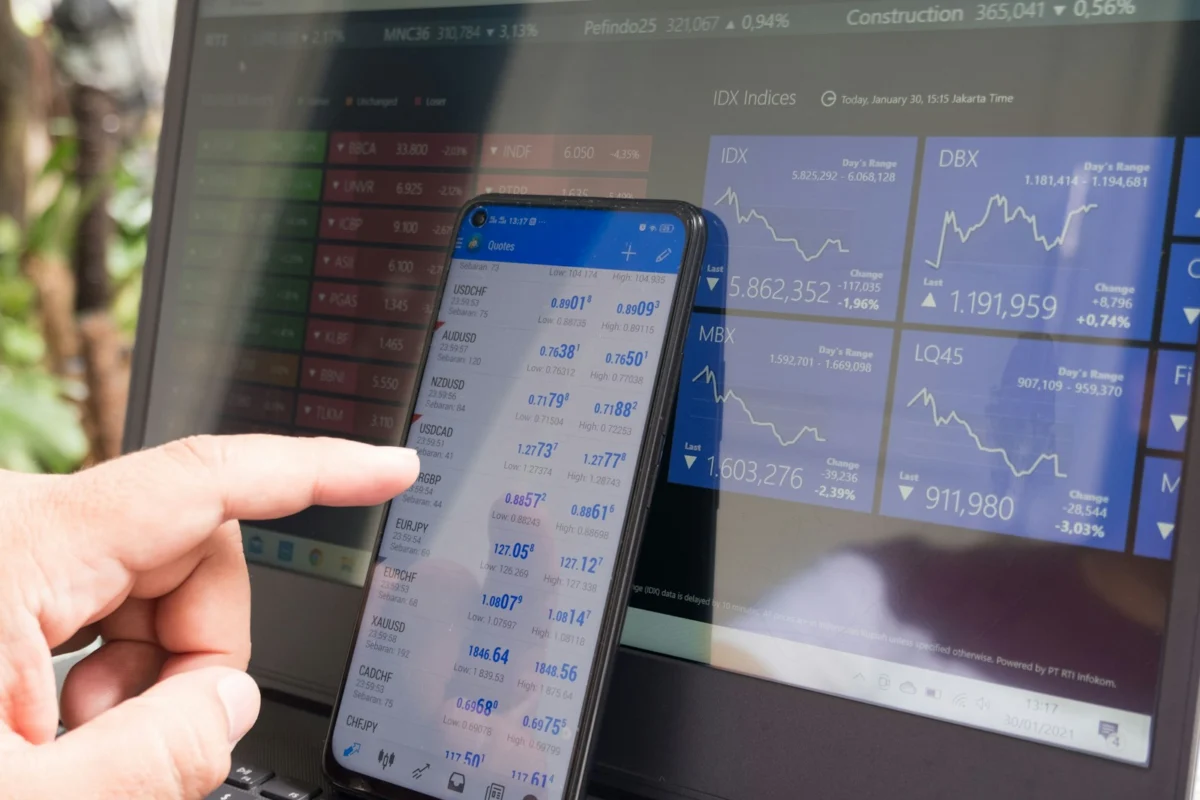
The global foreign exchange (forex) market, a colossal financial arena with daily turnovers exceeding $6.6 trillion, presents an enticing, yet formidable, landscape for young investors seeking to grow their capital. While the allure of significant returns is undeniable, the inherent volatility and complexity of currency trading mean that many novice participants face initial setbacks, often resulting in capital loss. Therefore, a foundational understanding of market mechanics, stringent risk management, and a commitment to continuous education are not merely advisable but absolutely essential for anyone contemplating entry into this dynamic domain. Prospective traders must internalize two paramount principles: never deploy capital that cannot be comfortably lost, and approach the market with a thoroughly informed and realistic perspective.
Understanding the Forex Market Landscape
Forex, an abbreviation for "foreign exchange," refers to the global decentralized or over-the-counter (OTC) market where all the world’s currencies are traded. It is the largest and most liquid financial market globally, facilitating international trade and investment. Participants engage in the simultaneous buying of one currency and selling of another, speculating on future price movements. Unlike traditional stock markets, there is no central exchange for forex; transactions occur directly between two parties in a vast interbank network, primarily involving commercial banks, central banks, investment banks, multinational corporations, hedge funds, and, increasingly, retail traders.
Globally, the decentralized nature of forex allows for 24-hour trading across different time zones, from Monday morning in Sydney to Friday afternoon in New York. This continuous operation is a significant draw, offering flexibility for traders. However, the regulatory environment varies considerably across jurisdictions. In the United States, the forex market is subject to stringent oversight by federal agencies, a stark contrast to the less regulated or self-regulated environments found in some other parts of the world. This heightened regulatory framework in the US, primarily enforced by the Commodity Futures Trading Commission (CFTC) and the National Futures Association (NFA), aims to protect retail investors by imposing specific rules and limitations, such as restricting trading to spot currencies where currency pairs are bought and sold immediately at the current exchange rate. These regulations, largely a response to market excesses and investor losses prior to and during the 2008 financial crisis, aim to foster a more secure trading environment for American participants.
The Appeal and Inherent Perils for Novice Traders
The forex market holds a particular appeal for younger generations of investors. Its accessibility, often requiring relatively low initial capital compared to other asset classes, coupled with the potential for substantial returns due to leverage, makes it an attractive proposition. The 24/5 operational cycle also caters to individuals with diverse schedules, while the intellectual challenge of analyzing market trends and developing trading strategies can be highly engaging. Furthermore, the pervasive integration of technology, from advanced charting software to automated trading systems, resonates strongly with tech-savvy demographics.
Despite these attractions, the perils for inexperienced traders are significant. Industry data consistently indicates a high failure rate among retail forex traders, with some estimates suggesting that between 70% and 90% of new traders lose money. This stark reality is often attributable to several factors: insufficient education, inadequate risk management, emotional trading decisions, and the deceptive allure of high leverage. Leverage, while amplifying potential gains, equally magnifies losses, often leading to rapid capital depletion. The market’s complexity also makes it a fertile ground for fraudulent schemes and unregulated brokers, further endangering novice investors. Consequently, a disciplined, cautious, and thoroughly informed approach is not merely recommended but is an absolute prerequisite for navigating this high-stakes environment.
Navigating Brokerage Selection and Understanding Trading Costs
The choice of a forex broker is arguably one of the most critical decisions a new trader will make. It directly impacts trading costs, platform reliability, access to tools, and the security of invested capital. Brokers act as intermediaries, facilitating access to the interbank market. For American traders, selecting a broker regulated by the CFTC and NFA is non-negotiable, as this provides a layer of protection and ensures adherence to established financial conduct rules. Beyond regulatory compliance, factors such as platform stability, customer service responsiveness, the range of tradable currency pairs, execution speed, and the ease and security of deposit and withdrawal methods should be meticulously evaluated.
Trading costs are a primary consideration and vary significantly among brokers. These costs can erode potential profits, especially for frequent traders.
- Spreads: The most common cost is the "spread," which is the difference between the bid (buy) price and the ask (sell) price of a currency pair. Spreads are typically measured in "pips" (percentage in point), the smallest unit of price movement in a currency pair. For instance, a broker like OANDA might offer a spread of around 1.4 pips for the EUR/USD pair. A lower spread translates to lower trading costs. For major currency pairs, spreads can range from 0.5 pips to 3 pips, depending on market liquidity and broker pricing models.
- Commissions: Some brokers, particularly those offering "raw" or "ECN" (Electronic Communication Network) spreads, charge a fixed commission per trade in addition to a very tight spread. This model is often preferred by high-volume traders as it can be more cost-effective overall.
- Swap Fees (Overnight Interest): When a trading position is held open overnight, traders may incur or receive a swap fee, also known as an overnight interest charge or credit. This charge reflects the interest rate differential between the two currencies in the pair, as well as the broker’s own financing costs. Traders holding long positions in a higher-yielding currency against a lower-yielding one might receive a credit, while the opposite scenario typically incurs a charge.
- Inactivity Fees: Many brokers impose fees if an account remains dormant for an extended period, typically 6 to 12 months. For example, OANDA deducts 20 units of currency (e.g., $20, €20) per month for inactive accounts. It is crucial to be aware of these terms.
- Deposit and Withdrawal Fees: While many reputable brokers offer free deposits via debit cards and ACH transfers, some payment methods or international wire transfers may incur fees from banks or payment processors. Currency conversion fees might also apply if the deposit currency differs from the account’s base currency.
A prudent approach involves thoroughly reviewing a broker’s fee schedule and terms of service before committing capital. The vast majority of reputable brokers offer demo accounts, which are invaluable tools for new traders. These simulated trading environments allow individuals to practice strategies, familiarize themselves with the trading platform, and understand market dynamics without risking real money. This hands-on learning experience is universally considered superior to passive learning through videos or online guides alone, providing practical experience in a risk-free setting. Furthermore, many platforms provide free trading tools, such as advanced charting capabilities (e.g., TradingView integration), technical indicators, and access to popular trading platforms like MetaTrader 4 with premium upgrades, all designed to support informed decision-making.
Advanced Strategies and Technological Integration
As traders gain experience and confidence, the exploration of more advanced strategies and technological integration becomes a natural progression. The modern forex market has witnessed a significant shift towards automation, with a substantial portion of trading volume now executed by algorithmic systems. Many younger traders, often possessing a strong aptitude for technology, gravitate towards automated trading rather than manual trade management.
Automated trading systems, commonly known as Expert Advisors (EAs) or trading robots, are programs that execute trades based on predefined rules and parameters. These systems can analyze market data, identify trading opportunities, and execute orders with speed and precision far exceeding human capabilities. For those with a coding background, developing custom automation strategies offers a significant advantage. Brokers like OANDA provide robust APIs (Application Programming Interfaces), such as the US Forex API, which allow traders to connect their custom software directly to the broker’s platform. These APIs offer access to live and historical price data, account information, and order execution functionalities, enabling sophisticated strategy development, backtesting, and live deployment. The benefits of automation include the elimination of emotional bias, consistent adherence to a trading plan, and the ability to monitor multiple markets simultaneously. However, it is crucial to recognize that automated systems require careful design, rigorous testing, and continuous monitoring, as market conditions can change, rendering previously profitable strategies ineffective. Over-optimization and system failures are also inherent risks.
For highly active traders, particularly those dealing with substantial volumes, some brokers offer volume rebate programs. These programs are designed to reward high-frequency or high-volume traders with cash rebates or reduced commissions based on their monthly trading activity. For instance, OANDA’s "Elite Trader" program might require a minimum monthly trading volume of $10 million to qualify for rebates. It is important to note that such programs are typically tailored for institutional or professional traders with significant capital and advanced strategies, and they are generally not relevant for beginners or retail traders with modest capital. Attempting to meet such volume thresholds without adequate experience and capital is a high-risk endeavor.
Regulatory Framework and Investor Protection in the US
The stringent regulatory environment in the United States sets it apart from many other global forex markets, primarily through the oversight of the CFTC and the NFA. The CFTC, an independent agency of the US government, regulates the commodity futures and options markets in the United States, including forex. The NFA, a self-regulatory organization, is responsible for the integrity of the US futures and derivatives markets and provides consumer protection services. Their combined efforts ensure a more transparent and secure trading environment for US residents.
Key regulations imposed by these bodies include:
- Leverage Limits: To mitigate excessive risk-taking, the CFTC restricts the maximum leverage available to retail forex traders. For major currency pairs (e.g., EUR/USD, GBP/USD, USD/JPY), leverage is capped at 50:1, meaning a trader can control $50,000 worth of currency with $1,000 of margin. For minor currency pairs, the limit is 20:1. These limits are significantly lower than those offered by many offshore brokers, which can sometimes extend to 500:1 or even higher. While higher leverage offers the potential for greater returns, it exponentially increases the risk of margin calls and rapid account depletion. The US regulations prioritize capital preservation over speculative high-risk potential.
- FIFO (First-In, First-Out) Rule: US regulations require traders to close their oldest open position of a specific currency pair first. This rule prevents traders from cherry-picking which positions to close to maximize gains or minimize losses, enforcing a more disciplined trading approach.
- No Hedging Rule: US regulations prohibit retail traders from simultaneously holding opposing positions (buy and sell) on the same currency pair in the same account. This prevents a common strategy known as "hedging," where traders open opposite positions to protect against adverse market movements. While seemingly restrictive, this rule simplifies account management and aligns with the regulatory philosophy of discouraging overly complex or high-risk strategies for retail investors.
- Segregated Accounts: Regulated US brokers are required to keep client funds in segregated accounts, entirely separate from the firm’s operational capital. This measure provides a critical layer of investor protection, ensuring that client funds are not used for the broker’s business operations and are accessible even if the broker faces financial difficulties.
These regulations collectively aim to create a safer and more transparent trading environment for American investors. While they may limit certain aggressive trading strategies or the potential for astronomical gains often advertised by unregulated entities, they significantly reduce the risk of fraud and provide a framework for investor recourse. The implication for US traders is a market that prioritizes controlled risk and stability, fostering a more sustainable approach to forex trading.
The Path to Sustainable Forex Trading: Slow, Steady, and Cautious
It is imperative to dispel the myth that forex trading offers a rapid and effortless path to wealth. Such portrayals are fundamentally inaccurate and often propagated by unscrupulous actors. Sustainable success in forex trading is a marathon, not a sprint, demanding rigorous discipline, continuous learning, and an unwavering commitment to risk management.
Central to a responsible trading approach is the principle of only trading with capital one can genuinely afford to lose. This means dedicating a portion of discretionary income or savings that, if entirely lost, would not impact one’s financial stability or quality of life. Beyond this, effective risk management involves:
- Position Sizing: Carefully determining the appropriate size of each trade relative to the total account capital. A common guideline is to risk no more than 1-2% of total capital on any single trade.
- Stop-Loss Orders: Utilizing stop-loss orders to automatically close a losing position when it reaches a predetermined price level, thereby limiting potential losses.
- Take-Profit Orders: Employing take-profit orders to automatically close a winning position when it reaches a predetermined profit target.
- Capital Allocation: Diversifying trading strategies or even asset classes to avoid over-reliance on a single market or approach.
Equally crucial is the cultivation of psychological discipline. The emotional rollercoaster of fear and greed can be a trader’s greatest adversary. Adhering strictly to a pre-defined trading plan, avoiding impulsive decisions, and learning to accept both wins and losses as part of the process are vital for long-term consistency. Overtrading, fueled by a desire to recoup losses or chase profits, is a common pitfall that often leads to further capital erosion.
Furthermore, continuous learning is non-negotiable. The forex market is dynamic, influenced by a myriad of global economic, political, and social factors. Traders must consistently update their knowledge of fundamental analysis (macroeconomic data, central bank policies, geopolitical events) and technical analysis (chart patterns, indicators, price action). Staying informed about global news and economic calendars is paramount. By trading with amounts that are comfortable, slowly learning the intricacies of the market, and prioritizing education over speculation, traders can gradually build a robust understanding of market dynamics and position themselves for greater potential success.
In conclusion, the foreign exchange market offers unparalleled opportunities for capital growth, particularly for a new generation of technologically adept investors. However, its immense scale and inherent volatility necessitate an approach grounded in realism, caution, and unwavering discipline. The highly regulated environment in the US provides a safer, albeit more constrained, framework for participation, emphasizing investor protection and managed risk. For aspiring traders, the journey is characterized by continuous learning, meticulous risk management, the astute selection of a reputable broker, and a commitment to understanding the complex interplay of global economic forces. By embracing a slow, steady, and cautious methodology, young investors can navigate the forex market not as a lottery, but as a challenging yet potentially rewarding pursuit of financial acumen and growth.

