

The global financial landscape has witnessed a remarkable surge in recent years, with the S&P 500 index, a key benchmark for broad U.S. stock market performance, experiencing a period of exceptionally rapid growth. Over the past two years, the index has appreciated by approximately 57%, and its value has more than doubled over the last five years. This significant upward trajectory has led many investors, particularly those approaching or in retirement, to re-evaluate their financial standing, with some feeling they have unexpectedly reached or surpassed their retirement goals. Conversely, long-retired individuals might find themselves with newfound wealth, prompting consideration of more substantial expenditures or investments. This dramatic market performance has inevitably sparked a critical question among market participants and analysts alike: Is this growth a reflection of genuine economic strength and technological advancement, or does it signal an impending financial bubble, potentially leading to a significant market correction?
The Unprecedented Market Ascent and Investor Sentiment

The S&P 500’s climb has been particularly pronounced since the "Covid Era," marking a period of recovery and subsequent acceleration that few predicted. For instance, an initial investment of $100,000 in the S&P 500 in 2019, with dividends reinvested, would today stand at an estimated $256,960—a staggering 157% return on the original capital. This robust performance has undeniably boosted the net worth of countless individuals whose retirement savings are typically allocated to broad market index funds. While such gains are welcome, they also introduce a degree of uncertainty and apprehension, encapsulated by a common investor query: "The market seems to be in a huge bubble right now due to all sorts of hype around Artificial Intelligence. Does this make it more vulnerable to a huge crash in the future, and will it affect my retirement?" Addressing this question necessitates a closer examination of current market dynamics, valuation metrics, and the underlying economic narrative.
Dissecting Market Valuation: Price-to-Earnings Dynamics
To understand the current market valuation, it is crucial to revisit the fundamental principles of stock ownership. A stock represents a share in a company’s ownership, entitling the holder to a portion of its future earnings. This concept can be intuitively understood through an analogy to real estate: owning a rental property grants the owner the right to collect rent, which, after expenses, constitutes profit. The sale price of such a property is typically based on its projected income stream. For example, a property generating $2,000 per month ($24,000 annually) selling for $240,000 has a price-to-earnings (P/E) ratio of 10 (240k/24k). If that same property could be sold for $480,000, its P/E ratio would be 20. While a higher selling price benefits the seller, it implies a less favorable outlook for the buyer, who acquires the income stream at a higher multiple.

Applying this principle to the stock market, data from analysis sites like multpl.com reveal a significant divergence between stock price growth and underlying corporate earnings. While a $100,000 investment in the S&P 500 from 2019 yielded a 157% capital gain, the share of company earnings from that same investment grew only by a modest 42%, from $5,290 to $7,540, over the same period. Consequently, the S&P 500’s price-to-earnings (P/E) ratio has climbed from approximately 20 in 2019 to around 30 today. This elevation in the P/E ratio suggests that investors are currently paying a significantly higher premium for each dollar of corporate earnings compared to just a few years ago. While this does not imply that owning stocks is unprofitable, it does indicate that future returns, as a percentage of portfolio value, are likely to be lower than if investments were made during periods of lower P/E ratios. This fundamental mathematical reality underscores the importance of valuation in projecting long-term investment outcomes.
The Magnificent Seven Phenomenon: A Concentrated Rally
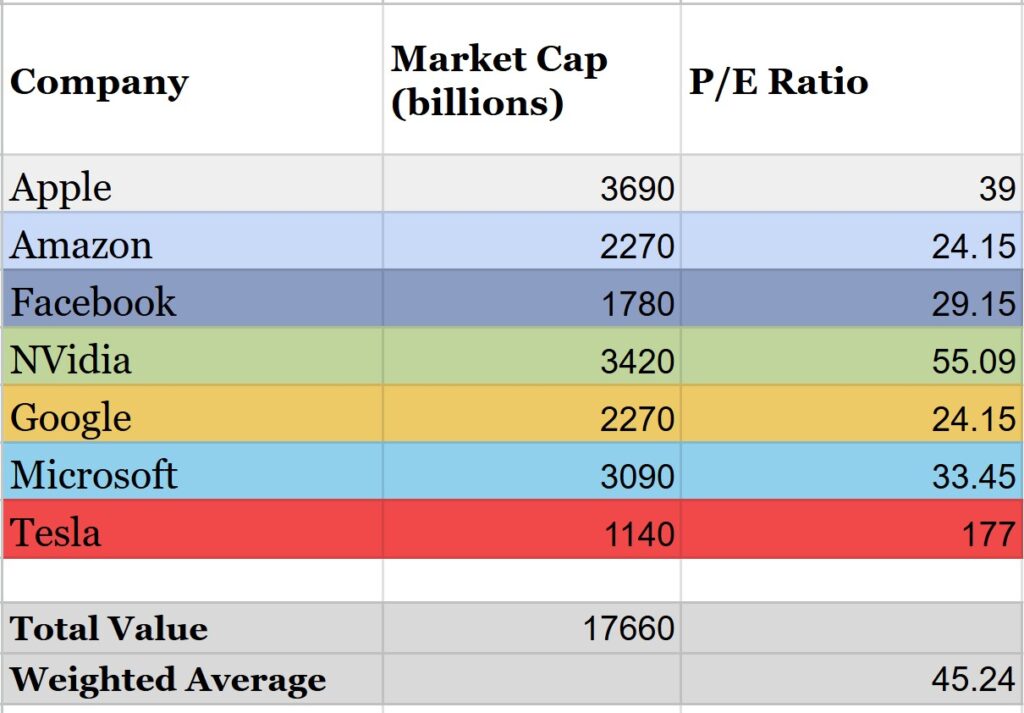
A deeper analysis of the S&P 500’s recent performance reveals a highly concentrated rally. Approximately three-quarters of the index’s recent growth can be attributed to just seven dominant technology companies, collectively dubbed the "Magnificent Seven" (MAG7): Apple, Nvidia, Microsoft, Amazon, Google (Alphabet), Meta Platforms (Facebook), and at times, Tesla. These companies represent an extraordinary concentration of market value, collectively accounting for over 25% of the entire S&P 500’s market capitalization, totaling an astounding $17.66 trillion.

The MAG7 companies exhibit significantly higher P/E ratios than the broader market. Their weighted average P/E stands at approximately 45, far exceeding the S&P 500’s overall P/E of 30. This contrasts sharply with the remaining 493 companies in the S&P 500, which have a more modest, though still above-average, weighted P/E ratio of about 20. This disparity indicates that investor enthusiasm and expectations for future growth are heavily skewed towards these select tech giants. For instance, Nvidia, a primary beneficiary of the AI infrastructure build-out, commands a P/E ratio driven by explosive demand for its specialized chips. Tesla, while a member of the group, often trades on the anticipation of future innovations and market dominance rather than current profitability, leading to a highly speculative valuation. The market’s current structure suggests that while the overall U.S. economy is perceived as healthy, these large tech companies are expected to deliver substantially faster growth in the coming years, primarily fueled by the burgeoning Artificial Intelligence revolution.
Artificial Intelligence: The Catalyst and Its Ambiguities
The primary driver behind this concentrated market euphoria is the rapid advancement and transformative potential of Artificial Intelligence. Recent breakthroughs in AI, particularly in areas like large language models (LLMs) and generative AI, have demonstrated capabilities once thought to be decades away. Software is now capable of human-like reasoning across an expanding array of applications, from complex data analysis and legal document review to code generation and autonomous vehicle operation.
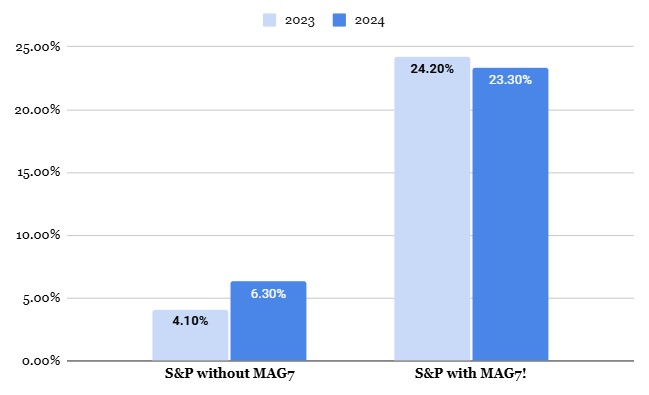
The business world has responded with a frenetic pace of investment. Six of the Magnificent Seven companies are reportedly pouring hundreds of billions of dollars into constructing vast data centers filled with supercomputers designed to power advanced AI. Nvidia, the seventh, directly benefits from this massive capital expenditure, as it designs and manufactures the high-performance graphics processing units (GPUs) essential for AI computations, allowing it to command premium prices and ship products by the trainload. This initial phase, focused on AI infrastructure, is just the beginning. The broader expectation is that AI will usher in a new era of unprecedented productivity across virtually every industry. Envision a future where AI can identify medical conditions from images with superhuman accuracy, design novel pharmaceuticals thousands of times faster than traditional methods, or even animate humanoid robots for deployment as mechanical workers. The tantalizing prospect of an "infinite workforce" of highly intelligent, cost-free AI employees is seen by many as the ultimate solution to humanity’s historical constraints of finite intelligence and labor.
However, this future, while promising, is not without its ambiguities and potential pitfalls. While many observers, including those closely following the field, believe these predictions will largely materialize, the timeline remains uncertain. Critical questions persist: Will the projected profits of these companies genuinely materialize at the forecasted levels, or will they be hampered by unforeseen challenges such as massive cost overruns, intense competitive pressures, or unexpected technological or ethical setbacks? Furthermore, the societal implications of widespread AI adoption are a growing concern. The possibility of mass unemployment due to automation could lead to significant social upheaval, prompting debates around universal basic income and the concentration of wealth in the hands of a few tech titans. The vision of a future where an entity like Sam Altman, CEO of OpenAI, could hypothetically accumulate vast, unprecedented wealth while much of the human workforce is displaced, highlights these profound economic and social questions.
Expert Outlooks and Divergent Forecasts
In navigating such an unprecedented financial landscape, insights from seasoned market observers and institutions become invaluable. Warren Buffett, the venerable "Oracle of Omaha," has consistently signaled a cautious stance regarding current market valuations. Berkshire Hathaway, his conglomerate, holds a staggering $334 billion in uninvested cash, a clear indication that Buffett and his team perceive a scarcity of genuinely undervalued assets. Even share repurchases of Berkshire Hathaway’s own stock are being curtailed, as the company considers its shares slightly overvalued at a P/E ratio averaging around 21 in recent years. This conservative positioning by one of history’s most successful investors underscores a belief that current prices do not offer compelling long-term value.
Institutional forecasts also offer a broader perspective. Vanguard, a cornerstone of the index fund world, annually publishes its 10-year annualized return projections. For the coming decade, Vanguard notably forecasts that international stocks and even bonds will outperform U.S. stocks. This projection is rooted in valuation disparities: the P/E ratio for international stock funds, such as the VXUS fund, stands at a more modest 15.9, suggesting that non-U.S. equities are effectively "on sale" at nearly 50% off compared to their U.S. counterparts. However, it’s worth noting that Vanguard has made similar predictions in prior years that have yet to materialize, partly because the current AI boom has been largely concentrated within U.S. tech firms.
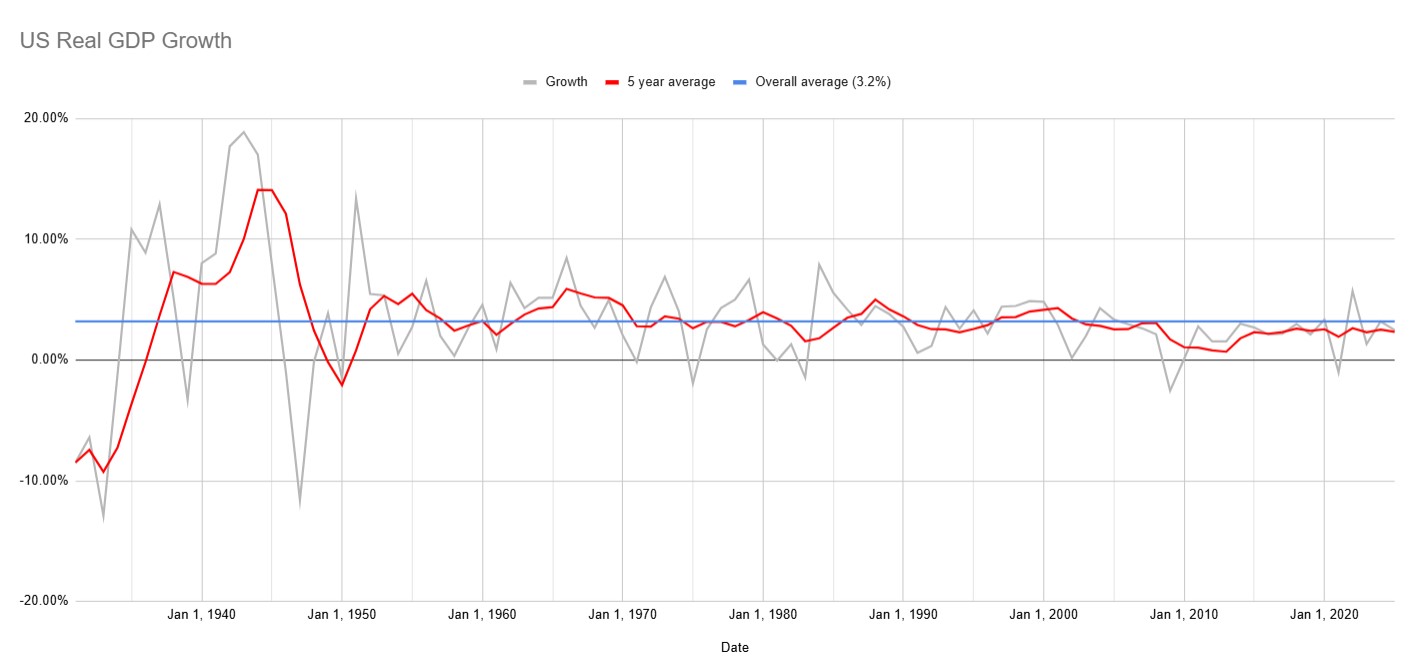
Moreover, a historical perspective on U.S. economic growth provides further context. While the world undergoes drastic changes, the real GDP growth of the U.S. economy has averaged a surprisingly steady 3% after inflation over many decades. Interestingly, recent decades have shown slower than average growth, creating a paradox when contrasted with the current exuberance in the stock market. This observation fuels the ongoing debate among economists and analysts: Is the current market an anomaly driven by legitimate, transformative technological shifts, or is it a speculative bubble reminiscent of past market manias?

Strategic Considerations for Investors
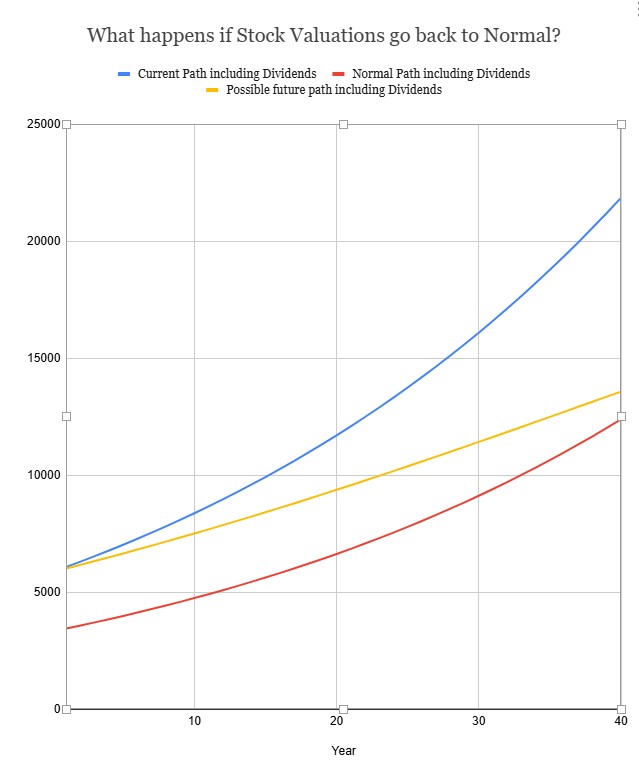
Given the confluence of elevated valuations, a concentrated market rally, and the transformative yet uncertain promise of AI, investors are left to ponder the optimal path forward. The foundational principle of long-term index fund investing remains robust. Attempting to time the market—selling stocks now in anticipation of a future crash and buying back in at lower prices—is a strategy consistently proven to be a losing game over the long run. Even if stocks revert to more typical valuations, the underlying economy and corporate earnings will continue to grow, albeit potentially at a slower pace relative to current prices. This scenario would imply a path of lower but still positive returns, as future investors might simply pay a lower multiple for those earnings.
Diversification emerges as a key strategy. While a U.S.-centric portfolio has outperformed in recent years, largely due to the MAG7’s surge, allocating capital across more categories, such as international stocks and bonds, and implementing automatic rebalancing, could offer slightly higher risk-adjusted returns with reduced volatility over the long term. Robo-advisors like Betterment, for example, offer diversified core portfolios with a weighted average P/E ratio of approximately 22, balancing exposure across different asset classes.
Another practical consideration for individual investors involves managing debt, particularly mortgages. Historically, maintaining a mortgage while investing surplus cash in index funds has often yielded better returns. However, with current interest rates reaching levels around 7%, the calculus becomes a much closer trade-off. Paying off a 7% mortgage effectively provides a guaranteed, tax-equivalent return of 7%, which, in an environment of potentially lower expected stock returns, becomes a highly attractive, risk-free investment. For many, the psychological benefit of being mortgage-free also holds significant value, outweighing purely financial optimizations. It serves as a sensible alternative to leaving substantial cash in low-yield checking or savings accounts.
Conclusion: Prudence Amidst Uncertainty
The current stock market environment presents a complex picture of unprecedented growth, driven by the profound potential of Artificial Intelligence, juxtaposed against historically elevated valuations. While the transformative power of AI is undeniable and could indeed usher in an era of enhanced productivity, the concentration of market gains in a few tech giants and the high premiums investors are currently paying for future earnings warrant a degree of caution.
Ultimately, the most prudent approach for long-term investors remains consistent: maintain a disciplined investment strategy, continue contributing to diversified portfolios, and avoid the emotional pitfalls of market timing. While the future trajectory of the market and the full impact of AI remain unknown, a focus on foundational economic growth, a balanced investment approach, and a healthy skepticism towards speculative fervor will serve investors well. Rather than fixating on daily news headlines and market fluctuations, redirecting energy towards tangible, enriching activities—such as engaging in physical pursuits in the outdoors—offers guaranteed returns in terms of well-being and personal fulfillment, regardless of what the stock market does tomorrow. The long-term success of an investor lies not just in financial accumulation, but in the peace of mind and quality of life achieved through a sensible and resilient approach to both finances and living.

