
While global attention has long fixated on the United States and Israel’s ambitions regarding Iran, a less recognized but increasingly potent dynamic is unfolding within the Kingdom of Saudi Arabia, suggesting a growing probability of significant internal upheaval. Far from being an unshakeable bastion of stability, this key US and Israeli partner faces a convergence of financial strains, evolving demographics, military setbacks, and simmering domestic discontent that could precipitate profound change. The central question revolves not around if, but rather the magnitude of this impending shift: will it be a removal of Crown Prince Mohammed bin Salman (MBS) by disgruntled members of the House of Saud, or could the 94-year-old kingdom face a more fundamental collapse? Analysts suggest that these two scenarios might unfold in rapid succession.
The Historical Bedrock of Saudi Stability
To comprehend the current fragility of Saudi Arabia, one must first understand the pillars that have sustained it since its unification in 1932 by Ibn Saud. The kingdom’s original structure was a delicate balance of tribal allegiances, a pact with the conservative Wahhabi religious establishment, and a broad consensus within the vast royal family. The discovery and subsequent exploitation of immense oil reserves transformed Saudi Arabia into a quintessential rentier state. This model allowed the monarchy to distribute wealth directly to its citizens through generous welfare programs, extensive government employment, and subsidies, thereby fostering social peace and loyalty without the need for a robust taxation system or active citizen participation in economic productivity. The state, in essence, bought stability, circumventing the traditional social contract found in states reliant on citizen taxation. This arrangement ensured that the ruling House of Saud remained the central benefactor, tying the populace’s well-being directly to the monarchy’s continued rule.
Mohammed bin Salman’s Ascent and the Erosion of Traditional Power Structures
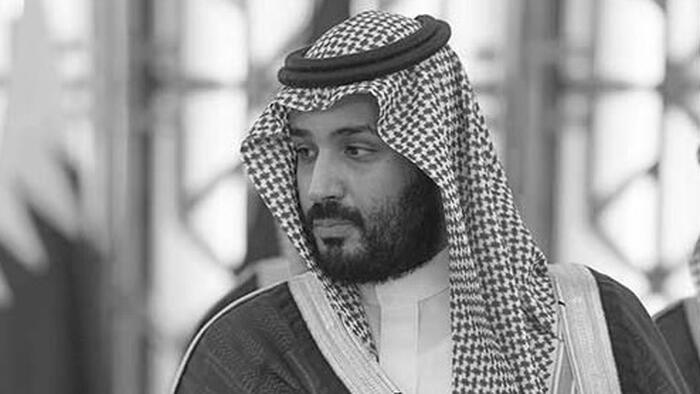
The traditional equilibrium began to fracture decisively with the ascension of Mohammed bin Salman to Crown Prince in 2017. MBS embarked on a radical campaign to centralize power and decision-making, concentrating authority in his own hands and those of a tight circle of trusted loyalists. This move represented a fundamental departure from the established system of intra-royal family consensus and tribal appeasement, effectively a revolution against the very arrangement that had safeguarded the House of Saud’s survival for decades.
One of MBS’s most audacious and controversial initial moves was the unprecedented roundup of hundreds of Saudi royals, prominent businessmen, and former government officials in November 2017. These high-profile figures were detained at Riyadh’s luxurious Ritz-Carlton hotel under the guise of an anti-corruption purge. Reports from human rights organizations and former detainees suggest that many were subjected to psychological and physical abuse. Seventeen individuals were reportedly hospitalized, and a major general died in custody. Saudi officials claimed that detainees secured their freedom by forfeiting assets totaling an astonishing $107 billion, a sum that underscored the scale of the power consolidation and wealth transfer. This audacious move alienated vast swathes of the traditional royal family, tribal leaders, and business elites, many of whom had seen their influence and financial networks severely curtailed.
Simultaneously, MBS provoked the conservative Wahhabi religious establishment, the ulema, by pursuing an agenda of social liberalization and Westernization. These reforms, aimed at burnishing Saudi Arabia’s international image and appeasing a burgeoning youth population, included allowing women to drive, relaxing women’s dress codes, ending the requirement for male guardians for traveling women, reopening cinemas after a decades-long ban, and permitting public concerts and art festivals. Crucially, he also stripped the once-feared religious police (the mutawa) of their investigation and arrest powers, relegating them to an advisory role. As Chas Freeman, former US ambassador to Saudi Arabia, observed, "He has offended virtually every constituency of the royal family. He’s also offended the reactionary religious establishment, so he’s made a hell of a lot of enemies."
Economic Vulnerabilities and the Retreat of Vision 2030
MBS’s drastic power grabs were not solely for personal aggrandizement; they were also driven by an acute awareness of Saudi Arabia’s looming financial vulnerabilities. The kingdom’s rentier state model, heavily reliant on oil revenues, faced an existential threat exacerbated by rapid population growth and fluctuating global energy markets. Since the 1970s, Saudi Arabia’s population has expanded dramatically, while oil revenues have struggled to keep pace with the increasing demands of a young populace. Nearly two-thirds of Saudi citizens are under the age of 30, a demographic dividend in an economically dynamic nation but a significant liability in a rentier state. This youthful bulge strains the government’s capacity to provide financial security and employment, with failure carrying the considerable risk of widespread discontent.

A primary mechanism for distributing wealth and mitigating idleness has been government employment. As of 2016, a staggering two-thirds of employed Saudis held government jobs, with their salaries consuming approximately 40% of the kingdom’s budget. This over-reliance on the public sector stifles private industry, which struggles to attract workers who prefer the often higher pay, lower demands, and greater job security of government positions. This, in turn, inhibits the growth of a robust private sector capable of reducing the burden on the state.
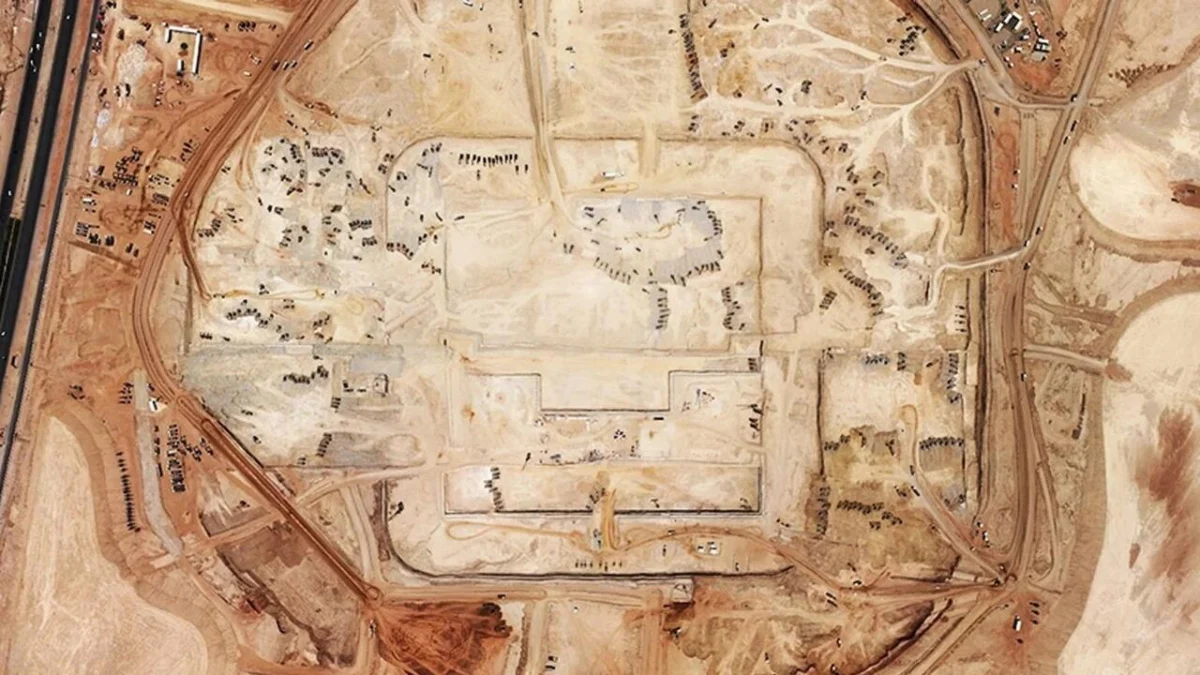
Recognizing the urgent need to fundamentally re-engineer the economy and reduce its dependence on oil, MBS unveiled "Vision 2030" in 2016. The ambitious plan aimed to spur private-sector investment, create diversified employment opportunities, and enhance the quality of life for Saudi citizens. Its centerpiece was a series of mega-projects designed to dazzle the world and attract foreign capital. These included Trojena, a futuristic ski resort in the desert; Mukaab, a colossal cube-shaped skyscraper in Riyadh, envisioned to be as voluminous as 20 Empire State Buildings; and "The Line," a linear city designed to house nine million people within two parallel buildings, each 1,640 feet tall and 660 feet wide, stretching an astonishing 110 miles across the desert.
However, as the 2030 deadline approaches, many of these grand visions have dimmed. Trojena, slated to host the 2028 Asian Winter Games, has reportedly been put on ice. The Line has seen its ambitions dramatically curtailed, with only a few kilometers of construction and a 70-mile-long trench completed, far short of its original scope. The colossal Mukaab skyscraper project has been halted after initial excavation. The curtailment of these ambitions reflects a bitter irony: the kingdom’s quest to end its dependence on oil revenues is itself heavily reliant on robust oil revenues. Since the announcement of Vision 2030, global oil prices have not consistently cooperated, forcing painful reassessments. Many now view these grand projects as wasteful vanity endeavors that have only exacerbated Saudi Arabia’s financial predicament, raising serious questions about MBS’s economic judgment.
Military Debacles and a Tarnished Reputation
MBS’s military decisions have proven even more catastrophic. Upon his appointment as Saudi defense minister in 2015, he immediately sought to assert his military prowess by initiating an intervention in Yemen’s civil war. The Saudi-led coalition aimed to restore the internationally recognized government, which had been ousted from the capital Sana’a by Ansar Allah, a Zaidi Shia group commonly referred to as the Houthis.

The intervention proved to be an enormous and costly failure. Despite substantial logistical support, arms, and intelligence from the United States and other Western allies, the Saudi-led coalition failed to defeat Ansar Allah. The conflict inflicted immense damage on Saudi Arabia’s international reputation, with widespread reports of bombings causing mass civilian casualties and a Saudi-imposed blockade contributing to one of the world’s worst humanitarian crises, characterized by famine and disease.
A fragile truce was established in 2022, offering a glimmer of hope for de-escalation. However, in July of this year, MBS reignited tensions by allegedly violating the truce, bombing an airport in Yemen’s capital to prevent a Yemeni delegation from landing in an Iranian jet after attending a funeral in Iran. Ansar Allah swiftly retaliated, declaring a counter-blockade on Saudi Arabia. The group then launched an offensive, rapidly seizing control of the remaining segments of Yemen’s west coast, strategically positioning their forces to threaten Saudi shipping lanes through the vital Bab al-Mandab Strait.
Worse still, Ansar Allah escalated its offensive directly into Saudi territory, repeatedly inflicting damage on critical oil and gas facilities. These attacks were sometimes joined by Iraqi Shia militias, who notably succeeded in shutting down the crucial east-west pipeline, which Saudi Arabia had been utilizing as an alternative to the Iranian-blockaded Strait of Hormuz. Ansar Allah has also targeted Saudi airports, with one of the most severe attacks involving a Yemeni cruise missile hitting a passenger terminal at Riyadh’s King Khalid International Airport. This devastating strike killed 13 people, wounded over 300, and forced a weeks-long closure, severely disrupting air travel and commercial activity. Compounding MBS’s ongoing military humiliation, former US President Trump reportedly rebuffed his repeated pleas for American forces to rejoin the war against Ansar Allah.
The physical damage from these missile and drone attacks is extensive, with some analysts predicting it could take seven to ten years to replace specialized oil and gas equipment and fully restore production capacity. Beyond the tangible destruction, the most enduring damage has been inflicted on Saudi Arabia’s reputation as a safe and stable destination for investment and tourism. This directly undermines the core tenets of Vision 2030. In a vivid illustration of this impact, Ansar Allah’s attacks recently forced the postponement of Saudi Arabia’s annual Future Investment Initiative, dubbed "Davos in the Desert." This highly anticipated October event, intended to attract CEOs from major corporations like JPMorgan Chase, Citigroup, Goldman Sachs, and Blackrock to Riyadh, had to be delayed. Similarly, major sports events, including F1 races, have been canceled or postponed, and the E-Sports World Cup was moved from Riyadh to Paris. As former CIA intelligence analyst Larry Johnson aptly summarized, "MBS has staked everything on Vision 2030, the promise that Saudi Arabia will become a global hub for business, tourism, sport and investment. Every one of those businesses depends on one thing: the perception that the kingdom is safe. The Houthis are attacking that perception directly."
Internal Dissension and Historical Parallels

The military setbacks and economic disappointments have created fertile ground for internal discontent within the kingdom. Beyond the alienated royals and the provoked religious establishment, a growing segment of the Saudi populace, particularly the youth, is feeling the pinch of economic hardship and unmet expectations. Human rights concerns, notably the 2018 assassination of journalist Jamal Khashoggi, have also contributed to international scrutiny and likely fueled quiet domestic unease, even amidst tight governmental control over dissent.
With Saudi Arabia facing increasingly dire circumstances, the prospect of MBS being targeted for removal by those who perceive him as incapable of navigating the kingdom through its perils becomes more plausible. Saudi history offers stark precedents for such scenarios. In the late 1950s and early 1960s, King Saud al Saud’s extravagant personal spending and mismanagement of the kingdom’s finances led to a reduction of his powers. Ultimately, in 1964, he was dethroned in a bloodless coup orchestrated by his younger brother, Crown Prince Faisal, who then ascended to the throne.
Eleven years later, King Faisal himself was removed from power in a far bloodier fashion. In 1975, upon returning from a trip to the United States, he was assassinated by his nephew, Prince Faisal bin Musaid. The prince was reportedly outraged by the king’s drive to Westernize and liberalize Saudi Arabia, including the introduction of television, and may have also been motivated by revenge for his brother’s death in a 1966 protest against the new technology.
These historical episodes loom large over the current predicament. In October, reports circulated that MBS was moving between heavily guarded bomb shelters beneath his palaces. While officially attributed to fear of Houthi assassination attempts, some analysts, like Alistair Crooke, suggest a deeper fear: "Actually, what he’s frightened of is an assassination by one of his own family or a military officer." Chas Freeman further underscored the inherent vulnerability of monarchies in the region, noting, "There’s a long history in the Arab world of the overthrow of monarchy. It’s facilitated because Islam, in the Holy Quran, is actually very much against monarchy." The confluence of disaffected royal family members, a alienated religious establishment, and a potentially frustrated populace creates a precarious situation for the Crown Prince.
Broader Regional and Global Implications

The potential for significant upheaval in Saudi Arabia carries profound regional and global implications. Should the kingdom face instability, its ripple effects would be felt across the Middle East, potentially destabilizing other Gulf rentier states and exacerbating existing sectarian tensions. The future of Kuwait, for example, has been cited as vulnerable to conquest by Iraqi Shiite militias in a broader regional power vacuum.
Globally, Saudi instability would send shockwaves through international oil markets, leading to extreme price volatility and threatening global energy security. It would also deter foreign investment in the region and disrupt global supply chains. For the United States and its allies, a destabilized Saudi Arabia would necessitate a drastic reevaluation of regional security architecture and alliances, potentially altering the balance of power in favor of rival actors like Iran. The prospect of a major US ally undergoing regime change or even collapse would redefine geopolitical dynamics for decades.
As Alistair Crooke recently stated on the Daniel Davis Deep Dive, "People just do not see the huge geopolitical shifts that are taking place today. The Middle East is going to change. You will not recognize it in two years’ time." Saudi Arabia, once perceived as a pillar of regional stability, now stands at a critical juncture, with its internal vulnerabilities and external pressures converging to create an unpredictable and potentially transformative future. The world watches, largely unaware, as the foundations of a powerful kingdom show increasing signs of strain.

