
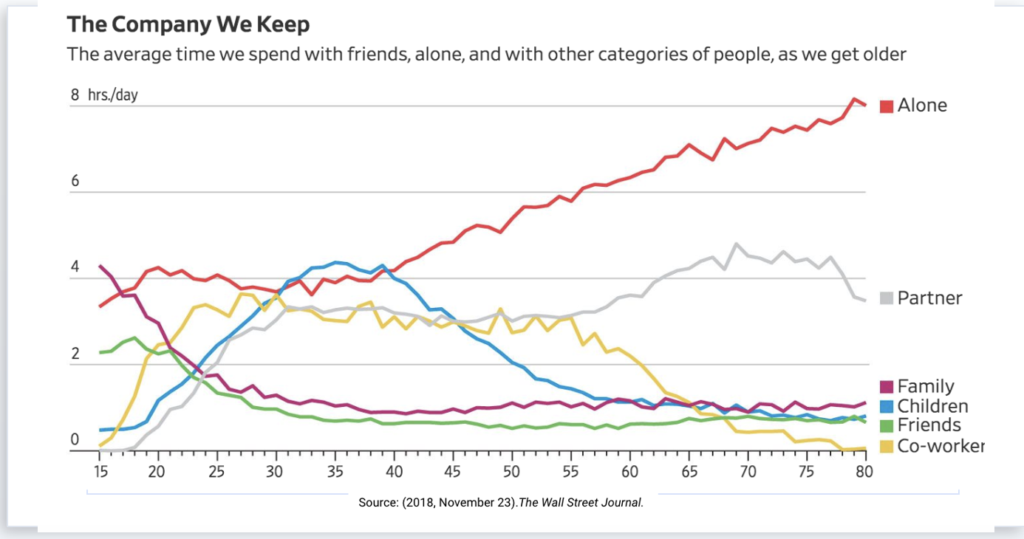
The transition into retirement, while often heralded for its promise of newfound freedom, presents a significant shift in an individual’s daily experience, particularly concerning the increased amount of time spent in solitude. This period of increased introspection can be a source of unexpected challenge, as retirees find themselves not merely alone, but alone with their own thoughts. The internal dialogue that accompanies this phase of life is proving to be a critical, yet often overlooked, aspect of navigating this major life change.
Emerging research and expert analysis suggest that some of the most profound and impactful conversations experienced during retirement are those that unfold within one’s own mind. These continuous internal dialogues can encompass a wide spectrum of cognitive processes, from forward-looking planning, imaginative exploration, and reflective analysis to more challenging patterns such as worry, rumination, self-criticism, and blame. Discussions on platforms like "The Retirement Wisdom Podcast" have highlighted that the nature of this inner conversation can significantly influence an individual’s ability to either narrow their life’s possibilities or to proactively shape their next chapter with greater intention and potential.
Dr. Marilee Adams, Founder and CEO of The Inquiry Institute and author of the recently updated fifth edition of "Change Your Questions, Change Your Life," emphasizes the profound impact of our self-directed questions on our mindset. Her work identifies two primary operating mindsets: the "Judger" and the "Learner." Judger questions, often backward-looking or self-critical, tend to focus on perceived flaws or negative outcomes, posing queries such as, "What’s wrong with me?" or "Why did this happen?" In contrast, Learner questions foster curiosity, agency, and a sense of possibility, prompting inquiries like, "What do I want now?" or "How else can I think about this?"
This distinction becomes particularly pertinent as individuals enter retirement. This major life transition often strips away the familiar structures, professional identities, and external feedback mechanisms that previously provided a framework for daily life. In the absence of these external anchors, Judger questions can gain considerable momentum, potentially leading to feelings of stagnation or dissatisfaction. Conversely, adopting a more inquisitive and growth-oriented approach through Learner questions can help redirect focus toward core values and aspirations, such as seeking greater meaning, joy, opportunities for contribution, stronger relationships, and continued personal development.
Complementing this perspective is the work of Dr. Ethan Kross, Director of the Emotion & Self Control Laboratory at the University of Michigan and author of "Chatter." Dr. Kross’s research delves into the science of self-talk, differentiating between ordinary negative thoughts and what he terms "chatter"—a repetitive and often unproductive cycle of worry, rumination, and catastrophizing. While Kross does not advocate for the elimination of negative emotions, noting their potential to offer valuable lessons in moderation, he identifies the detrimental effects of becoming trapped in these cyclical thought patterns.
A significant point of convergence between Adams’ and Kross’s research lies in their shared conclusion that the objective is not to silence the inner voice, but rather to engage with it more skillfully. Both experts underscore the universality of an inner critic and the importance of accepting its presence. Furthermore, they highlight that heightened awareness of one’s internal dialogue is the precursor to developing choice and agency. Both Adams and Kross offer practical strategies to transition from automatic reactions to more intentional responses to one’s thoughts.
Dr. Adams’ approach is characterized by the elegant framework of "The Choice Map," which provides a clear language and a practical methodology: identify the "Judger" mindset, pause, and then intentionally shift to the "Learner" mindset. A particularly powerful question recommended by Adams for facilitating this shift is, "Who do I choose to be in this moment?" This question empowers individuals to consciously define their role and perspective, irrespective of external circumstances or internal rumblings.
Dr. Kross, on the other hand, advocates for a more diversified "toolbox" approach, recognizing that different situations may call for distinct strategies. His recommendations include "distance self-talk," which involves addressing oneself by name and offering coaching as one would to a friend. Another technique is "mental time travel," encouraging individuals to consider how a current challenge might appear from a future perspective, such as six months or a year from now. Incorporating activities like walking in nature is also presented as a beneficial ritual that can contribute to becoming a more adept "chatter advisor" with a personalized toolkit.
Practical Strategies for Navigating Inner Dialogue
To cultivate a more constructive inner dialogue, individuals can begin by increasing their awareness of their internal conversations. Drawing from Dr. Adams’ work, a foundational practice involves a physical pause to interrupt the momentum of thought patterns. A simple yet effective technique, learned from Dr. Aditi Nerurkar, is the "Stop. Breathe. Be." protocol. This immediate cessation of activity allows for a moment of grounded presence.
Following this pause, the next step is to actively "catch" one’s questions. This involves identifying the specific inquiries one is posing to oneself. The critical distinction lies in discerning whether these are "Judger" questions, which tend to be critical and limiting, or "Learner" questions, which are open-ended and geared towards growth and understanding.
When one finds themselves in what Adams describes as the "Judger Pit"—a state of being stuck in a negative or self-defeating thought loop—the "Switching Lane" move becomes crucial. This involves deliberately posing a "Learner" question to consciously shift into a more productive and empowering mindset.
From Dr. Kross’s perspective, altering the "voice" of internal dialogue can be highly effective. This can involve using one’s own name in self-talk, as if offering advice to a close friend facing a similar situation: "What advice would I give a good friend facing this?" Shifting the temporal frame is also a powerful tool; asking, "How important will this feel six months from now?" can provide valuable perspective and diminish the perceived magnitude of immediate stressors.
Finally, it is important to recognize when venting might be perpetuating negative cycles. While seeking empathy is natural, the article suggests looking for individuals who can offer not just validation, but also help broaden one’s perspective and move beyond the confines of the problem.
Retirement, with its expanded freedoms, thrives when paired with a more discerning and skillful approach to one’s thoughts and emotional landscape. Through consistent practice, the inner voice can transform from a persistent critic into a valuable ally and a trusted coach, guiding individuals through this new phase of life with greater wisdom and resilience. The implications of mastering this internal communication extend beyond retirement, impacting overall well-being and the capacity for sustained personal growth throughout life.
Further Resources for Exploration:
For those interested in delving deeper into these concepts, the following resources are recommended:
-
Podcast Conversations:
- Listen to the podcast conversation with Dr. Marilee Adams on "Change Your Questions, Change Your Life in Retirement."
- Explore Dr. Ethan Kross’s discussions on "Chatter & Your Inner Voice" and "Shift: Managing Your Emotions."
-
Books:
- "Change Your Questions, Change Your Life, 5th Edition" by Marilee Adams, PhD.
- "Chatter: The Voice in Our Head, Why It Matters, and How to Harness It" by Ethan Kross, PhD.
- "Shift: Managing Your Emotions—So They Don’t Manage You" by Ethan Kross, PhD.
-
Tools and Assessments:
- Take the survey and download "The Choice Map" from The Inquiry Institute.

