
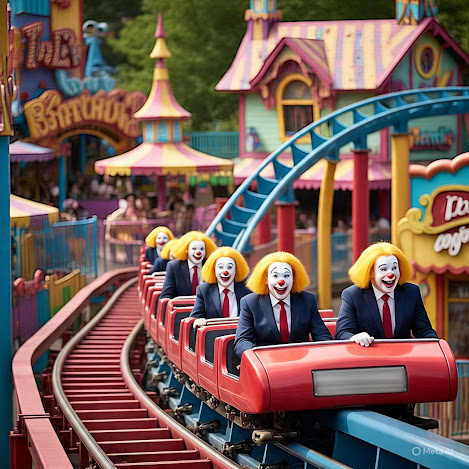
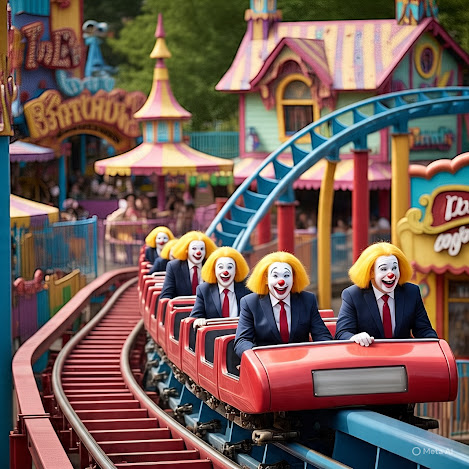
The global financial markets have experienced a period of unprecedented volatility in recent months, largely attributed to the escalating implementation of tariffs by the current U.S. administration. Following a multi-year bull run that culminated in a market peak in February 2025, investors have been subjected to a "wild roller coaster," witnessing some of the steepest drops and most rapid recoveries in modern history. The S&P 500, for instance, saw its value plummet by approximately 20% at its lowest point, only to rebound remarkably close to its previous highs as of June 2025, reflecting a complex interplay of investor anxiety and underlying optimism regarding future trade policy.
A Market in Flux: The Post-February 2025 Landscape
The period immediately following February 2025 marked a distinct shift from the previous sustained growth. The market’s ascent, fueled by technological advancements and robust corporate earnings, suddenly encountered significant headwinds. Key indices like the Dow Jones Industrial Average and the NASDAQ Composite mirrored the S&P 500’s erratic movements. Analysts pointed to a confluence of factors contributing to this instability, but a consensus quickly emerged: the primary driver of this market turbulence was the unpredictable nature of U.S. tariff policy. This period has been characterized by sharp intraday swings and significant weekly reversals, challenging even seasoned investors and prompting widespread debate among economists and policymakers.
Understanding Tariffs: A Fundamental Economic Tool
At its core, a tariff is a tax imposed by a government on goods and services imported from other countries. These taxes are typically paid by the importing entity—be it an individual purchasing an item directly from an overseas supplier or a large corporation like Amazon or Walmart bringing in container ships full of products. Economically, tariffs function as a form of sales tax on imported goods.
However, the burden of tariffs ultimately falls on the end consumer. When the cost of importing goods increases for retailers or manufacturers, these higher costs are invariably passed on through elevated retail prices to maintain profit margins. Beyond consumer goods, tariffs impact industrial sectors profoundly. For example, increased tariffs on imported steel, copper, or lumber raise the construction costs for everything from new commercial buildings and infrastructure projects to residential housing, thereby influencing broader economic development and affordability.
The immediate effect of broad-based tariffs is akin to a general sales tax: it tends to slow economic activity and reduce consumer purchasing power. While the revenue generated flows into government coffers, potentially aiding in budget funding or deficit reduction, this benefit must be weighed against the broader economic inefficiencies created. For an economy to thrive, tax regimes ideally need to be as low, fair, and predictable as possible, fostering an environment where businesses can plan for the long term and individuals are incentivized to contribute productively. The current administration’s approach, characterized by frequent changes and the imposition of unusually high tariff rates, has introduced a significant degree of unpredictability that runs counter to these principles.
The Rationale Behind Tariff Implementation
Governments historically employ tariffs for various reasons, chief among them protecting domestic industries from foreign competition. By making imported goods more expensive, tariffs can give local products a price advantage, theoretically boosting domestic production and employment. For instance, a tariff on imported automobiles could bolster sales for domestic manufacturers, potentially leading to increased hiring and factory expansion.
Beyond protectionism, tariffs are sometimes justified on strategic grounds, such as ensuring national security by maintaining domestic production capabilities in critical sectors like defense manufacturing. However, the use of tariffs can also be influenced by political considerations, such as appeasing specific industry lobbies or securing votes in key electoral states. Both Democratic and Republican administrations have utilized tariffs, sometimes with debatable economic outcomes. A notable example cited by critics is the tariff on imported solar panel components, which, despite the potential for cheap, clean energy, was seen as hindering the widespread adoption of solar power by increasing costs for consumers and installers. The current administration has further escalated these particular tariffs, underscoring a bipartisan tendency towards protectionist measures.
The current administration’s rationale for its aggressive tariff policy has been a subject of intense debate. Public statements have often suggested that tariffs will lead to increased national wealth and job creation, primarily by re-shoring manufacturing. This perspective emphasizes direct gains in protected industries while seemingly downplaying the broader economic costs incurred by other sectors and consumers through higher prices and reduced efficiency. Financial markets, however, have consistently reacted negatively to tariff announcements, with share prices typically falling, indicating that investors and corporate leaders largely view tariffs as a drag on profitability and economic growth. Conversely, any indication of tariff reduction or de-escalation tends to trigger market rallies. This divergence suggests that the administration’s tariff strategy might also serve as a negotiating tactic, aiming to extract concessions from trading partners by wielding economic pressure.
Impact on Consumers, Businesses, and Global Trade
The repercussions of tariffs extend far beyond immediate price adjustments. For consumers, the impact is inflationary. Higher import costs for raw materials and finished goods translate into elevated retail prices across a vast array of products, from electronics and apparel to groceries and construction materials. This effectively reduces real disposable income, potentially dampening consumer spending and overall economic growth.
Businesses face a multifaceted challenge. Companies reliant on global supply chains for components or finished products must absorb increased costs, seek alternative (often more expensive) domestic suppliers, or relocate production, which entails significant capital expenditure and operational disruption. Small and medium-sized enterprises (SMEs) are often disproportionately affected, lacking the resources of larger corporations to navigate complex tariff regulations or diversify supply chains rapidly. Sectors like agriculture have also borne the brunt of retaliatory tariffs from trading partners, leading to reduced export markets and financial strain for farmers.

Globally, the imposition of tariffs often triggers retaliatory measures, leading to trade wars that disrupt established trade agreements and harm international relations. Organizations like the World Trade Organization (WTO), designed to facilitate free and fair trade, find their mandates challenged, and their dispute resolution mechanisms strained. Major trading partners, including the European Union and China, have openly criticized the U.S. tariff strategy, initiating their own counter-tariffs and pursuing alternative trade alliances, thereby fragmenting the global economic landscape.
The "Jobs" Debate: A Closer Examination
The argument that tariffs create domestic jobs is a central pillar of protectionist policy. While a tariff on imported goods might indeed lead to increased demand for domestically produced alternatives, prompting local manufacturers to hire more workers and potentially invest in new facilities, this effect is rarely isolated. The example of a $5,000 tariff on imported Hondas might boost General Motors’ sales and employment. However, this gain is often offset by losses elsewhere in the economy.
Consumers would face higher prices and reduced choice, effectively paying a subsidy to the protected industry. Businesses that rely on imported components or machinery would see their operational costs rise, potentially leading to job losses or reduced expansion in those sectors. Moreover, shielding domestic industries from international competition can diminish their incentive to innovate, improve efficiency, or invest in research and development, potentially slowing overall economic progress in the long run. Most economists generally concur that while tariffs can create jobs in specific protected sectors, their net effect on overall employment and economic efficiency is typically negative, making them a tool to be used with extreme caution, reserved primarily for critical strategic industries or national security concerns.
Legal Challenges and Constitutional Framework
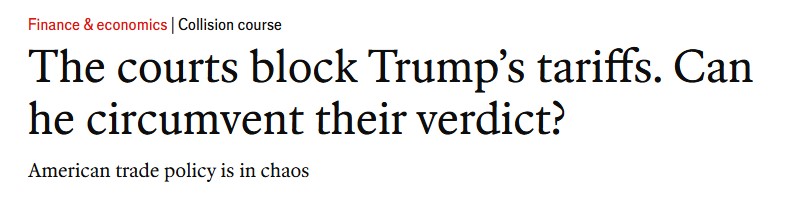
The executive branch’s authority to impose tariffs has become a significant point of contention, leading to legal challenges within the U.S. court system. Presidents have historically drawn on statutes such as Section 232 of the Trade Expansion Act of 1962 (allowing tariffs on imports deemed a threat to national security) and Section 301 of the Trade Act of 1974 (permitting action against unfair trade practices). However, the broad application and frequent adjustments of tariffs by the current administration have sparked debates over the appropriate balance of power between the executive and legislative branches. Critics argue that such unilateral actions undermine the constitutional framework of checks and balances, effectively granting dictatorial economic power to a single individual rather than adhering to the deliberative process intended by the "three independent branches of government." Several industry groups and affected businesses have filed lawsuits, questioning the legality and scope of these tariff impositions, suggesting that the ultimate resolution may well lie in judicial interpretation of these foundational statutes.
The Inventory Buffer and Looming Price Hikes
Despite the significant tariff increases, the immediate impact on consumer prices has not been as pronounced as some economists initially predicted. This delay can be attributed to the sheer scale and inertia of the U.S. economy. As the world’s largest consumer market, the U.S. operates with extensive inventory stockpiles, often holding several months’ worth of various goods. Furthermore, in anticipation of impending tariffs, many importers accelerated their orders, creating an even larger buffer of pre-tariff goods.
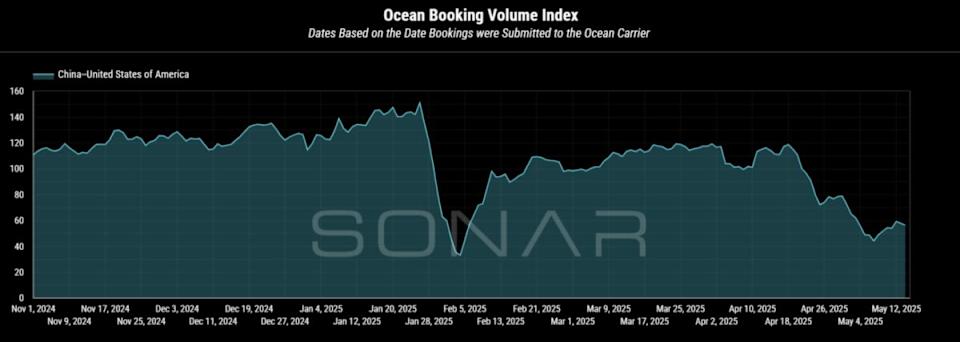
However, data from shipping indices, such as the Freightwaves Ocean Shipping Index (OSI), reveal a substantial drop in imports since the tariffs took effect. This indicates that while the nation is currently drawing down its stockpiled inventory, the flow of new, cheaper goods has significantly diminished. Economists project that if current tariff levels persist and import volumes remain low, the U.S. will likely begin to experience widespread shortages and more noticeable price increases across a range of products throughout the latter half of 2025. While a scarcity of "plastic party trinkets" might be tolerable, reduced access to essential tools, machinery, and industrial components could have far more severe economic consequences.
Future Scenarios and Economic Outlook
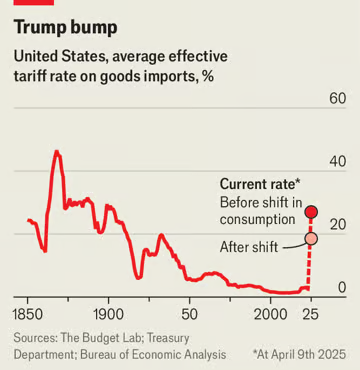
The trajectory of the current trade dispute remains uncertain, with two primary scenarios dominating economic discourse:
-
Sustained High Tariffs: This less likely scenario posits that the elevated tariffs become a semi-permanent fixture of U.S. trade policy. In this situation, the U.S. economy would likely undergo a significant restructuring. Industries benefiting from protection would expand, but at the cost of overall economic efficiency. Consumers would face persistently higher prices, and inflation could become a more entrenched problem. Global supply chains would continue to reorient, potentially leading to increased domestic production but also reduced international trade and slower global economic growth. The U.S. would risk economic isolation, facing continued retaliatory measures and reduced access to diverse, competitively priced goods and services. This path could lead to a less innovative and more insular economy, with potentially reduced living standards over the long term.
-
Tariffs as a Negotiating Tactic: The more optimistic, and arguably more probable, scenario views the current tariff regime primarily as leverage in international trade negotiations. In this outcome, the administration would eventually de-escalate or remove many of the tariffs after securing perceived concessions from trading partners. This would allow for a return to lower, more predictable tariff levels and a resumption of relatively free international trade. The immediate effects would likely include a stabilization of prices, a boost to consumer confidence, and renewed investment as businesses gain clarity and certainty. Supply chains would gradually re-normalize, and international trade relations could improve. This scenario suggests that the current turbulence is a temporary phase, a strategic maneuver rather than a fundamental shift in long-term trade policy, ultimately leading back to the principles of open markets that have historically underpinned global prosperity.
Historically, periods of U.S. economic prosperity have been strongly linked to open borders and free trade, both domestically (between states) and internationally (with friendly nations). The free exchange of goods, services, and ideas fosters innovation, increases efficiency, and ultimately enriches all participants. The prevailing investor sentiment, as evidenced by the stock market’s resilience and recovery despite current tariff levels, suggests a strong belief that the latter scenario will ultimately prevail.
Investor Sentiment and Resilience
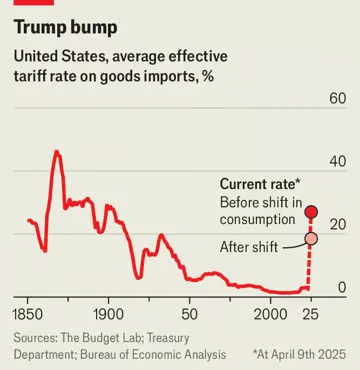
The market’s journey since "Liberation Day" on April 2nd, when a significant tariff announcement triggered a major market downturn, exemplifies this underlying investor belief. Despite initial panic that led some investors to prematurely lock in substantial losses, the subsequent two months have seen a steady rebound. Each instance of proposed tariff reduction or a perceived de-escalation in trade rhetoric has been met with a corresponding increase in stock prices, signaling renewed investor confidence in the long-term economic outlook. As of early June 2025, the U.S. stock market has largely recovered to near all-time highs, a valuation that appears incongruous with the current seven-fold increase in tariff levels compared to pre-crisis benchmarks. This disparity underscores a collective market bet that the current "experiment in emergency tariff dictatorship" will eventually yield to a return to more democratic and predictable trade policies, allowing for a resumption of global free trade.
Navigating Information in a Volatile Era
The recent economic turbulence and policy shifts also highlight a critical challenge in the contemporary information landscape. In an era dominated by click-driven commercial media, the primary objective has shifted from informing to capturing attention, often at the expense of accuracy and nuance. News headlines are frequently crafted to generate outrage or fear, as these emotions tend to drive higher engagement and revenue. This phenomenon creates a distorted public perception of complex economic realities.
To counter this, individuals are increasingly urged to develop media literacy and critically evaluate information sources. Relying solely on sensationalized headlines can lead to misguided decisions, particularly in financial matters. Instead, becoming conversant in core economic principles and consulting original data sources or reputable, non-partisan analyses can provide a more accurate understanding of events. As the economic landscape continues to evolve, a discerning approach to information consumption will be as crucial as sound investment strategies. The long-term resilience of the U.S. economy and markets remains a testament to its adaptability, provided fundamental principles of open markets and predictable governance are eventually restored.

