
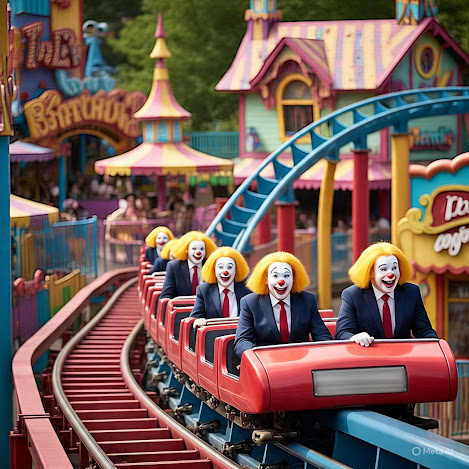
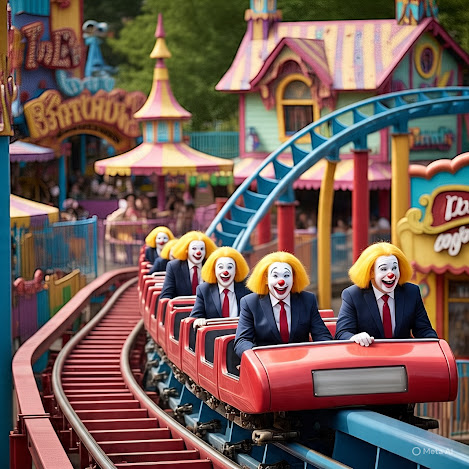
The global financial markets, after experiencing a multi-year bull run that culminated in February 2025, have since been thrust onto a volatile roller coaster ride, characterized by some of the steepest drops and rapid recoveries in recent history. The period witnessed the market shed a full 20% of its value at its nadir, only to miraculously rebound near its previous peak by June of the same year. While market volatility often defies simple explanation, the consensus among economists and analysts points to a singular, overarching factor: the imposition and fluctuating threat of tariffs. This unprecedented period has left stakeholders, from multinational corporations to individual investors, grappling with profound uncertainty about the economic future.
Understanding Tariffs: A Deeper Dive into Trade Taxation
At its core, a tariff is a tax levied by a government on goods imported into a country. These duties are typically paid by the importing entity, whether it be an individual purchasing a product directly from an overseas supplier or large corporations like Amazon, Walmart, or Apple importing vast quantities of merchandise. However, the economic reality is that the burden of tariffs ultimately falls upon the domestic consumer. As the cost of imported goods rises for retailers and manufacturers, these increased expenses are invariably passed on to the end-user through higher retail prices, preserving profit margins.
The impact extends beyond consumer goods. Major industrial projects, such as the construction of new retail outlets by companies like Home Depot or the development of infrastructure like oil rigs by Chevron, face significantly increased costs due to tariffs on essential imported materials such as steel, copper, and lumber. Similarly, the housing market experiences upward price pressure as a substantial portion of building materials originates from various international sources. On a macro level, tariffs function akin to a broad-based sales tax, leading to higher prices across the economy, which in turn tends to slow economic activity and diminish consumer purchasing power. While the revenue generated from tariffs does flow into government coffers, potentially aiding the national budget and reducing deficits, the broader economic slowdown often outweighs these fiscal benefits.
For any modern economy, a balanced and predictable tax system is crucial for stability and growth. Taxes, including sales, income, and corporate taxes, are necessary to fund public services. However, their levels must be carefully calibrated to be as low as possible while ensuring effective governance, and their application must be fair and predictable. This predictability fosters an environment where businesses and individuals are incentivized to invest, innovate, and plan for the long term. The current tariff regime, characterized by its unpredictable and often arbitrary nature, fundamentally undermines these principles.
The Economic Rationale: Protectionism vs. Free Trade
Historically, tariffs have been employed by nations primarily for protectionist purposes: to shield domestic industries from foreign competition. By making imported goods more expensive, tariffs can give local products a competitive edge. For instance, a tariff on imported automobiles could boost sales for domestic manufacturers, leading to increased production and employment within that sector. While this might appear beneficial to the protected industry and its workforce, consumers often bear the brunt through higher prices and reduced product choice.
Such protectionist measures can be strategically applied, as seen in sectors critical for national defense, where tariffs on imported fighter jets might be justified to ensure the viability of domestic aerospace manufacturers like Boeing and Lockheed. However, they can also be influenced by less altruistic motives, such as political lobbying by powerful industry groups seeking to protect their profits.
It’s important to note that the use of tariffs transcends political divides. While former President Donald Trump significantly escalated tariff use, previous administrations, including that of Joe Biden, have also implemented tariffs. A notable example cited by critics was the Biden administration’s tax on imported solar panel components, which aimed to bolster domestic manufacturing but paradoxically increased the cost of clean energy, hindering broader economic and environmental goals. Such policies, when not carefully considered, can inadvertently obstruct the flow of wealth and technological advancement.
Tariffs and Job Creation: A Complex Equation
The argument that tariffs create jobs is often presented as a primary justification for their implementation. Returning to the hypothetical example of a $5,000 tariff on imported Hondas, a significant portion of consumers might opt for domestically produced General Motors vehicles to avoid the higher cost. This shift in demand could indeed lead to increased sales for GM, prompting them to expand operations, hire more employees, and potentially invest in new factories and technologies.
However, this localized boom comes at a broader societal cost. Consumers nationwide pay more for vehicles, and the reduced competition can diminish GM’s incentive to innovate and improve efficiency. Furthermore, higher transportation costs for businesses like Amazon, due to tariffs on their delivery fleet components, translate into marginally higher prices for virtually all goods and services. This ripple effect means that while jobs might be created in one protected sector, other sectors of the economy become less efficient, potentially stifling innovation and job creation elsewhere. Most economists widely agree that while tariffs may offer short-term gains for specific industries, their overall effect on a national economy is generally negative, leading to decreased employment and slower growth, except in very specific cases like national security or food sovereignty where the costs are deemed acceptable.
The Trump Administration’s Tariff Strategy and Market Response
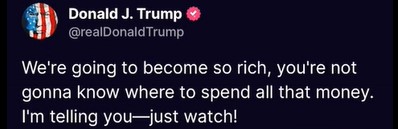
Donald Trump’s enthusiastic and often unpredictable use of tariffs has been a source of considerable bewilderment for economists and investors alike. His public pronouncements often suggest a belief that tariffs inherently enrich the nation by favoring domestic production, overlooking the intricate web of global supply chains and the broader economic inefficiencies they create. This "Bizarro Opposite Universe" economic philosophy, as some critics term it, focuses solely on the first-order effects (e.g., more manufacturing jobs) while disregarding the far-reaching second and third-order consequences.
The stock market’s reactions, however, tell a different story. Announcements of increased tariffs typically trigger declines in share prices, reflecting investor concerns about reduced corporate profits and overall economic contraction. Conversely, when tariff threats are softened or withdrawn, share prices tend to rebound, signaling a collective relief among those who manage and invest in U.S. companies. This consistent pattern underscores a fundamental disconnect between the administration’s stated rationale and the actual economic impact perceived by market participants.
This leads to a pervasive theory that the tariffs are not primarily an economic policy aimed at long-term wealth creation, but rather a tactical instrument in international trade negotiations. The unpredictability and rapid reversals are seen as a means to exert pressure on trading partners, forcing them to concede to U.S. demands. This strategy, however, subjects the entire U.S. economy to the whims of a single individual, a situation many argue is antithetical to the principles of a constitutional democracy designed with checks and balances among independent branches of government.
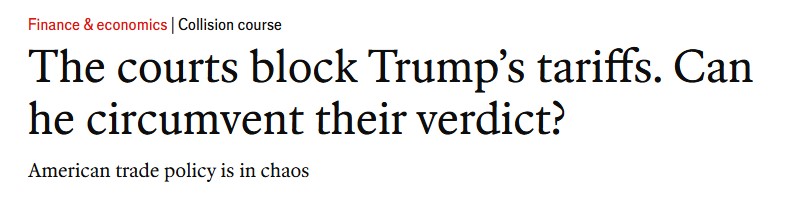
The legal system has already begun to grapple with these challenges. As highlighted in articles from publications like The Economist, companies and trade groups are increasingly challenging the executive branch’s authority to impose tariffs without clear legislative approval, arguing that such actions overstep constitutional boundaries and create an unstable business environment. These court battles represent a crucial test of the resilience of democratic institutions in restraining executive power.
Current Tariff Landscape and Delayed Price Increases
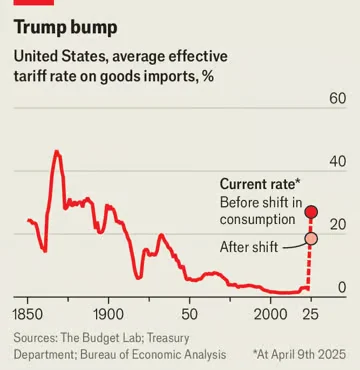
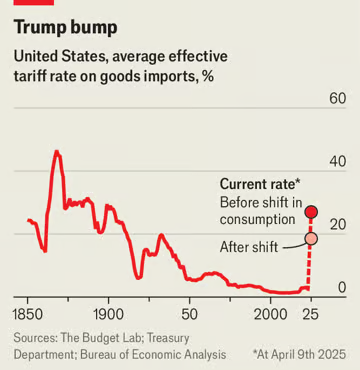
Despite the fluctuating nature of recent tariff announcements, the effective tariff rates currently in place are significantly higher than those observed over the past 75 years. The modern U.S. economy, having thrived on decades of relatively low tariffs and free trade, is fundamentally structured around open international commerce. The abrupt shift to higher tariffs represents a dramatic departure from this established paradigm.
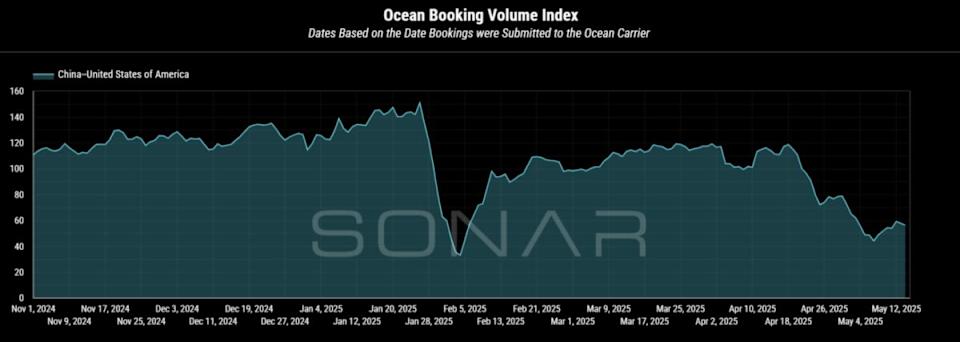
The immediate impact of these tariffs on consumer prices has not been as pronounced as some might expect, largely due to the inherent inertia of the global supply chain. The U.S. economy, functioning like a massive cargo ship, possesses considerable inventory. Before the tariffs fully took effect, many importers strategically accelerated their orders to stockpile goods, creating a buffer of cheaper, pre-tariff merchandise. Consequently, while imports have demonstrably dropped, the country has been drawing down on these existing stockpiles. This situation, however, is unsustainable. As these inventories deplete, likely by late summer or early fall, consumers are anticipated to face widespread price increases and potential shortages, particularly for essential tools, machinery, and other core components that underpin industrial and daily life.
Future Scenarios: Dark Side and Bright Side
The prevailing wisdom in U.S. politics and economics often invokes the phrase, "This too shall pass." The question is not if, but how, the current tariff saga will resolve. Two primary scenarios emerge:
1. The Persistence of High Tariffs:
Should the current high tariffs become a permanent fixture, the economic ramifications could be severe. The U.S. economy, unprepared for such a drastic shift, would likely face a sustained period of inflation, as the cost of imported goods and components continues to rise. This would erode consumer purchasing power, leading to reduced demand and potentially a recession. Businesses would struggle with increased operational costs, leading to decreased profitability, reduced investment, and job losses. Global trade would contract significantly, potentially triggering a wider international economic downturn and even leading to a fragmentation of global supply chains as countries seek to reduce reliance on vulnerable trade routes. This scenario could also lead to heightened government intervention in the economy and increased social unrest as economic hardship mounts.
2. A Return to Low Tariffs via Negotiation:
The more optimistic scenario posits that the tariffs are indeed a negotiating tactic, and a resolution will eventually lead to their reduction or elimination. This outcome would likely see a rapid resurgence in international trade, as businesses regain confidence and supply chains normalize. Investor sentiment would improve dramatically, fueling stock market growth and stimulating economic expansion. Lower import costs would translate into more affordable consumer goods, boosting purchasing power and consumer confidence. This path aligns with the long-held economic principle that open borders and the free exchange of goods, services, and even people, foster global prosperity through collaboration and mutual respect.
Epilogue: Market Resilience and the Information Age
The journey through this period of tariff-induced volatility has been instructive. The stock market’s initial plunge following the "Liberation Day" announcement on April 2nd, 2025, which saw some investors panic and lock in significant losses, highlights the importance of a long-term perspective. Yet, over the subsequent two months, the market demonstrated remarkable resilience, gradually recovering to near all-time highs as tariff threats eased. This recovery suggests a collective belief among investors that a truce and a return to more liberal international trade policies are ultimately inevitable. While current tariff levels remain substantially elevated compared to pre-crisis norms, the market’s bullish outlook reflects an underlying confidence in the system’s ability to self-correct and a deep-seated belief in the enduring benefits of free enterprise.
This period also offers a crucial lesson in navigating the modern information landscape. In an era where news headlines are increasingly crafted to generate clicks through outrage and fear rather than accurate reporting, forming well-informed opinions requires a critical approach. The stark differences in framing between various media outlets, often reflecting partisan biases or sensationalism, underscore the unreliability of surface-level reporting. The solution lies either in disengaging from the constant media cycle and focusing on personal well-being or, for areas of genuine interest, delving into original sources and becoming a subject matter expert. As one gains deeper understanding, the inaccuracies and distortions prevalent in much of commercial media become strikingly apparent, reinforcing the need for independent analysis. Ultimately, the economy, like life itself, is best approached with a calm, informed perspective, allowing one to filter out the noise and focus on fundamental realities.

