
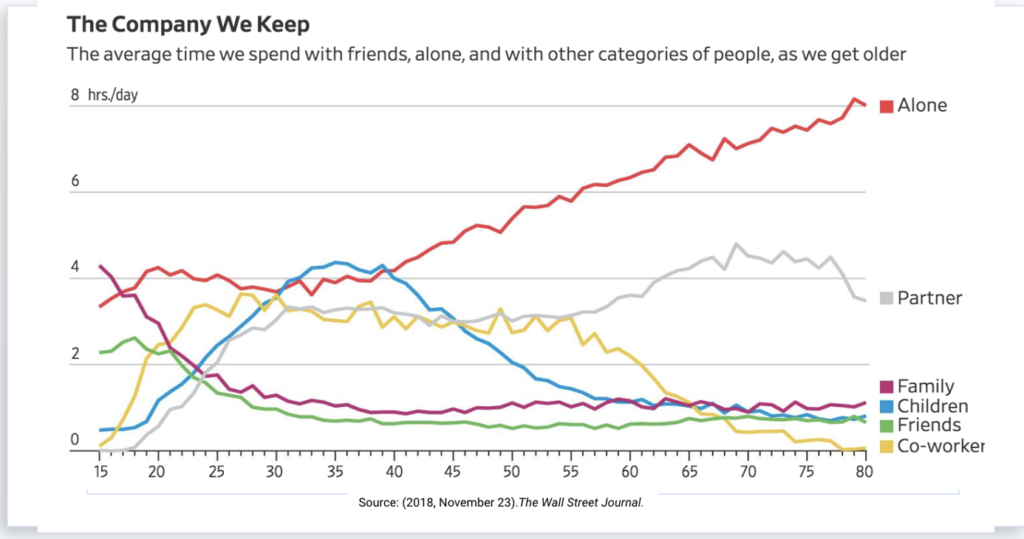
The transition into retirement, a phase marked by newfound freedom and an abundance of unstructured time, often presents individuals with an unexpected companion: themselves. This period of increased solitude amplifies the internal dialogue, transforming it from a background hum to a central feature of daily life. The nature of these self-conversations, as illuminated by recent research and expert insights, can profoundly shape an individual’s experience, determining whether retirement becomes a period of stagnation or an intentional blossoming of new possibilities.
Recent discussions on "The Retirement Wisdom Podcast" have brought to the forefront the critical role of this inner monologue. These conversations, often unheard by others, are revealing themselves as some of the most significant dialogues an individual will engage in during their post-career years. The spectrum of this internal discourse ranges from productive planning, imaginative envisioning, and reflective analysis to unproductive cycles of worry, rumination, self-criticism, and blame. Experts like Dr. Marilee Adams and Dr. Ethan Kross underscore that mastering this inner conversation is not merely about managing thoughts, but about actively shaping one’s mindset and, consequently, the trajectory of one’s life.
The Power of Inquiry: Shifting from Judger to Learner
Dr. Marilee Adams, founder and CEO of The Inquiry Institute and author of the newly updated fifth edition of "Change Your Questions, Change Your Life," posits that the questions we ask ourselves are the primary architects of our mindset. Her foundational insight is that our internal questioning framework dictates whether we operate from a "Judger" or a "Learner" mindset.
The "Judger" mindset is characterized by backward-looking, self-critical, and often blame-oriented questions. Examples include, "What’s wrong with me?" "Why did this happen to me?" or "Why even bother?" These questions tend to trap individuals in a cycle of negativity and helplessness, mirroring the common experience of feeling stuck or self-condemning. Research from the field of cognitive psychology consistently shows that negative self-talk can activate stress response pathways in the brain, leading to physiological and psychological distress. A study published in the Journal of Personality and Social Psychology indicated that individuals who engaged in more frequent self-critical thoughts reported higher levels of depression and anxiety.
In stark contrast, the "Learner" mindset is fueled by curiosity, agency, and a forward-looking perspective. Questions such as, "What do I want now?" "What can I contribute?" or "How else can I think about this?" open doors to new solutions, personal growth, and a proactive approach to challenges. Adams’ work emphasizes that this shift in questioning is particularly vital during major life transitions like retirement. Without the structured environments of work, the habitual patterns of Judger questions can gain significant momentum. Conversely, adopting wise, Learner-oriented questions can redirect focus towards core values and aspirations, such as seeking greater meaning, cultivating joy, fostering meaningful relationships, and pursuing continuous personal development. The Inquiry Institute’s "Choice Map," a practical tool developed by Adams, offers a visual and linguistic framework for identifying and transitioning from Judger to Learner questioning.
Taming the Inner Voice: Understanding and Managing "Chatter"
Complementing Adams’ focus on questioning, Dr. Ethan Kross, director of the Emotion & Self Control Laboratory at the University of Michigan and author of "Chatter: The Voice in Our Head, Why It Matters, and How to Harness It," delves into the science of self-talk. Kross distinguishes between ordinary negative thoughts and "chatter"—a more insidious, repetitive loop of worry, rumination, and catastrophizing that can become debilitating.
Kross’s research, drawing on neuroimaging studies and behavioral experiments, highlights that while negative emotions are a natural part of the human experience and can offer valuable learning opportunities, persistent entanglement in these states is detrimental. His work suggests that "chatter" can hijack cognitive resources, impair decision-making, and exacerbate stress. Data from the National Institute of Mental Health indicates that chronic stress, often fueled by rumination, is a significant risk factor for a range of physical health problems, including cardiovascular disease and weakened immune function.
The consensus between Adams and Kross is not about silencing the inner voice, but about developing a more skillful and intentional relationship with it. Both researchers stress the inevitability of an inner critic and the importance of accepting its presence. Crucially, they highlight that increased awareness of this inner dialogue is the first step towards gaining control. This awareness, they argue, creates a crucial space for choice, allowing individuals to move from automatic, reactive responses to deliberate, intentional actions.
Practical Strategies for Navigating Inner Dialogue
The insights from Adams and Kross converge on practical, actionable strategies for individuals seeking to enhance their well-being, particularly during the transformative period of retirement.
From Dr. Marilee Adams’ Framework:
- Raise Awareness: The initial step involves consciously observing one’s internal conversations. This practice can begin with a simple physical pause, a technique recommended by Dr. Aditi Nerurkar, MD: "Stop. Breathe. Be." This brief interlude can disrupt the momentum of automatic thought patterns.
- Identify Question Types: Once awareness is heightened, the next step is to categorize the questions being asked. Are they "Judger" questions, which tend to be critical and backward-looking, or "Learner" questions, which are curious and forward-looking?
- Employ the "Switching Lane": When caught in a "Judger Pit" of negative rumination, the "Switching Lane" technique involves consciously posing a "Learner" question to shift the mindset. Adams’ potent switching question, "Who do I choose to be in this moment?" encourages a reorientation towards intentionality and personal agency.
From Dr. Ethan Kross’s Toolkit:
- Distance Self-Talk: Kross advocates for employing a form of "distanced self-talk," where individuals address themselves using their own name, as if coaching a friend. For example, instead of "I can’t handle this," one might ask, "What advice would [Your Name] give a good friend facing this situation?" This linguistic shift can create psychological distance, allowing for a more objective assessment.
- Mental Time Travel: Another powerful technique is "mental time travel," which involves reframing current challenges by considering their long-term significance. Asking, "How important will this feel six months from now?" or "A year from now?" can effectively diminish the perceived magnitude of immediate stressors.
- Leveraging Nature and Social Support: Kross also highlights the benefits of rituals like walking in nature, which can interrupt negative thought loops and promote a sense of calm. Furthermore, he emphasizes the importance of seeking out supportive individuals who can offer empathy and help broaden perspectives, rather than those who merely commiserate and inadvertently prolong the cycle of venting.
Broader Implications for Well-being and Life Transitions
The emphasis on mastering one’s inner dialogue carries significant implications beyond retirement. In an era increasingly characterized by information overload and rapid societal change, the ability to regulate one’s internal state and maintain a constructive mindset is a crucial life skill. The scientific exploration of self-talk and questioning strategies provides a robust, evidence-based approach to enhancing mental resilience, fostering personal growth, and improving overall quality of life.
As individuals navigate the substantial life transition of retirement, the freedom it offers is best amplified by a conscious and wise approach to their thoughts and emotional landscape. By applying the principles championed by researchers like Adams and Kross, individuals can transform their inner critic into a valuable ally and coach, paving the way for a more fulfilling, intentional, and joyful post-career journey. The ongoing research in this field continues to underscore that the quality of our internal conversations is not a passive byproduct of our circumstances, but an active determinant of our experience and our capacity to thrive. The ability to ask better questions and to manage internal chatter is, in essence, an investment in one’s own future well-being.

