
The 2020s have emerged as a decade of unprecedented political upheaval and economic volatility in the United States, marked by dramatic shifts in public sentiment and electoral outcomes. At the core of this relentless political whiplash, many analysts contend, lies the pervasive and escalating issue of price inflation, profoundly reshaping the American landscape. While often reduced to complex economic reports, inflation, experienced viscerally through the rising cost of living, has fueled widespread frustration and driven voters to continually re-evaluate their political allegiances, creating an environment where governing parties find themselves perpetually on the defensive.
The Turbulent Dawn of the 2020s
The decade commenced under extraordinary circumstances, setting a tone of instability that would persist. The year 2020 was characterized by a confluence of crises, beginning with the global outbreak of the COVID-19 pandemic. This unprecedented health emergency prompted widespread lockdowns across states and municipalities, bringing significant sectors of the economy to an abrupt halt. The social fabric was further strained by nationwide protests and civil unrest during the summer, reflecting deep-seated societal tensions. Amidst this turmoil, a constant stream of political controversies and media spectacles, including the widely discussed Hunter Biden laptop saga, contributed to an exhausted and polarized electorate.
Against this backdrop of intense chaos, Joe Biden secured the presidency. His victory was widely interpreted by many as a repudiation of the preceding Trump years’ tumult and a return to a more conventional, centrist political style. The prevailing narrative suggested that "the adults were back in charge," promising a period of stability and, perhaps, a return to "boring" politics after years of high-octane drama. This expectation, however, would prove to be largely unmet as new challenges emerged and existing ones intensified.
The Economic Response to Crisis and the Rise of Inflation
Far from settling into a calmer political rhythm, the Biden administration grappled with an evolving set of domestic and international crises. The government’s extensive pandemic response continued, marked by ongoing health directives and significant fiscal outlays. Concurrently, geopolitical tensions escalated, culminating in the outbreak of war in Ukraine in early 2022, followed by the conflict in Gaza later in 2023. However, it was the economic fallout from the bipartisan response to the COVID-19 pandemic that arguably delivered the most direct and widespread impact on American households: a rate of price inflation not seen in forty years.
The genesis of this inflationary surge can be traced directly to the massive economic "rescue plans" implemented during the pandemic. With the federal government’s full support, state and local authorities enforced lockdowns, necessitating substantial financial intervention to sustain individuals and businesses. The Federal Reserve, the nation’s central bank, played a pivotal role in this response. Through various unconventional monetary policies, including quantitative easing and significant asset purchases, the Fed dramatically expanded the monetary supply. It is estimated that the central bank created over six trillion dollars in the first two years of the decade, a staggering sum injected directly into the economy. This unprecedented expansion meant that, by some calculations, approximately one in every three dollars currently in circulation was created after 2019.
This massive increase in the monetary supply had a predictable, albeit delayed, effect: a significant depreciation in the purchasing power of each dollar. Economic theory, stretching back centuries, posits that when governments create new money to finance expenditures or distribute it, the resulting loss of purchasing power is not instantaneous or uniformly experienced. Those who receive the newly created money first—often government contractors, financial institutions, or recipients of initial stimulus—benefit by spending it at pre-inflationary prices. As this new money circulates through the economy, it bids up prices, ultimately forcing those who receive the money last to contend with higher costs for goods and services before their own incomes or assets can adjust. This mechanism, critics argue, constitutes a de facto transfer of wealth from those who are last in line to those who are first, often benefiting politically connected entities or government programs at the expense of the broader public. This process unfolded on an almost unimaginable scale during the pandemic.
Inflation’s Grip on the Electorate: The Political Whiplash
While economists often dissect inflation through granular reports like the Consumer Price Index (CPI) or the Personal Consumption Expenditures (PCE) index, the average American experiences it far more viscerally. For most, inflation is not a statistical abstraction but a daily reality of higher prices at the grocery store, the gas pump, and for housing. The collective memory of economic conditions prior to the pandemic, specifically around 2019, serves as the benchmark. Since then, overall prices have increased by an estimated 30 percent, with some essential categories seeing even sharper rises. Commodities like coffee, beef, and especially energy have exhibited significant price jumps, directly impacting household budgets. This widespread and palpable erosion of purchasing power has fostered a deep sense of frustration and a pervasive feeling that the public has become poorer, a sentiment that accurately reflects the economic reality for many.
This profound economic discontent has transcended traditional political and ideological divides. Swing voters, political independents, and even the typically politically disinterested segments of the population found themselves united in their anger over inflation. Understandably, they tended to assign blame to whichever political party occupied the White House and controlled Congress at the time. This dynamic created a substantial advantage for any political candidate who made "improving the cost of living" a central pillar of their campaign, particularly if they could credibly present themselves as an "outsider" untainted by direct involvement in the federal government during the initial phases of the inflation crisis.
The 2022 midterm elections provided an early demonstration of this phenomenon. Rising prices were a primary concern for many voters, leading to a significant shift away from the Democratic Party, which controlled both the presidency and Congress. Exit polls from the 2022 elections indicated that economic concerns, particularly inflation, were a top motivator for voters, often favoring Republican candidates. While the Supreme Court’s decision to overturn Roe v. Wade earlier that year galvanized Democratic turnout and ultimately minimized the projected "Red Wave," the underlying economic dissatisfaction was undeniably a powerful force shaping the election results.
Building on this trend, an analysis posits that the 2024 general election saw a more pronounced swing. According to this perspective, voters, still reeling from persistent inflation, handed the White House and both houses of Congress to Donald Trump and the Republican Party. Trump, campaigning on promises to tackle economic hardship and often criticizing the incumbent administration’s policies, effectively leveraged the public’s widespread frustration over affordability. This phenomenon was not isolated to the United States; indeed, 2024 was reportedly the first year since 1905 where nearly every incumbent party in developed countries experienced a loss in vote share. These nations, either integrated into the dollar system or operating under their own central banks pursuing similar inflationary policies, faced comparable public discontent over rising costs.
However, the political pendulum continued its rapid swing. Within a mere two years of this hypothetical 2024 victory, Trump’s approval ratings reportedly plummeted to historic lows. The very dynamic that propelled him to power—public dissatisfaction with economic conditions—began to turn against him. Suddenly, the political momentum shifted dramatically, with not only Democrats but even "democratic socialists" experiencing a surge in support, as evidenced in subsequent elections. This rapid reversal underscores the extreme sensitivity of the electorate to economic well-being, particularly regarding the cost of living.
The Unaddressed Root: Monetary Policy and Political Expediency
A critical analysis of this political volatility suggests that neither major party has genuinely confronted the fundamental cause of the inflation crisis: the actions and policies of the Federal Reserve. The central bank’s expansive monetary policies, particularly the massive increase in the money supply, are identified as the root of the problem. Yet, the political class, across the ideological spectrum, appears disinclined to challenge this institutional framework. The control over the monetary and banking system, critics argue, provides too much leverage and financial benefit for the political establishment to willingly relinquish it without immense public pressure.
In the hypothetical Trump administration following a 2024 victory, the response to inflation, according to this analysis, mirrored previous patterns of political expediency. Instead of addressing the Federal Reserve’s role, Republicans allegedly used public anger to justify unrelated policy agendas. There was an apparent hope that the public would eventually adjust to the new, higher price levels and the accompanying redistribution of wealth. Administration officials, it is argued, adopted tactics reminiscent of their predecessors, selectively highlighting positive economic data, disingenuously conflating a slowing rate of price increases with actual price decreases, and consistently proclaiming the economy to be robust and thriving, despite widespread public sentiment to the contrary.
Further complicating matters, a hypothetical geopolitical decision—such as Trump launching a war on Iran—is posited to have directly exacerbated the economic situation. Such a conflict would predictably lead to a significant jump in energy prices, pouring fuel on the inflationary fire. This, in turn, would have reversed the political dynamic that had initially favored Trump in 2024. Suddenly, Democrats, particularly the more anti-establishment democratic socialists, would find themselves in an advantageous position. They could present themselves as outsiders, untainted by responsibility for the "affordability crisis," and committed to finding solutions.
However, the analysis extends this critique to the Democratic Party as well. It suggests that even if Democrats and democratic socialists were to gain significant political power in future elections (e.g., holding Congress and winning the White House in 2028), they too would likely exhibit little interest in confronting the central bank that underpins the inflation crisis. Instead, they would likely seek to "steer" monetary policy towards their own partisan objectives. Furthermore, the expansive government spending programs often advocated by the Left would, in all likelihood, necessitate further increases in money printing, thereby inadvertently fueling the very crisis that initially helped them win power.
Broader Implications and Future Outlook
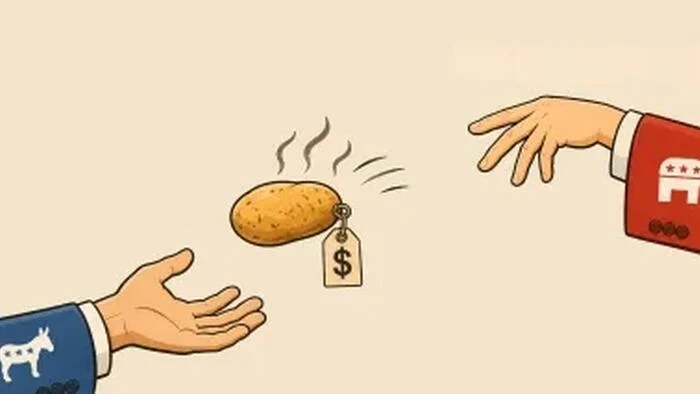
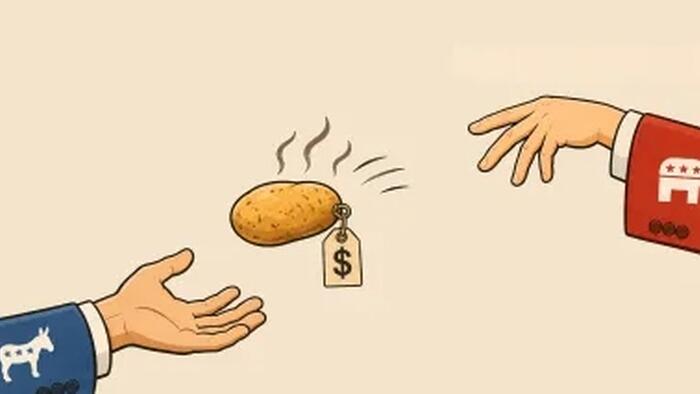
The recurring cycle of political swings driven by inflation points to a deeper, systemic challenge within the American economic and political framework. The entrenchment of central bank influence, coupled with the political class’s reluctance to address monetary policy as a primary driver of economic instability, creates a perpetual "hot potato" scenario. Each party, upon assuming power, finds itself inheriting or exacerbating the very economic conditions that led to their predecessor’s downfall.
This cycle carries significant implications for public trust. When political leaders consistently fail to deliver tangible improvements in living standards, or when their economic narratives appear disconnected from the daily realities of citizens, trust in institutions and the democratic process erodes. The global trend of incumbent parties losing ground reinforces the idea that this is not merely an American phenomenon but a reflection of broader dissatisfaction with how developed nations are managing their economies, particularly concerning monetary policy.
The analysis concludes with a forward-looking perspective: the Democrats and democratic socialists, should they come to power under these conditions, will likely find themselves in the same precarious position that Republicans currently occupy. When public frustration inevitably mounts again, the electorate will once more seek new answers and leaders—individuals untainted by recent office-holding—who can offer a credible path out of the affordability crisis. This future scenario, it is argued, presents a unique opportunity for those who possess a profound understanding of the true causes and effective cures for inflation. Their ability to articulate and advocate for fundamental reforms to monetary policy could become the decisive factor in shaping future political landscapes, offering a potential advantage that cannot be ignored. The challenge, therefore, lies in being prepared to seize this opportunity when the political pendulum inevitably swings again.

