
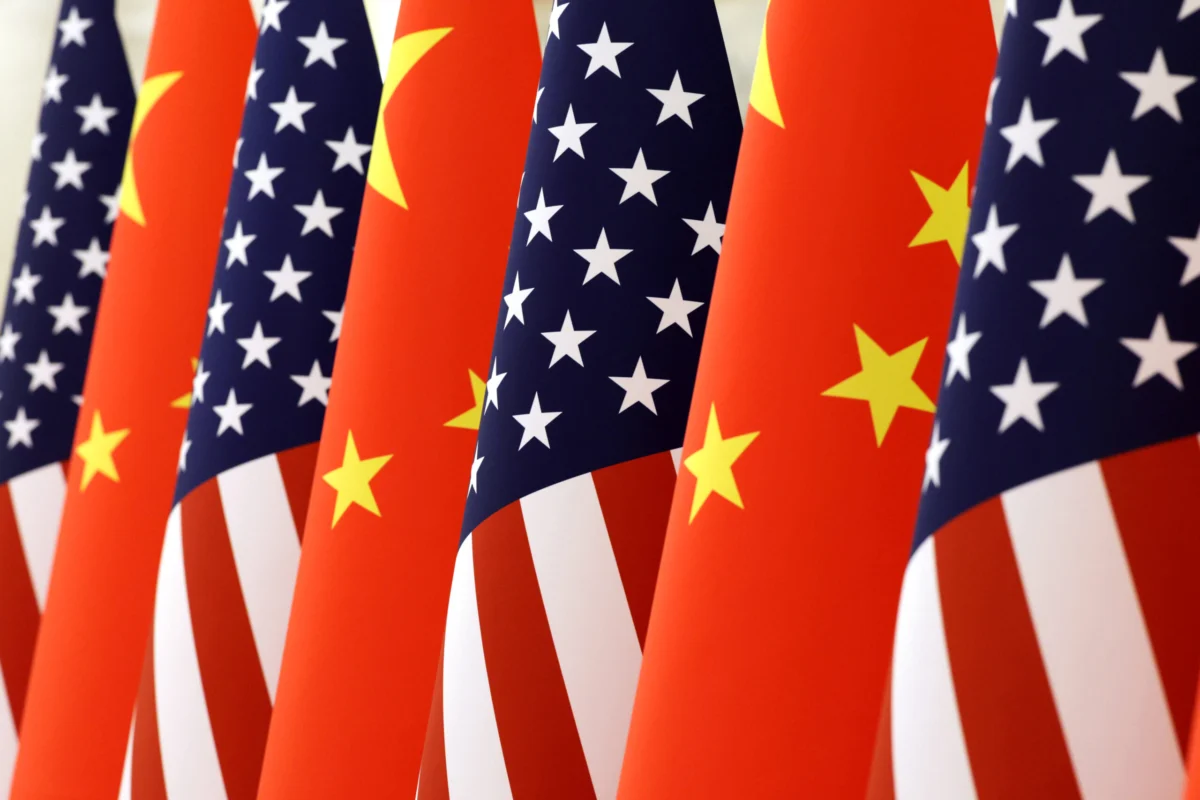
BEIJING – The U.S. political landscape has undergone a significant transformation following the Democratic Party’s decisive victory in the 2026 midterm elections, seizing majorities in both the House of Representatives and the Senate, and flipping key gubernatorial offices across the nation. This dramatic shift in congressional power is now widely anticipated by analysts to elevate risks for U.S.-China tensions, particularly concerning the contentious issue of Taiwan, while simultaneously hardening the already fierce competition in advanced technology sectors. The immediate aftermath of the election signals a period of complex diplomatic maneuvering, with U.S. President Donald Trump, now in a lame-duck phase, preparing for two critical summits with Chinese President Xi Jinping before the new Democratic Congress is sworn in.
A Sweeping Mandate and Shifting Political Sands
The midterm elections, held this week, delivered a resounding mandate for the Democratic Party, which secured control of both chambers of Congress. Beyond Washington, the party also celebrated significant victories in gubernatorial races, notably in states like Texas, Nevada, and Iowa, signaling a broader realignment of political power across the country. While most of the newly elected officials will not officially commence their terms until January 2027, the electoral outcome immediately casts a long shadow over ongoing U.S. foreign policy, particularly relations with China.
Before the new Congress convenes, a delicate window exists for the outgoing administration. President Trump and President Xi Jinping are slated to meet twice in quick succession: first in Shenzhen this month, followed by another high-stakes encounter in Miami, Florida, next month. These meetings are crucial for maintaining what analysts describe as a "fragile truce" between the two global superpowers.
Gabriel Wildau, managing director at Teneo, commented on President Trump’s unique position during this transitional period. "As a lame duck who is increasingly focused on his personal legacy rather than the Republican Party’s success, Trump may resist increased pressure for confrontation with China and continue his pursuit of ‘strategic stability’," Wildau stated in an email analysis. This perspective suggests that Trump might prioritize cementing a diplomatic legacy, potentially seeking to de-escalate rather than intensify conflicts with Beijing, even as his own party lost significant ground.
The incoming Democratic Congress, however, is expected to chart a more assertive course. A primary item on their legislative agenda, as learned by CNBC, is the removal of tariffs imposed by the Trump administration on Chinese goods. This move is part of a broader Democratic focus on addressing domestic inflation and the cost of living, with the belief that reducing tariffs could lower import costs for American consumers. While this particular policy aims to ease economic burdens at home, the overall Democratic approach to China is anticipated to be more robust, especially concerning economic security and geopolitical flashpoints like Taiwan.
Scott Kennedy, senior advisor and trustee chair in Chinese business and economics at the Center for Strategic and International Studies, elaborated on this anticipated shift. "On balance as a result of the midterms the Democrats may nudge the U.S.’s China policy in a more hawkish direction through hearings and legislation, particularly on economic security issues and Taiwan," Kennedy noted. He cautioned, however, that any such efforts would "be constrained by the executive branch’s wide range of latitude and China’s growing power and leverage, which can’t be easily undone." This highlights the inherent challenges of altering U.S. foreign policy significantly when faced with a powerful and entrenched global actor like China.
The backdrop to these domestic political shifts is a global landscape where China’s influence continues to grow. Beijing has actively engaged in extensive diplomatic outreach throughout the year, hosting a flurry of global leaders and solidifying economic ties. Major economies, including the U.S. and the European Union, have simultaneously grappled with an unexpected surge of imports from China, further complicating trade dynamics. Furthermore, China’s undisputed dominance in critical minerals, particularly rare earths, provides Beijing with substantial leverage in ongoing trade negotiations and strategic dialogues with both Washington and Brussels, underscoring its pivotal role in global supply chains.
Taiwan: The Enduring Flashpoint
Among the myriad issues defining U.S.-China relations, Taiwan consistently stands out as the most perilous. Its status as a democratically self-governed island, which Beijing claims as an integral part of its territory, forms the bedrock of potential conflict. The U.S. maintains unofficial relations with Taiwan under its "One China" policy, a delicate diplomatic balancing act that has come under increasing strain.
"Taiwan remains the most dangerous issue in U.S.-China relations and, in my view, the area where a Democratic Congress is most likely to challenge Beijing," wrote George Chen, partner and co-chair of digital practice at consultancy The Asia Group. Chen’s analysis points to a historical trend: "Congress has repeatedly shown a willingness to pursue Taiwan initiatives even when administrations are more cautious." This pattern suggests that a Democrat-controlled Congress might feel emboldened to push for stronger legislative and diplomatic support for Taiwan, thereby making President Trump’s balancing act significantly more challenging during his remaining months in office.
Recent history provides ample evidence of congressional willingness to assert U.S. support for Taiwan, often testing the limits of Beijing’s tolerance. In August 2022, then-House Speaker Nancy Pelosi’s visit to Taiwan triggered a furious reaction from Beijing, which responded with unprecedented military exercises around the island, including live-fire drills and missile launches. This event underscored the deep sensitivities surrounding Taiwan and the potential for any high-level U.S. engagement to provoke a severe Chinese response.
More recently, in 2023, Representative Hakeem Jeffries (D-N.Y.), who is now poised to become the first Black Speaker of the House in U.S. history, met with Tsai Ing-wen, then president of Taiwan, in New York. Such high-profile engagements by leading U.S. lawmakers are often viewed by Beijing as direct challenges to its sovereignty claims and as infringements upon the "One China" principle. The ascent of a figure like Jeffries to the Speakership, with a demonstrated record of engagement with Taiwanese leadership, could signal a more proactive congressional stance on Taiwan moving forward.
During President Trump’s visit to Beijing in May 2026, President Xi Jinping reportedly issued a stark warning, emphasizing that mishandling the Taiwan issue would place U.S.-China relations in "great jeopardy." This direct admonition from the Chinese leader highlights Beijing’s unwavering resolve on the issue and its perception of Taiwan as a core national interest, non-negotiable in diplomatic terms.
Beyond the geopolitical and historical sensitivities, Taiwan’s strategic importance has grown exponentially in the context of the global artificial intelligence (AI) race. The island is home to Taiwan Semiconductor Manufacturing Company (TSMC), the world’s largest dedicated independent semiconductor foundry. TSMC is a critical supplier of advanced chips, including those essential for AI development, notably manufacturing a significant portion of Nvidia’s cutting-edge processors. Any instability or conflict involving Taiwan could severely disrupt the global supply of these crucial components, with catastrophic implications for the tech industry and the broader AI ecosystem worldwide. The imperative to maintain stability in the Taiwan Strait is thus not merely a diplomatic or military concern but a fundamental economic and technological one.
The Escalating Tech Rivalry and Economic Security
The U.S.-China technology rivalry, already a defining feature of the bilateral relationship, is expected to intensify further under the new Democratic Congress. The competition spans various domains, from advanced semiconductors and artificial intelligence to telecommunications infrastructure and quantum computing.
In the immediate wake of the election results, U.S. stocks experienced a surge on Wednesday, partly buoyed by President Trump’s acceptance of the Democratic victories and indications that Washington would increase efforts to de-escalate the Iran conflict, leading to a fall in oil prices. Tech giants like Apple and most of the "Magnificent Seven" stocks saw significant gains, though Nvidia experienced a slight decline, possibly due to broader market re-evaluations or specific sector concerns.
However, beneath these short-term market fluctuations lies a growing bipartisan consensus in Washington regarding technological leadership. George Chen reiterated this point, stating, "there’s an emergence of a broader consensus in Washington that America’s technological lead should not be used to strengthen China’s military or strategic capabilities." He anticipates that a Democratic Congress, driven by this consensus, may be motivated to adopt an even more aggressive posture. "As a result, Beijing may discover that technology becomes a growing source of friction even if Trump and Xi continue to maintain relatively cordial summit diplomacy," Chen concluded.
Over the last several years, the U.S. government has progressively tightened restrictions on Chinese companies’ access to advanced chips and semiconductor manufacturing equipment. These measures, initially targeting companies like Huawei and subsequently expanding to a wider array of entities, aim to curtail China’s ability to develop cutting-edge military applications and advanced AI systems. The restrictions have spurred Beijing’s accelerated efforts to achieve self-sufficiency in semiconductor production and develop its own indigenous versions of advanced technologies, thereby fueling a costly and protracted technological arms race. China’s "Made in China 2025" industrial policy, launched years ago, has been a key driver in this pursuit of technological independence, particularly in high-tech manufacturing.
China’s strategic advantage in critical minerals, particularly rare earths, adds another layer of complexity to the tech competition. Rare earths are essential for manufacturing a wide range of high-tech products, including electric vehicles, renewable energy technologies, and advanced military systems. China controls a dominant share of global rare earth mining and processing, providing it with significant leverage in trade negotiations and the ability to potentially disrupt global supply chains. This control offers Beijing a powerful countermeasure against U.S. tech restrictions, creating a delicate interdependence even amidst intense competition.
The ultimate trajectory of the tech outlook, particularly concerning AI, remains subject to significant uncertainties. Chinese tech stocks, which had experienced a sharp sell-off the previous month, climbed on Thursday, extending a recent rebound. Liqian Ren of WisdomTree attributed this recovery partly to Beijing’s latest regulatory interventions aimed at stabilizing the market. However, she emphasized that the long-term performance of Chinese tech stocks is more closely tied to global investor sentiment regarding AI’s transformative potential. "There’s a lot of uncertainty on how much AI can deliver for U.S., or for China," Ren observed, highlighting the speculative nature of AI’s economic impact and the challenges in predicting its future trajectory. The sheer scale of investment in AI research and development, both by governments and private entities in the U.S. and China, underscores its perceived strategic importance as a determinant of future economic and military power.
Broader Implications and the Road Ahead
The Democratic sweep in the 2026 midterms is more than just a domestic political event; it represents a significant inflection point for global geopolitics. The shift in U.S. congressional power is expected to bring a renewed emphasis on human rights issues in China, trade enforcement, and potentially a more coordinated approach with allies to counter perceived Chinese economic coercion and military expansion. While President Trump’s remaining months in office may see him attempting to finalize "strategic stability" agreements with Xi Jinping, the incoming Congress is likely to exert considerable pressure for a tougher stance, creating a potential for legislative-executive friction on foreign policy.
The two upcoming summits between Trump and Xi, in Shenzhen and Miami, will thus be closely watched. They represent the last opportunity for the current U.S. administration to shape the bilateral relationship before a more assertive Congress takes the reins. Discussions are expected to cover trade imbalances, intellectual property rights, regional security issues, and perhaps even a framework for managing AI competition. However, any agreements reached will be viewed through the lens of a departing administration, and their longevity and enforceability under a new Congress remain uncertain.
The global economic ramifications of this evolving dynamic are substantial. While the Democratic agenda to remove tariffs might offer some relief to U.S. consumers and businesses, the underlying structural issues in the U.S.-China trade relationship, such as state subsidies for Chinese industries and market access for U.S. firms, are likely to remain contentious. Furthermore, the intensifying tech rivalry could lead to further fragmentation of global supply chains, higher production costs, and potentially a balkanization of technology standards, creating challenges for multinational corporations operating across both spheres of influence.
China, for its part, is likely to continue its strategy of strengthening economic ties with other nations, diversifying its trade partners, and accelerating its drive for self-reliance in critical technologies. Beijing’s proactive diplomacy and economic initiatives, such as the Belt and Road Initiative, are designed to create a resilient network of alliances and dependencies that can withstand pressure from Washington. The internal dynamics of China’s economy, including its efforts to stimulate domestic consumption and innovation, will also play a crucial role in how it navigates the intensified U.S. competition.
In conclusion, the U.S. 2026 midterm elections have ushered in a new era of political dynamics that will profoundly impact the trajectory of U.S.-China relations. The incoming Democratic Congress is poised to challenge Beijing more aggressively on issues ranging from Taiwan’s sovereignty to economic security and technological dominance. While the lame-duck period offers a final opportunity for President Trump to influence the immediate course of the relationship, the long-term trend points towards an era of heightened competition, strategic recalibration, and potential flashpoints that will demand astute diplomacy and careful management from both global powers.
CNBC’s Justin Papp and Kevin Breuninger contributed to this report.

