
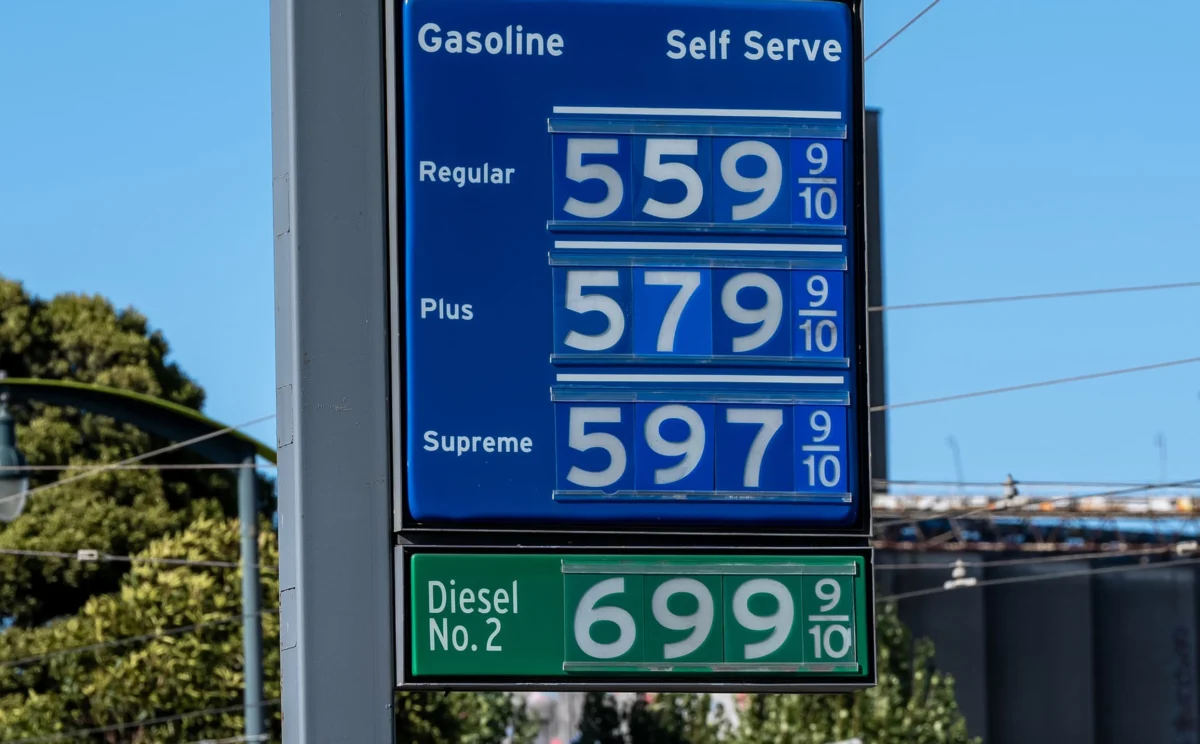
California, a state synonymous with both innovation and environmental leadership, finds itself at the nexus of a critical economic challenge: the nation’s highest fuel prices converging with the busiest containership port complex in the United States. This potent combination, exacerbated by persistent global geopolitical instability, is creating a ripple effect that threatens to impose a significant "hidden tax" on consumers nationwide, manifesting as elevated prices for a vast array of everyday products. As the conflict in Iran extends into its sixth month and the war in Ukraine continues to disrupt global energy markets, the intricate web of supply chains, heavily reliant on diesel-powered transportation, is under unprecedented strain.
The Geopolitical Crucible: Fueling the Price Surge
The current landscape of elevated petroleum product prices, particularly for diesel, is a direct consequence of a complex interplay of international conflicts and strategic energy shifts. The six-month mark of the Iran war signifies a prolonged period of instability in a region critical to global energy supplies. While initial concerns often center on crude oil, experts highlight that petroleum product markets, especially for refined fuels like diesel, are exhibiting far greater tightness. The conflict has introduced significant risks to vital shipping lanes, notably the Strait of Hormuz, a chokepoint through which a substantial portion of the world’s seaborne oil passes. While direct blockades have been avoided, the heightened tensions and the specter of disruption contribute to a risk premium embedded in global energy prices. Moreover, the broader Red Sea crisis, involving Houthi attacks on commercial shipping, has forced many vessels to reroute around the Cape of Good Hope, significantly increasing transit times, fuel consumption, and insurance costs. This lengthening of supply lines places additional, unforeseen demand on fuel supplies and logistical resources.
Simultaneously, the ongoing war in Ukraine has profoundly impacted Russia’s role as a major energy exporter. Ukraine’s strategic targeting of Russian refining infrastructure has taken substantial processing capacity offline, further constricting global supplies of refined products. Russia, historically a significant supplier of diesel to European markets, has seen its export capabilities diminished and redirected due to sanctions and military action. According to Andy Lipow of Lipow Oil Associates, the combined effect of the Iran conflict and the attacks on Russian refineries has resulted in a global diesel supply deficit equivalent to approximately 8% of global demand. This substantial shortfall underscores the vulnerability of the global economy to disruptions in the refining sector, which is less flexible and harder to expand quickly than crude oil production. ExxonMobil CEO Darren Woods articulated this challenge on CNBC, stating, "I think this refining challenge is going to be with the world for a while," further noting that even if the Strait of Hormuz reopens, the lost Russian capacity and the unpredictable export policies of China will continue to shape the market. The confluence of these events has created a persistent inflationary pressure on diesel, a fuel indispensable to global commerce and industry.
California’s Unique Energy Landscape: A Costly Confluence
California’s role in this national economic challenge is disproportionately large, owing to a unique combination of its strategic geographic location, stringent environmental policies, and evolving energy infrastructure. The San Pedro Bay port complex, encompassing the Port of Los Angeles and the Port of Long Beach, serves as the primary gateway for nearly one-third of all containership imports and exports for the entire United States. This makes it a critical artery for goods flowing into and out of the national economy. Before these goods reach warehouses, distribution centers, and ultimately retail shelves across the country, they must first be transported from the ports by trucks and trains, all of which operate on fuel purchased at California’s elevated prices.
The "California premium" on fuel prices is a multifaceted issue. The state has some of the most ambitious and stringent environmental regulations in the nation, particularly concerning fuel standards. The California Air Resources Board (CARB) mandates unique fuel formulations designed to reduce emissions, making it difficult and costly for out-of-state refineries to supply the California market. This effectively creates an "energy island" where fuel specifications differ significantly from national averages, requiring specialized production and limiting supply sources. Furthermore, California’s fossil fuel industry has experienced a significant contraction over the years, with several refineries closing due to a combination of economic pressures, regulatory burdens, and a strategic pivot towards cleaner energy sources. For instance, the closure of facilities like the Phillips 66 Rodeo refinery (now being converted to a renewable fuels facility) has reduced the state’s refining capacity, increasing its reliance on imports of refined products or its remaining, often older, facilities.
Compounding these factors is the state’s limited connection to major fuel pipelines that link other parts of the U.S. This isolation means that refined products, when not produced within the state, must be transported by more expensive methods, primarily marine vessels or rail, further adding to the cost. Additionally, California imposes some of the highest state and local fuel taxes in the nation, adding another layer to the pump price. The combined effect of these factors creates a significant disparity: while the average price for a gallon of diesel in the U.S. stands at approximately $5.36, California’s average soared to $6.92, a stark increase from $5.10 before the Iran conflict began. This substantial difference means that a meaningful share of America’s supply chain is effectively paying West Coast fuel prices, as noted by JPMorgan analysts led by Natasha Kaneva. These prices directly influence freight costs, transportation margins, and, critically, the ultimate delivered cost of goods nationwide.
The Economic Ripple Effect: A Hidden National Tax
The seemingly localized issue of high diesel prices in California transforms into a national economic burden due to the interconnected nature of modern supply chains. Diesel, often dubbed the "workhorse of the American economy," powers the vast majority of heavy-duty trucks, trains, and maritime vessels responsible for transporting goods across the country. When the cost of this essential fuel rises dramatically in a critical logistics hub like California, the increase is not absorbed solely by the transportation companies.
Trucking companies, operating on already thin margins, are compelled to implement fuel surcharges or adjust their freight rates to cover the escalating cost of diesel. These increased transportation costs are then passed down the supply chain. Manufacturers pay more to ship raw materials and components, distributors pay more to move finished products from ports to regional warehouses, and retailers pay more to stock their shelves. This cascading effect means that the higher fuel costs embedded in the initial leg of the journey from California’s ports ultimately become an integral part of the final price consumers pay for everything from imported electronics and apparel to fresh produce and building materials.
Consider a container of goods arriving at the Port of Los Angeles from Asia. The initial haul from the port to an inland distribution center, often just a few hundred miles, is immediately impacted by California’s $6.92 per gallon diesel. Even if the container is then transferred to a train or truck that continues its journey across the country, the initial high-cost leg has already baked in a significant expense. This initial freight cost, though a small percentage of the total value of high-end goods, becomes a more substantial factor for lower-margin, bulk commodities.

This phenomenon is a direct contributor to broader inflationary pressures. As the cost of transportation, a fundamental input for nearly all goods, increases, it pushes up the Consumer Price Index (CPI), impacting household budgets across all income levels. For American households, this translates into higher prices at the grocery store, increased costs for home improvement projects, and more expensive consumer electronics. It acts as an invisible, indirect tax that reduces purchasing power without appearing as a direct levy. Furthermore, sectors like agriculture, heavily reliant on diesel for farm machinery and the transport of perishable goods from California’s fertile valleys to national markets, face mounting operational costs, potentially leading to higher food prices for consumers. Small and medium-sized businesses, often lacking the negotiating power of larger corporations, are particularly vulnerable, as increased shipping costs can severely erode their profit margins and competitive edge.
Expert Perspectives and Industry Reactions
The gravity of California’s fuel price impact on the national economy has garnered significant attention from industry leaders and financial analysts. ExxonMobil CEO Darren Woods’s observation about the "refining challenge" persisting underscores a systemic issue beyond immediate geopolitical flare-ups. His remarks highlight that even if current conflicts de-escalate, the fundamental capacity constraints in global refining, exacerbated by a historical underinvestment in new facilities and the push towards decarbonization, will continue to exert upward pressure on refined product prices. The long lead times and substantial capital required to build new refineries mean that solutions are not immediate, leaving the market susceptible to supply shocks.
Andy Lipow’s assessment of an 8% global diesel demand shortfall provides a quantitative measure of the problem, emphasizing the critical supply-demand imbalance that fuels price volatility. This deficit is not easily overcome, especially given the concurrent disruptions from two major geopolitical conflicts. His analysis serves as a stark warning that the tightness in the diesel market is not merely speculative but rooted in tangible supply losses and disruptions.
The analytical insights from JPMorgan, particularly from analysts like Natasha Kaneva, are crucial in translating these raw price figures into their broader economic consequences. Their statement that "[A] meaningful share of America’s supply chain pays West Coast fuel prices" and that these prices "influence freight costs, transportation margins, and ultimately the delivered cost of goods nationwide" succinctly captures the mechanism of the hidden tax. It validates the direct link between regional fuel prices and national consumer costs, providing a robust economic framework for understanding the widespread impact.
From an industry perspective, various stakeholders are undoubtedly grappling with these challenges. Trucking associations, such as the American Trucking Associations (ATA), routinely highlight fuel costs as one of their top concerns, advocating for policies that stabilize prices or offer relief. Port authorities, while not directly setting fuel prices, are acutely aware of the logistical bottlenecks and cost escalations impacting their throughput and efficiency. Retail industry groups also express concerns about rising transportation costs eating into profit margins and forcing price adjustments for consumers. While direct "official responses" in terms of policy shifts are slow to materialize, the market is responding with increased surcharges, route optimization efforts, and a continuous search for efficiencies to mitigate the impact of persistently high fuel costs.
Looking Ahead: Navigating Persistent Challenges
The outlook for diesel prices and their impact on the U.S. economy remains characterized by significant uncertainty, largely dictated by the unpredictable trajectory of global geopolitics and the inherent structural challenges of the energy market. The ongoing conflicts in Iran and Ukraine continue to pose the most immediate and significant risks to supply stability. Any further escalation or expansion of these conflicts could trigger renewed volatility, while de-escalation might offer some relief, albeit likely temporary given the underlying market tightness.
The global refining capacity, already strained, faces long-term structural issues. The trend of declining refining capacity in the U.S. and other developed nations, driven by environmental regulations, high capital costs for upgrades, and a long-term strategic shift towards renewable energy, means that the world’s ability to quickly process crude oil into refined products like diesel is diminishing. Building new, modern refineries is a multi-year, multi-billion-dollar endeavor fraught with regulatory hurdles and public opposition, making rapid expansion an unfeasible solution in the short to medium term. This tension between the immediate, critical demand for fossil fuels, especially for the industrial and transportation sectors, and the overarching societal goal of decarbonization, creates a complex policy dilemma.
For California, addressing its unique "energy island" status would require significant policy considerations. While the state is committed to its environmental leadership, exploring ways to enhance fuel supply reliability, such as improving pipeline infrastructure connections or incentivizing local refining capacity that can meet stringent environmental standards, could be part of a broader strategy. However, such measures often face strong opposition from environmental groups and may contradict the state’s long-term climate goals. Federally, strategies could include bolstering strategic petroleum reserves for refined products, rather than just crude oil, or exploring targeted tax relief for the transportation sector during periods of extreme price volatility.
Ultimately, the hidden tax imposed by high diesel prices, particularly those stemming from California’s unique market dynamics, underscores the profound interconnectedness of global energy markets and local economic realities. As long as geopolitical instability persists and refining capacity remains constrained, consumers across the United States will continue to bear the indirect cost of powering the nation’s vast supply chain, highlighting the urgent need for resilient energy strategies and diversified transportation solutions.

