
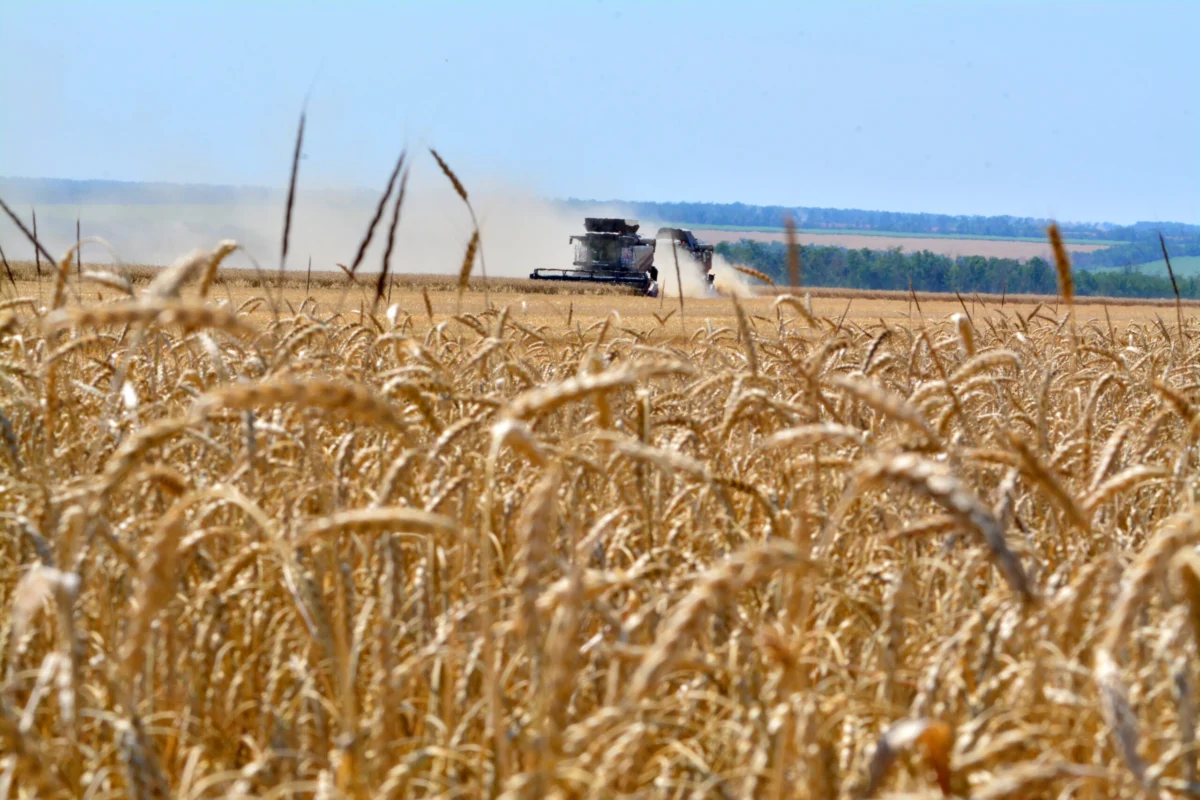
Global commodity markets are witnessing a dramatic ascent in the prices of key staple grains, with both corn and wheat futures surging to their highest levels in over three years. This significant rally, which has sent ripples across international food security and economic landscapes, is being driven by a complex interplay of factors, notably distinct for each crop: escalating geopolitical tensions in the Black Sea for wheat and mounting concerns over U.S. supply for corn. The combined effect underscores the fragile balance of global food systems, vulnerable to both climatic shifts and geopolitical instability.
On Friday, wheat futures settled 3.1% higher at 784 cents per bushel, having touched an intraday high of 790.25 cents—a peak not seen since February 14, 2023, when prices briefly reached 797.5 cents. The weekly performance for wheat was even more striking, with a 12.1% gain marking its largest weekly surge since March 2022. Year-to-date, wheat futures have soared by more than 54.5%, directly reflecting the intensifying conflict between Russia and Ukraine and its profound impact on vital Black Sea shipping lanes.
Meanwhile, corn futures also exhibited robust growth, settling 0.6% higher at 536.5 cents per bushel on Friday after reaching an intraday high of 541.25 cents. This marks the highest level for corn since July 28, 2023. For the week, corn advanced 5.5%, and its 15.6% increase in August positions it for its strongest monthly performance since April 2021, when it recorded a 19.31% rise. Overall, corn futures are up 21.8% year-to-date, primarily propelled by tightening U.S. supply expectations and robust global demand, with ongoing disruptions to Ukrainian exports adding further upward pressure.
The Black Sea Conundrum: Fueling Wheat’s Meteoric Rise
The unprecedented surge in wheat prices is inextricably linked to the volatile geopolitical landscape of the Black Sea region, a critical artery for global grain trade. Russia and Ukraine collectively account for over a quarter of the world’s wheat exports, making any disruption in this corridor a significant global concern. The recent escalation of hostilities, particularly after the effective collapse of the Black Sea Grain Initiative (BSGI) in mid-July, has ignited intense fears of widespread supply shortfalls.
The BSGI, brokered by the United Nations and Turkey in July 2022, had provided a crucial humanitarian corridor for Ukrainian grain exports through the Black Sea, alleviating a nascent global food crisis. Its termination and subsequent attacks on port infrastructure and shipping vessels in both Ukrainian and Russian territories have dramatically altered market expectations. William Osnato, Barchart’s director of commodity data research and analysis, succinctly captured the sentiment, stating, "You’ve had a number of different disruptions in the Black Sea. That’s definitely the main story." He elaborated that damage to Russian grain-export infrastructure has specifically caused expectations for near-term Russian wheat shipments to fall, with the Black Sea representing the largest point of exports for the region.
Russia, as the world’s largest wheat exporter and a low-cost supplier, plays a pivotal role in setting global wheat prices. Its inability to move significant volumes through the Black Sea due to recent attacks—including incidents in the Sea of Azov, a feeder into the Black Sea, and military strikes on grain export facilities, oil tankers, and other vessels—has paralyzed shipping operations. The heightened risk has made it exceedingly challenging for shipping firms to secure insurance, effectively stifling exports. "What moves the market is a change in expectations, and Russia will not be able to ship as much wheat by several millions of tons because the capacity to ship out of the Black Sea has been significantly damaged," Osnato explained, highlighting the immediate and quantifiable impact on supply.
Adding another layer of pressure to the already strained wheat supplies are adverse weather conditions in key growing regions. Europe experienced a severe heatwave throughout the summer, significantly cutting its wheat production by an estimated 8 million to 10 million tons. Concurrently, drought conditions severely reduced hard red winter wheat output in agricultural powerhouses such as Texas, Oklahoma, and Kansas in the United States, further tightening global reserves.
U.S. Supply Woes and Global Demand Drive Corn Prices Upward
In contrast to wheat, corn’s recent rally is predominantly anchored in growing anxieties surrounding the U.S. crop supply and a weakening outlook, compounded by the persistent constraints on Ukrainian exports. The United States is the world’s largest producer and exporter of corn, making its domestic production outlook a primary determinant of global prices.
"From the beginning of August to now, the consensus in the market is that there is less supply than we thought at the beginning of the month," noted William Osnato, pinpointing the critical shift in market sentiment. This revised outlook stems from several key reports and observations. The U.S. Department of Agriculture’s (USDA) August World Agricultural Supply and Demand Estimates (WASDE) report, a crucial benchmark for global commodity markets, lowered corn yield estimates more substantially than traders had anticipated. Despite projecting what could still be the second-largest harvest on record, the agency cut its yield forecast by 2.3 bushels per acre, bringing it down to 180.7 bushels per acre. This reduction, even if seemingly modest, carries significant weight in a finely balanced market.
Further cementing these concerns were the disappointing field observations from the Pro Farmer’s Crop Tour. This influential annual tour, which assesses crop conditions across major U.S. growing states, revealed that extreme July heat had adversely impacted the corn crop, following a period of excessive rainfall in June across many parts of the U.S. Osnato elaborated on the timing: "We are a little past the peak point of the growing season, which is late July, early August, but you can still have poor weather impact the crop at this point." He specifically cited that several portions of the eastern Corn Belt were affected by excessive rainfall during August, contributing to the development of corn fungal diseases later in the growing season, which can significantly reduce yields and quality.
Jim McCormick, co-founder and chief operating officer at AgMarket.Net, emphasized the heightened importance of these U.S. crop concerns given the pre-existing tightness in global supplies. "We thought the world was going to be bailed out by the U.S. supply. Now the U.S. supply is becoming questionable, and the market’s moving up into a rationing mode," he told CNBC, underscoring the shift from anticipated abundance to potential scarcity.
Beyond domestic factors, Europe’s agricultural struggles have also played a role. The continent endured extreme high temperatures and drought throughout the summer, significantly impacting its corn production. This reduced European output, coupled with strong export demand from the region, added pressure to an already constrained global supply. The USDA, in its August report, notably raised U.S. corn exports by 75 million bushels to 3.3 billion, a move reflecting increased global demand and the ongoing limitations on exports from Ukraine, a major global corn exporter. While Osnato acknowledged the impact of Ukrainian disruptions, he noted that some of this effect had already been priced into the corn market, suggesting the U.S. supply outlook remains the more immediate catalyst. McCormick also highlighted a potential spillover effect: Europe’s drought-hit corn crop could indirectly increase pressure on wheat, as a shortage of corn might lead the region to substitute more wheat for animal feed, consequently reducing its wheat exports.
A Timeline of Mounting Pressures
The current surge in grain prices is the culmination of several interconnected events unfolding over the past year:
- February 2023: Wheat prices experienced an initial peak (797.5 cents/bushel on Feb. 14), reflecting early market jitters related to the ongoing conflict.
- June 2023: Excessive rainfall in parts of the U.S. Corn Belt sets the stage for potential crop stress later in the season.
- July 2023:
- Extreme heat waves blanket the U.S. Midwest, impacting critical pollination stages for corn.
- The Black Sea Grain Initiative effectively terminates, leading to immediate market uncertainty and price hikes.
- Escalating attacks in the Black Sea and Sea of Azov regions begin to severely disrupt shipping and damage grain infrastructure.
- Corn prices hit a recent high on July 28 (541.25 cents), driven by emerging U.S. weather concerns.
- August 2023:
- The USDA’s crucial WASDE report significantly lowers U.S. corn yield estimates, catching markets off guard.
- The Pro Farmer Crop Tour confirms widespread damage to the U.S. corn crop due to adverse weather.
- Continued geopolitical tensions in the Black Sea keep wheat markets highly volatile, with further infrastructure attacks.
- August rainfall in the Eastern Corn Belt contributes to fungal diseases, exacerbating corn supply worries.
- European drought impacts both corn and wheat yields, increasing regional import demand.
- Mid-August sees both corn and wheat futures firmly establish new multi-year highs.
Broader Implications: Food Security, Inflation, and Market Psychology
The sustained ascent in corn and wheat prices carries significant implications far beyond the trading floors. For millions globally, particularly in food-importing nations in Africa, the Middle East, and parts of Asia, these price hikes translate directly into higher food costs and exacerbate existing food insecurity. Many of these regions rely heavily on Black Sea grain exports, making them acutely vulnerable to supply disruptions. The United Nations and other international organizations have repeatedly warned about the potential for humanitarian crises if stable grain supplies are not maintained.
Economically, rising commodity prices feed into broader inflationary pressures, impacting consumer purchasing power worldwide. Food inflation, already a challenge in many economies, is likely to see further upward movement, putting pressure on central banks and governments to implement mitigating policies. This could range from domestic subsidies to calls for renewed international efforts to secure shipping lanes.
Beyond these fundamental supply and demand dynamics, market psychology also plays a crucial role. As William Osnato noted, "When a contract hits new highs and multi-year highs, then you start to get momentum and systematic traders interested. So now you have fundamental and systematic traders looking at the market positively, and so those are all sort of mixing together." This suggests that the current rally could attract further speculative buying, potentially pushing prices even higher, even if fundamental conditions stabilize somewhat. This momentum-driven trading adds another layer of volatility and unpredictability to an already complex market.
Looking ahead, the outlook for global grain markets remains highly uncertain. Future price movements will hinge on several critical factors: the trajectory of the Russia-Ukraine conflict and any potential for renewed Black Sea shipping agreements, the performance of upcoming harvests in major producing regions, and the evolving global weather patterns. As the world navigates these intertwined challenges, the stability of staple food supplies remains a paramount concern for governments, consumers, and international bodies alike.

