
BEIJING – China’s external trade sector demonstrated remarkable resilience and growth in September 2026, with exports surging by an impressive 36.3% year-on-year, marking their fastest pace since February. This robust performance underscores the continued strength of the nation’s manufacturing and export capabilities in a complex global economic landscape. Official data released on Wednesday further revealed that imports also climbed significantly, rising by 31%, which represents their quickest acceleration since June, picking up from a 28.2% increase in August. Both figures comfortably surpassed estimates from a Reuters poll, which had projected 25.5% for exports and 24.5% for imports, highlighting a stronger-than-anticipated rebound in global trade flows driven by demand for Chinese goods.
The extraordinary export growth contributed to a record monthly trade surplus of $133.5 billion, a figure that analysts are scrutinizing closely for its implications on both China’s domestic economy and international trade relations. This unprecedented surplus, as noted by Hao Zhou, head of research and chief economist at Guotai Junan International Holdings, "underscores the continued strength of China’s external sector despite lingering concerns over domestic demand." The data paints a picture of China’s economy increasingly relying on external trade to offset internal pressures, a dynamic that has drawn significant global attention in recent years.
Unpacking the Numbers: A Deep Dive into September’s Trade Data
The September trade data represents a critical juncture for China’s economy, showcasing a powerful resurgence in its role as a global manufacturing and export powerhouse. The 36.3% year-on-year export growth is not merely a statistical anomaly but a reflection of several converging factors, including a robust global demand environment for specific product categories and a stabilization, albeit fragile, in key geopolitical trade relationships. The corresponding 31% surge in imports also suggests a healthy appetite for raw materials, components, and consumer goods, indicating a degree of internal economic activity and potentially strategic stockpiling.
The Record Surplus and Bilateral Trade Dynamics
The $133.5 billion trade surplus achieved in September 2026 is a historic milestone, surpassing all previous monthly records. This figure is particularly significant as it follows a period earlier this year when China’s exports and imports each grew at their fastest pace in five years, signaling a sustained upward trajectory in its trade balance. The sheer scale of this surplus is likely to intensify global scrutiny, especially from major trading partners concerned about trade imbalances.
A significant contributor to this record surplus was the exceptional performance of China’s exports to the United States. According to customs data accessed via Wind Information, exports to the U.S. grew by nearly 39.6% in September, outpacing the growth of overall exports. This surge pushed the monthly trade surplus with the U.S. to its highest level since January 2025, a clear indication of robust American consumer and industrial demand for Chinese-made products. The U.S. remains China’s largest trading partner on a single-country basis, making the health of this bilateral trade relationship a crucial barometer for global economic stability. This resurgence comes after a period of significant tension and tariff impositions, underscoring the complex interdependencies between the two economic giants.
Key Drivers Behind the Export Boom
Several intertwined factors have fueled China’s impressive export performance in September, ranging from technological advancements to diplomatic overtures.
The AI Revolution and Tech Demand
Perhaps the most prominent driver of the recent export boom is the surging global demand for China-made parts crucial for data centers, which are the backbone of artificial intelligence infrastructure. The value of China’s integrated circuit board exports globally surged by an astonishing 136% in September from a year ago. However, a crucial detail emerges upon closer inspection: the number of units exported only rose by 1%, according to CNBC calculations of official figures. This significant disparity between value and volume growth strongly suggests a substantial increase in the average unit price of these sophisticated components, likely driven by high demand and possibly rising production costs or premiumization of advanced chips.
This trend highlights China’s pivotal role in the global technology supply chain, particularly as the world accelerates its investment in AI capabilities. As countries and corporations race to build out their AI infrastructure, the demand for specialized hardware, from processors to memory modules and integrated circuit boards, has skyrocketed. China, with its vast manufacturing capacity and increasingly sophisticated tech industry, is well-positioned to capitalize on this wave, even amidst ongoing efforts by some Western nations to diversify their supply chains or restrict access to advanced semiconductor technology. The surge in value indicates that China is exporting higher-value, more complex components, moving up the value chain in a critical sector.
Stabilizing Geopolitical Winds: US-China Trade Relations
Another significant factor contributing to the positive trade figures is a stabilization, or at least a temporary de-escalation, in tensions with the United States. After years of trade disputes initiated under the previous U.S. administration, there have been concerted efforts to foster dialogue and address outstanding issues. Just last month, the U.S. and China announced plans to roll back tariffs on an estimated $30 billion worth of goods from each country. This crucial development was accompanied by an extension of a broader trade truce by two months, pushing its expiry to January.
This limited tariff reduction and truce extension, likely stemming from high-level diplomatic engagements, have provided a much-needed boost to business confidence. For exporters and importers on both sides, the prospect of reduced trade barriers, even if incremental, lessens uncertainty and transaction costs, thereby encouraging greater trade volumes. While fundamental strategic competition and disagreements on issues such as technology transfer, human rights, and geopolitical influence persist, the willingness to find common ground on trade matters has evidently provided a tailwind for China’s export sector. It signals a pragmatic approach from both nations to manage their economic relationship, recognizing the deep interdependencies despite broader geopolitical rivalries.
Resilient Global Demand and Product Pricing
Beyond the specific drivers of AI and U.S. relations, a broader context of resilient global demand, coupled with a coinciding rise in prices of core products, has also contributed to China’s robust trade performance. As global economies continue to recover from previous downturns, consumer spending and industrial activity have picked up in many regions, creating a favorable environment for exports. The global inflationary environment, characterized by rising commodity prices and supply chain pressures, has also played a role. While higher prices can dampen demand in some instances, they also translate into higher values for traded goods, thus boosting the nominal growth figures for both exports and imports. This rise in prices, particularly for intermediate goods and raw materials, has directly supported import growth as China’s factories require these inputs to meet export orders.
Sectoral Spotlights: Winners and Shifters
China’s trade data reveals a varied performance across different sectors, highlighting both areas of exceptional growth and strategic shifts.
The Automotive Export Juggernaut
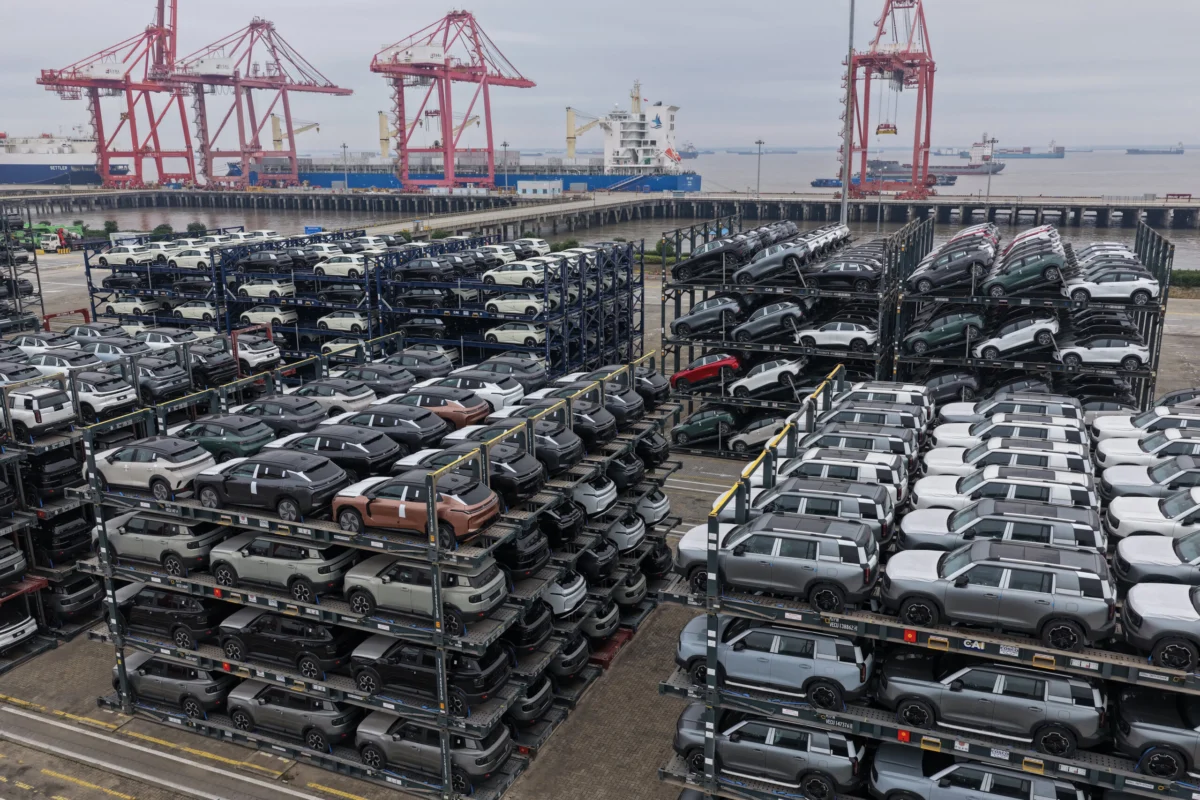
China’s automotive sector has emerged as a major global player, with its exports surging by an impressive 56.3% in September to 1.18 million vehicles. The value of these exports climbed even higher, reaching 62%. This phenomenal growth underscores China’s rapidly expanding influence in the global car market, particularly in the electric vehicle (EV) and hybrid segments. Chinese automakers, backed by significant domestic investment and technological advancements, have become highly competitive, offering a range of vehicles that appeal to international markets on both price and innovation.
However, this aggressive expansion has not been without international repercussions. Just last week, the European Union announced that China had agreed to halve its exports of hybrid-powered cars to the bloc. This agreement followed high-level trade talks in Beijing, where the EU had voiced concerns over a potential flood of Chinese EVs and hybrids into the European market, which could disrupt domestic industries and lead to job losses. The deal, while demonstrating China’s willingness to engage in dialogue, also reflects the escalating global scrutiny on the economic impact of China’s surging industrial exports, particularly in strategic sectors like automotive. It signals a recognition by Beijing of the need to manage trade relations carefully to avoid triggering protectionist measures from key partners.
Energy Imports: A Shifting Landscape
In contrast to the export boom, China’s energy import patterns show a distinct shift. The volume of China’s crude oil imports fell by double-digits for a sixth-straight month, even as their value rose for the first time since May, according to Wind Information. Similarly, China’s crude oil and natural gas imports have both declined in volume since the start of the year. This trend indicates several underlying factors. Domestically, there could be a combination of strategic stockpiling adjustments, a slowdown in energy-intensive industrial production due to domestic demand concerns, and a continued push towards renewable energy sources within China’s broader energy security strategy. The rise in value despite falling volume for crude oil suggests that global oil prices have remained elevated, impacting the cost of imports even if fewer barrels are purchased. This complex dynamic highlights China’s ongoing efforts to balance energy security with economic growth and environmental goals.
Strategic Resources: Rare Earths and Fertilizers
The trade data also offers insights into China’s management of strategic resources. Reflecting the impact of export controls and stockpiling policies, the volume of China’s rare earths and fertilizer exports dropped during the first three-quarters of this year. China holds a dominant position in the global rare earth supply chain, and any adjustments to its export policies have significant international implications, particularly for industries reliant on these critical minerals for high-tech applications. Concurrently, fertilizer imports surged during the same period, suggesting either increased domestic agricultural demand or efforts to build strategic reserves to ensure food security. These trends underscore China’s proactive approach to managing resources deemed critical for national security and economic stability.
Broader Economic Context and International Scrutiny
While the September trade data is undeniably strong, it exists within a broader economic context characterized by internal challenges and intensifying international scrutiny.
Lingering Domestic Demand Concerns
As noted by economist Hao Zhou, the record trade surplus arrives "despite lingering concerns over domestic demand." This highlights a growing divergence within the Chinese economy: a robust external sector driving growth versus persistent weaknesses in internal consumption and investment. Challenges in the property sector, coupled with uneven consumer confidence and structural adjustments, have led to calls for rebalancing China’s economic model towards greater reliance on domestic consumption. The government’s "dual circulation" strategy, which aims to strengthen domestic demand while maintaining external trade, reflects this strategic imperative. The strong export performance, while positive for overall GDP, can also be seen as compensating for these internal weaknesses, underscoring the ongoing need for structural reforms to foster more balanced and sustainable growth.
Global Trade Imbalances and Protectionism
The escalating global scrutiny on the economic impact of China’s surging exports has become a prominent feature of international trade relations in recent years. Major trading blocs like the European Union and the United States are increasingly vocal about concerns over market distortions, unfair competition, and the impact of China’s industrial subsidies on global markets. The EU’s anti-subsidy investigations into Chinese EVs, which ultimately led to the hybrid vehicle export deal, are a prime example of this growing assertiveness. Such actions reflect a broader global trend towards scrutinizing trade practices and, in some cases, implementing protectionist measures to safeguard domestic industries. The massive trade surplus achieved by China in September is likely to further fuel these debates and potentially lead to more calls for trade rebalancing or punitive tariffs from its major trading partners.
Historical Context and Recent Trends
China’s current trade performance is not an isolated event but part of a larger historical trajectory. Earlier this year, China’s exports and imports each grew at their fastest pace in five years, setting the stage for the exceptional performance seen in September. This indicates a sustained period of robust trade activity following the disruptions of the global pandemic and subsequent supply chain issues. Over the past few decades, China has consistently transformed its export basket, moving from low-value manufactured goods to increasingly sophisticated and high-tech products, exemplified by the surge in integrated circuit board exports. This evolution reflects continuous industrial upgrading and significant investments in research and development.
For the first three quarters of the year, China’s exports grew to every major country tracked by the customs agency, underscoring the broad-based nature of its export success. However, imports from specific countries like Malaysia, Germany, and the U.K. fell during that time, indicating shifts in supply chain dynamics or specific sectoral challenges in those bilateral relationships. This nuanced performance highlights the dynamic and complex nature of China’s global trade network.
Expert Analysis and Future Outlook
The record-breaking September trade figures solidify China’s position as a dominant force in global commerce. As Hao Zhou articulated, the external sector remains a powerful engine for the Chinese economy. However, the sustainability of this export-led growth model is a subject of intense debate among economists.
Analysts suggest that while global demand for tech products, particularly those related to AI, is likely to remain strong in the near to medium term, risks abound. A potential global economic slowdown, renewed protectionist measures from key trading partners, or significant disruptions in global supply chains could quickly dampen China’s export momentum. Furthermore, the delicate balance in US-China trade relations, despite the recent tariff rollbacks, remains fragile. Any resurgence of tensions could rapidly reverse the current positive trend.
Domestically, the imperative to rebalance the economy towards internal consumption persists. If domestic demand does not strengthen sufficiently, China’s reliance on exports to maintain economic growth could exacerbate global trade imbalances and invite further international pressure. Opportunities for China lie in its continued investment in high-tech manufacturing, its vast network of trade agreements (such as RCEP), and its Belt and Road Initiative, which continues to foster trade with emerging markets. The strategic management of its energy imports and critical resources like rare earths will also be crucial for long-term stability and geopolitical influence.
Conclusion: Navigating a Complex Global Trade Environment
China’s September 2026 trade data paints a compelling picture of a powerful external sector, characterized by record export growth and an unprecedented trade surplus. Driven by a surge in global demand for AI-related technology and a pragmatic de-escalation of trade tensions with the U.S., these figures underscore China’s enduring role as a manufacturing and export leader. The impressive growth in automotive exports, particularly in the EV sector, further cements its global industrial footprint, even as it navigates complex negotiations with blocs like the EU.
However, beneath the headline figures lie significant challenges and strategic considerations. The divergence between robust external performance and lingering domestic demand concerns highlights the ongoing need for internal economic rebalancing. Moreover, the escalating global scrutiny on China’s trade practices and the potential for increased protectionism from its major trading partners demand careful diplomatic and economic management. As China continues to navigate this complex global trade environment, its ability to adapt, innovate, and strategically manage its relationships will be paramount to sustaining its economic trajectory and ensuring stable global commerce.

