
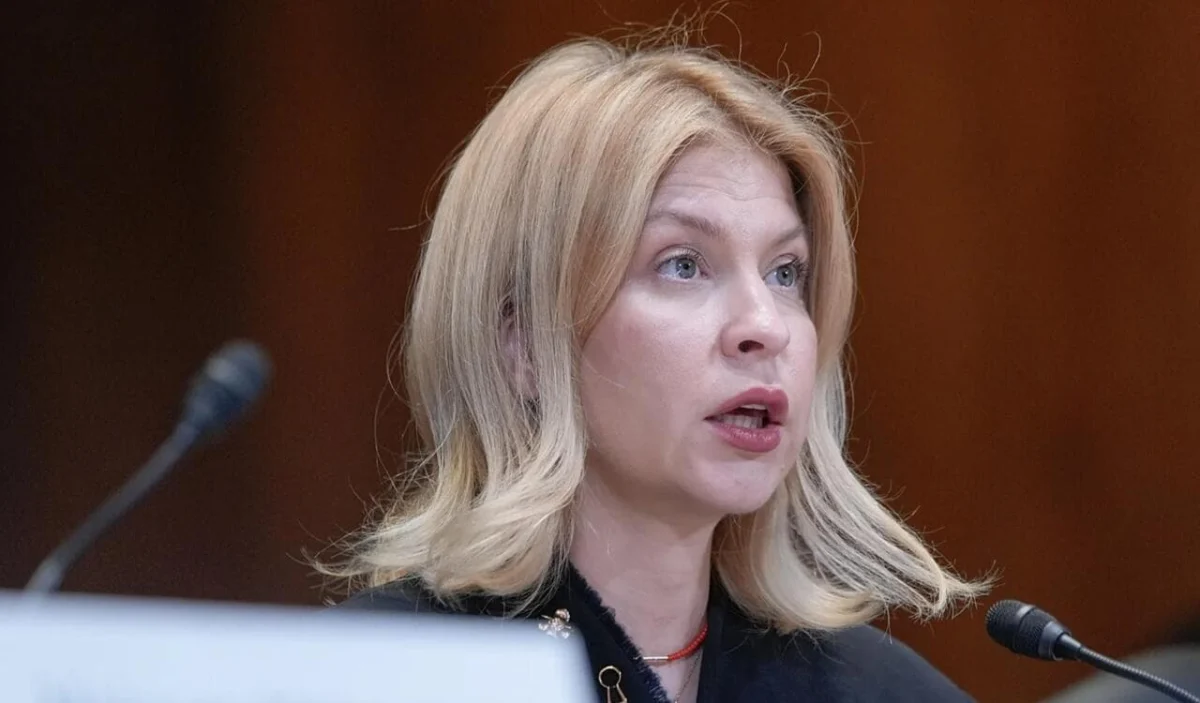
Kyiv, Ukraine – Olha Stefanishyna, Ukraine’s former ambassador to the United States, has been formally charged with illicit enrichment and false asset declarations, a development that underscores President Volodymyr Zelenskyy’s intensified campaign against corruption within the nation’s highest ranks. Her dismissal earlier this week, confirmed by local media and Reuters, comes as part of a broad shake-up of military and cabinet leadership, signaling Kyiv’s unwavering commitment to transparency and accountability, even amidst ongoing conflict. The charges against Stefanishyna allege that she concealed significant assets, including multiple properties, valued at approximately $310,000, which authorities claim could not have been acquired through her official salary.
The allegations against Stefanishyna center on her alleged failure to declare two apartments, valued at nearly Hr 11 million (approximately $250,000), which were reportedly registered in the name of a friend. Additionally, other undeclared assets contribute to the total alleged illicit enrichment of Hr 13.9 million ($310,000). The National Anti-Corruption Bureau (NABU) initiated the investigation, with the Special Anti-Corruption Prosecutor’s Office (SAPO) subsequently filing charges. On August 6, the High Anti-Corruption Court (HACC) set bail for Stefanishyna at Hr 6 million (approximately $130,000). Prior to her ambassadorial role, Stefanishyna held prominent positions within the Ukrainian government, including Deputy Prime Minister and a brief stint as Minister of Justice during the war with Russia, further magnifying the public and international scrutiny surrounding her case. The fact that many of these properties and assets were reportedly registered under the names of friends and family members points to an alleged deliberate attempt to obscure ownership and circumvent declaration requirements.
A Nation Under Scrutiny: Ukraine’s Enduring Fight Against Corruption
The charges against Olha Stefanishyna are not an isolated incident but rather a prominent example of Ukraine’s persistent and often challenging battle against systemic corruption. This struggle has taken on renewed urgency since the full-scale Russian invasion in February 2022, as Kyiv seeks to reassure international partners and its own citizens of its commitment to good governance. Corruption has long been identified as a significant impediment to Ukraine’s development and its aspirations for closer integration with Western institutions, particularly the European Union and NATO.
Following the 2014 Maidan Revolution, Ukraine embarked on a series of ambitious anti-corruption reforms, establishing a specialized institutional framework designed to investigate, prosecute, and adjudicate high-level corruption cases independently. Key among these are the National Anti-Corruption Bureau (NABU), responsible for investigating top-level corruption; the Special Anti-Corruption Prosecutor’s Office (SAPO), which supervises NABU investigations and represents the prosecution in court; and the High Anti-Corruption Court (HACC), specifically mandated to hear corruption cases. These bodies were created with substantial support and pressure from international partners, including the United States, the European Union, and the International Monetary Fund (IMF), which have consistently conditioned financial aid and political support on tangible progress in anti-corruption efforts.
The war has paradoxically intensified both the opportunities for corruption and the political will to combat it. The vast influx of international financial and military aid, coupled with simplified procurement procedures under martial law, has created new vulnerabilities. Simultaneously, the immense sacrifice of the Ukrainian people and the existential threat posed by Russia have fueled public outrage against officials perceived to be enriching themselves at the nation’s expense. President Zelenskyy has repeatedly emphasized that combating corruption is not merely a domestic policy priority but a matter of national security, crucial for maintaining public morale, ensuring the efficient use of resources, and preserving the trust of international allies. Recent polls consistently show that while Ukrainians overwhelmingly support their government in the war effort, public dissatisfaction with corruption remains high, with a significant portion of the population viewing it as a major internal threat alongside the external aggression. Transparency International’s 2023 Corruption Perception Index, for instance, showed Ukraine making some progress, rising from 33 points in 2021 to 36 in 2023 out of 100, reflecting a recognition of ongoing reform efforts, but also highlighting the long road ahead. The Stefanishyna case, therefore, serves as a public demonstration that no one is above the law, regardless of their past or present high-level position.
Timeline of Dismissal and Legal Proceedings
The sequence of events leading to Olha Stefanishyna’s dismissal and subsequent charging illustrates the procedural mechanisms now in place for addressing high-level corruption in Ukraine.
Initial Investigation and Allegations
The investigation into Stefanishyna’s alleged illicit enrichment was initiated by NABU, the primary investigative body for high-level corruption. This probe focused on her asset declarations, particularly discrepancies related to property ownership that raised suspicions of undeclared wealth. The core of the allegations suggests that the acquisition of these assets, totaling approximately $310,000, was not consistent with her official income during her various governmental roles. This period of alleged illicit activity is believed to have included her tenure as Ukraine’s ambassador to the United States, a position she held for the past year, having been appointed in August of the previous year. Reports also indicate that she had been in the process of purchasing another high-value apartment, estimated at $550,000, before ultimately withdrawing from the transaction amidst the unfolding investigation.
Voluntary Resignation and Presidential Dismissal
Upon becoming aware of the gravity of the allegations and the ongoing investigation, Stefanishyna voluntarily submitted her resignation earlier this week. This proactive step, while possibly an attempt to mitigate the political fallout, did not deter the subsequent official action from the President’s Office. President Zelenskyy formally dismissed her from her position as Ukraine’s ambassador to the United States shortly thereafter. This action aligns with Zelenskyy’s broader directive for accountability across governmental sectors, reinforcing his administration’s zero-tolerance stance on corruption.
Formal Charges and Court Appearance
Following the investigation, the Special Anti-Corruption Prosecutor’s Office (SAPO) formally charged Stefanishyna with illicit enrichment and lying in her asset declarations. These charges underscore the specific legal violations she is accused of committing under Ukrainian anti-corruption legislation. On August 6, the High Anti-Corruption Court (HACC) held a hearing to consider a motion for pre-trial restrictions. The prosecution initially requested a bail amount of Hr 13 million (approximately $290,000), reflecting the alleged scale of her undeclared assets. However, the HACC ultimately set bail at Hr 6 million (approximately $130,000), a decision that legally allows her to remain out of custody during the ongoing investigation and trial, provided she adheres to specific conditions, which typically include restrictions on travel and communication with witnesses. This judicial process demonstrates the operational capacity of Ukraine’s specialized anti-corruption institutions to pursue cases against high-ranking officials.
Official Statements and the Accused’s Rebuttal
The unfolding case of Olha Stefanishyna has elicited responses from various stakeholders, highlighting the delicate balance between upholding legal processes and managing public perception, especially during a time of national crisis.
Stefanishyna’s Public Defense
In response to the allegations and charges, Olha Stefanishyna took to social media, specifically Facebook, to issue a statement denying any wrongdoing. She asserted that she has nothing to hide and welcomes the procedural actions as part of the lawful work of the law enforcement system. "Any procedural actions are part of the lawful work of the law enforcement system and do not amount to a finding of guilt," she wrote, adding, "I take these developments calmly and without unnecessary emotion." Her statement emphasizes her voluntary resignation, implying cooperation with the authorities and a commitment to transparency on her part. This public stance seeks to defend her reputation and maintain innocence until proven guilty through due legal process.
Government and Anti-Corruption Body Stance
While President Zelenskyy’s office has not issued a specific statement regarding Stefanishyna’s case beyond the official dismissal, the broader context of his recent "shake-up" clearly signals a top-down directive to tackle corruption. The dismissal itself serves as an official affirmation of the government’s commitment to rooting out malfeasance. Spokespersons for NABU and SAPO, while not commenting on the specifics of ongoing investigations outside of court proceedings, typically issue general statements affirming their adherence to legal procedures and their dedication to pursuing justice without political interference. Their actions in bringing charges and seeking bail in court speak to their mandate and operational independence. The Ministry of Foreign Affairs would likely issue a brief statement confirming the change in ambassadorial personnel, without delving into the specifics of the legal charges, maintaining diplomatic decorum.
International Reassurance
International partners, particularly the United States and the European Union, have consistently voiced their support for Ukraine’s anti-corruption efforts. While they typically refrain from commenting on individual cases, the dismissal and subsequent charges against Stefanishyna are likely to be viewed as a positive sign of Ukraine’s continued commitment to reforms. The U.S. State Department, for instance, would likely reiterate its broad support for Ukraine’s democratic institutions and its efforts to combat corruption, emphasizing the importance of rule of law for Ukraine’s long-term stability and Euro-Atlantic integration. Similarly, EU officials would likely interpret such actions as tangible progress towards meeting the strict conditions for EU membership, which include robust anti-corruption frameworks and enforcement. This sustained pressure and conditional aid underscore the critical importance of these reforms for Ukraine’s geopolitical trajectory.
Repercussions and Ukraine’s Path Forward
The case of Olha Stefanishyna carries significant repercussions, both domestically and internationally, shaping perceptions of Ukraine’s governance and its future trajectory. It underscores the multi-faceted challenges Ukraine faces as it simultaneously defends its sovereignty and strives for profound internal transformation.
Impact on International Relations
For Ukraine’s international partners, particularly the United States, the swift action taken against a high-ranking diplomat like Stefanishyna sends a crucial message. While the departure of an ambassador inevitably requires a transition, the underlying cause – an anti-corruption drive – reinforces Ukraine’s commitment to good governance. This is vital for maintaining the flow of military and financial aid, which is often conditioned on transparency and accountability. Allies need to be confident that their support is not being siphoned off by corrupt officials. Demonstrating that even high-profile individuals are not immune to prosecution helps to solidify this trust, ensuring continued international solidarity and assistance in the face of Russian aggression. The EU accession process, a cornerstone of Ukraine’s strategic ambitions, explicitly requires a robust rule of law and an effective anti-corruption framework. Cases like Stefanishyna’s, despite their negative immediate optics, ultimately serve as evidence of Ukraine’s progress in building these critical institutions and upholding their independence.
Domestic Political and Social Impact
Domestically, President Zelenskyy’s continued emphasis on rooting out corruption is a critical component of maintaining public trust and national unity during wartime. The Ukrainian population has endured immense suffering, including frequent blackouts, widespread displacement, and a battered wartime economy. Against this backdrop, reports of government officials allegedly living lavish lifestyles or enriching themselves illicitly ignite profound frustration and outrage among ordinary citizens. Such resentment can erode public morale and undermine confidence in the government, potentially creating internal fissures that Russia could exploit. By taking decisive action, Zelenskyy aims to demonstrate that his administration is responsive to public demands for accountability and that the sacrifices of the Ukrainian people are not in vain due to internal malfeasance. This sustained crackdown can bolster his image as a leader committed to fundamental reforms, even as he navigates the complexities of war. However, it also highlights the persistent nature of corruption within Ukraine’s institutions, signaling that the battle is far from over.
Strengthening Anti-Corruption Institutions
The successful investigation, charging, and ongoing prosecution of a former ambassador by NABU, SAPO, and HACC demonstrate the operational effectiveness and independence of these specialized anti-corruption bodies. Their ability to pursue cases against individuals at the highest echelons of power, despite the immense pressures of wartime, is a testament to the institutional reforms undertaken over the past decade. This strengthens the rule of law within Ukraine, a foundational principle for any democratic state. It also serves as a deterrent, signaling to other officials that corrupt practices will be investigated and punished, regardless of their position or influence. The judicial process, while potentially lengthy, is crucial for establishing precedents and reinforcing the principle of equality before the law.
Looking Ahead: The Dual Challenge
Ukraine’s path forward remains a dual challenge: defending its territorial integrity against external aggression while simultaneously reforming and purifying its internal governance structures. The Stefanishyna case is a stark reminder that these two struggles are inextricably linked. A strong, transparent, and accountable government is not just an aspiration but a strategic imperative for Ukraine’s survival, its ability to secure long-term international support, and its ultimate integration into the European family of nations. The ongoing efforts against corruption, exemplified by high-profile cases such as this, are thus not merely about punishing individual wrongdoing, but about fundamentally reshaping the fabric of Ukrainian society and governance, ensuring a more just and resilient future. The vigilance of civil society, the steadfastness of anti-corruption institutions, and the unwavering commitment of the political leadership will be paramount in navigating this complex and critical journey.

