
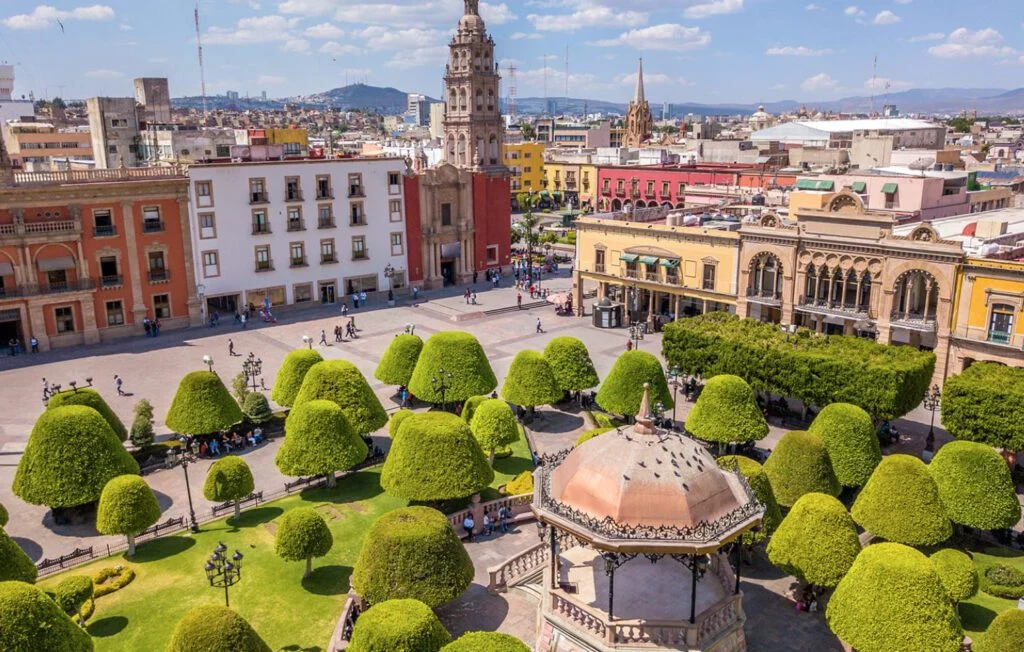
The allure of retirement often sparks dreams of new horizons, and for an increasing number of Americans, these dreams involve embracing life beyond the United States. Anne Nicolai, a seasoned writer and entrepreneur, is one such individual who, in 2008, made a significant transition, trading her corporate career and Minnesota residence for a vibrant expat life in San Miguel de Allende, Mexico. Now a part-time freelancer and a karaoke host, Nicolai has cultivated a unique perspective on the expatriate retirement experience, sharing five key lessons with writer Bev Bachel that offer profound insights for those contemplating a similar path.
The Evolving Landscape of Retirement Migration
The phenomenon of Americans retiring abroad is not a new one, but it has gained considerable momentum in recent decades. Driven by a confluence of factors, including the desire for a lower cost of living, access to better healthcare, a pursuit of cultural enrichment, and a yearning for adventure, individuals are increasingly looking beyond their native shores for their golden years. According to a 2022 report by the U.S. Census Bureau, while official statistics on expat retirement numbers are not precisely tracked, anecdotal evidence and the growth of expat resource websites suggest a significant and growing demographic. Many of these retirees are drawn to countries with established expat communities, where infrastructure and support systems are in place to ease the transition.
Nicolai’s journey began over a decade ago, a testament to the long-term viability and satisfaction that can be found in international retirement. Her venture, MoveToMexico.org, serves as a testament to her expertise and a resource for many who are navigating the complexities of relocating. Her insights, shared with Bachel, offer a practical and personal guide to the challenges and triumphs of expatriate living.
Learning #1: Discovering Untapped Personal Capabilities
One of the most profound revelations for Nicolai upon her arrival in Mexico was the discovery of her own resilience and adaptability. "You are capable of more than you give yourself credit for," she asserts, reflecting on her initial struggles with the Spanish language, currency conversion, and even basic social cues. Fourteen years later, these challenges have transformed into accomplishments. Nicolai is now a fluent Spanish speaker, a confident karaoke host, and no longer relies on mental calculations for currency exchange, having fully integrated into the local economy.
The bureaucratic hurdles associated with establishing legal residency in a foreign country can be daunting. Nicolai recounts the intricate process of obtaining and renewing her temporary residency visa, which involved multiple visits to immigration offices and meticulous documentation. Her eventual acquisition of permanent residency, akin to a U.S. "green card," signifies a deep commitment and successful navigation of a complex system. Furthermore, her repeated solo road trips between San Miguel de Allende and Minneapolis, spanning over 20 journeys, underscore her burgeoning independence and problem-solving skills. These experiences, including navigating unfamiliar routes and encountering unexpected challenges like bribes, have significantly expanded her comfort zone and fostered a deep sense of personal pride.
This personal growth mirrors findings from various sociological studies on expatriate adaptation. Research consistently indicates that individuals who embrace the challenges of living abroad often report increased self-efficacy, improved problem-solving abilities, and a greater appreciation for their own capabilities. The act of confronting the unknown and successfully overcoming obstacles acts as a powerful catalyst for personal development.
Learning #2: The Invaluable Strength of Community and Safety in Numbers
Relocating to a new country necessitates a heightened awareness of personal safety and security. Nicolai acknowledges the tangible security measures prevalent in Mexico, such as decorative ironwork on windows and doors, and fortified garden walls, which are commonplace in many residential areas. The need for vigilance extends to everyday practices, like never leaving personal electronics unattended in vehicles.
However, Nicolai emphasizes that establishing a presence within an existing expat community significantly mitigates these concerns. "There is safety in numbers," she states, highlighting the benefits of communal support and shared resources. In San Miguel de Allende, for instance, a substantial expat population has fostered the development of specific security infrastructures, including English-speaking emergency services and a direct line to the American consular agency. The integration of expats into the local fabric also means that many residents are accustomed to interacting with foreigners, leading to a higher prevalence of English speakers in various sectors.
The article notes that expats can choose from a spectrum of living arrangements, from mixed neighborhoods to expat-dominated gated communities or entirely Spanish-speaking enclaves. Nicolai’s personal choice to reside in a Spanish-speaking neighborhood underscores her commitment to immersion, yet she still finds security in the strong bonds she has forged with her neighbors. This sense of community, where mutual trust and support are paramount, provides a vital safety net, allowing residents to rely on each other in times of need. This observation aligns with urban planning and sociology research that highlights the role of social capital and community cohesion in enhancing neighborhood safety and individual well-being.
Learning #3: Leveraging Technology for Connection and Integration
In an era of unprecedented technological advancement, geographical distance no longer equates to isolation. Nicolai highlights the critical role technology plays in maintaining connections with loved ones and integrating into a new community. The widespread availability of high-speed internet and affordable mobile services globally ensures that expatriates can remain in constant contact.
Applications like WhatsApp, Duo, and Facetime facilitate free voice and video calls, enabling participation in important family milestones, such as birthdays and holidays, even from afar. The convenience of online banking allows for easy bill payments back home, and direct deposit of Social Security benefits into foreign bank accounts, in either dollars or local currency, streamlines financial management. This accessibility is crucial for retirees who rely on these funds for their daily living expenses.
Beyond personal connections, technology serves as an indispensable tool for navigating and understanding the new environment. Nicolai points to expat forums on platforms like Facebook, which provide a wealth of information on everything from local events and garage sales to crime alerts and recommendations for hard-to-find items. Navigational tools like Google Maps and Waze, when coupled with reliable internet access, offer detailed directions, simplifying daily errands and exploration of the local area. This digital infrastructure not only enhances convenience but also fosters a sense of belonging and informed participation in the expat community and beyond. The increasing reliance on digital platforms for social connection and information access is a well-documented trend, particularly impactful for those living abroad.
Learning #4: The Transformative Power of Cultural Immersion
Nicolai’s decision to move to Mexico was motivated by a desire for a richer, more fulfilling life, characterized by abundant sunshine, vibrant culture, and the intellectual stimulation of learning a new language. Her former "Type A" lifestyle in the U.S., marked by consumerism and a demanding corporate schedule, has undergone a significant transformation.
After 14 years in Mexico, she has embraced the virtues of patience, humility, and simplicity. Her consumption habits have shifted dramatically, with a focus primarily on essential food items and karaoke music. The majority of her wardrobe, brought from her previous life, still serves her well, a testament to a more active lifestyle that includes increased walking, dancing, and healthier eating habits. This shift in lifestyle is not unique to Nicolai; many expatriates report a similar reevaluation of priorities and a move towards a more mindful and less materialistic existence.
This immersion in a different culture has proven to be a profoundly positive experience, fostering personal growth and a deeper appreciation for different ways of life. The intellectual challenge of navigating a new linguistic and cultural landscape, coupled with the practicalities of daily life, has broadened her perspective and enriched her understanding of the world. This aligns with anthropological and psychological research that suggests cultural immersion can lead to enhanced cognitive flexibility, greater empathy, and a more nuanced worldview.
Learning #5: The Freedom of Choice and the Option to Return
A crucial aspect of expatriate retirement, as highlighted by Nicolai, is the understanding that the decision to move abroad is not necessarily a permanent, irreversible one. She acknowledges that many long-term expats, some residing in Mexico for over three decades, have built fulfilling lives. Conversely, she has also witnessed individuals who, after relocating, have chosen to return to their home countries for health reasons or to be closer to family.
The expat journey is characterized by fluidity and personal choice. "There is no right way or wrong way to retire; there is no perfect timing; there is no right or wrong place," Nicolai emphasizes. The process is one of exploration and adaptation, rather than a definitive success or failure. For Nicolai, Mexico has become home, and she anticipates spending her remaining years there. However, she maintains the freedom to reconsider her location or lifestyle at any point.
This sentiment resonates with the evolving narrative of retirement, which is increasingly viewed as a period of continued exploration and personal fulfillment, rather than a static end-state. Individuals are empowered to redefine their retirement years according to their evolving needs and desires. The ability to "always go home," or to pivot to another destination, provides a safety net that encourages individuals to take the leap and explore new possibilities without the fear of being permanently "stuck." This sense of agency is a powerful motivator for those considering retirement abroad, underscoring the flexibility and adaptability inherent in modern retirement planning. The note provided clarifies the term "expat" as a person living outside their native country, emphasizing that it does not imply a loss of patriotism but rather an embrace of intellectual curiosity and an adventurous spirit, a sentiment that perfectly encapsulates Nicolai’s perspective and the broader trend of global retirement migration.

