
The global financial technology landscape is converging on the Marriott Marquis Times Square in New York City from September 9 through 11 for FinovateFall 2026, one of the industry’s most influential gatherings for banking executives, venture capitalists, and technology pioneers. While the conference has long served as a cornerstone for the North American fintech ecosystem, this year’s iteration highlights a significant surge in international participation. Twelve companies originating from outside the United States—spanning the United Kingdom, Spain, Canada, Singapore, South Africa, Argentina, the Czech Republic, Israel, the Netherlands, and Belgium—are set to take the stage. These firms will engage in Finovate’s signature high-pressure format: a seven-minute live demo of their technology with no slides or pre-recorded videos allowed. This rigorous standard is designed to separate functional innovation from marketing speculation, providing a transparent look at the tools poised to reshape global finance.

The 2026 edition of FinovateFall arrives at a critical juncture for the financial services sector. As traditional institutions grapple with the integration of generative artificial intelligence, the sunsetting of legacy infrastructure, and the increasing complexity of international regulatory compliance, the "Global Dozen" represent a cross-section of solutions tailored to these exact pressures. From agentic operating systems to privacy-preserving data collaboration, the international cohort reflects a shift away from simple front-end user experience (UX) improvements toward deep-tier infrastructure modernization.
Chronology of Finovate and the Road to New York
The journey to the FinovateFall stage is a months-long process of vetting and preparation. Founded in 2007, the Finovate series has established itself as the premier venue for fintech debuts. The selection process for the 2026 New York event began in early spring, with hundreds of applications reviewed by a panel of industry experts. Unlike many trade shows that prioritize sponsorship spend for stage time, Finovate’s demo slots are curated based on the novelty and potential impact of the technology.

By mid-summer 2026, the international finalists were confirmed, initiating a rigorous rehearsal phase. For companies traveling from Europe and Asia, the stakes are particularly high. New York represents not just a demographic hub, but the gateway to the massive U.S. community banking and credit union market. Historically, international companies that win "Best of Show" at FinovateFall often see a marked increase in North American venture capital interest and partnership inquiries within the subsequent six months.
The three-day event is structured to maximize interaction. September 9 opens with the first round of demos, followed by networking sessions designed to facilitate "collision points" between founders and legacy bank decision-makers. The subsequent days delve into deeper thematic discussions, yet the live demos remain the focal point, serving as a barometer for the technological health of the global fintech sector.

Profiling the International Innovators: A Sectoral Analysis
The twelve international firms scheduled to demo represent four distinct pillars of modern finance: automated compliance, AI-native engagement, infrastructure modernization, and inclusive wealth management.
1. The United Kingdom: A Hub for Compliance and Payments
The UK continues to be the strongest non-U.S. contributor to the Finovate stage, bringing four distinct companies to the 2026 roster.
- 3 Degrees: Founded in 2025 and headquartered in London, 3 Degrees addresses the friction in international payments for community banks. As cross-border transaction volumes are projected to reach $250 trillion by 2027, smaller institutions often struggle with the costs of correspondent banking. 3 Degrees offers a fully digital international payment stack that allows these banks to compete with Tier-1 global institutions.
- Covecta: This London-based firm, founded in 2024, is demoing an "agentic operating system." Unlike standard automation, Covecta’s autonomous agents are designed to connect high-level bank strategy to granular execution across the entire lifecycle of a financial product, optimizing performance in real-time.
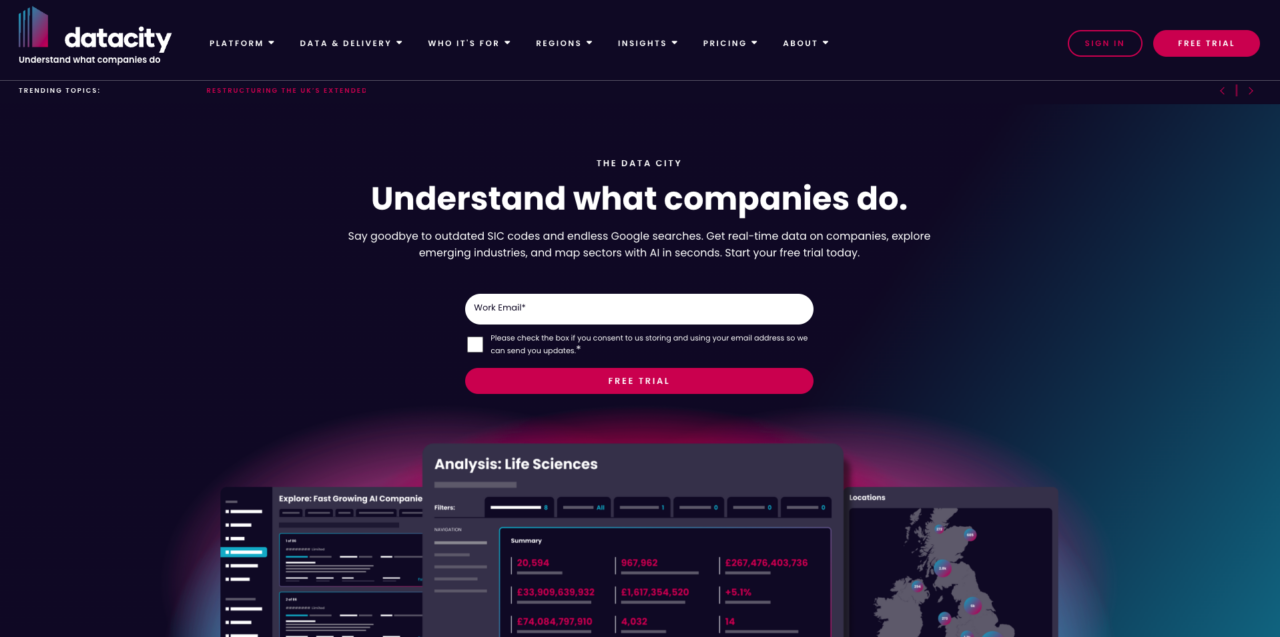
- Data City: Hailing from Leeds, Data City utilizes AI and open-web data to solve the perennial problem of inaccurate industry codes. Their "Industry Engine" automates the assignment of SIC/NAICS codes, a critical component for Know Your Customer (KYC) and Know Your Business (KYB) screenings.
- Doshi: Doshi represents the gamification of financial literacy. Founded in 2023, the London firm provides an AI engagement layer that turns behavioral data into "revenue-generating product readiness signals," helping banks identify when a user is truly prepared for a loan or investment product.
2. Europe and the Middle East: Infrastructure and Privacy
Mainland Europe and Israel contribute solutions focused on the technical "plumbing" of the financial world.
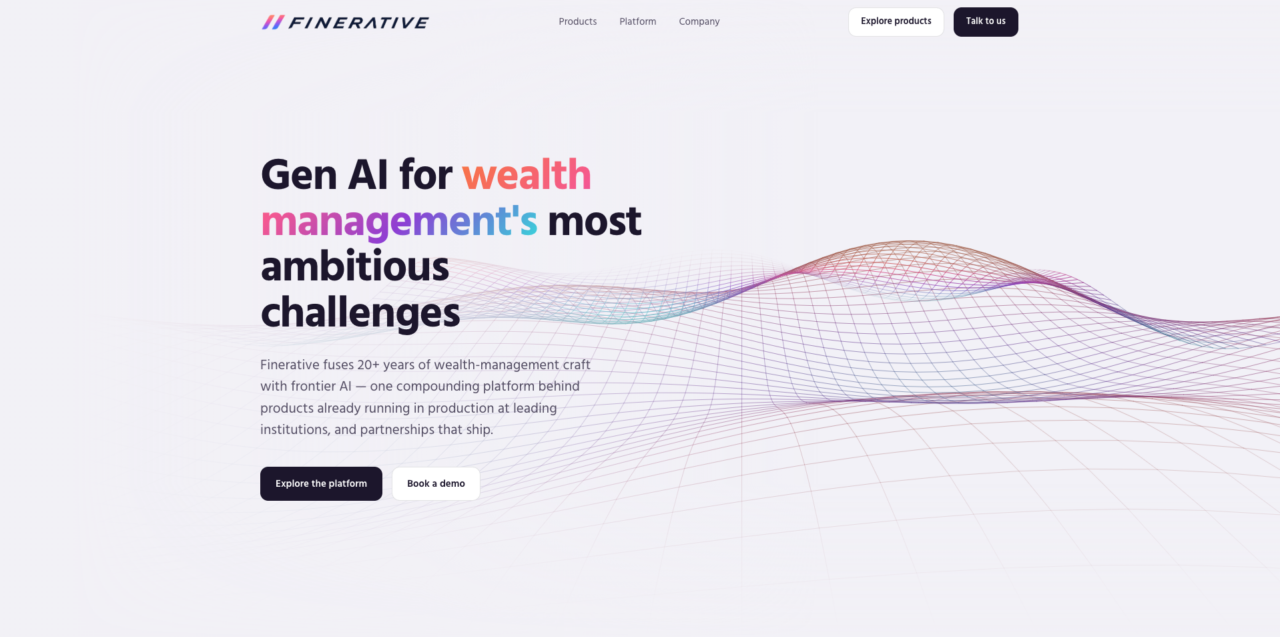
- Finerative (Spain): Based in Madrid, Finerative is introducing Wealth MCP. This platform acts as a bridge, allowing financial institutions to use AI clients while maintaining a permissioned, encrypted, and fully audited infrastructure for market data and portfolio access.
- Tapix by Dateio (Czech Republic): Founded in 2013, Tapix is a veteran in the field of transaction intelligence. Their API cleanses raw payment data into human-readable merchant and location information, a baseline requirement for modern mobile banking apps seeking to offer personalized insights.
- Tweezr (Israel/Netherlands): This dual-headquartered firm focuses on "technical debt." Founded in 2024, Tweezr’s tools accelerate the modernization of legacy systems, a primary hurdle for established banks attempting to migrate to the cloud.
- Young Early Starters (Belgium): YES is a 2026 startup focusing on the next generation of investors. Their app allows children to trade stocks and ETFs with mandatory parental oversight, addressing the growing demand for early-stage financial education.
3. North and South America: Bridging the Americas
- LemonadeLXP (Canada): Based in Ottawa, this company provides an AI-powered learning experience platform (LXP). In an era where bank staff must constantly adapt to new software, LemonadeLXP uses gamification to drive staff performance and, by extension, customer growth.
- Palomonte Labs (USA/Argentina): Operating between Miami and Buenos Aires, Palomonte Labs is showcasing "Cube2." This solution makes financial APIs "AI-readable," ensuring that the next generation of AI agents can safely and accurately execute financial integrations without human intervention.
4. Asia and Africa: Data Collaboration and Self-Service
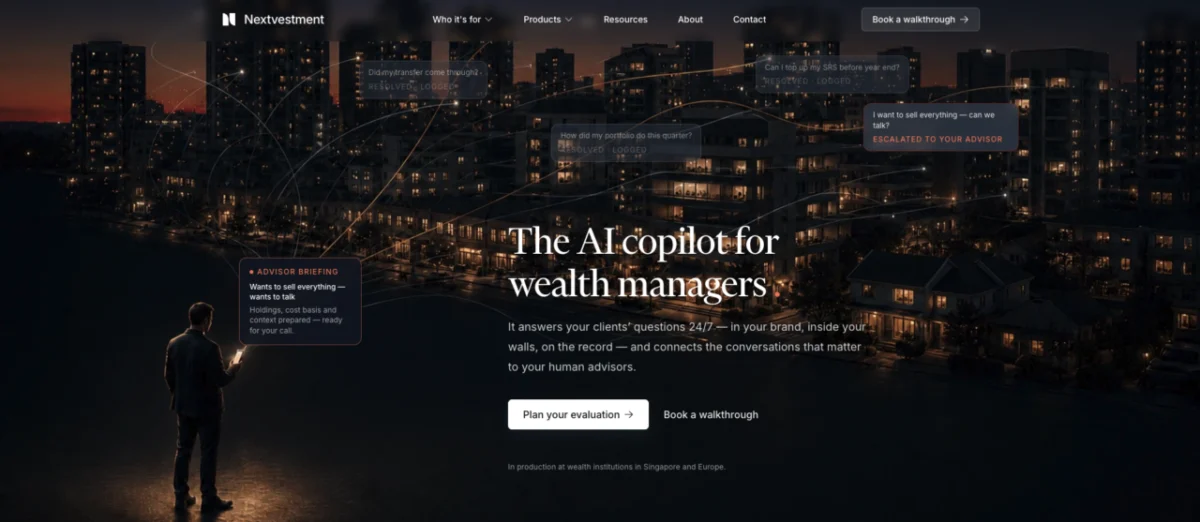
- Nextvestment (Singapore): Founded in 2024, Nextvestment offers a self-service exploration tool for investment planning. It allows clients to model scenarios independently while signaling to advisors the exact moment human intervention is required, maximizing advisor productivity.
- Omnisient (UK/South Africa): With headquarters in London and Cape Town, Omnisient is a leader in privacy-preserving data collaboration. Their platform allows banks to analyze consumer behavior data from retailers without the sensitive data ever leaving its original environment, enabling more accurate credit scoring for the "unbanked" or "underbanked" populations.
Supporting Data: The Economic Context of the International Surge
The presence of these twelve companies reflects broader macroeconomic trends. According to industry reports from early 2026, global fintech funding has begun to stabilize following the "valuation correction" of 2023-2024. However, the nature of the investment has shifted. Capital is no longer flowing into "growth-at-all-costs" B2C neo-banks; instead, it is being funneled into B2B infrastructure firms that provide immediate ROI to established financial institutions.

Data from the first half of 2026 suggests that AI-related fintech investments accounted for nearly 40% of all venture activity in the sector. This is evidenced by the FinovateFall lineup, where over 70% of the international companies utilize some form of advanced machine learning or autonomous agent technology. Furthermore, the UK’s strong showing is bolstered by the country’s "Smart Data" initiatives and its leadership in Open Banking, which have created a fertile testing ground for companies like 3 Degrees and Covecta before they attempt to scale in the U.S.
Industry Implications and Analyst Reactions
Industry analysts suggest that the "New York Stage" remains the ultimate validation for international fintechs. "The U.S. banking market is uniquely fragmented compared to Europe or Asia, with thousands of community banks and credit unions," says Marcus Thorne, a senior fintech analyst. "For an international firm, the ability to demo in New York is a strategic play to reach the ‘long tail’ of American finance. These institutions are desperate for innovation but lack the R&D budgets of a JPMorgan Chase. They are looking for ready-to-deploy solutions from companies like those seen at Finovate."
The inclusion of firms like Omnisient also highlights a growing global emphasis on "Alternative Data." As traditional credit scoring models face scrutiny for bias and incompleteness, the ability to leverage retail data in a privacy-compliant manner is seen as a game-changer for financial inclusion. Analysts expect that the "Privacy-Preserving Collaboration" niche will be one of the most watched categories during the September 9-11 event.
Broader Impact: The Future of Global Financial Integration
The participation of these twelve international firms at FinovateFall 2026 serves as a reminder that financial innovation is no longer siloed within Silicon Valley or Wall Street. The solutions being presented—whether they are Belgian apps for young investors or Singaporean advisory tools—point toward a future of "borderless" financial technology.

As these companies take the stage next week, the primary metric of success will not just be the applause from the audience, but the subsequent pilot programs and licensing deals that emerge. For the Marriott Marquis in Times Square, the event represents more than just a conference; it is a live laboratory where the next decade of banking infrastructure is being stress-tested in real-time. The "Global Dozen" are not just demoing software; they are presenting a roadmap for a more efficient, automated, and inclusive global financial system.

