

Brian and Michael, two 34-year-old professionals residing in central Connecticut, have reached a significant milestone in their decade-long relationship, yet they find themselves navigating a complex financial landscape defined by consumer debt and the rising costs of the Northeastern housing market. As they approach their tenth anniversary in November, the couple serves as a representative case study for a generation of workers balancing stable public sector employment with the volatility of modern living expenses, including unexpected medical costs and the pressures of the rental market. Their current situation highlights the tension between achieving "adulting" milestones—such as homeownership and marriage—and the practical necessity of aggressive debt liquidation in a high-interest-rate environment.

The Socioeconomic Profile of the Household
The household’s financial foundation is built upon two distinct career paths within the state of Connecticut’s public and behavioral health sectors. Brian serves as a quality assurance manager for a state-run hospital, a role that offers significant long-term benefits, including a pension and comprehensive healthcare. Michael, a brain injury survivor, utilizes his personal experience to inform his professional life as a project coordinator for a state behavioral health agency serving youth, supplemented by a secondary role as an advocate and disability leadership coordinator.
Combined, the couple earns a gross annual income of approximately $167,544. After taxes, healthcare premiums, and mandatory retirement contributions, their net annual take-home pay stands at $109,455. Despite this relatively high income bracket, the couple’s financial progress has been hampered by a series of life events that shifted their focus from savings to crisis management over the past twelve months.

A Chronology of Financial Disruption: 2022-2023
To understand the couple’s current debt load, one must examine the timeline of their recent life transitions. For eight years, Brian and Michael occupied a 600-square-foot studio apartment with a monthly rent of $945. This low-overhead lifestyle allowed Brian to successfully pay off $58,000 in student loans, a feat that theoretically cleared the path for homeownership.
However, the period between late 2022 and mid-2023 introduced significant volatility:

- Housing Uproot: The couple was forced to navigate a tightening rental market, eventually relocating to a luxury two-bedroom apartment in a refurbished industrial mill. While the new space offers 12-foot ceilings and modern amenities, the monthly rent jumped to $2,000—a 111% increase from their previous residence.
- Veterinary Emergencies: During this transition, the couple faced the loss of their long-time cat, Rex, and the subsequent adoption of two kittens who required extensive veterinary care for gastrointestinal issues.
- Moving Expenses: The "scramble" to find housing and furnish a larger space led to a reliance on credit cards, a common pitfall for households facing rapid transitions without a sufficient liquid emergency fund.
By late 2023, these factors culminated in a total consumer debt of $28,259, distributed across three credit cards with interest rates poised to reset to nearly 18% by November.
Detailed Financial Breakdown and Debt Analysis
The couple’s debt is structured in a way that demands immediate strategic intervention. According to their disclosures, the debt is distributed as follows:

- Brian’s Visa (SCU): $16,057 with a 0% introductory rate expiring in November 2023, after which it jumps to 17.99%.
- Michael’s Visa Platinum: $9,700 with a 10.99% interest rate.
- Brian’s Visa Platinum (Navy Federal): $2,503 with a 0.99% rate expiring in November 2023, jumping to 17.74%.
While their total assets are valued at $91,250, the vast majority is tied up in retirement accounts (401k, 403b, 457b, and pension funds). Their liquid cash—intended for both emergencies and a future home down payment—stands at only $9,000. This represents roughly one month of their current $8,035 monthly expenditure, a precarious position given the age and mileage of their vehicles, a 2007 Mercedes and a 2007 Subaru, both with 175,000 miles.
Expert Analysis: The Path to Debt Freedom
Financial analysts and consultants, including Liz Frugalwoods, suggest that Brian and Michael are in a stronger position than they perceive, provided they implement a rigorous spending "detox." The primary challenge is not an income deficiency, but a lack of visibility regarding discretionary spending.
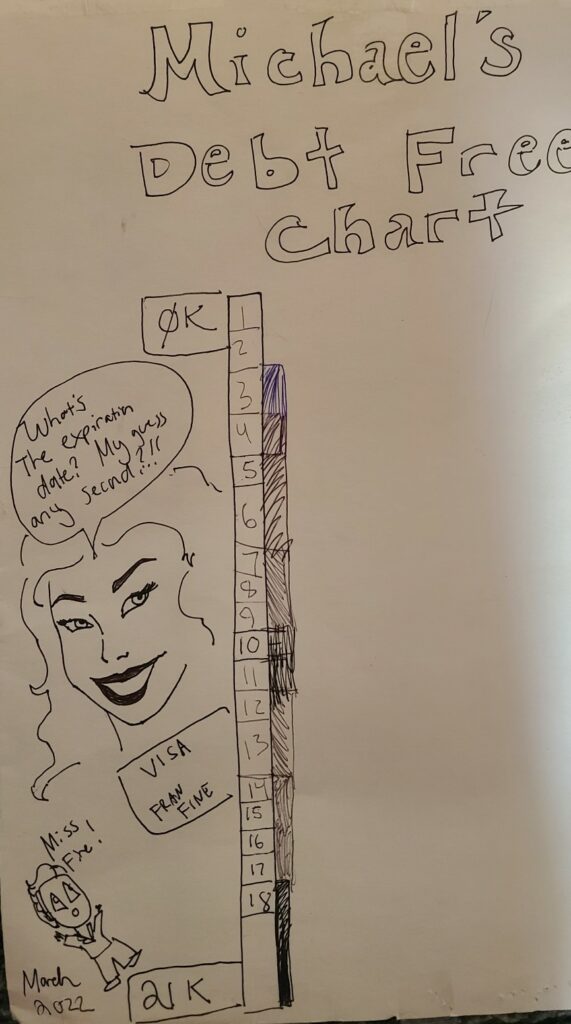
The Proposed Spending Detox
To achieve their goal of being debt-free within a six-month window, a radical reallocation of funds is required. By categorizing expenses into "Fixed," "Reducible," and "Discretionary," the couple can identify significant savings.
Current monthly spending includes $200 for eating out, $200 for home goods, $200 for Brian’s gifts, and various other discretionary costs. By temporarily eliminating these items, the couple could potentially reduce their monthly outgoings from $8,035 to approximately $6,665. This would free up an additional $2,456 per month beyond their current debt payments, allowing for a total monthly debt payload of $4,456. At this rate, the $28,259 debt could be retired in approximately six and a half months, effectively neutralizing the threat of the 17.99% interest rates.

The Retirement "Triple Crown"
One of the most significant advantages Brian possesses is his access to a "triple crown" of retirement vehicles through his state employment: a 403b, a 457b, and a pension.
- The 457b Advantage: Unlike a 401k or 403b, a 457b plan allows for penalty-free withdrawals upon separation from service, regardless of age. This provides a unique bridge for those considering early retirement or career transitions.
- The Pension Factor: Brian’s projected pension offers a monthly payout of $4,150 starting in 2054. While this provides a robust floor for their retirement planning, experts caution against over-reliance on a single source, especially given the historical instability of some state-run pension funds and the inflationary pressures on fixed incomes.
The Connecticut Context: High Costs and Market Barriers
The couple’s struggle is mirrored across the state of Connecticut. According to data from the Missouri Economic Research and Information Center (MERIC), Connecticut consistently ranks among the top ten most expensive states to live in, particularly concerning utilities and housing. Brian and Michael’s electricity bill averages $235 per month, a figure influenced by Connecticut’s high delivery rates, which are among the highest in the continental United States.

Furthermore, the Connecticut housing market remains highly competitive. The median sales price for single-family homes in the state has seen double-digit percentage increases in recent years, driven by low inventory and an influx of buyers from the New York and Boston metropolitan areas. For Brian and Michael, entering this market requires not just the elimination of debt, but the accumulation of a down payment that can compete with "all-cash" or high-equity offers.
Strategic Prioritization of Long-Term Goals
The couple has expressed interest in several competing goals: homeownership, legal marriage, starting a business, and Brian’s pursuit of a master’s degree. Financial experts suggest a tiered approach to these objectives to avoid further debt cycles.

- Debt Liquidation: This is the immediate priority. The psychological and financial burden of high-interest consumer debt prevents the accumulation of meaningful wealth.
- Emergency Fund Expansion: Before saving for a home, the couple must bolster their cash reserves to cover three to six months of expenses. This is especially critical given their high-mileage vehicles.
- Education and Career: Brian’s interest in a master’s degree is viewed by some analysts as a potential "unhelpful detour" unless it is tied to a guaranteed and significant salary increase. In the public sector, salary scales are often rigid, and the return on investment (ROI) for advanced degrees must be calculated with precision.
- Homeownership: This goal is deferred to the final stage. While Brian views not owning real estate as a "vulnerability," rushing into a mortgage with existing debt and low cash reserves would create even greater exposure to financial risk.
Broader Impact and Implications
The case of Brian and Michael illustrates the "shame cycle" often associated with millennial debt. Despite having high-impact careers and respectable salaries, the feeling of being "behind" peers can lead to erratic financial decisions. The transition from a low-cost studio to a high-cost luxury apartment is a common phenomenon where individuals seek "age-appropriate" living standards that their current balance sheets may not yet support.
The broader implication for policymakers and financial advisors is the need for better "mid-career" financial literacy that addresses the specific needs of public sector employees. While Brian and Michael have excellent "on-paper" wealth in the form of future pensions and retirement accounts, their current liquid instability makes them vulnerable to life’s "predictable emergencies."

As Brian and Michael work through their six-month debt repayment plan, their journey will serve as a blueprint for other professional couples in high-cost-of-living areas. The transition from "dreaming" to "doing" requires a clinical assessment of the spreadsheet, the discipline to endure a period of austerity, and the strategic patience to prioritize stability over the appearance of success. Their upcoming tenth anniversary serves as a deadline for this financial rebirth, potentially marking the beginning of a decade defined not by debt, but by the "lasting legacy" they hope to build.

