
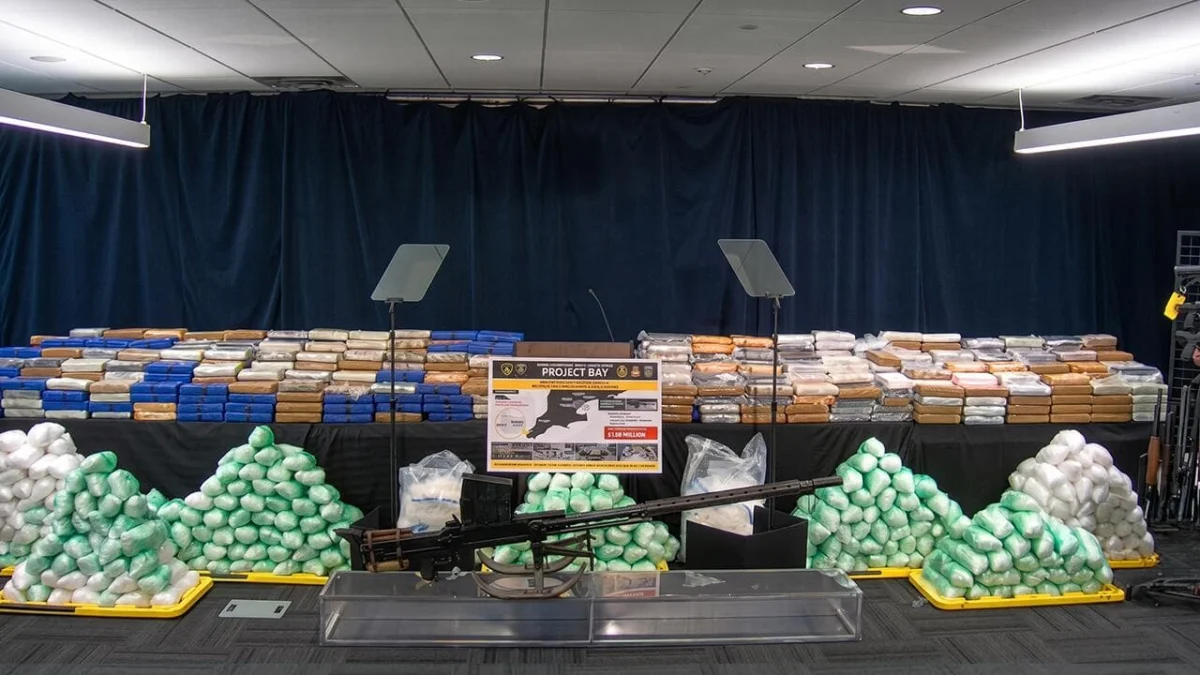
A sweeping cross-border investigation, dubbed Project Bay, has dismantled a sophisticated drug trafficking operation that leveraged legitimate commercial transportation networks to smuggle vast quantities of illicit substances across the Canada-U.S. border. The multi-agency effort, spearheaded by Canadian authorities with significant support from their American counterparts, culminated in the seizure of nearly 1.7 metric tons of illegal drugs with an estimated street value exceeding $139 million, marking one of Ontario’s most substantial single-case drug seizures by weight. The operation also led to the recovery of 17 firearms, including an anti-tank rifle, a stark indicator of the dangerous and organized nature of the criminal enterprise. Twenty-one individuals have been charged with a total of 104 offenses under Canadian law, with authorities continuing to pursue two outstanding suspects.
Unmasking a Sophisticated "Broker-Style" Network
The investigation, which began in January 2025 with the Windsor Police Service, rapidly expanded in scope as investigators uncovered a highly organized "broker-style" model operating clandestinely within the commercial transportation sector. This method allowed the criminal organization to exploit established logistics connections, effectively embedding its illicit activities within the legitimate flow of goods. Instead of owning and operating their own fleets, the network acted as an intermediary, contracting drivers and using existing supply chain infrastructure to move drug shipments. This approach provided a layer of insulation for the higher echelons of the criminal group, making detection more challenging for law enforcement.
According to statements released by the involved agencies, drivers within this network knowingly transported the illegal products, indicating a deliberate infiltration of personnel into the transportation industry. This modus operandi highlights a growing concern for legitimate logistics companies, whose infrastructure can unwittingly or wittingly be co-opted for nefarious purposes, posing significant reputational and security risks. The complexity of the operation necessitated a broad collaborative response, drawing in municipal, provincial, federal, and international law enforcement resources to unravel its intricate web.
A Detailed Chronology of the Investigation
The genesis of Project Bay traces back to January 2025 when the Windsor Police Service initiated an investigation based on intelligence concerning a drug trafficking network. Recognizing the cross-border implications and the potential scale of the operation, the Canada Border Services Agency (CBSA) joined the effort the following month, in February 2025, lending its expertise in border security and intelligence. As the investigation deepened and the interprovincial dimensions of the network became apparent, the Ontario Provincial Police (OPP) provided crucial support, extending the reach of the inquiry across various jurisdictions within Ontario and beyond.
The collaborative spirit was further solidified with the involvement of U.S. agencies, including Homeland Security Investigations (HSI) and the Drug Enforcement Administration (DEA), which provided critical assistance on the international facets of the case. Domestically, Toronto Police and Peel Regional Police also offered significant operational and investigative support, underscoring the widespread impact and reach of the criminal organization.
The culmination of months of meticulous intelligence gathering, surveillance, and inter-agency coordination came in a series of targeted actions. On June 25, law enforcement teams executed a significant wave of 18 search warrants across multiple locations in Ontario, including Windsor, Corunna, LaSalle, Brampton, and Kleinburg. These initial raids yielded substantial evidence and seizures. The investigative momentum continued with two additional searches conducted in Markham and Caledon on July 14, followed by another two in Brampton on July 20. These sequential operations allowed authorities to progressively dismantle the network, seizing its assets and apprehending key figures.
The Massive Haul: Drugs, Weapons, and Illicit Gains
The scale of the seizures during Project Bay paints a vivid picture of the immense criminal enterprise that was brought down. Authorities recovered a staggering 973 kilograms of suspected cocaine, a highly addictive stimulant with severe public health consequences. Alongside this, 660 kilograms of suspected methamphetamine were seized, another powerful and dangerous synthetic drug. The haul also included 49 kilograms of suspected opium, a raw material for various opioids, and 230 oxycodone tablets, highlighting the network’s involvement across a spectrum of controlled substances. The sheer volume of these drugs underscores the immense profit potential for criminal enterprises and the devastating impact such quantities could have had on communities across North America.
Beyond the narcotics, the operation uncovered a significant arsenal of weaponry, further emphasizing the violent potential inherent in large-scale drug trafficking. Officers seized 17 firearms, a worrying number, which included an anti-tank rifle. The presence of such a high-caliber military-grade weapon in a domestic criminal context is particularly alarming, suggesting the extreme lengths to which these organizations are prepared to go to protect their operations and illicit profits. The seized weapons cache also comprised ammunition, brass knuckles, various magazines, and a baton, indicating a readiness for confrontation and violence.
The financial aspect of the bust was equally significant, as investigators aimed to disrupt the economic underpinnings of the criminal network. Authorities recovered C$80,000 and US$10,000 in cash, alongside high-end jewelry, which often serves as a means of laundering illicit gains or storing wealth. The seizure of money counters, 43 cellphones, and six laptops provided crucial digital evidence, offering further insights into the network’s communication methods, financial transactions, and broader operational structure. One vehicle was also impounded as offense-related property, signaling the intent to strip the criminals of assets acquired through their illicit activities.
Charges and Ongoing Legal Proceedings
In the wake of the comprehensive investigation and subsequent raids, authorities laid a total of 104 offenses against 21 individuals. These charges fall under two key pieces of Canadian legislation: the Criminal Code, which covers a wide range of criminal acts, and the Controlled Drugs and Substances Act, specifically targeting offenses related to illicit narcotics. Law enforcement successfully apprehended 19 of the accused during the operation, bringing them into custody to face justice. However, two individuals remain at large, with outstanding arrest warrants issued for their capture, indicating that the investigative efforts are far from over.
The legal process for these individuals will be complex, involving extensive evidence presented by the prosecution. Furthermore, the financial dimension of the criminal activity is being meticulously examined by the OPP Provincial Asset Forfeiture Unit. This specialized unit’s mandate is to investigate offenses involving criminal proceeds and assist in seizing property connected to alleged crimes, effectively stripping criminal organizations of their ill-gotten gains. Their involvement underscores a strategic approach by law enforcement to not only disrupt drug flows but also dismantle the financial infrastructure that sustains such networks, thereby diminishing their capacity to operate. The broader investigation into Project Bay remains active, suggesting that further arrests or charges could be forthcoming as authorities continue to piece together the full scope of the network.
A United Front: The Power of Multi-Agency Collaboration
The success of Project Bay serves as a powerful testament to the effectiveness of multi-agency cooperation in combating complex, transnational criminal enterprises. Chief Superintendent Mike Stoddart of the Ontario Provincial Police underscored this point, stating, “This seizure reflects the scale of criminal activity that crosses borders and impacts communities across Ontario.” He attributed the significant disruption of harmful substances and the removal of substantial profits from the criminal economy to the unparalleled cooperation among municipal, provincial, federal, and international partners.
Chief Jason Crowley of the Windsor Police Service highlighted the investigative journey, noting, “This investigation began as the result of information obtained by the Windsor Police Service,” and subsequently expanded across several Ontario jurisdictions. He commended the collective efforts of all law enforcement partners in dismantling a network responsible for moving dangerous drugs and firearms into communities across the province, emphasizing the tangible impact on public safety.
Michael Prosia, Regional Director General for CBSA’s Southern Ontario region, echoed these sentiments, crediting the seamless cooperation among domestic and international agencies. He specifically thanked the Ontario Provincial Police and Windsor Police for their dedicated work. Prosia also provided context to the seizure by noting the CBSA’s broader efforts, stating that officers in Southern Ontario have seized 5,555 kilograms of illegal drugs and 206 firearms at land ports this year alone, demonstrating the persistent challenges at the border and the continuous vigilance of border services. This broader data underscores that Project Bay, while significant, is part of an ongoing battle against illicit trade.
Broader Implications and Industry Vulnerabilities
Project Bay offers critical insights into the evolving tactics of criminal networks and the vulnerabilities inherent in legitimate commercial supply chains. The "broker-style" model employed by this organization demonstrates a sophisticated understanding of logistics and transportation, allowing them to exploit existing industry connections for their illicit ends. This poses a significant challenge for the commercial transportation sector, which must remain vigilant against potential infiltration. Companies are increasingly faced with the need to enhance their security protocols, conduct thorough background checks on employees, and implement advanced cargo screening measures to prevent their assets and operations from being compromised.
The sheer volume of drugs seized, combined with the presence of high-powered firearms, highlights the direct threat these operations pose to public safety and national security. The profits generated from such large-scale drug trafficking often fuel other forms of organized crime, including human trafficking, extortion, and violence. By disrupting these financial flows, law enforcement aims to weaken the broader criminal ecosystem.
For transportation professionals, understanding the mechanisms by which traffickers exploit industry connections is paramount. This case serves as a stark reminder that what appears to be a standard freight movement could, in fact, be a conduit for dangerous contraband. The ongoing nature of the investigation and the pursuit of outstanding suspects indicate that authorities are committed to fully dismantling this network and sending a clear message to other criminal organizations attempting similar schemes. The collaborative success of Project Bay reinforces the necessity of a united, multi-jurisdictional approach to safeguarding borders, communities, and the integrity of global supply chains from the pervasive threat of organized crime.

