
Riyadh, Saudi Arabia – A devastating missile attack on King Khalid International Airport in Riyadh on Saturday, October 10, 2026, has sent shockwaves across the Middle East, resulting in 12 fatalities and injuring over 300 individuals. The strike, attributed to Iran-backed Houthi rebels, has ignited intense scrutiny over the efficacy of Saudi Arabia’s advanced Western-supplied air defense systems and significantly heightened fears of a broader regional conflict. While initial reports noted the absence of an immediate official claim, a senior Houthi official, Mohammed al-Bukhaiti, later asserted responsibility, framing the assault as retaliation for ongoing Saudi-led airstrikes in Yemen. This incident marks the deadliest attack on a Gulf Arab nation since the commencement of the broader US-Israeli conflict with Iran in February, underscoring the precarious geopolitical landscape.
Immediate Aftermath and Human Cost
The missile barrage plunged King Khalid International Airport into chaos, forcing a temporary suspension of all operations. Flight monitor website Flightradar24 indicated that approximately 85% of scheduled flights were canceled, causing widespread disruption to international air traffic. The human toll was severe, with casualties comprising a multinational contingent. Saudi authorities confirmed that four Saudi nationals were among the dead, alongside two from Bangladesh, and one each from the United States, Egypt, Jordan, Syria, Sudan, and Palestine. The sheer scale of injuries, exceeding 300, overwhelmed local medical facilities, highlighting the indiscriminate nature and devastating impact of the strike.
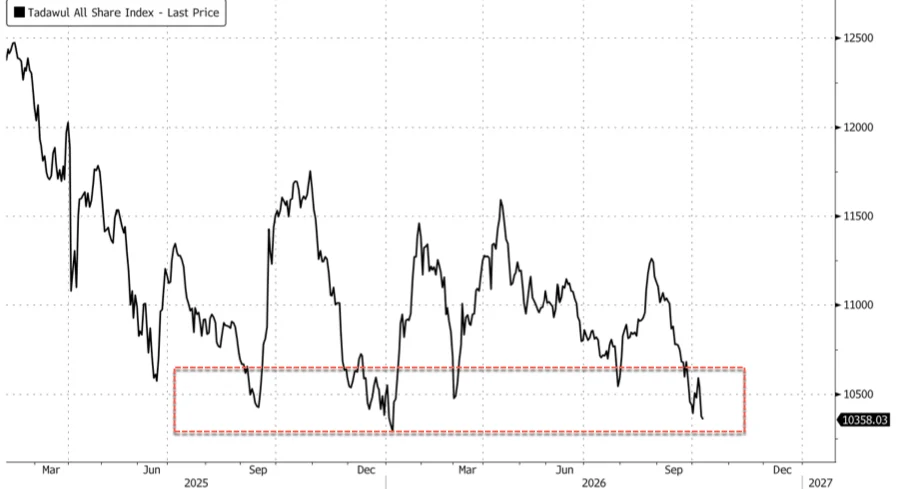
The attack occurred just hours before the scheduled opening of the prestigious World Petroleum Congress in Riyadh, an event crucial to Saudi Arabia’s ambitions as a global energy and business hub. The disruption cast a pall over the proceedings, underscoring the direct economic and reputational costs of the escalating conflict. Saudi Arabia’s benchmark stock index reacted swiftly, falling by as much as 1% in early trading, with major constituents like Saudi National Bank and the state oil giant Saudi Aramco experiencing declines, reflecting investor apprehension regarding regional instability.
The Broader Context: A Prolonged Conflict and Shifting Dynamics
The strike on Riyadh is not an isolated incident but rather a dramatic escalation in a long-running and brutal proxy conflict. The Yemen war, which began in earnest in 2014 when Houthi rebels seized the capital Sanaa, prompted a Saudi-led coalition to intervene in March 2015 with the aim of restoring the internationally recognized government. Since then, the conflict has devolved into a devastating humanitarian crisis, with millions displaced and facing famine.
The Houthi movement, formally known as Ansar Allah, has consistently demonstrated an ability to launch ballistic missiles and one-way attack drones deep into Saudi territory, targeting critical infrastructure including airports, oil facilities, and population centers. These attacks, often utilizing Iranian-designed or supplied components, have served as a persistent challenge to Saudi Arabia’s national security and its substantial investments in air defense.
Al Jazeera correspondent Yousef Mawry, reporting from Sanaa, observed that despite years of intensive Saudi-led airstrikes across Yemen, the coalition has been unable to neutralize the Houthis’ capacity for such cross-border assaults. "Although Saudi Arabia has said it will retaliate, let’s not forget that it’s carried out many air strikes across Yemen, and the Yemeni group is still able to launch ballistic missiles and drones towards Saudi Arabia," Mawry stated, highlighting the enduring resilience and sophisticated capabilities of the rebel group.

Questions Over Air Defense Effectiveness
The success of the Houthi missile in penetrating Riyadh’s defenses has raised critical questions about the effectiveness of Saudi Arabia’s Western-supplied air and missile defense systems. The Kingdom has invested billions in advanced weaponry, including Patriot missile defense systems and potentially Terminal High Altitude Area Defense (THAAD) systems, designed to intercept incoming ballistic missiles. The mass casualties and direct hit on a major international airport suggest potential gaps in detection, interception capabilities, or overall coverage.
This incident is not the first time Saudi air defenses have been challenged. Previous attacks on oil facilities, notably the 2019 strikes on Abqaiq and Khurais, demonstrated vulnerabilities to swarm drone and cruise missile attacks. While those incidents prompted a reevaluation of defense strategies, Saturday’s attack indicates that the threat remains potent and adaptable. Analysts are now scrutinizing whether the specific type of missile used, its trajectory, or other operational factors exploited unforeseen weaknesses in the layered defense architecture around the capital. The Saudi-led coalition swiftly condemned the attack as a "war crime," yet the immediate focus turned to understanding how such a devastating strike could occur despite robust defensive measures.
International Reactions and US Stance
The international community has widely condemned the attack. While specific statements from all global leaders were not immediately available, such an act of aggression against civilian infrastructure and a major international airport typically draws strong rebuke from the United Nations, the European Union, and individual nations advocating for regional stability.
Of particular significance was the response from the United States. Asked by reporters on Saturday whether the US military would join Saudi attacks on the Houthis, President Trump responded, "We may. We’re going to look at it. We just found out about the recent attack, so we’ll make a decision. We move very quickly." This statement marks a potential pivot in US policy, reversing previous inclinations to avoid direct military intervention in the Yemen conflict, despite repeated requests from Riyadh for military action. The possibility of direct US involvement adds another layer of complexity and risk to an already volatile situation, especially given the backdrop of the broader US-Israeli conflict with Iran.
Houthi Strategy and Objectives
The timing and nature of the attack suggest a deliberate Houthi strategy aimed at maximizing pressure on Saudi Arabia and its allies. Yasmeen al-Eryani, executive director for knowledge production at the Sanaa Center, indicated that the Houthis are striving to exert "maximum pressure" on Riyadh. This push comes less than a month before the US midterm elections, potentially calculated to influence American foreign policy decisions.
Al-Eryani further elaborated on the Houthi’s internal mobilization efforts, noting a shift from the west coast battle to more densely populated areas like Taiz. "We could see further mobilization; they have very high momentum. They will probably continue to capitalize on that momentum, internally and cross-border attacks and by doing this, operationalizing a unification of arenas putting pressure across the region, economically, politically and so on," she explained. This suggests a multi-pronged approach designed to consolidate gains internally while projecting power externally. The Houthi leadership, including Mohammed al-Bukhaiti, has consistently framed these attacks as legitimate responses to Saudi airstrikes, which a Houthi-affiliated health ministry spokesman claimed have killed 91 people since September 3, predominantly women and children, though this figure remains unverified.

Dania Thafer, executive director of the Gulf International Forum, highlighted the dual nature of the Houthi threat. While Gulf states typically aim to "compartmentalize the Houthi issue" to prevent wider escalation, the rebels’ actions make this increasingly difficult. "I still think that the Saudis probably want de-escalation. They don’t want long-term escalation, but the Houthis are making it very difficult by not only being a threat to Saudi national security but also a threat to international maritime security. So this battle is much bigger than just a tit-for-tat," Thafer explained, alluding to the Houthis’ past targeting of commercial shipping in the Red Sea. Al-Eryani added that the Houthis were "provoking" Saudi Arabia, the US, and regional states, potentially drawing more actors into the conflict.
Broader Regional and Economic Implications
The Riyadh airport attack risks pushing the Gulf region into a significantly more dangerous phase. US-allied Gulf governments are increasingly recognizing that Iran’s extensive proxy network, of which the Houthis are a key component, poses a shared, multifaceted threat to national security, vital energy infrastructure, and crucial maritime trade routes. The direct targeting of civilian infrastructure and the high casualty count represent a serious escalation that demands a robust response.
Unofficial reports circulating shortly after the attack suggested that Saudi Arabia had already commenced intense retaliatory airstrikes against multiple Houthi targets across Yemen, indicating that the Kingdom is unlikely to shy away from a forceful response. However, as Mawry noted, such retaliation has historically failed to deter Houthi missile capabilities. The cycle of attack and counter-attack risks deepening the humanitarian catastrophe in Yemen and further destabilizing the entire region.
Economically, beyond the immediate market dip, the attack undermines Riyadh’s ambitious Vision 2030 plan to diversify its economy and transform the capital into a major global aviation and business hub. Repeated disruptions to international air travel and the perceived insecurity could deter foreign investment and tourism, slowing down the Kingdom’s economic transformation efforts.
The Path Forward: Escalation or De-escalation?
The tragic events at King Khalid International Airport underscore the urgent need for a diplomatic resolution to the Yemen conflict, yet the prospects for such a resolution appear increasingly dim. The Houthis’ demonstrated capability and stated intent to exert "maximum pressure" suggest they are not ready to de-escalate without significant concessions. Conversely, Saudi Arabia, having suffered a deadly attack on its capital, is under immense pressure to respond decisively, further entrenching the cycle of violence.
The potential for direct US military involvement, as hinted by President Trump, could fundamentally alter the dynamics of the conflict, but also carries the risk of widening the regional confrontation. The interplay between the Yemen war and the broader US-Israeli conflict with Iran suggests that the Middle East remains a crucible of escalating tensions, where local conflicts can rapidly ignite wider conflagrations with global implications for energy security and international relations. The coming days will be critical in determining whether the region descends further into conflict or if a path towards de-escalation can be forged amidst the prevailing animosity.

