

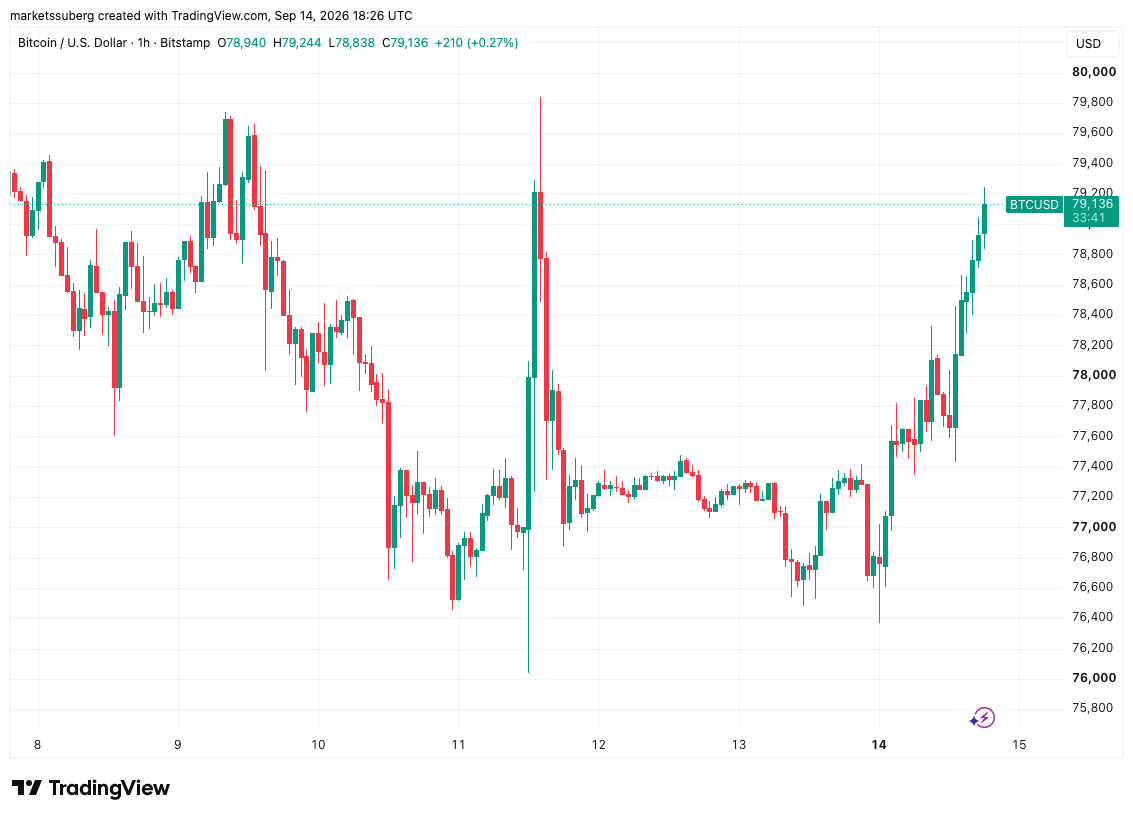
Bitcoin (BTC) surged back above the $79,000 mark as the Wall Street trading session commenced on Monday, a significant rebound fueled by evolving market sentiment surrounding the US-Iran conflict. While initial optimism surrounding potential de-escalation buoyed risk assets, a complex interplay of geopolitical signals and upcoming Federal Reserve policy decisions continues to shape the financial landscape, impacting everything from oil prices to cryptocurrency valuations.
Geopolitical Winds Shift as Trump Signals Potential Iran Deal
The cryptocurrency market experienced a notable uplift as US President Donald Trump indicated a potential shift in diplomatic engagement with Iran. In a post on Truth Social, Trump stated, "The failing Nation of Iran wants to make a deal, quickly and badly. I will determine whether or not the U.S.A. will choose to engage – The concept of which we are open to." This statement, interpreted by many as a signal towards de-escalation, provided a much-needed catalyst for risk assets that had been under pressure due to escalating tensions in the Middle East.
Data from TradingView confirmed BTC/USD’s recovery, with the cryptocurrency erasing its weekend losses and registering gains of approximately 3% during the early trading hours of Monday. This upward momentum suggests a renewed appetite for speculative investments as immediate fears of a wider regional conflict appeared to recede, at least temporarily.

Oil Markets React to Diplomatic Overtures and Supply Chain Concerns
The geopolitical developments had a pronounced effect on global oil markets. US equities initially saw gains at the Wall Street open, mirroring the optimism in cryptocurrencies. However, this sentiment proved to be fragile, as broader market indices, such as the S&P 500, subsequently turned negative, trading down 0.3% at the time of writing. This market hesitation stems from persistent uncertainty regarding the security of critical oil transit routes in the Middle East.
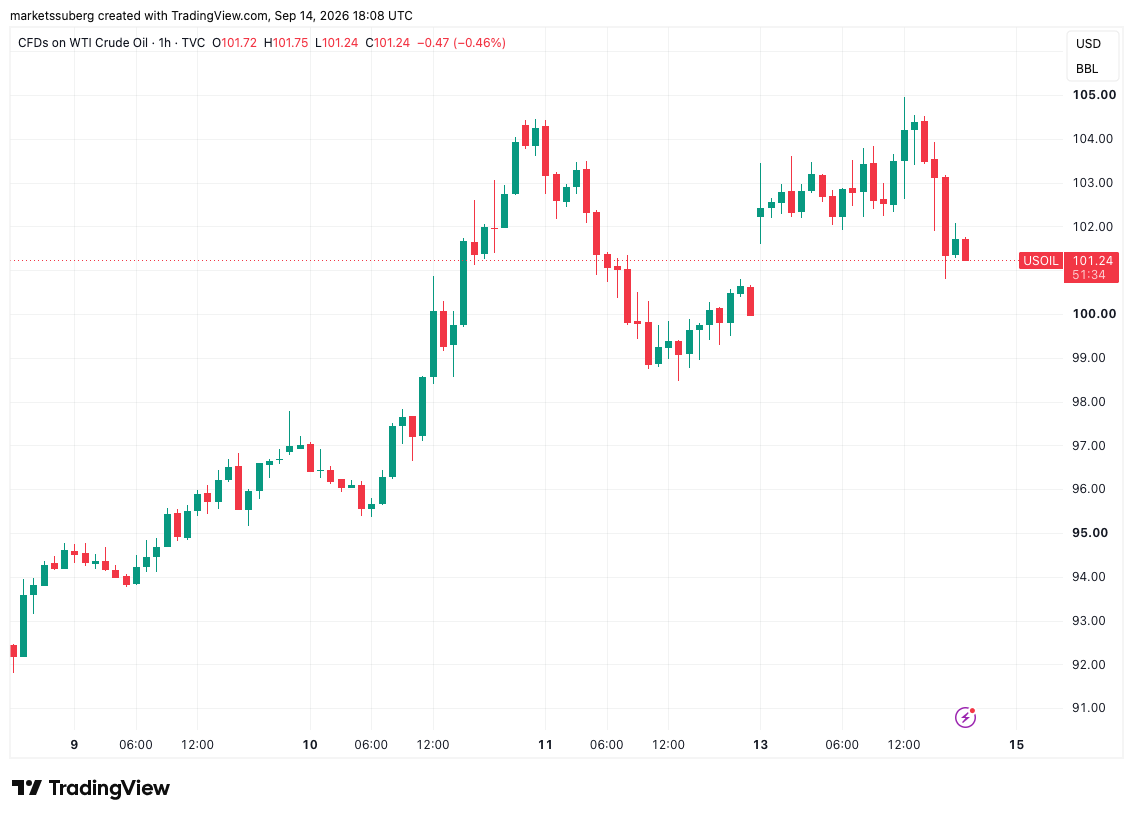
The Strait of Hormuz, a vital chokepoint for global oil shipments, along with Saudi Arabia’s East-West pipeline and the Bab El-Mandeb Strait, have been identified as potential targets, underscoring the broader implications of any prolonged conflict in the region. As of Monday’s trading, US WTI crude oil remained elevated, trading above $100 per barrel, while Brent crude was priced at $105 per barrel. These elevated prices reflect ongoing supply concerns and the inherent risks associated with geopolitical instability in major energy-producing regions.
Later in the day, President Trump further elaborated on his outlook, reinforcing his prediction of lower oil prices while explicitly alluding to an impending end to the conflict with Iran. In a subsequent Truth Social post, he declared, "With the temporary exception of Oil, prices are coming down sharply, and Oil will drop like a rock as soon as the Military Conflict with Iran is over, and that will not be long." This statement contributed to a notable dip in oil prices, indicating that market participants were highly attuned to the President’s pronouncements and their potential impact on commodity markets.
Federal Reserve’s Tightening Stance Amidst Inflationary Pressures
While geopolitical shifts dominated headlines, the looming decision from the Federal Reserve regarding interest rates continued to cast a significant shadow over financial markets. The latest data from CME Group’s FedWatch Tool indicated a substantial increase in the probability of a rate hike at the upcoming Federal Open Market Committee (FOMC) meeting. As of Monday, the odds of a 25-basis-point hike stood at a commanding 92.7%, a stark increase from 59.4% just a week prior. This heightened expectation signals a strong consensus among market participants that the Fed will continue its aggressive monetary tightening campaign to combat persistent inflation.
Trading company QCP Capital offered insights into the potential implications of sustained high oil prices on US financial policy. They predicted that elevated energy costs could directly influence the Federal Reserve’s decision-making process. The Fed is widely expected to announce its latest interest-rate adjustment on Wednesday, with markets pricing in a 25-basis-point increase, bringing the target range to 3.75-4%.
QCP Capital’s analysis highlighted the delicate balancing act facing policymakers. "A prolonged disruption would increase the risk of higher energy costs feeding into transport and logistics pricing, potentially lifting inflation expectations and constraining the Fed’s ability to pause tightening even as growth slows," the firm stated in a note on Monday. They further elaborated on the inherent policy tension: "This dynamic creates policy tension: continued energy prices could keep the Fed restrictive, while economic data weakness from higher energy costs could argue for patience." This suggests that while inflation remains a primary concern, a potential economic slowdown fueled by energy price shocks could complicate the Fed’s path forward.
Focus Shifts to Fed’s Forward Guidance for Risk Assets
The impending Federal Reserve decision and its subsequent communication are poised to be critical drivers for risk assets, including Bitcoin. QCP Capital suggested that the market had largely priced in the anticipated 0.25% rate hike, leading to expectations of reduced volatility surrounding the announcement itself.
The muted market reaction to last week’s Consumer Price Index (CPI) inflation data further supports the notion that the Federal Reserve’s forward guidance will carry more weight than the actual interest-rate decision. "This containment reflects a shift in focus: the binary question of whether the Fed will hike has been answered; the critical issue for positioning is now how policymakers frame the move and what it signals about the path ahead," QCP wrote. This indicates that investors will be closely scrutinizing the language used by Fed officials for clues about future monetary policy, including the potential for further rate hikes or a sustained period of higher interest rates.
For Bitcoin, the implications of the Fed’s communication are significant. As a risk asset, Bitcoin’s performance is often correlated with broader market sentiment and liquidity conditions, which are heavily influenced by monetary policy. A hawkish tone from the Fed, suggesting a prolonged period of tightening, could put downward pressure on Bitcoin and other cryptocurrencies. Conversely, any indication of a pivot or a more dovish stance, even if not immediately apparent, could provide a boost to risk assets.
Bitcoin’s Technical Levels and the Path to a Bull Market Comeback
From a technical perspective, Bitcoin has shown signs of resilience. BTC/USD reclaimed its 50-week exponential moving average (EMA) at $77,430 on Monday, a crucial level that it had briefly fallen below in the previous week. As previously reported, the 50-week EMA is considered a key indicator for Bitcoin bulls, and its reclamation is viewed as a significant step towards a potential bull market comeback.
The recovery above this moving average suggests that buying pressure has re-emerged, potentially signaling a reversal of recent downward trends. The ability of Bitcoin to hold this level and build upon its gains will be closely watched by traders and analysts as they assess the cryptocurrency’s short-to-medium term trajectory.
The interplay between geopolitical events, macroeconomic policy, and technical indicators creates a dynamic and complex environment for Bitcoin. While the immediate relief from escalating US-Iran tensions provided a welcome boost, the underlying uncertainties surrounding oil supply, inflation, and the Federal Reserve’s next moves ensure that the cryptocurrency market will remain volatile. Investors and traders will be keenly observing the Fed’s upcoming announcement and any further developments in the Middle East to gauge the future direction of Bitcoin and other risk assets. The coming week promises to be pivotal, with the Fed’s communication potentially setting the tone for financial markets for the remainder of the year.

